Quote

Menu

Marine Spare Parts Blog & News

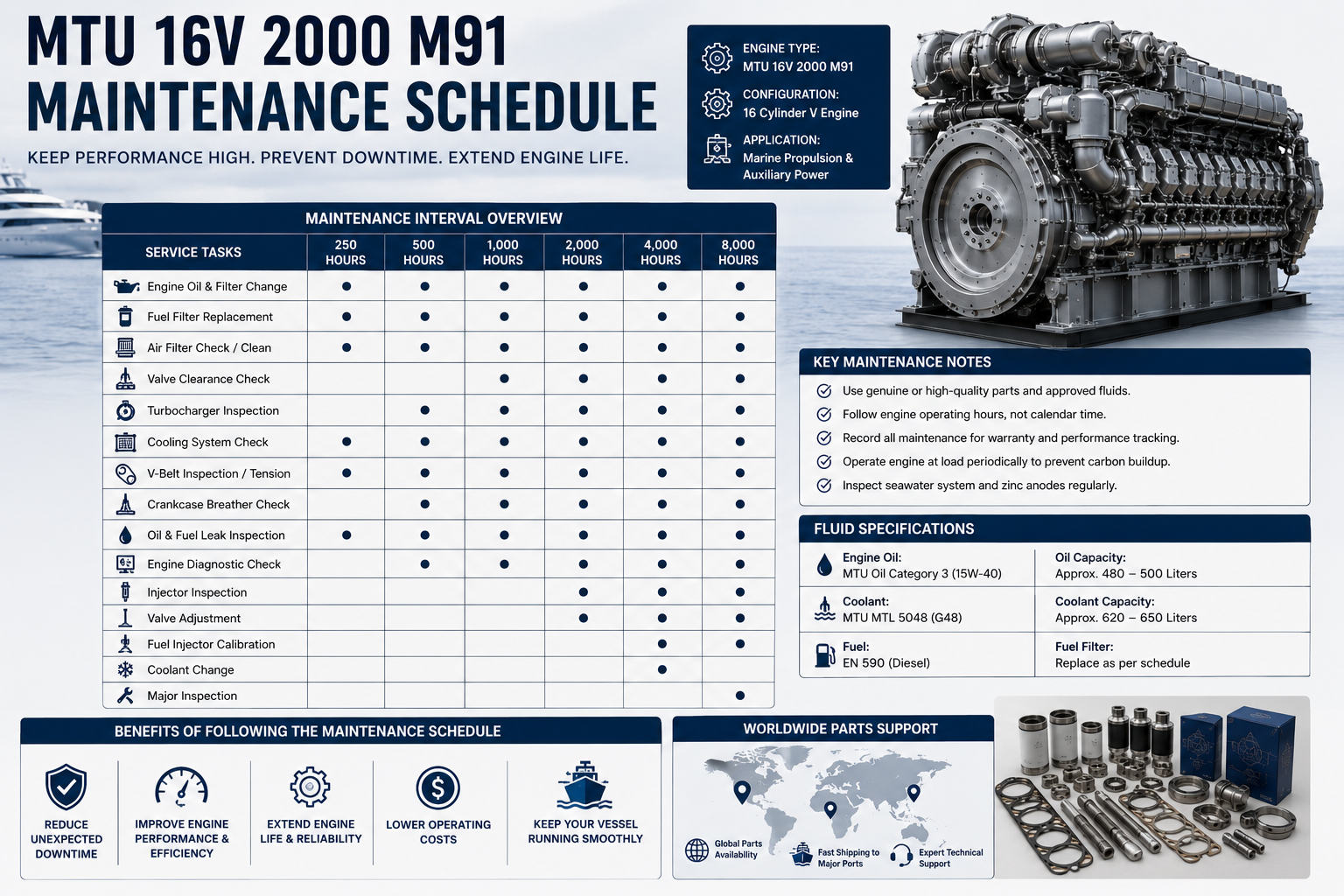
  • MTU 16V 2000 M91 Maintenance Schedule: What the Service Hours Really Mean for a Working Vessel
  • Why Convert MTU Operating Hours Into Months?
  • MTU 16V 2000 M91 Component Lifetime in Months
  • ⚙️ MTU 16V 2000 M91 Maintenance Planning Block
  • The 500-Hour Point Is More Important Than It Looks
  • Why Valve Clearance Deserves Regular Attention
  • The 2,000-Hour Maintenance Point
  • Why Endoscopic Inspection Is So Valuable
  • The 4,000-Hour Maintenance Point Is a Major Event
  • MTU 16V 2000 M91 Cylinder Head Maintenance
  • Turbocharger Maintenance
  • Raw-Water Pump Maintenance
  • Engine Oil Filter: Why There Isn't a Fixed Hour Number in This Table
  • Engine Room Reality: The Calendar Can Beat the Hour Meter
  • What MTU Means by Preventive Maintenance
  • Low Usage vs. High Usage: What Changes?
  • Vessel A — Low Usage
  • Vessel B — High Usage
  • What Should Fleet Managers Stock?
  • Engineer's Toolbox
  • MTU 16V 2000 M91 Planning Record
  • Marine Engineer Tip
  • Common Maintenance Planning Mistakes
  • Frequently Asked Questions
  • Is the MTU 16V 2000 M91 part of the MTU Series 2000?
  • How often is valve clearance checked on the referenced MTU 16V 2000 M91 schedule?
  • When are the air filters replaced?
  • When are the injectors replaced?
  • When is the raw-water pump overhauled?
  • When are the cylinder heads overhauled?
  • Does every MTU 16V 2000 M91 use exactly this schedule?
  • Related MTU 16V 2000 M91 Parts
  • Related MTU Series 2000 Engine Pages
  • Browse MTU Marine Engines & Spare Parts
  • Worldwide MTU Marine Spare Parts Supply
  • Why Choose Alfa Marine Spare Parts?
  • Contact Alfa Marine Spare Parts
  • One Final Thought
Read more
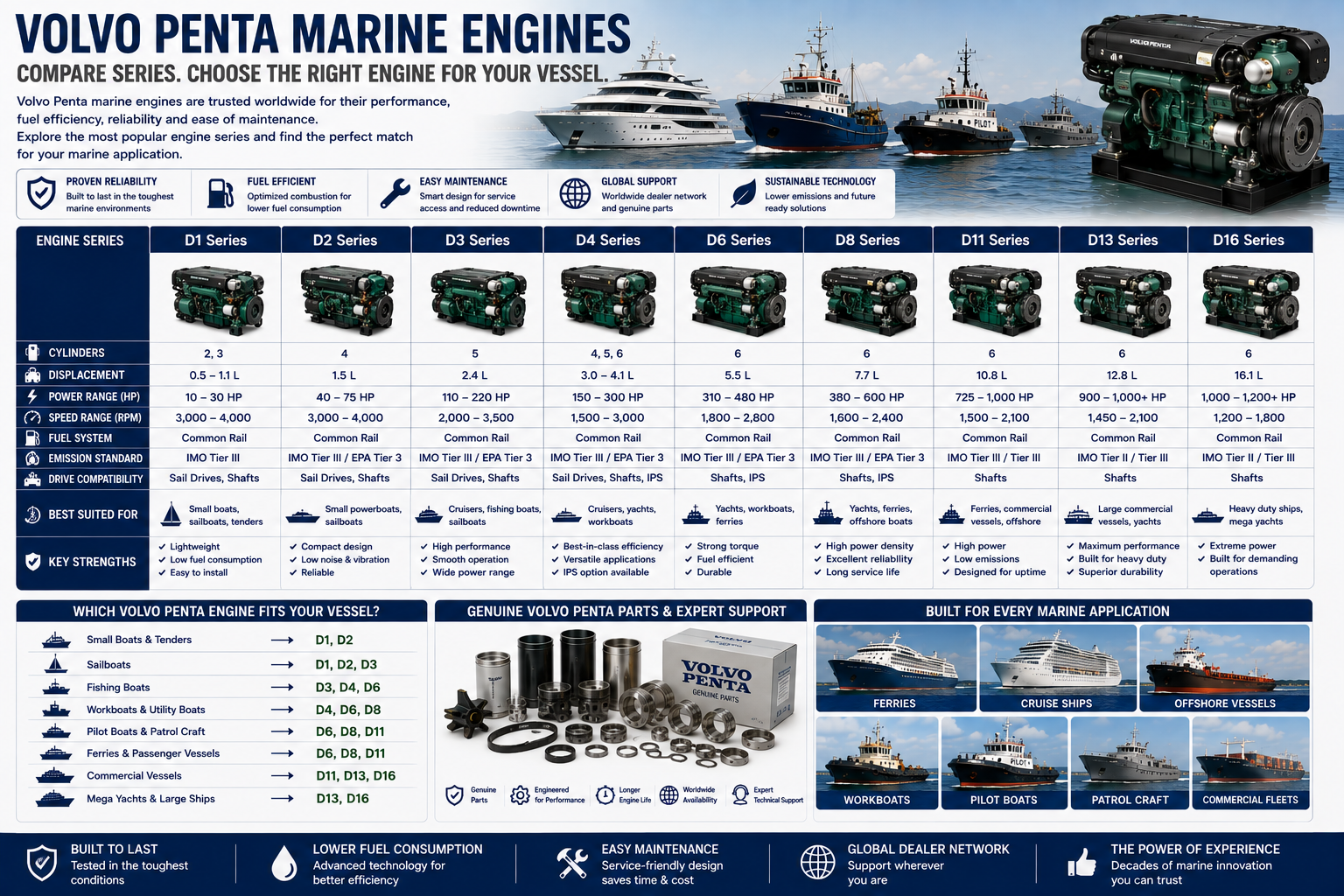
  • Volvo Penta Marine Engine Types: What Is the Difference, and Which Engine Fits Which Vessel?
  • Understanding the Main Volvo Penta Marine Engine Families
  • Volvo Penta D1: The Small Sailboat Engine
  • Which Boats Suit a D1?
  • D1 Personality
  • Volvo Penta D2: More Power for Larger Sailing Yachts
  • D1 vs. D2: What Is the Practical Difference?
  • Volvo Penta D1
  • Volvo Penta D2
  • Volvo Penta D3: The Compact High-Output Generation
  • Volvo Penta D4: Four Cylinders With Serious Power
  • Which Boats Suit a Volvo Penta D4?
  • D4 Personality
  • Why Can a 3.7-Liter Engine Produce More Than 300 hp?
  • Volvo Penta D6: One of the Most Recognizable Marine Diesels
  • Where Does a D6 Fit?
  • D4 vs. D6: Which Makes More Sense?
  • Volvo Penta D4
  • Volvo Penta D6
  • Why the D4 and D6 Became So Important
  • What Is Volvo Penta Aquamatic?
  • Why Would You Choose a Sterndrive?
  • Volvo Penta D8: Moving Into Bigger Commercial Power
  • Which Boats Suit a Volvo Penta D8?
  • D8 Personality
  • Volvo Penta D11: The Bigger Inline-Six
  • Where Does the D11 Fit?
  • Volvo Penta D13: Up to 1,000 hp in an Inline Six
  • Which Boats Suit a D13?
  • D13 Personality
  • Why Stay With an Inline Six at 1,000 hp?
  • Volvo Penta D16: Heavy Commercial Power
  • D13 vs. D16: Bigger Does Not Always Mean More Horsepower
  • D13
  • D16 MH
  • Volvo Penta IPS: More Than an Engine
  • Which Engines Are Used With IPS?
  • Why Do Yacht Builders Like IPS?
  • Better Maneuverability
  • Packaging
  • Propeller Efficiency
  • Electronic Integration
  • What Needs Maintenance on an IPS System?
  • IPS vs. Conventional Shaft Drive
  • SHAFT DRIVE
  • IPS
  • Volvo Penta Commercial Marine Engines
  • Volvo Penta for Sailing Yachts
  • Volvo Penta Saildrive Systems
  • Volvo Penta for Motor Yachts
  • Which Volvo Penta Engine Fits a Sportfishing Boat?
  • Which Volvo Penta Engine Fits a Pilot Boat?
  • Which Volvo Penta Engine Fits a Workboat?
  • Volvo Penta Marine Generator and Auxiliary Engines
  • Propulsion vs. Generator Duty
  • Common Rail and Electronic Control
  • Electronic Vessel Control
  • Older Volvo Penta vs. Modern Volvo Penta
  • Why Some Owners Keep Older Volvo Penta Engines
  • Volvo Penta IMO III Engines
  • What Changes With IMO III?
  • Quick Volvo Penta Marine Engine Comparison
  • Volvo Penta Marine Engine “Personalities”
  • D1 — The Little Sailor
  • D2 — The Cruiser
  • D4 — The Compact Performer
  • D6 — The Marine All-Rounder
  • D8 — The Commercial Crossover
  • D11 — The Bigger Six
  • D13 — The 1,000-hp Straight Six
  • D16 MH — The Heavy Worker
  • Which Volvo Penta Engine Would You Choose for Different Boats?
  • Small Sailing Yacht
  • Larger Sailing Yacht
  • Small Motor Yacht
  • Medium Motor Yacht
  • Large Yacht
  • Fast Workboat
  • Heavy Commercial Workboat
  • Pilot or Patrol Boat
  • Why Exact Volvo Penta Engine Identification Matters
  • A Good Volvo Penta Parts Inquiry
  • Common Volvo Penta Marine Spare Parts
  • Cooling-System Maintenance Matters
  • Raw-Water Impellers
  • Turbocharger Maintenance
  • Fuel Cleanliness Is Critical
  • Buying a Used Volvo Penta Marine Engine
  • Maintenance Accessibility Matters
  • Marine Engineer Tip
  • Frequently Asked Questions
  • What Are the Main Volvo Penta Marine Diesel Engines?
  • Which Volvo Penta Engine Is Common in Sailing Yachts?
  • How Powerful Is the Volvo Penta D4?
  • How Powerful Is the Volvo Penta D6?
  • What Is the Volvo Penta D8?
  • How Powerful Is the D11?
  • How Powerful Is the Volvo Penta D13?
  • What Is Volvo Penta IPS?
  • Which Engines Are Available With IPS?
  • Does Volvo Penta Make Commercial Marine Engines?
  • Does Volvo Penta Offer IMO Tier III Engines?
  • Why Is the Engine Serial Number Important?
  • Volvo Penta Marine Engine Spare Parts
  • Common Volvo Penta Parts We Can Help Identify
  • Related Volvo Penta Marine Engine Pages
  • Why Choose Alfa Marine Spare Parts?
  • Worldwide Volvo Penta Marine Spare Parts Supply
  • Contact Alfa Marine Spare Parts
  • One Final Thought
Read more
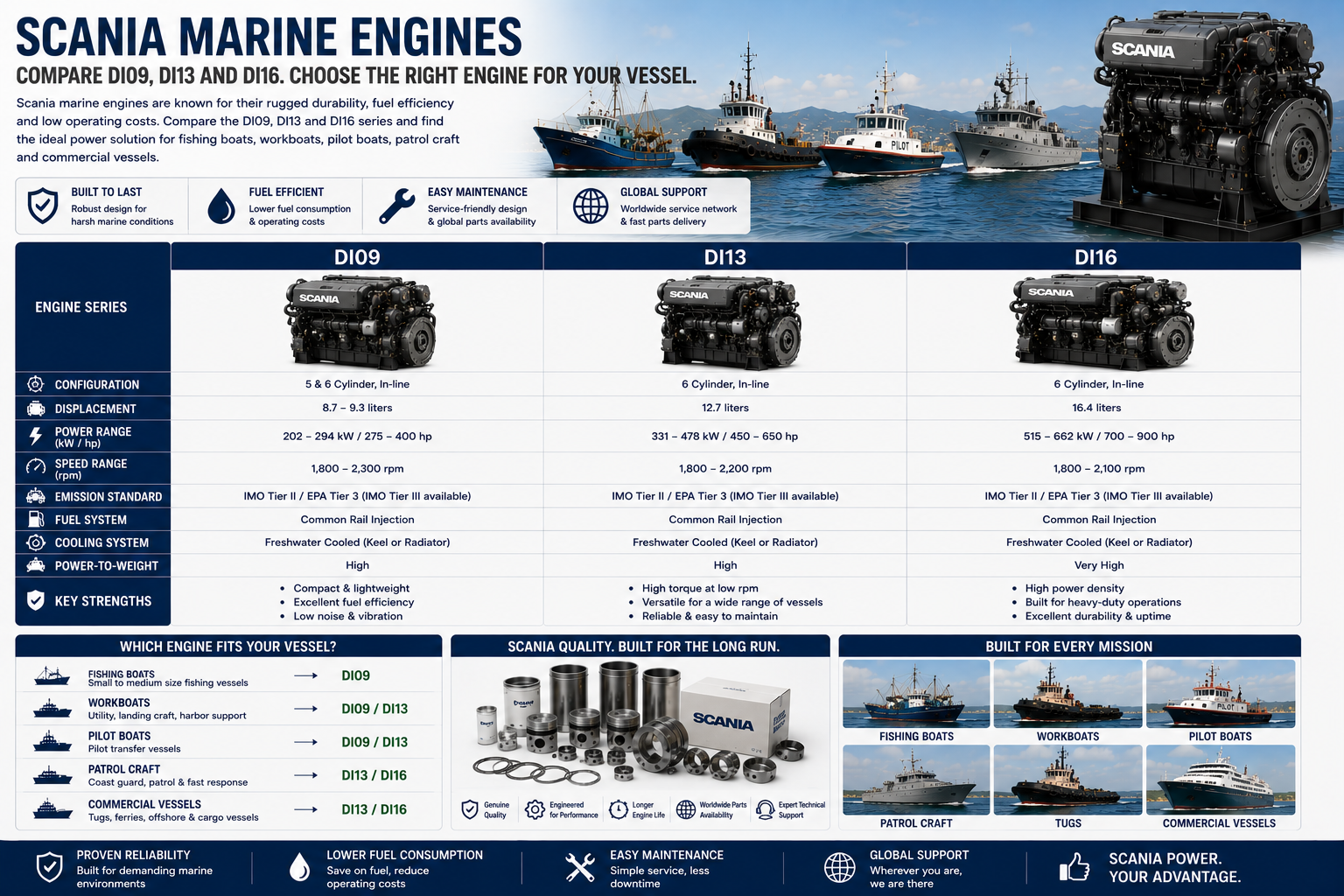
  • Scania Marine Engine Types: What Is the Difference, and Which Engine Fits Which Vessel?
  • Understanding the Main Scania Marine Engine Families
  • Why Scania Marine Engines Are Different From Ordinary Truck Engines
  • Scania DI09: The Compact Commercial Worker
  • Why Five Cylinders?
  • Which Boats Suit a Scania DI09?
  • Scania DI09 Personality
  • Why the DI09 Can Be Attractive for Fishing Boats
  • Scania DI13: The Marine All-Rounder
  • Which Boats Suit a Scania DI13?
  • Why an Inline-Six Works Well in Commercial Boats
  • DI09 vs. DI13: What's the Main Difference?
  • Scania DI09
  • Scania DI13
  • Scania DI13 for Pilot Boats
  • Scania DI13 for Passenger Vessels
  • One Scania DI13 Can Have Different Power Ratings
  • Scania DI16: The V8 Heavyweight
  • Why Does a V8 Make Sense in a Boat?
  • Which Boats Suit a Scania DI16?
  • DI16 Personality
  • DI13 vs. DI16: Which One Makes More Sense?
  • DI13
  • DI16
  • Scania DI16 076M: How Powerful Can It Get?
  • Wet Cylinder Liners: Why Engineers Care
  • Scania's Modular Engine Philosophy
  • Mechanical Scania vs. Modern Electronic Scania
  • Traditional Mechanical Diagnosis
  • Modern Electronic Diagnosis
  • Scania Marine Cooling: Heat Exchanger or Keel Cooling
  • Heat-Exchanger Cooling
  • Keel Cooling
  • Why Higher-Power DI13 and DI16 Cooling Can Be Different
  • Scania Marine Auxiliary Engines
  • Propulsion Engine vs. Auxiliary Engine
  • Propulsion Engine
  • Auxiliary Engine
  • Scania and Diesel-Electric Propulsion
  • Scania and Hybrid Marine Power
  • Why Hybrid Power Can Make Sense for Workboats
  • Scania and Renewable Fuels
  • Which Scania Engine Makes Sense for a Fishing Vessel?
  • Smaller commercial fishing vessel
  • Medium fishing vessel
  • Larger or faster fishing vessel
  • Which Scania Engine Makes Sense for a Workboat?
  • Which Scania Engine Makes Sense for a Patrol Boat?
  • Which Scania Engine Makes Sense for a Pilot Boat?
  • Which Scania Engine Makes Sense for a River Barge?
  • Which Scania Engine Makes Sense for a Pleasure Craft?
  • Commercial Duty vs. Pleasure Duty
  • Boat A
  • Boat B
  • DI09, DI13 and DI16 at a Glance
  • Scania Marine Engine “Personalities”
  • DI09 — The Compact Worker
  • DI13 — The All-Rounder
  • DI16 — The V8 Muscle
  • Common Scania Marine Engine Spare Parts
  • Why Cooling Parts Need Exact Identification
  • Why the Complete Scania Model Code Matters
  • Why Engine Serial Number Matters
  • Scania Wet Liners and Overhaul Planning
  • Don't Throw Away the Old Bearings Without Looking at Them
  • Turbocharger Condition Matters
  • Marine Engineer Tip
  • Frequently Asked Questions
  • What are the main Scania marine engine families?
  • How much power do Scania marine engines produce?
  • Is the Scania DI09 a six-cylinder engine?
  • Is the Scania DI13 an inline six?
  • Is the Scania DI16 a V8?
  • How powerful is the Scania DI16?
  • What types of boats use Scania marine engines?
  • Does Scania make marine generator engines?
  • Can Scania marine engines be keel cooled?
  • Does Scania offer heat-exchanger-cooled marine engines?
  • Can Scania engines be used in diesel-electric vessels?
  • Does Scania support hybrid marine propulsion?
  • Scania Marine Engine Spare Parts
  • Common Scania Parts We Can Help Identify
  • Related Scania Marine Engine Pages
  • Why Choose Alfa Marine Spare Parts?
  • Worldwide Scania Marine Spare Parts Supply
  • Contact Alfa Marine Spare Parts
  • One Final Thought
Read more
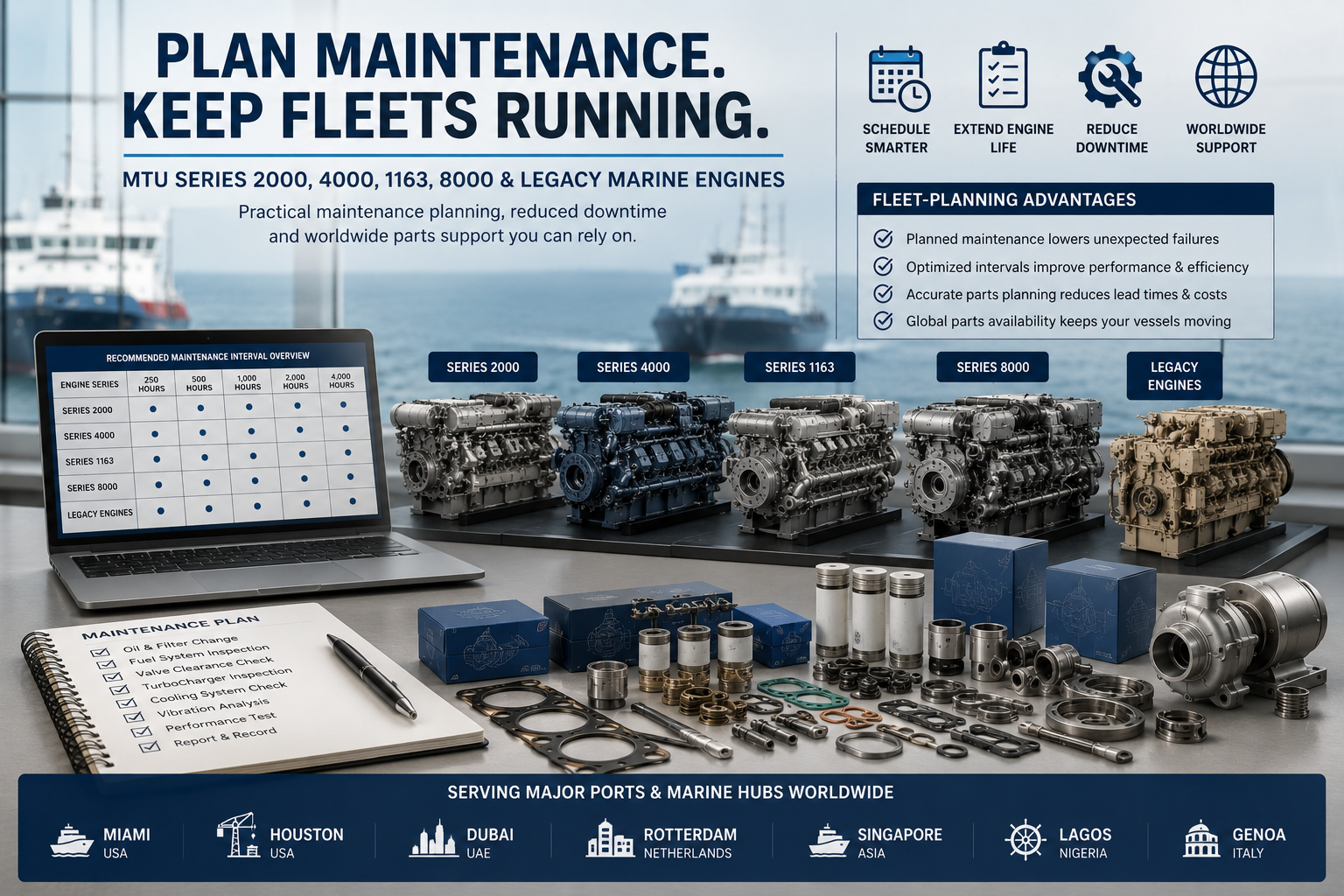
  • MTU Marine Engine Maintenance Guide: A Practical Fleet Planning Guide for Series 2000, 4000, 1163 & 8000
  • Why This Matters to MTU Fleet Managers
  • How to Read the Maintenance Blocks Below
  • MTU Series 2000 Marine Engine Maintenance Planning
  • MTU Series 2000 Maintenance Block
  • ⚙️ MTU Series 2000 Component Maintenance Planning
  • MTU Series 2000 Engine Types to Include in Fleet Records
  • MTU Series 4000 Marine Engine Maintenance Planning
  • MTU Series 4000 Maintenance Block
  • ⚙️ MTU Series 4000 Component Maintenance Planning
  • MTU Series 4000 Engines Your Fleet Register May Contain
  • MTU Series 1163 Marine Engine Maintenance Planning
  • MTU Series 1163 Maintenance Block
  • ⚙️ MTU Series 1163 Component Maintenance Planning
  • Common MTU Series 1163 Marine Engine Types
  • MTU Series 8000 Marine Engine Maintenance Planning
  • MTU Series 8000 Maintenance Block
  • ⚙️ MTU Series 8000 Component Maintenance Planning
  • MTU Series 8000 Engine Types
  • What About Older MTU Marine Engines?
  • Legacy MTU Engine Maintenance Block
  • ⚙️ Legacy MTU Marine Engine Planning
  • How to Turn Operating Hours Into a Fleet Maintenance Calendar
  • Vessel A
  • Vessel B
  • Vessel C
  • Build One Maintenance Block for Every Engine
  • Vessel Maintenance Record
  • Planning Parts: What Should Be Onboard?
  • What Should Be Kept as Fleet Stock?
  • What Should Usually Be Supplier-Supported?
  • Engine Room Reality: Hours Don't Tell the Whole Story
  • What Should Fleet Managers Trend?
  • Marine Engineer Tip
  • When Should You Order MTU Overhaul Parts?
  • Don't Buy the Complete Overhaul Kit Before Understanding the Overhaul
  • Why Oil Analysis Deserves Its Own Fleet Column
  • Common Fleet Maintenance Mistakes
  • Frequently Asked Questions
  • Which MTU marine engine families should a fleet maintenance plan cover?
  • Can one MTU maintenance schedule be used for every engine in the same series?
  • Can operating hours be converted into months?
  • Should condition monitoring change maintenance decisions?
  • Should every major spare part be kept onboard?
  • What information should I provide when requesting an MTU spare part?
  • Alfa Marine Spare Parts: Supporting the Complete MTU Fleet
  • Browse MTU Marine Engines & Spare Parts
  • Worldwide MTU Marine Spare Parts Supply
  • Contact Alfa Marine Spare Parts
  • One Final Thought
Read more
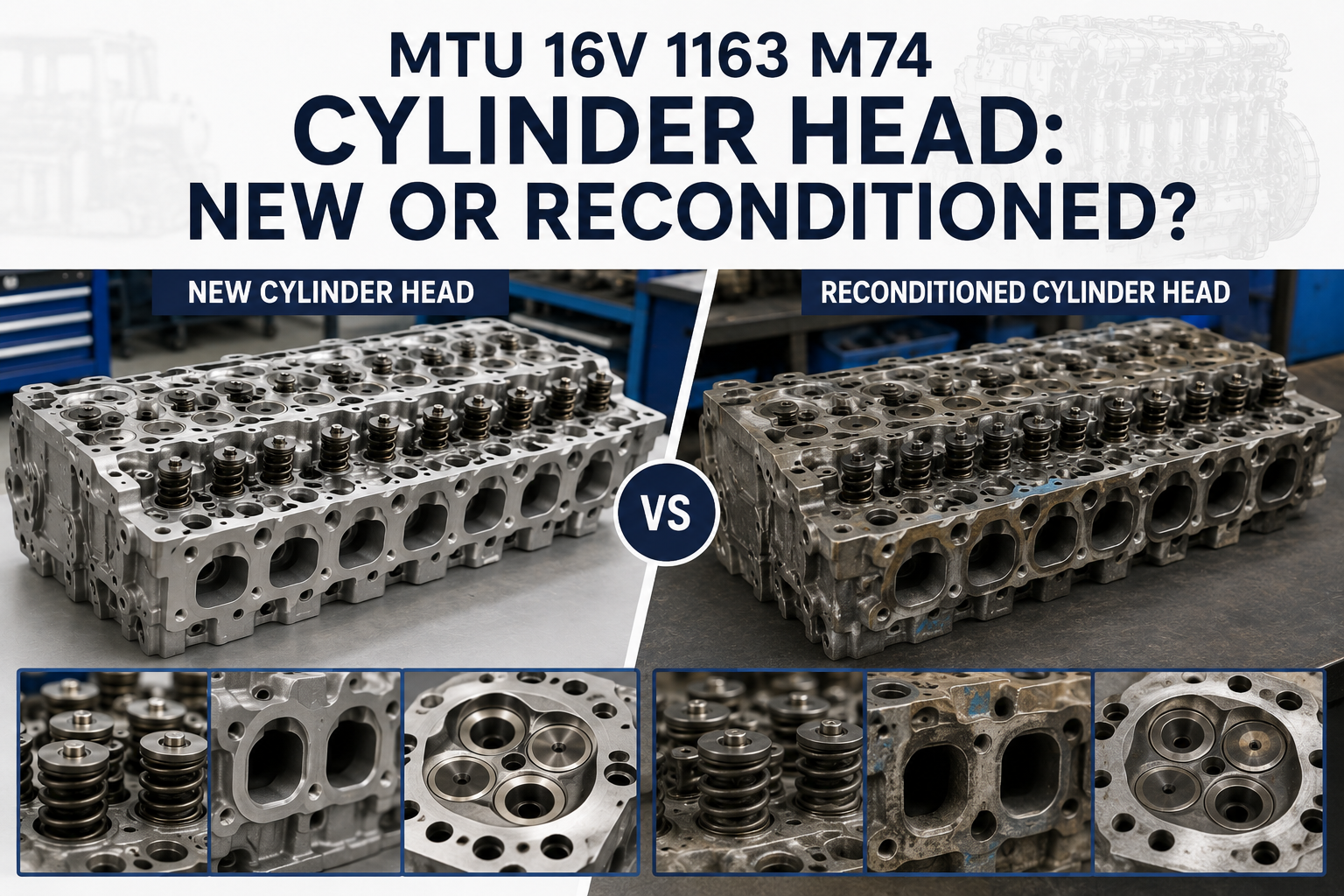
  • Why Buying a New MTU 16V 1163 M74 Cylinder Head Is Sometimes Better Than Sending It to the Machine Shop
  • Where Does the MTU 16V 1163 M74 Belong?
  • The First Question Shouldn't Be: "Can the Machine Shop Repair It?"
  • "Should we repair it?"
  • Engineering Lesson: Serviceable Does Not Always Mean Desirable
  • Chief Engineer's Notebook
  • When Reconditioning an MTU 16V 1163 M74 Cylinder Head Makes Sense
  • When Buying a New Cylinder Head Can Be the Better Decision
  • 1. The Cylinder Head Has Been Overheated
  • 2. Cracking Is Found
  • 3. Corrosion Has Reached the Cooling Passages
  • 4. The Sealing Surface Has Already Been Machined Before
  • 5. Valve-Seat Areas Have Significant Damage
  • 6. The Valve Guides Are Heavily Worn
  • 7. You Don't Know the Cylinder Head's History
  • Engine Room Reality: Labor Changes the Economics
  • The Real Calculation Is Cost Per Reliable Operating Hour
  • Machine-Shop Downtime Matters Too
  • Don't Automatically Replace All 16 Cylinder Heads
  • What Can the Old Cylinder Head Tell You?
  • Look at the Exhaust Valve
  • Look at the Intake Valve
  • Look at the Combustion Face
  • Look at the Head Gasket
  • Look at the Cooling Passages
  • Why Did the Cylinder Head Fail?
  • Real Marine Maintenance Scenario
  • Option 1 — Repair
  • Option 2 — Replace
  • Engineer's Toolbox: Repair or Replace?
  • Marine Engineer Tip
  • Common Cylinder Head Repair Mistakes
  • Frequently Asked Questions
  • Is the MTU 16V 1163 M74 part of the MTU Series 1163?
  • What vessels use the MTU 16V 1163 M74?
  • Can an MTU 16V 1163 M74 cylinder head be rebuilt?
  • When is buying a new cylinder head better?
  • Is a remanufactured cylinder head another option?
  • Should I provide the engine serial number when ordering?
  • Related MTU 16V 1163 M74 Cylinder Head Components
  • Related Engine Pages
  • Browse Our Complete Catalog
  • Worldwide MTU Marine Spare Parts Supply
  • Why Choose Alfa Marine Spare Parts?
  • Contact Alfa Marine Spare Parts
  • One Final Thought
Read more
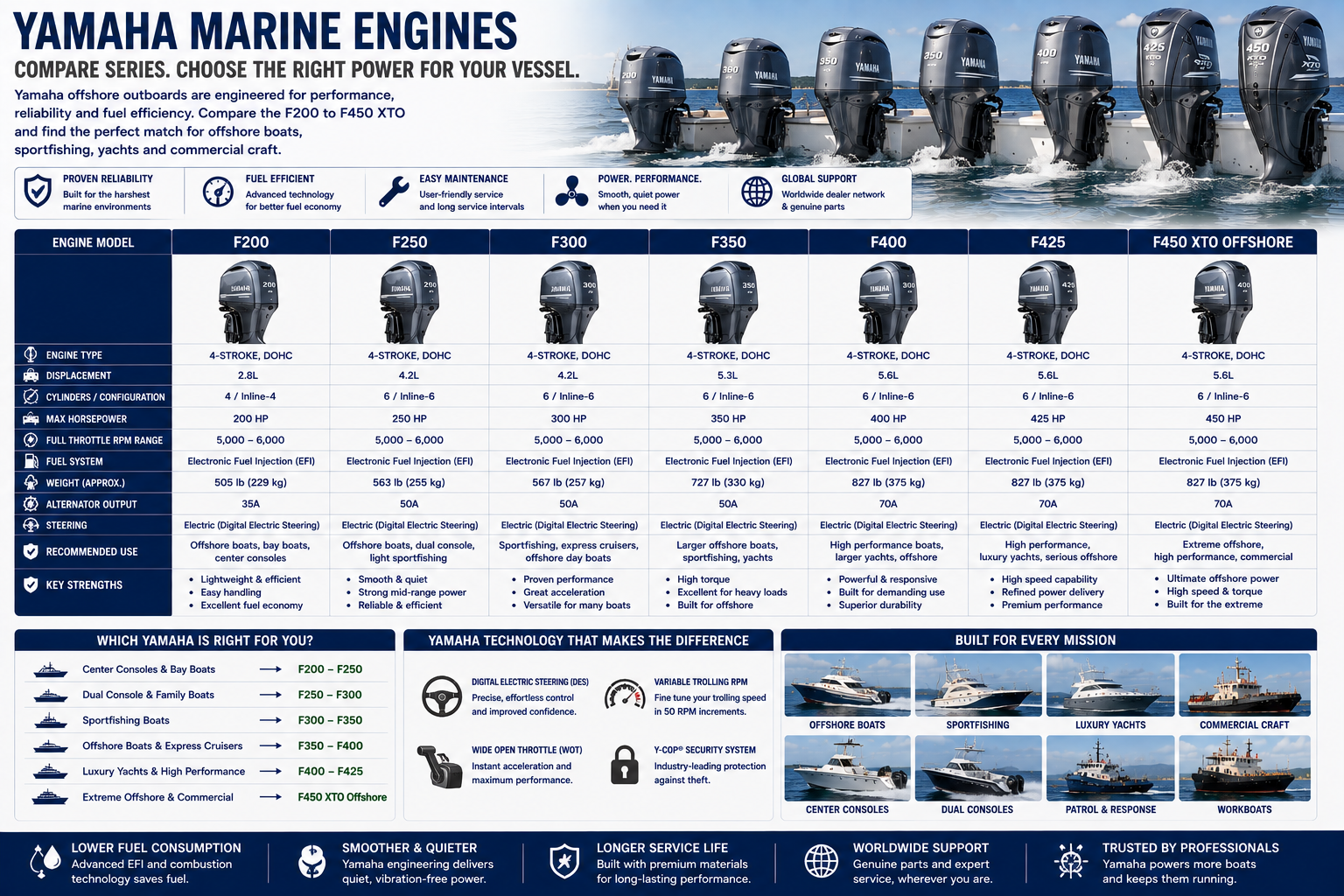
  • Yamaha High-Horsepower Marine Engines: What Is the Difference, and Which One Fits Which Boat?
  • Understanding the Larger Yamaha Marine Engine Families
  • Yamaha F200: Where Bigger Outboard Power Starts Getting Serious
  • Which Boats Suit an F200?
  • F200 Personality
  • Single vs. Twin Yamaha F200
  • Single F200
  • Twin F200
  • Yamaha F225 and F250: The Offshore Middleweights
  • Why Multiple Outboards Changed Large-Boat Design
  • Yamaha F300: One of the Most Important Offshore V6 Engines
  • Where Does an F300 Fit?
  • F250 vs. F300: Which Makes More Sense?
  • Yamaha F250
  • Yamaha F300
  • Yamaha F350: The New 4.3-Liter V6
  • F350 Personality
  • Why the F350 Matters
  • Yamaha XTO Offshore: Moving Into V8 Territory
  • Yamaha F400 XTO Offshore
  • Which Boats Suit an F400?
  • Yamaha F425 XTO Offshore
  • Why Was the F425 Important?
  • Yamaha F450 XTO Offshore: The Big One
  • F450 Personality
  • What Happens When You Install Two F450s?
  • Triple F450
  • Quad F450
  • F300 vs. F350 vs. F450
  • Yamaha F350
  • Yamaha F450 XTO
  • Why the XTO Uses Direct Fuel Injection
  • The XTO's Cylinder Technology Is Different Too
  • Yamaha Outboards vs. Large Inboard Diesels
  • Large Outboard Installation
  • Inboard Diesel Installation
  • Which Yamaha Is Best for an Offshore Fishing Boat?
  • Which Yamaha Is Best for a Sportfishing Boat?
  • Which Yamaha Is Best for a Large RIB?
  • Which Yamaha Is Best for a Patrol Boat?
  • Yamaha High-Horsepower Engines for Yacht Tenders
  • Why Digital Steering Matters on Big Outboards
  • Yamaha Helm Master EX
  • Why Joystick Control Matters
  • Water Pumps Matter Just as Much on a 450-hp Outboard
  • Why Gearcase Maintenance Becomes Critical
  • Propellers Matter More as Horsepower Increases
  • Why Maximum RPM Matters
  • Quick Yamaha High-Horsepower Comparison
  • Yamaha High-Horsepower Engine “Personalities”
  • F200 — The Versatile One
  • F250 — The Offshore All-Rounder
  • F300 — The Popular Big V6
  • F350 — The High-Output V6
  • F400 XTO — The Big V8
  • F425 XTO — The Technology Pioneer
  • F450 XTO — The Offshore Heavyweight
  • Common Yamaha High-Horsepower Marine Spare Parts
  • Why Exact Yamaha Engine Identification Matters
  • A Good Yamaha Parts Inquiry
  • Don't Forget Engine Position on Triple and Quad Installations
  • Common Maintenance Areas on Large Yamaha Outboards
  • Buying a Used Yamaha F300, F350 or XTO: What Should You Check?
  • Marine Engineer Tip
  • Frequently Asked Questions
  • What Are Yamaha's Largest Current Outboard Engines?
  • Is the Yamaha F450 a V8?
  • How Much Power Does the F450 Produce?
  • Is the Yamaha F400 Also a V8?
  • What Is the Yamaha F350?
  • Is the F300 a V6?
  • What Is Yamaha XTO Offshore?
  • Does the XTO Use Direct Fuel Injection?
  • Can Yamaha Large Outboards Be Used in Quad Installations?
  • What Is Helm Master EX?
  • Are F400 and F450 Propellers Special?
  • Yamaha High-Horsepower Marine Spare Parts
  • Common Yamaha Parts We Can Help Identify
  • Related Yamaha Marine Engine Pages
  • Why Choose Alfa Marine Spare Parts?
  • Worldwide Yamaha Marine Spare Parts Supply
  • Contact Alfa Marine Spare Parts
  • One Final Thought
Read more
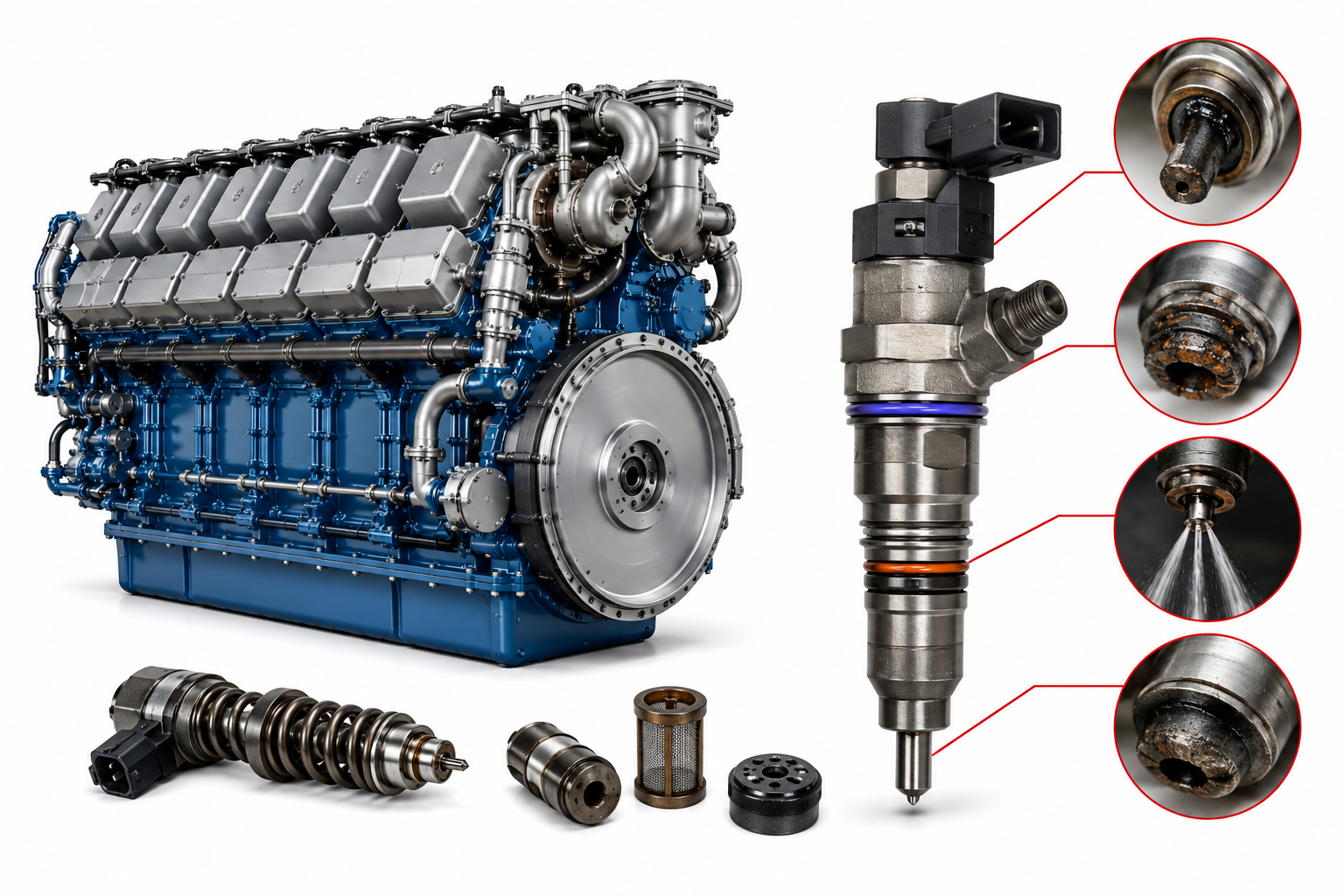
  • MTU 12V 2000 M96X Fuel Injector Problems: Causes, Symptoms and Preventive Maintenance
  • What Do Fuel Injectors Do?
  • Common Causes of Injector Failure
  • Contaminated Fuel
  • Poor Fuel Filtration
  • Normal Wear
  • Fuel Quality Problems
  • Water in the Fuel System
  • Warning Signs of Worn Injectors
  • Why Fuel Filters Are Critical
  • Oil Analysis Can Detect Injector Problems
  • Components to Inspect Alongside Injectors
  • Preventive Maintenance Checklist
  • Marine Engineer Tip
  • Common Mistakes
  • Frequently Asked Questions
  • What causes black smoke?
  • Can injectors increase fuel consumption?
  • Should injectors be tested before replacement?
  • Can dirty fuel damage injectors?
  • Can leaking injectors damage the engine?
  • Worldwide Marine Engine Spare Parts Supply
  • Browse Our Complete Spare Parts Catalog
  • Why Choose Alfa Marine Spare Parts?
  • Contact Alfa Marine Spare Parts
  • Conclusion
Read more
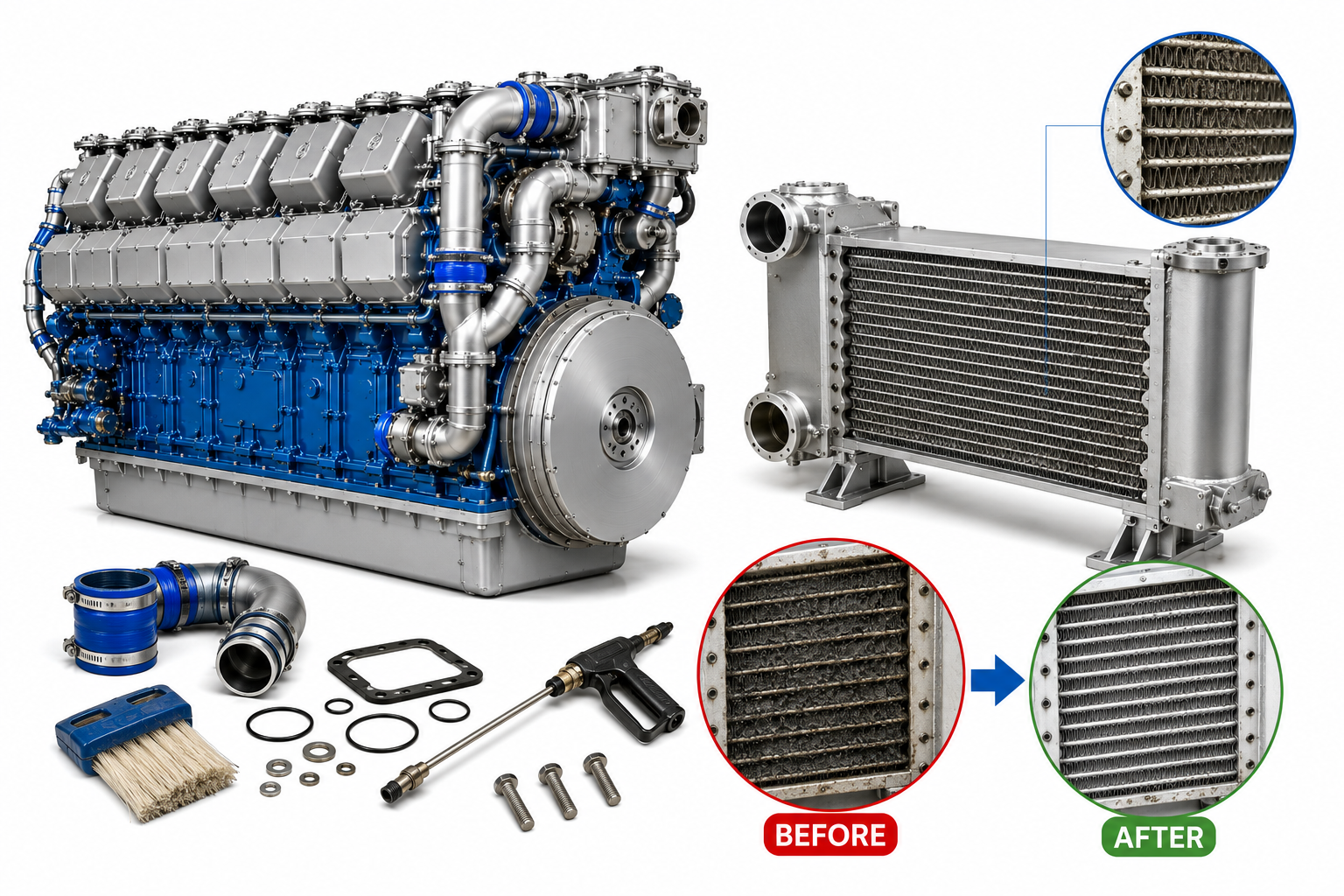
  • MTU 8V 2000 M72 Charge Air Cooler Maintenance: Why a Clean Cooler Means More Power and Lower Fuel Consumption
  • What Is a Charge Air Cooler?
  • Why Is the Charge Air Cooler Important?
  • Common Causes of Charge Air Cooler Problems
  • Salt Deposits
  • Marine Growth
  • Oil Contamination
  • Corrosion
  • Blocked Cooling Tubes
  • Warning Signs of a Dirty Charge Air Cooler
  • How Does It Affect the Turbocharger?
  • Components to Inspect During Service
  • Can Oil Analysis Help?
  • Preventive Maintenance Checklist
  • Marine Engineer Tip
  • Common Mistakes
  • Frequently Asked Questions
  • What is the difference between a heat exchanger and a charge air cooler?
  • Can a dirty charge air cooler reduce engine power?
  • Does the charge air cooler affect fuel consumption?
  • Should the turbocharger be inspected at the same time?
  • Can overheating damage the charge air cooler?
  • Worldwide Marine Engine Spare Parts Supply
  • Browse Our Complete Spare Parts Catalog
  • Why Choose Alfa Marine Spare Parts?
  • Contact Alfa Marine Spare Parts
  • Conclusion
Read more
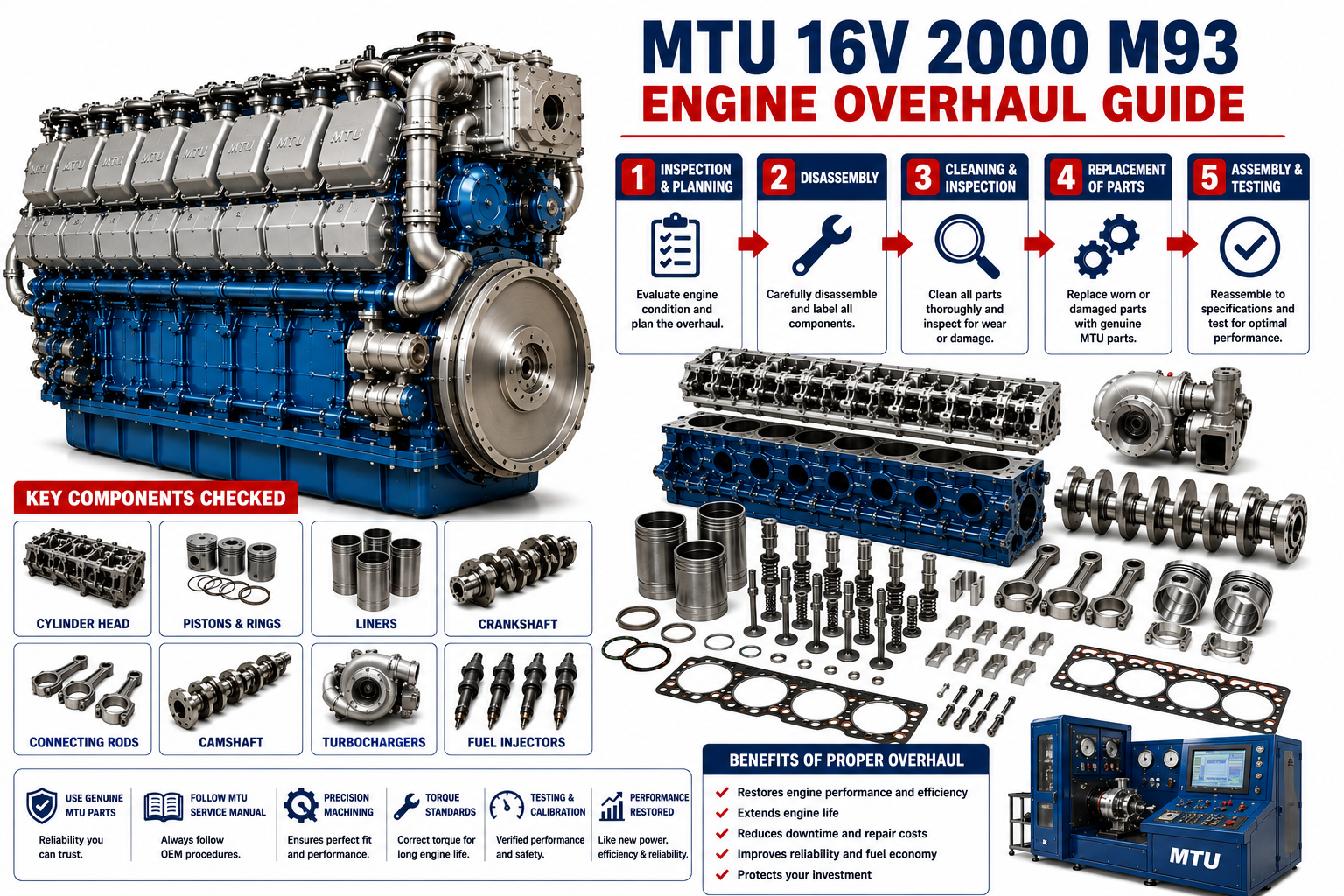
  • MTU 16V 2000 M93 Engine Overhaul: When Is the Right Time and What Should You Inspect?
  • What Is an Engine Overhaul?
  • When Should an MTU 16V 2000 M93 Be Overhauled?
  • Warning Signs That an Overhaul May Be Needed
  • Components Commonly Inspected During an Overhaul
  • Fuel System Inspection
  • Cooling System Inspection
  • Lubrication System Inspection
  • Why Oil Analysis Is So Valuable
  • Preventive Maintenance After an Overhaul
  • Marine Engineer Tip
  • Common Mistakes
  • Frequently Asked Questions
  • Does every MTU 16V 2000 M93 require a complete overhaul?
  • Can oil analysis reduce overhaul costs?
  • Should turbochargers be inspected during an overhaul?
  • Is the cooling system important during an overhaul?
  • Can regular maintenance delay a major overhaul?
  • Worldwide Marine Engine Spare Parts Supply
  • Browse Our Complete Spare Parts Catalog
  • Why Choose Alfa Marine Spare Parts?
  • Contact Alfa Marine Spare Parts
  • Conclusion
Read more
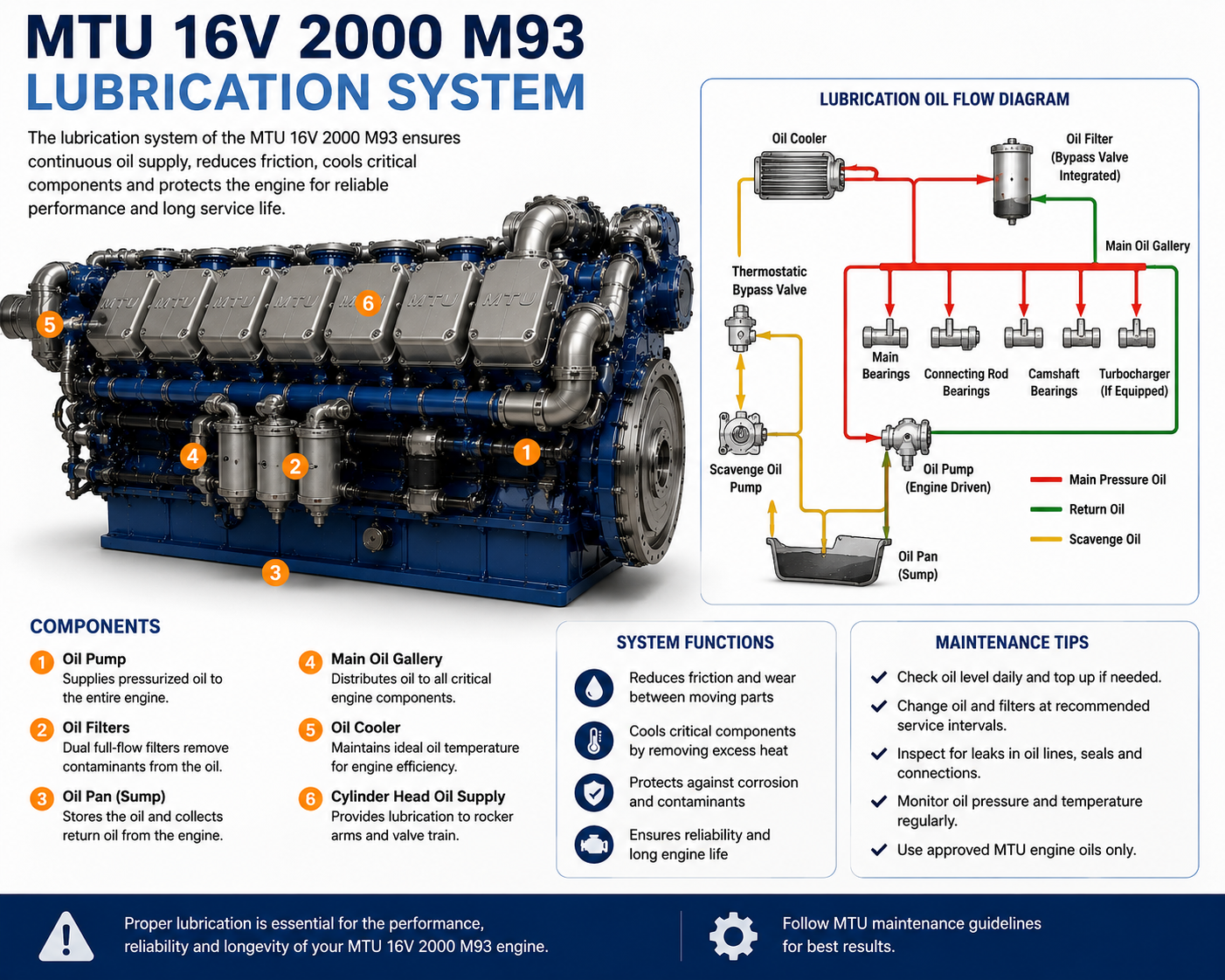
  • MTU 16V 2000 M93 Lubrication System Maintenance: The One System Every Marine Engineer Should Never Take for Granted
  • Why Is the Lubrication System So Important?
  • How Does the Lubrication System Work?
  • A Real Marine Maintenance Story
  • What Causes Lubrication Problems?
  • Dirty Engine Oil
  • Delayed Oil Changes
  • Blocked Oil Filters
  • Low Oil Level
  • Oil Pump Wear
  • Early Warning Signs
  • Why Oil Pressure Trends Matter
  • Components That Should Be Inspected Together
  • Why Oil Analysis Should Be Routine
  • Preventive Maintenance Checklist
  • Marine Engineer Tip
  • Common Maintenance Mistakes
  • Frequently Asked Questions
  • How often should engine oil be replaced?
  • Why is oil analysis important?
  • Can low oil pressure damage the turbocharger?
  • What happens if the oil filter becomes blocked?
  • Is changing oil enough to protect the engine?
  • Worldwide Marine Engine Spare Parts Supply
  • Browse Our Complete Spare Parts Catalog
  • Why Choose Alfa Marine Spare Parts?
  • Contact Alfa Marine Spare Parts
  • Conclusion
Read more
« Previous 1 2 3 7