Sea Water, Jacket Water & Fuel Feed Pumps: What They Do
A marine diesel engine can use several pumps, but they do not all move the same fluid or perform the same job. Three names frequently found in engine manuals, parts catalogs and spare-parts requests are Sea Water Pump, Jacket Water Pump and Fuel Feed Pump.
Knowing which pump you need matters because an engine may have more than one water pump. A request for an "engine water pump" is often not enough to identify the correct part.
This guide explains what each pump does, what flows through it and what information should be checked when looking for a replacement.
1. Sea Water Pump
The Sea Water Pump, also commonly called a raw-water pump, moves external water through the marine cooling system.
Water enters through the vessel's sea inlet and normally passes through a strainer before reaching the pump. From there, raw water can flow through heat exchangers and coolers before eventually being discharged overboard.
Depending on the vessel and engine arrangement, the raw-water circuit may help remove heat from engine coolant, charge air, lubricating oil, transmission oil or other equipment.
What Kind of Water Does a Sea Water Pump Handle?
Despite its name, a Sea Water Pump does not operate only in seawater.
It can handle salt water, brackish water or fresh water, depending on where the vessel is operating.
A yacht at sea normally takes in salt water. A vessel entering an estuary may operate in brackish water, while a workboat on a river, canal or lake may use fresh water as its external cooling medium.
The pump still performs the same basic job: supplying raw water to the cooling circuit.
The conditions inside that water, however, can make a difference.
Salt water increases exposure to corrosion and deposits. Brackish water can contain changing levels of salt, sediment and biological material. Rivers and shallow inland waters may introduce sand, mud, vegetation and debris.
The complete raw-water path—from the intake and strainer through the pump and coolers—therefore deserves attention when cooling-water flow begins to fall.
Different Sea Water Pump Designs
Not every marine Sea Water Pump uses the same design.
Flexible-impeller pumps are common on many marine engines. As the pump rotates, flexible blades move through the housing to create the suction and discharge required to circulate raw water.
These impellers can be damaged by dry running, age, sand or debris. If blades break away, the missing pieces should be located because fragments can move downstream and restrict cooling passages.
Other marine engines use different pump designs. Larger engines in particular should not automatically be assumed to have a flexible rubber impeller simply because the pump handles seawater.
For a more specific example, see our MTU Series 4000 Raw Water Pump guide, which covers seawater flow, pump condition and cooling problems on MTU Series 4000 marine engines.
2. Jacket Water Pump
The Jacket Water Pump operates on the closed side of the engine cooling system.
Instead of drawing water from outside the vessel, it circulates treated coolant through the engine.
Coolant travels through internal passages around hot areas such as the cylinder block and cylinder heads. It absorbs engine heat and carries that heat through the closed cooling circuit.
On a heat-exchanger-cooled marine engine, that heat can then be transferred to the external raw water without the two liquids normally mixing.
The distinction is simple:
Sea Water Pump = external raw water
Jacket Water Pump = internal engine coolant
Both pumps are involved in controlling engine temperature, but they work in separate circuits.
When an Engine Starts Running Hot
If engine temperature begins rising under load, the Jacket Water Pump should not automatically be blamed.
The problem may be on the closed coolant side, but it could also be caused by insufficient raw-water flow.
A restricted sea strainer, worn raw-water pump, fouled heat exchanger, thermostat problem, low coolant level or another cooling-system fault can produce similar symptoms.
A useful troubleshooting step is therefore to determine whether circulation is being lost on the raw-water side or the jacket-water side before replacing a pump.
Some engines have more than two cooling-water circuits. MTU Series 4000 installations, for example, can use separate seawater/raw-water, high-temperature and low-temperature cooling circuits depending on the engine configuration. Our MTU 4000 Water Pumps & Parts guide explains these different pump types in more detail.
3. Fuel Feed Pump
The Fuel Feed Pump belongs to a completely different engine system.
It moves diesel fuel rather than cooling water.
Its purpose is to maintain the fuel supply required by the engine's fuel system. Depending on engine design, the pump can move fuel from the low-pressure supply side through filtration and toward the injection equipment.
Terms such as fuel supply pump, fuel transfer pump and lift pump may also appear when searching for marine diesel parts. These descriptions can refer to related functions, but they should not automatically be treated as interchangeable part names.
Fuel systems vary considerably between engines.
A mechanically injected marine diesel can have a very different fuel supply arrangement from a modern electronically controlled or common-rail engine. Pump design, pressure and position within the fuel system should therefore be checked against the exact engine.
What Happens When Fuel Supply Is Restricted?
Insufficient fuel supply may contribute to difficult starting, unstable running or loss of power under load.
These symptoms do not automatically prove that the Fuel Feed Pump has failed.
Blocked filters, restricted fuel lines, air entering the supply side or contaminated fuel can create similar problems. The fuel supply path should therefore be checked before replacing the pump.
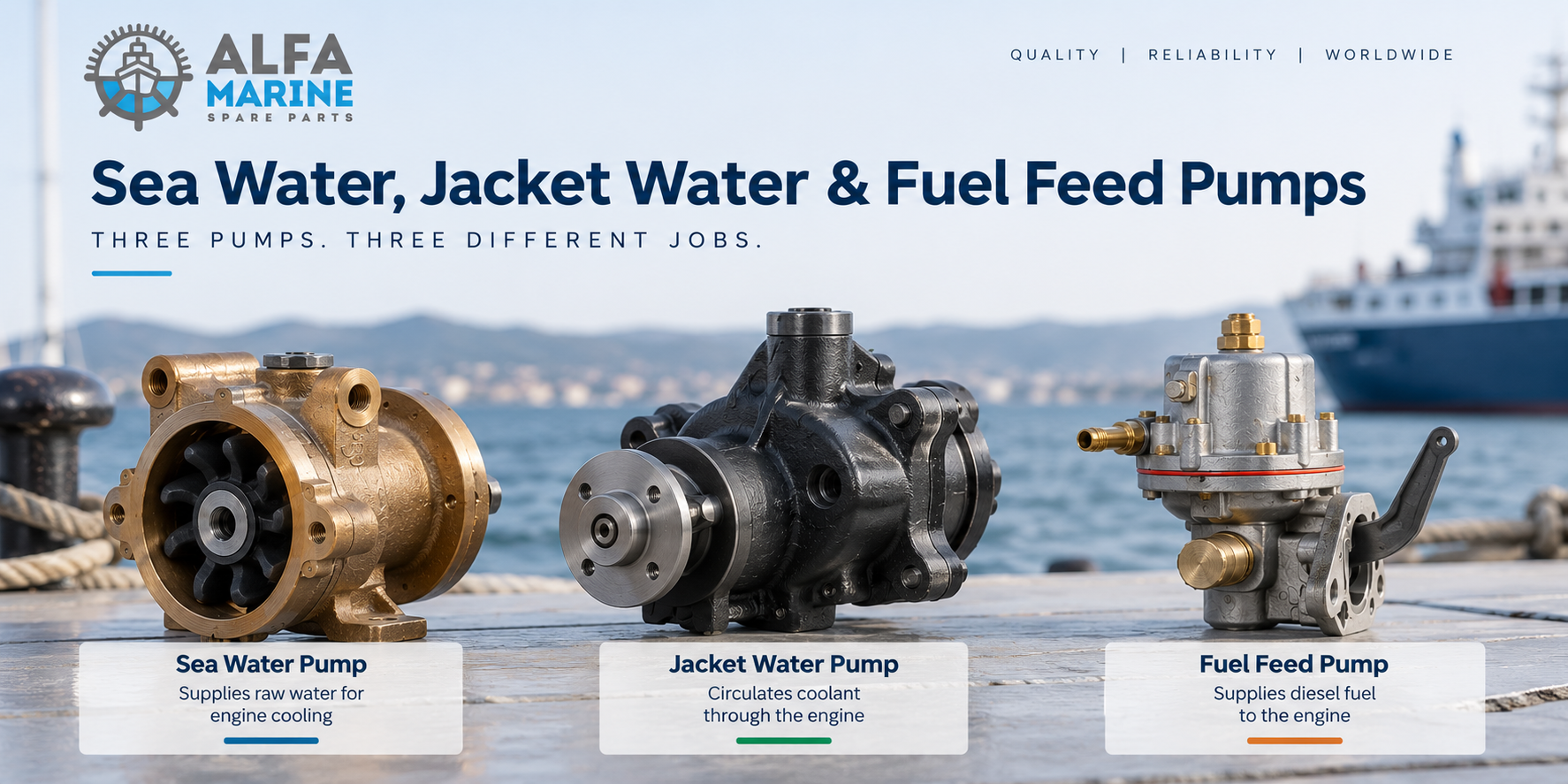
Three Pumps, Three Different Jobs
The easiest way to distinguish these pumps is to look at what they move.
| PumpWhat It MovesMain Job | ||
| Sea Water Pump | Salt, brackish or fresh raw water | Supplies external cooling water |
| Jacket Water Pump | Treated engine coolant | Circulates coolant through the engine |
| Fuel Feed Pump | Diesel fuel | Supplies fuel to the engine fuel system |
This distinction becomes particularly useful when working from an old vessel parts list or a short RFQ.
A description such as "water pump for engine" may not tell a supplier which pump is actually required.
Sea Water, Jacket Water and Fuel Feed Pumps by Engine Brand
Pump design and terminology vary between marine engine manufacturers.
Alfa Marine Spare Parts supplies marine engine pumps and related parts for engines from manufacturers including Caterpillar, MTU, Cummins, Volvo Penta, MAN, Yanmar, Perkins, DEUTZ, John Deere, Scania, Wärtsilä, Mitsubishi, Doosan and Detroit Diesel.
One manufacturer may use Sea Water Pump, while another may use Raw Water Pump or another description for a particular cooling arrangement.
The same caution applies to Fuel Feed Pumps. A pump should not be selected only because its description or appearance resembles another fuel pump.
The engine and pump reference should be checked before ordering.
How to Identify the Correct Marine Engine Pump
Two pumps can look almost identical while having different shafts, gears, mounting arrangements, connections or internal specifications.
When looking for a replacement, provide:
Engine manufacturer
Complete engine model
Engine serial number
Existing pump part number
Required quantity
When a number cannot be identified, clear photographs of the existing pump, identification markings and engine nameplate can help.
This is particularly important with older engines where an original pump number may have been superseded or the installed pump may already have been replaced in the past.
Complete Pump or Repair Parts?
Not every pump problem requires a complete replacement.
Depending on the pump design and its condition, repair requirements may include seals, shafts, bearings, gaskets, O-rings, wear parts or a dedicated repair kit.
Before ordering a generic repair kit, identify the actual pump. A kit described simply as being suitable for an engine family does not necessarily contain the correct parts for every pump used within that family.
For a practical example, see our MTU Sea Water Pump Repair Kit identification guide, which explains why the engine model, serial number and existing pump number should be checked before selecting repair parts.
The condition of the existing housing, shaft and sealing surfaces should also be considered before deciding whether rebuilding or replacing the pump is appropriate.
Frequently Asked Questions
Is a Sea Water Pump the same as a Jacket Water Pump?
No. The Sea Water Pump handles external raw water, while the Jacket Water Pump circulates coolant inside the engine's closed cooling circuit.
Can a Sea Water Pump work in fresh water?
Yes. Depending on where the vessel operates, a marine raw-water pump can handle salt water, brackish water or fresh water.
What information do I need when ordering a marine engine pump?
Provide the engine brand, complete model, serial number and pump part number where available. Clear photographs can help when the original reference cannot be identified.
Request a Quote for Marine Engine Pumps
Alfa Marine Spare Parts supplies Sea Water Pumps, Jacket Water Pumps, Fuel Feed Pumps, complete pump assemblies and related repair parts for marine diesel engines.
For a quotation, send the engine model, engine serial number, pump part number and required quantity. Complete vessel or engine spare-parts lists can also be submitted in one request.
Worldwide supply for commercial vessels, yachts, workboats, shipyards, marine engineers and repair companies.
 HARNESSES AND WIRE SENSORS
 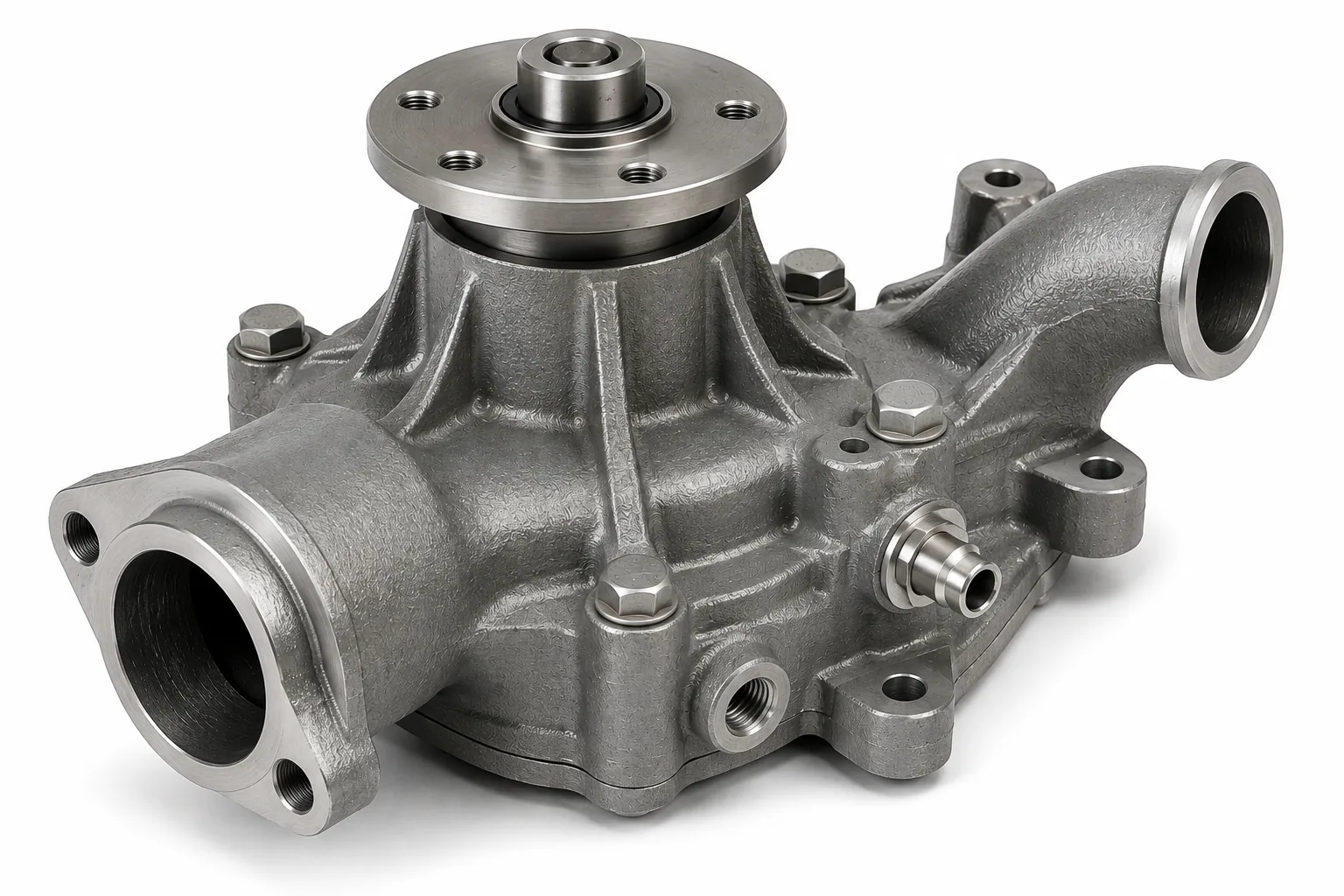 WATER PUMP
  CYLINDER HEAD
  DISPLAY MONITORS
  Turbocharger & Cartridge
  INJECTORS