Scania DI16 Marine Engine Cylinder Head Overhaul Kit: What Parts Do You Need?
Your Scania DI16 marine engine needs cylinder-head work.
Maybe you've found coolant loss.
Perhaps compression is low on one cylinder.
You may have an exhaust valve problem, a leaking head gasket or excessive valve-train wear.
Or the engine has reached the point where you're planning a top-end overhaul rather than waiting for a failure.
So you search:
“Scania DI16 marine engine cylinder head overhaul kit.”
But there's an important point before ordering:
There isn't one cylinder-head overhaul kit that should automatically be treated as correct for every Scania DI16 marine engine.
Scania parts information lists several cylinder-head gasket-kit arrangements for the D16M/DI16 marine family, including:
01-99-1680 — Gasket kit, Cylinder head
01-99-1681 — Gasket kit, Cylinder head
01-99-1682 — Gasket kit, Cylinder head
01-99-1683 — Gasket kit, Cylinder head
Which one is correct depends on the exact engine configuration.
In this guide, we'll look at Scania DI16 cylinder-head overhaul parts, gasket kits, valves, guides, seals, inspection procedures and what information you should check before ordering.
For engine components, visit our Scania D16 & DI16 V8 Marine Engine Spare Parts page.
What Is the Scania DI16 Marine Engine?
The Scania DI16 belongs to Scania's 16-litre V8 engine platform.
The earlier 16-litre engine architecture has a displacement of approximately 15.6 litres, with:
Cylinder configuration: V8
Cylinder bore: 127 mm
Piston stroke: 154 mm
Different generations and marine ratings have been produced, so the basic name DI16 doesn't identify every component fitted to an individual engine.
This becomes especially important when ordering:
- Cylinder-head gasket kits
- Cylinder heads
- Valves
- Valve guides
- Valve stem seals
- Injector-related components
- Rocker gear
- Head bolts
- Overhaul components
For correct identification, use the complete engine designation and engine serial number.
Is There One Scania DI16 Cylinder Head Overhaul Kit?
No.
This is probably the most important point in this article.
Scania's DI16 marine parts information lists multiple cylinder-head gasket-kit references.
These include:
| Scania ReferenceDescription | |
| 01-99-1680 | Gasket kit, Cylinder head |
| 01-99-1681 | Gasket kit, Cylinder head |
| 01-99-1682 | Gasket kit, Cylinder head |
| 01-99-1683 | Gasket kit, Cylinder head |
The existence of several kit references tells us something important:
Don't order a DI16 cylinder-head kit from the words “Scania DI16” alone.
The exact engine configuration needs to be identified first.
When requesting a kit, provide:
Complete engine model + engine serial number + existing part numbers
If available, also send photographs of the engine identification plate and removed components.
What Is Included in a Scania DI16 Cylinder Head Overhaul?
That depends on how extensive the overhaul needs to be.
A basic cylinder-head gasket job is very different from completely rebuilding the cylinder head.
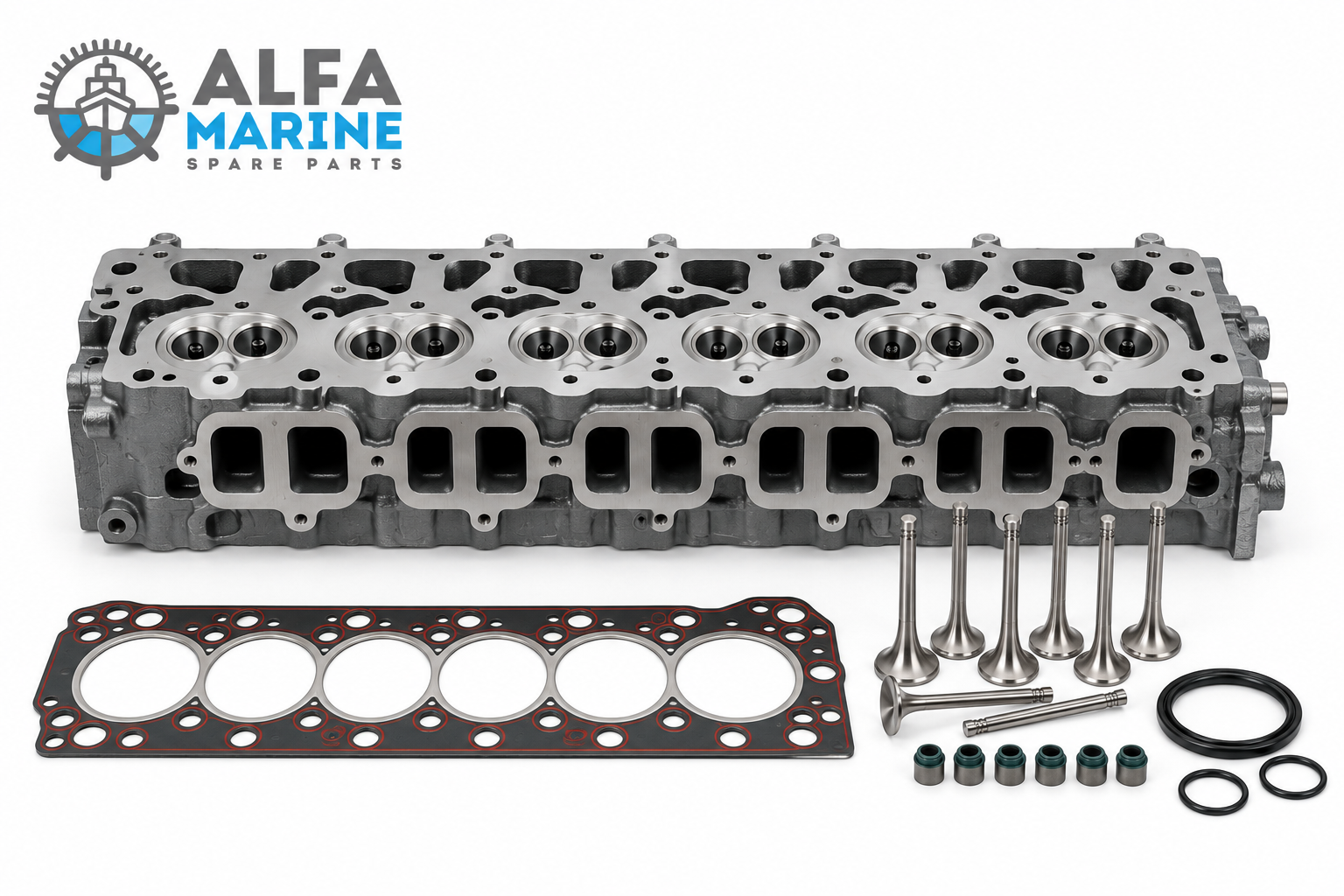
Depending on engine condition and the exact kit being supplied, a cylinder-head overhaul requirement may involve:
- Cylinder-head gasket
- Rocker-cover gaskets
- Valve stem seals
- Intake valves
- Exhaust valves
- Valve guides
- Valve-seat inserts
- Injector-related sealing components
- O-rings
- Other applicable seals and gaskets
- Cylinder-head bolts where replacement is required
Don't assume that a “cylinder-head gasket kit” contains every hard component required for a complete head rebuild.
Valves, guides, seats and other wear components may need to be ordered separately.
Cylinder Head Gasket Kit vs Cylinder Head Overhaul Kit
These terms are often used interchangeably when requesting marine-engine parts, but they don't necessarily mean the same thing.
Cylinder Head Gasket Kit
Generally focused on the gaskets and sealing components required during cylinder-head removal and installation.
Cylinder Head Overhaul Kit
A broader commercial description that may include or be requested together with components such as:
- Gaskets
- Valve stem seals
- Intake valves
- Exhaust valves
- Valve guides
- Valve seats
- Injector seals
- Other cylinder-head repair components
The actual contents depend on the kit and engine configuration.
That's why we recommend requesting parts by engine serial number and individual component requirement, not just asking for a generic “DI16 overhaul kit.”
When Does a Scania DI16 Cylinder Head Need Overhaul?
Cylinder-head work may become necessary because of normal wear, operating hours or a specific failure.
Common reasons include:
- Head-gasket leakage
- Coolant loss
- Compression loss
- Burned exhaust valve
- Valve-seat wear
- Valve-guide wear
- Valve stem-seal deterioration
- Cylinder-head cracking
- Overheating damage
- Injector-sleeve problems on applicable configurations
- Abnormal combustion
- Excessive oil consumption
- Major engine overhaul
Not every symptom proves the cylinder head needs rebuilding.
Diagnosis should come first.
What Are the Symptoms of a DI16 Cylinder Head Problem?
Possible symptoms can include:
Difficult Starting
Poor compression on one or more cylinders can make starting more difficult.
Uneven Running
Valve or compression problems can cause one cylinder to contribute less power than the others.
Coolant Loss
Coolant loss can indicate several problems, including an external leak or an internal sealing problem.
White Exhaust Smoke
Coolant entering a combustion chamber can contribute to white exhaust smoke, although white smoke has several possible causes.
Excessive Crankcase Pressure
Cylinder sealing problems can contribute to abnormal crankcase pressure, but piston and liner condition should also be investigated.
Loss of Power
A valve that isn't sealing correctly can reduce cylinder compression and engine performance.
High Exhaust Temperature
Combustion or valve problems can affect individual-cylinder exhaust temperatures.
None of these symptoms alone proves that the cylinder head is defective.
Should I Do a Compression Test First?
If engine condition and installation allow it, checking cylinder performance before dismantling can provide valuable information.
Depending on the diagnostic equipment available, investigate:
- Cylinder compression
- Cylinder balance
- Exhaust temperature
- Injector performance
- Valve clearance
- Cooling-system condition
- Combustion behaviour
The objective is to determine whether the problem is actually in the cylinder head before removing major components.
Should I Check Valve Clearance?
Yes.
Valve-clearance problems can affect engine operation without necessarily requiring a complete cylinder-head overhaul.
For applicable DI16 EMS/PDE engines, Scania service information specifies cold valve clearances of:
Intake valve: 0.45 mm
Exhaust valve: 0.70 mm
However, don't automatically apply these settings to every DI16 generation.
Later DI16 engines and different fuel-system generations should be serviced according to the documentation for the exact engine.
The complete engine designation matters.
What Happens During a Scania DI16 Cylinder Head Overhaul?
A professional cylinder-head overhaul normally begins after the head has been removed and cleaned.
The process may include:
Cleaning
Carbon, oil and deposits are removed so the head can be properly inspected.
Visual Inspection
Look for:
- Cracks
- Corrosion
- Erosion
- Burn damage
- Damaged gasket surfaces
- Valve-seat damage
- Injector-area damage
Pressure Testing
Where appropriate, the cylinder head can be pressure tested to identify cracking or leakage that may not be visible.
Flatness Inspection
The gasket surface should be checked against the applicable Scania specification.
Valve Inspection
Intake and exhaust valves should be checked for:
- Burning
- Pitting
- Stem wear
- Face wear
- Bending
- Cracking
Valve Guide Inspection
Excessive guide wear can prevent the valve from operating and sealing correctly.
Valve Seat Inspection
Valve-seat condition directly affects cylinder sealing.
Valve Stem Seal Inspection
Stem seals should be replaced where required during overhaul.
Injector Area Inspection
The injector mounting and sealing areas should be inspected according to the fuel-system configuration.
Should the Cylinder Head Be Pressure Tested?
If overheating, coolant loss or cracking is suspected, pressure testing is a sensible part of professional cylinder-head inspection.
A head can look acceptable externally and still have a problem that isn't obvious during visual inspection.
Pressure testing can help identify internal leakage before money is spent rebuilding and reinstalling a damaged head.
Can a Scania DI16 Cylinder Head Be Machined?
Possibly, but only within Scania's applicable service limits.
Don't automatically machine the head simply because it has been removed.
First check:
- Surface condition
- Flatness
- Head dimensions
- Valve-seat relationship
- Manufacturer machining limits
Removing unnecessary material can create additional problems.
The decision should be based on measurements and the correct Scania workshop specification for the exact engine.
Should the Intake and Exhaust Valves Be Replaced?
Not automatically.
Inspect and measure them first.
A valve may be reusable if it remains within specification and has no significant damage.
Replacement becomes more appropriate when you find:
- Burned valve face
- Excessive stem wear
- Cracking
- Severe pitting
- Distortion
- Damage outside service limits
Exhaust valves deserve particular attention because they operate under severe thermal conditions.
What About the Valve Guides?
Valve guides control valve-stem movement.
Excessive clearance can contribute to:
- Poor valve seating
- Oil consumption
- Valve wear
- Stem-seal wear
- Reduced cylinder-head performance
During a proper overhaul, guide condition should be measured rather than judged only by appearance.
If the guide is outside the applicable service limit, replacement may be necessary.
Should Valve Seats Be Replaced?
Not automatically.
Valve-seat inserts should be inspected for:
- Burning
- Pitting
- Cracking
- Recession
- Poor contact
- Excessive wear
Some seats can be professionally reconditioned within the applicable limits.
Others require replacement.
The correct decision depends on measurements and condition.
What About Valve Stem Seals?
Valve stem seals are relatively small components but are important during cylinder-head rebuilding.
Old seals can:
- Harden
- Wear
- Lose elasticity
- Become damaged during dismantling
If the cylinder head is being completely rebuilt, replacing applicable valve stem seals is normally part of the overhaul process.
Should I Replace the Cylinder Head Gasket?
Yes.
A removed cylinder-head gasket should not normally be reused.
The DI16 parts catalogue includes several cylinder-head gasket-kit arrangements, which is why the correct kit needs to be selected before reassembly.
Important references include:
01-99-1680
01-99-1681
01-99-1682
01-99-1683
But these numbers should not be treated as interchangeable.
Confirm the exact engine before ordering.
Why Are There Several DI16 Cylinder Head Gasket Kits?
Because DI16 describes an engine family rather than one single unchanging configuration.
Differences can occur according to:
- Engine generation
- Engine serial number
- Marine rating
- Fuel-system generation
- Cylinder-head configuration
- Production revision
- Emissions specification
- Application
That's why searching only:
“Scania DI16 cylinder head gasket kit”
can produce several apparently correct results.
The engine serial number helps determine which one actually belongs to your engine.
PDE vs XPI DI16 Engines
This is another important distinction.
Different generations of the Scania DI16 have used different fuel-system technology.
Applicable older DI16 engines can use PDE electronically controlled unit injectors, while later DI16 versions can use XPI common-rail injection.
That difference matters when ordering cylinder-head and injector-related components.
Don't assume a cylinder-head overhaul package intended for an older PDE engine is automatically correct for a later XPI DI16.
Always identify the complete engine.
Should I Replace the Cylinder Head Bolts?
Follow the applicable Scania workshop procedure for the exact DI16 generation.
On an applicable earlier Scania 16-litre workshop procedure, cylinder-head bolts were allowed limited reuse, with punch marks used to record previous installations.
That does not mean every DI16 cylinder-head bolt can always be reused.
Before reassembly:
- Identify the exact engine generation
- Check the applicable workshop manual
- Inspect the bolts
- Check previous-use markings where applicable
- Replace bolts when required
Don't make a reuse decision based only on the engine family name.
Cylinder Head Bolt Tightening Is Critical
Cylinder-head installation isn't a job where the bolts should simply be tightened until they “feel right.”
The applicable procedure can involve:
- Specified tightening sequence
- Multiple torque stages
- Final angular tightening
- Correct bolt lubrication
- Correct gasket positioning
The procedure varies by engine generation.
Use the workshop specification for the exact DI16 engine being rebuilt.
Incorrect tightening can lead to:
- Poor gasket sealing
- Head distortion
- Bolt problems
- Coolant leakage
- Combustion leakage
- Premature head-gasket failure
Should I Check Cylinder Liner Height?
Yes, where specified by the applicable Scania overhaul procedure.
This is easy to overlook.
You can install:
A rebuilt cylinder head.
A new gasket.
Correctly tightened bolts.
And still have a sealing problem if the underlying cylinder-liner condition is incorrect.
Applicable Scania 16-litre workshop information specifically calls for checking liner height before cylinder-head installation.
This is why a cylinder-head job shouldn't be treated as simply replacing a gasket.
Should I Inspect the Cylinder Liners While the Head Is Off?
Yes.
With the cylinder head removed, you have an opportunity to inspect areas that are normally difficult to see.
Check for:
- Bore wear
- Scoring
- Polishing
- Corrosion
- Cavitation
- Abnormal combustion marks
- Liner movement
- Incorrect protrusion
If you're finding significant liner or piston problems, the repair may need to expand beyond a cylinder-head overhaul.
What If One Cylinder Has a Burned Exhaust Valve?
Don't just replace the valve and close the engine.
Ask why it burned.
Possible contributing factors can include:
- Incorrect valve clearance
- Poor valve-seat contact
- Injector problem
- Abnormal combustion
- High exhaust temperature
- Cooling problem
- Valve-guide wear
Finding the root cause can prevent the replacement valve from suffering the same failure.
Should I Inspect the Injectors During a Cylinder Head Overhaul?
Yes, particularly if the original complaint involved:
- Rough running
- Smoke
- High exhaust temperature
- Poor combustion
- Power loss
- Burned valves
An injector problem can contribute to abnormal combustion.
Depending on the DI16 generation, the engine may use PDE or XPI fuel equipment.
The correct injector testing procedure therefore depends on the exact engine configuration.
Can I Overhaul Only One Cylinder Head?
Technically, the repair scope depends on the failure and condition of the engine.
If one cylinder has suffered a localized problem, it may not always be necessary to rebuild every cylinder head.
However, consider:
- Engine hours
- Condition of the other cylinders
- Reason for failure
- Vessel operating schedule
- Planned overhaul interval
- Labour required for access
On a high-hour engine, inspecting additional heads while access is available may make economic sense.
But parts shouldn't be replaced simply because they're accessible.
Condition and service history should guide the decision.
Rebuild the Existing Head or Buy a Replacement?
Both options can make sense.
Rebuild the Existing Cylinder Head
A good candidate for rebuilding may have:
- Serviceable casting
- No unacceptable cracking
- Recoverable gasket surface
- Repairable valve seats
- Replaceable guides and valves
Replace the Cylinder Head
Replacement may be preferable if there is:
- Severe cracking
- Major corrosion
- Unrepairable seat damage
- Excessive previous machining
- Serious casting damage
- Repair cost approaching replacement cost
A professional inspection should determine which option makes more sense.
New, Remanufactured or Reconditioned Cylinder Head?
Depending on availability and engine configuration, several options may exist.
New Cylinder Head
A new correctly specified head offers new components and casting condition according to the supplied assembly.
Remanufactured Cylinder Head
A properly remanufactured head should have been dismantled, cleaned, measured, repaired as required and tested before supply.
Reconditioned Cylinder Head
Ask exactly what work has been performed.
“Reconditioned” should not simply mean:
Cleaned + painted + resold.
Ask whether the head has been:
- Pressure tested
- Checked for flatness
- Inspected for cracks
- Valve guides measured
- Valve seats inspected
- Valves inspected or replaced
- Seals renewed
The condition report matters more than the label.
What Should I Order for a Complete DI16 Cylinder Head Job?
The answer depends on inspection.
A typical request may include:
Sealing Components
- Correct cylinder-head gasket kit
- Rocker-cover gaskets
- Applicable O-rings and seals
Valve Components
- Intake valves
- Exhaust valves
- Valve stem seals
- Valve guides
- Valve-seat inserts where required
Cylinder Head Components
- Complete cylinder head if replacement is necessary
- Applicable injector-related components
- Rocker gear components where worn
Installation Components
- Cylinder-head bolts where replacement is required
- Other disturbed seals and gaskets
Don't order every component before the head has been inspected unless you're performing a planned overhaul with a predetermined replacement schedule.
What Information Do I Need Before Ordering?
This is the most important sourcing checklist.
Send us:
Engine manufacturer: Scania
Engine model: DI16
Complete engine designation:
Engine serial number:
Fuel system: PDE / XPI / unknown
Existing kit number:
Cylinder-head number, if visible:
Required quantity:
Parts required:
Photographs:
Delivery country or port:
If you're unsure which gasket kit is installed, don't guess between:
01-99-1680
01-99-1681
01-99-1682
01-99-1683
Send the engine identification first.
Scania DI16 Cylinder Head Overhaul Checklist
Before rebuilding:
1. Identify the Engine
Record the complete DI16 designation and serial number.
2. Diagnose the Original Problem
Don't dismantle without understanding why the head is being removed.
3. Remove the Cylinder Head Correctly
Follow the applicable Scania workshop procedure.
4. Keep Components Organized
Mark removed heads and associated components if working on multiple cylinders.
5. Clean the Cylinder Head
Remove deposits before detailed inspection.
6. Pressure Test Where Required
Especially after overheating or unexplained coolant loss.
7. Check the Gasket Surface
Measure flatness and inspect for damage.
8. Inspect Valves
Check intake and exhaust valve condition.
9. Measure Valve Guides
Don't judge them only visually.
10. Inspect Valve Seats
Check contact and wear.
11. Inspect Injector Areas
Use the procedure applicable to the installed fuel system.
12. Check Cylinder Liners
Inspect condition and applicable liner-height requirements.
13. Identify the Correct Gasket Kit
Don't select one based only on “DI16.”
14. Check Cylinder Head Bolts
Follow the exact reuse/replacement requirements for the engine generation.
15. Reassemble to Specification
Use the correct tightening sequence, torque stages and angular tightening procedure.
16. Adjust the Valve Train
Use the correct settings for the exact DI16 configuration.
17. Check the Cooling System
Especially if overheating caused the original failure.
18. Test After Startup
Check for:
- Coolant leaks
- Oil leaks
- Combustion problems
- Abnormal smoke
- Unusual noise
- Cylinder temperature imbalance
Scania DI16 Cylinder Head Overhaul Kit FAQs
Is there a Scania DI16 cylinder head overhaul kit?
Yes, cylinder-head gasket and overhaul components are available for DI16 applications.
However, don't assume there is one universal kit for every DI16 marine engine.
Scania's marine parts information lists multiple cylinder-head gasket-kit arrangements.
What are the Scania DI16 cylinder head gasket kit numbers?
Documented D16M/DI16 marine cylinder-head gasket-kit references include:
01-99-1680
01-99-1681
01-99-1682
01-99-1683
The correct kit must be identified against the exact engine configuration.
Are 01-99-1680 and 01-99-1681 interchangeable?
Don't assume so.
The fact that Scania lists separate references means they should be treated as different kit arrangements unless Scania application or supersession information confirms otherwise.
Does a DI16 cylinder head gasket kit include valves?
Don't assume it does.
A gasket kit and a complete cylinder-head overhaul package aren't necessarily the same thing.
If you require valves, guides, seats or other hard components, list them separately in your inquiry.
Should I replace the valve stem seals during a cylinder head overhaul?
If the head is being completely dismantled and rebuilt, replacing the applicable valve stem seals is normally sensible.
Use the correct parts for the exact DI16 cylinder-head configuration.
Should a DI16 cylinder head be pressure tested?
If cracking, overheating or coolant leakage is suspected, pressure testing can help determine whether the casting is suitable for rebuilding.
Can a Scania DI16 cylinder head be resurfaced?
Potentially, but only within the applicable Scania machining specifications.
Measure the head first and follow the workshop limits for the exact engine.
Should I replace the cylinder head bolts?
Follow the workshop procedure for your specific DI16 generation.
Applicable earlier Scania 16-litre procedures allow controlled bolt reuse under defined conditions, but this should not be generalized to every DI16 engine.
What is the DI16 intake valve clearance?
Applicable older DI16 EMS/PDE service information specifies:
0.45 mm cold
Always verify the specification for your exact engine generation.
What is the DI16 exhaust valve clearance?
Applicable older DI16 EMS/PDE service information specifies:
0.70 mm cold
Again, confirm against the exact engine documentation before adjustment.
Should I check liner height before fitting the cylinder head?
Applicable Scania 16-litre workshop procedures specifically require checking cylinder-liner height before installing the cylinder head.
Follow the procedure for your exact engine.
Can Alfa Marine Spare Parts supply Scania DI16 cylinder head parts?
Alfa Marine Spare Parts can assist with requirements for:
- Cylinder heads
- Cylinder-head gasket kits
- Intake valves
- Exhaust valves
- Valve guides
- Valve stem seals
- Valve-seat components
- Injector-related components
- Rocker components
- Pistons and liners
- Bearings
- Gaskets
- Overhaul parts
Availability and supply options depend on the exact engine and component.
Related Scania Marine Engine Parts
For DI16 components, visit:
Scania D16 & DI16 V8 Marine Engine Spare Parts
You can also browse our Scania Marine Engine Parts page for additional Scania engine families and components.
For other engine components, browse our Marine Spare Parts catalogue.
Need a Scania DI16 Cylinder Head Overhaul Kit?
Looking for a Scania DI16 marine engine cylinder head overhaul kit, gasket set, cylinder head, valves or related top-end components?
Send us:
Complete Scania engine designation
Engine serial number
Existing cylinder-head or gasket-kit number
PDE or XPI configuration, if known
Parts required
Quantity
Clear photographs
Delivery country or port
If you're looking for one of these cylinder-head gasket-kit references:
01-99-1680
01-99-1681
01-99-1682
01-99-1683
include the number in your inquiry, but don't assume the kits are interchangeable.
Browse Scania D16 & DI16 V8 Marine Engine Parts