
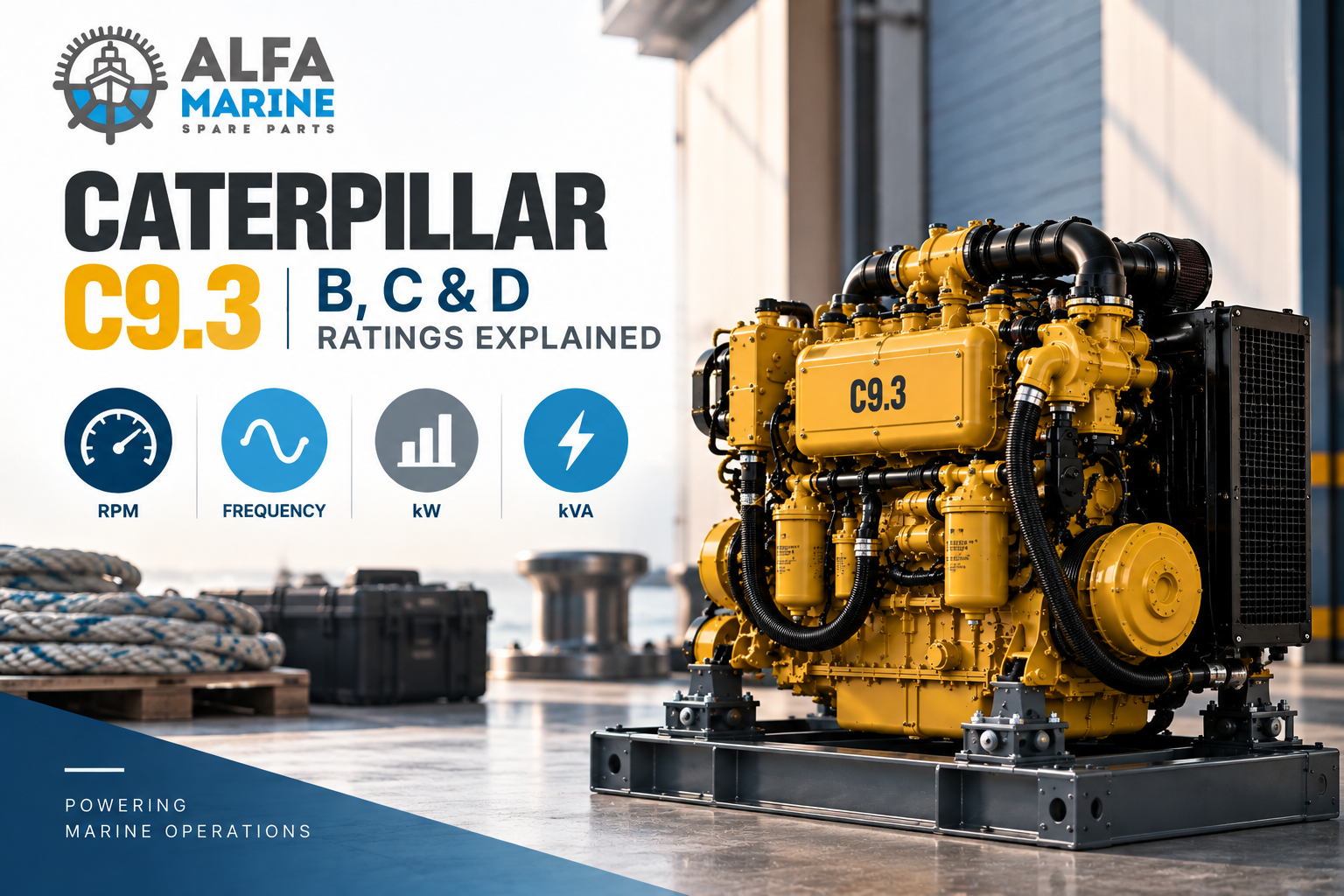

Caterpillar C9.3 Marine Engine B, C & D Ratings Explained
You are checking the Caterpillar C9.3 on a vessel and the engine plate shows 375 bhp at 1800 RPM.
Later, you search for the C9.3 online and find another one rated at 476 bhp at 2300 RPM.
Same engine model. Same 9.3-litre displacement.
So why is one C9.3 rated more than 100 horsepower higher than the other?
Nothing necessarily has to be wrong.
Caterpillar publishes different commercial propulsion ratings for the C9.3, including B, C and D ratings. Each has its own published power and rated engine speed.
That distinction is important because using the wrong rating can send a troubleshooting job in completely the wrong direction.
Before asking:
“Why won't this C9.3 reach 2300 RPM?”
first ask:
“Is this particular C9.3 actually supposed to reach 2300 RPM?”
For general engine and spare-parts information, see our Caterpillar C9.3 Marine Engine Parts page.
C9.3 B, C and D Ratings at a Glance
Here are the three commercial propulsion ratings discussed in this guide:
| RatingPublished PowerRated Speed | ||
| B Rating | 375 bhp / 280 bkW | 1800 RPM |
| C Rating | 416 bhp / 310 bkW | 2100 RPM |
| D Rating | 476 bhp / 355 bkW | 2300 RPM |
This is where much of the confusion begins.
All three are C9.3 engines.
The displacement has not suddenly changed because one engine is rated at 375 bhp and another at 476 bhp.
What has changed is the rating and intended operating duty.
What Kind of Engine Is the Caterpillar C9.3?
Before getting deeper into the ratings, it helps to establish the basic engine.
The C9.3 commercial marine propulsion engine is an inline six-cylinder, four-stroke diesel with a displacement of 9.3 litres.
Its basic published specifications include:
| SpecificationCaterpillar C9.3 | |
| Configuration | Inline 6-cylinder |
| Cycle | Four-stroke diesel |
| Displacement | 9.3 litres |
| Bore | 115 mm |
| Stroke | 149 mm |
| Aspiration | Turbocharged-aftercooled |
| Fuel system | Common rail |
| Governor | Electronic |
| Rotation from flywheel end | Counterclockwise |
Now notice what isn't in that table:
There isn't one universal horsepower figure.
That's because saying “It's a C9.3” still doesn't tell you which propulsion rating you are dealing with.
What Does the C9.3 B Rating Mean?
The B-rated C9.3 is published at:
375 bhp / 280 bkW at 1800 RPM
Imagine an engineer joins a vessel and sees the engine reaching approximately 1800 RPM under the relevant rated operating condition.
He remembers working on another C9.3 that ran at 2300 RPM.
His first thought might be:
“This engine is down 500 RPM.”
But if the engine in front of him is B-rated, 1800 RPM is the published rated speed.
There may be nothing to troubleshoot.
This is why checking the engine rating comes before looking for fuel restrictions, turbocharger problems or an overloaded propeller.
You need to know the correct target before deciding the engine is missing it.
What About the C Rating?
Move to the C rating and the numbers change:
416 bhp / 310 bkW at 2100 RPM
It is still a C9.3.
Still 9.3 litres.
Still an inline six-cylinder marine diesel.
But now the rated operating point is different.
If you compare this engine with a B-rated C9.3 without checking the rating first, the 300 RPM difference could easily look like a performance problem when it isn't.
And the D Rating?
The D-rated version is published at:
476 bhp / 355 bkW at 2300 RPM
This is the highest power and rated speed of the three commercial propulsion ratings covered here.
It is also where another common mistake can happen.
Someone searches:
“Caterpillar C9.3 horsepower”
and sees 476 bhp.
That number then gets treated as though it applies to every C9.3 on every vessel.
It doesn't.
A B-rated C9.3 isn't suddenly a 476 bhp engine because a D-rated specification exists online.
Why Have Three Different Ratings?
Because boats don't all work the same way.
Think about the difference between a commercial vessel operating day after day and another vessel with a very different load profile and operating schedule.
How long is the engine under load?
How often is high power required?
How many hours does the vessel operate?
What kind of propulsion duty does the engine perform?
Those questions matter.
A marine engine rating is more than a horsepower number printed on a brochure.
It relates the engine to an intended operating duty.
That's why looking only for the C9.3 with the biggest horsepower figure doesn't tell you which rating is appropriate for a particular installation.
Is B, C or D the “Best” C9.3 Rating?
Not really.
This is one of those questions where bigger isn't automatically better.
The D rating has the highest published power of the three.
That doesn't mean every commercial vessel should have a D-rated C9.3.
Likewise, the lower B rating doesn't mean the engine is somehow an inferior version.
The important question is whether the engine's rating matches the intended vessel application and duty.
For an engine already installed on a vessel, your job is simpler:
Identify the rating first and evaluate the engine against that rating.
Does Higher RPM Create the Higher Rating?
Look at the numbers together:
B — 280 bkW at 1800 RPM
C — 310 bkW at 2100 RPM
D — 355 bkW at 2300 RPM
It is tempting to look at that progression and think:
“So if I increase the RPM, I get the next rating.”
That's not how these ratings should be interpreted.
The published rating and engine configuration determine how that engine is intended to operate.
A B-rated engine should not be treated as though it can simply become a D-rated engine by changing its operating speed.
A Realistic Engine-Room Scenario
Picture a workboat coming in after the master reports that the engine “isn't reaching full RPM.”
The engineer starts the investigation and sees a maximum of about:
1800 RPM
Someone has already found a C9.3 specification online showing:
2300 RPM
Now the job is heading toward checking fuel pressure, turbocharger boost, air restriction and propeller load.
But before opening anything, somebody checks the engine identification.
It is a B-rated C9.3.
That changes the entire conversation.
The engine wasn't 500 RPM low.
The wrong rated RPM had been used as the reference.
A few minutes spent identifying the engine correctly can prevent hours of unnecessary troubleshooting.
Rated RPM and Actual RPM Are Not the Same Thing
This distinction is also worth keeping clear.
Rated RPM is the engine speed associated with its published rating.
Actual RPM is simply the speed the engine happens to be turning at that moment.
If an engine is genuinely unable to achieve its expected rated speed under the appropriate test conditions, then the investigation can begin.
Depending on the symptoms and installation, possible areas might include:
- Propeller loading
- Hull condition
- Marine transmission
- Fuel supply
- Air restriction
- Turbocharger and charge-air system
- Exhaust restriction
- Electronic control
- General engine condition
But there is no point investigating a “low RPM problem” until you know what the correct RPM should be.
Engine RPM Isn't Propeller RPM Either
Another number that can cause confusion is propeller speed.
Suppose a C-rated C9.3 is running at:
2100 engine RPM
The propeller isn't normally turning at 2100 RPM.
The marine transmission sits between the engine and propeller and provides a reduction ratio.
Take a simple example.
If the installed transmission had a hypothetical reduction ratio of:
2.0 : 1
then:
2100 ÷ 2 = approximately 1050 propeller RPM
The actual number depends on the gearbox fitted to the vessel.
So when discussing propulsion performance, keep three things separate:
engine RPM, gearbox reduction and propeller RPM.
What If the C9.3 Really Cannot Reach Rated RPM?
Once you have confirmed the correct rating, the question becomes more interesting.
Suppose the engine is genuinely expected to reach 2100 RPM but cannot get there under the appropriate operating conditions.
Now you have something to investigate.
One possible area is excessive propeller loading.
But don't jump straight to the propeller.
A dirty hull, fuel restriction, intake restriction, exhaust restriction, turbocharger issue, charge-air leak, transmission loss or an engine-related problem could also affect performance.
The symptoms and operating data should guide the investigation.
What Role Does the Turbocharger Play?
The C9.3 is turbocharged and aftercooled.
If the engine is struggling to produce expected power, the air side of the engine deserves attention.
Depending on the symptoms, an engineer may look at:
- Intake restriction
- Turbocharger condition
- Charge-air leakage
- Aftercooler condition
- Exhaust restriction
- Available boost information
But smoke plus low power does not automatically mean:
“Replace the turbo.”
The same symptoms can have several causes.
Fuel delivery, engine load and air supply all interact.
For a deeper look at this area, see our Caterpillar C-Series Turbocharger Inspection & Repair guide.
What About the C9.3 Fuel System?
The C9.3 uses a common rail fuel system.
That matters when approaching a low-power or unstable-running complaint.
You are dealing with an electronically controlled fuel system, not an older mechanical arrangement where every problem can be approached in exactly the same way.
Depending on the complaint, the investigation may involve fuel supply, filtration, rail-pressure information, electrical connections, engine data and diagnostic information.
Again, avoid diagnosing a part from one symptom.
A fault code, low RPM or smoke is a starting point for investigation—not automatically a parts order.
Don't Forget the Cooling Arrangement
Two C9.3 installations can also differ on the cooling side.
Depending on the marine configuration, you may encounter heat-exchanger or keel-cooled arrangements.
That becomes important when somebody says:
“The C9.3 is overheating.”
Before deciding where the problem must be, establish how that particular engine is cooled.
A seawater-side restriction is relevant to one installation but may make no sense as the first assumption on another cooling arrangement.
Identification comes first here too.
The C9.3 Isn't Only a Propulsion Engine
Here is another reason C9.3 specifications can look contradictory online.
Caterpillar also publishes the C9.3 for marine auxiliary duty.
The published auxiliary power range is approximately:
218–325 bkW
with applicable rated speeds of:
1500 and 1800 RPM.
So now we can have a C9.3 at 1800 RPM in more than one context.
A B-rated propulsion C9.3 is published at:
280 bkW at 1800 RPM
while an auxiliary C9.3 may also have a rated speed of:
1800 RPM
Same RPM.
Different application.
That's why RPM alone isn't enough to identify what you're looking at.
Why Do 1500 and 1800 RPM Appear Around Generator Applications?
Those speeds are familiar in generator installations.
For an applicable four-pole generator:
1500 RPM corresponds to 50 Hz
and:
1800 RPM corresponds to 60 Hz.
But don't mix the engine's mechanical output with the generator's electrical output.
Engine bkW and generator ekW describe different stages of the power system.
This is the same distinction we discussed with other Caterpillar marine generator applications: always identify what the number actually represents before comparing it.
Propulsion vs Auxiliary: Put the Numbers Side by Side
For propulsion:
B Rating — 280 bkW at 1800 RPM
C Rating — 310 bkW at 2100 RPM
D Rating — 355 bkW at 2300 RPM
For auxiliary applications:
approximately 218–325 bkW at applicable 1500 or 1800 RPM ratings
Now you can see why a generic search for:
“C9.3 RPM”
doesn't have one useful answer.
The application and rating have to come with it.
Horsepower and bkW Can Look Different Too
Caterpillar's propulsion specifications may show both horsepower and brake kilowatts.
For example:
375 bhp ≈ 280 bkW
416 bhp ≈ 310 bkW
476 bhp ≈ 355 bkW
Those aren't different engine ratings.
They are different units describing the same mechanical power.
One mechanical horsepower is approximately 0.746 kW.
So:
476 × 0.746 ≈ 355 kW
If one document uses bhp and another uses bkW, check the units before assuming the specifications disagree.
Why Two C9.3 Data Sheets Can Both Be Correct
This is really the main lesson of the article.
You can put two genuine C9.3 specification sheets next to each other and find different numbers.
That doesn't automatically mean one is outdated or incorrect.
They may describe different:
- Propulsion ratings
- Auxiliary applications
- Rated speeds
- Cooling arrangements
- Emissions configurations
- Generator applications
- Installation requirements
Before comparing two figures, make sure you're comparing the same type of C9.3.
What Should You Check on the Engine?
When there is any doubt, go back to the engine itself.
Record:
- Engine model
- Serial number
- Serial-number prefix
- Arrangement information where available
- Rated power
- Rated RPM
- Application
- Cooling arrangement
For propulsion questions, also record:
- Marine transmission model
- Reduction ratio
For a generator installation, record the generator nameplate as well.
A clear photograph of the engine nameplate is often more useful than somebody typing the numbers from memory.
The Nameplate Can Change the Whole Diagnosis
Imagine receiving this message:
“C9.3 won't go over 1800 RPM. What is wrong?”
There isn't enough information to answer that properly.
If it is a B-rated propulsion engine, 1800 RPM may be exactly where it is supposed to be.
If it is a C-rated engine expected to reach 2100 RPM, now there may be something worth investigating.
If it is D-rated, the reference changes again.
And if it is an auxiliary installation, 1800 RPM may have a completely different meaning.
The same symptom can go from normal operation to possible performance problem simply by identifying the engine correctly.
Caterpillar C9.3 Ratings Summary
The Caterpillar C9.3 is a 9.3-litre inline-six, four-stroke, turbocharged-aftercooled marine diesel used in propulsion and auxiliary applications.
For commercial propulsion, the published ratings covered here are:
B Rating — 375 bhp / 280 bkW at 1800 RPM
C Rating — 416 bhp / 310 bkW at 2100 RPM
D Rating — 476 bhp / 355 bkW at 2300 RPM
For marine auxiliary duty, published C9.3 configurations cover approximately:
218–325 bkW at applicable 1500 or 1800 RPM ratings.
So there isn't one universal answer to:
“How much horsepower does a C9.3 have?”
or:
“What RPM should a C9.3 reach?”
You need one more piece of information:
Which C9.3 are we talking about?
For a wider comparison with other engines in the range, see our Caterpillar Marine Engine Types: Differences & Applications.
Frequently Asked Questions
My C9.3 only reaches 1800 RPM. Should I be worried?
Not necessarily. Check the engine rating before assuming there is a problem. A B-rated C9.3 propulsion engine is published at 375 bhp / 280 bkW at 1800 RPM, and some auxiliary configurations also operate at 1800 RPM. If the nameplate says the engine should reach a higher rated speed and it cannot under the correct conditions, then it makes sense to investigate further.
I found a 476 bhp C9.3 online, but mine says 375 bhp. Is mine derated?
Not simply because the numbers are different. Caterpillar publishes different C9.3 propulsion ratings. The 375 bhp version corresponds to the B rating covered here, while 476 bhp corresponds to the D rating. Check the engine's identification and published rating rather than comparing horsepower alone.
Two boats have C9.3 engines, so why don't they have the same RPM?
Because “C9.3” identifies the engine family, not one universal marine rating. One vessel could have a B, C or D propulsion rating, while another C9.3 could be installed for auxiliary duty. The nameplate, rated power, rated RPM and application will tell you which configuration you are actually dealing with.
Related Caterpillar C-Series Technical Information
For C9.3 engine and spare-parts information, see our Caterpillar C9.3 Marine Engine Parts page.
For the wider engine family, visit our Caterpillar C-Series Marine Engine Parts page.
For comparisons between Caterpillar marine engine families and applications, read Caterpillar Marine Engine Types: Differences & Applications.
For turbocharger and charge-air troubleshooting, see Caterpillar C-Series Turbocharger Inspection & Repair.
Technical Information Notice
Caterpillar C9.3 ratings and specifications vary according to engine application, rating, configuration, emissions requirements and installation.
Always confirm the rated power, rated RPM and applicable technical information against the identification data and documentation for the individual engine.
Alfa Marine Spare Parts is an independent supplier and is not an authorized Caterpillar dealer or official representative. Caterpillar names and model designations are used solely for identification and technical reference purposes.
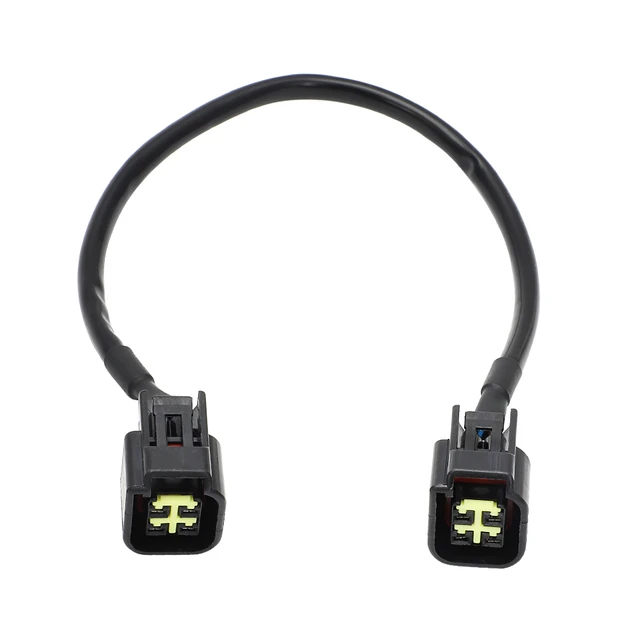 HARNESSES AND WIRE SENSORS
 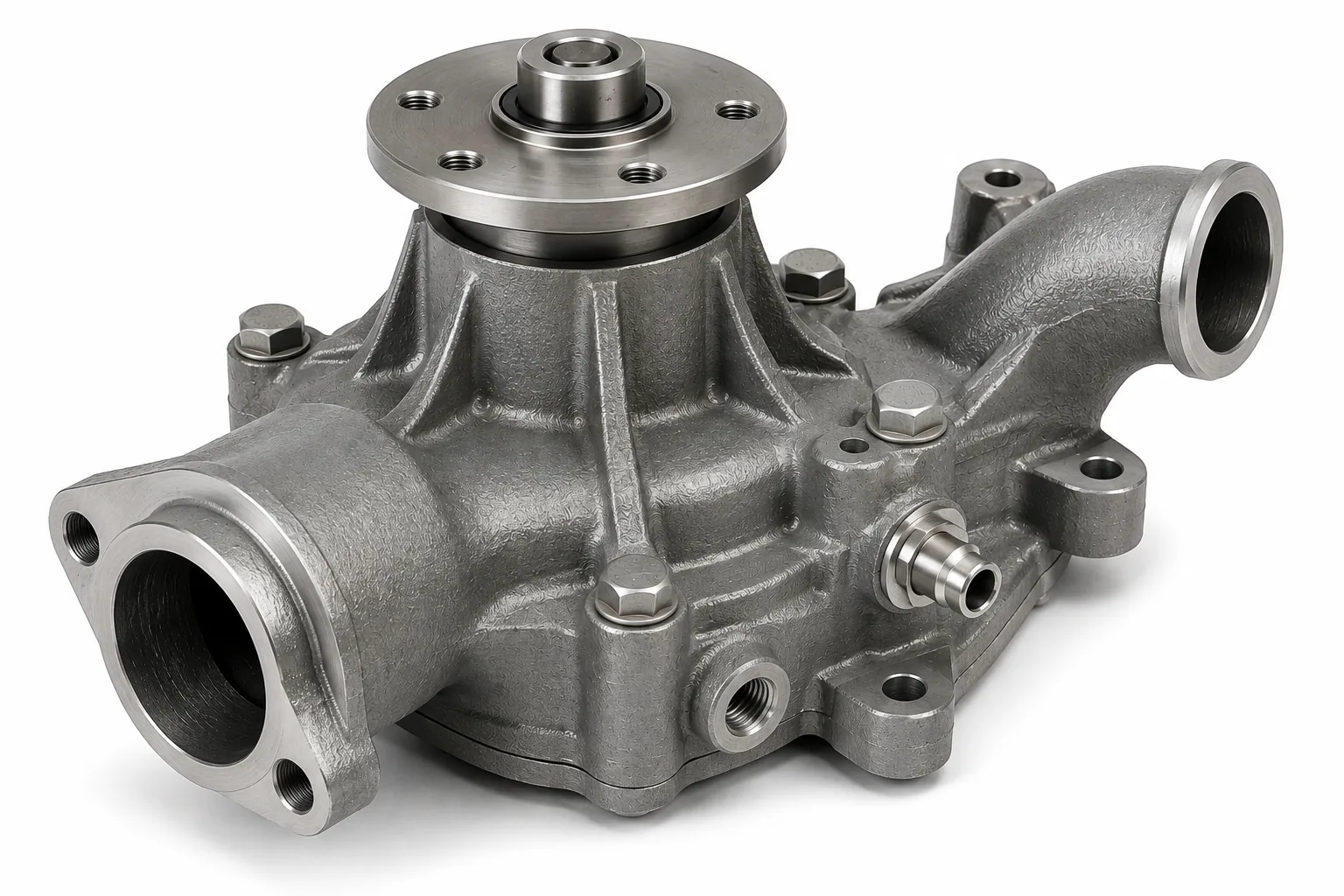 WATER PUMP
 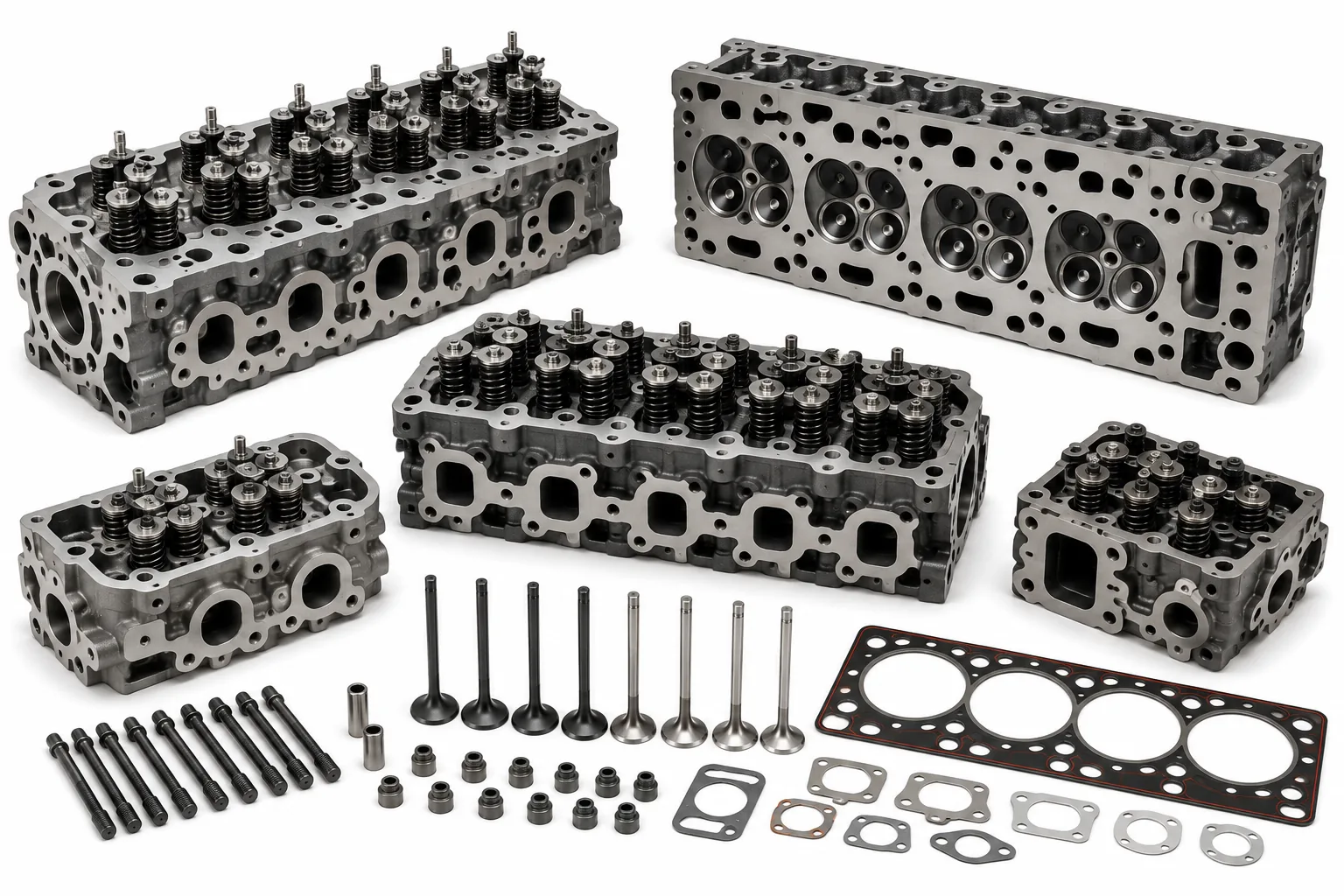 CYLINDER HEAD
  DISPLAY MONITORS
  Turbocharger & Cartridge
  INJECTORS