
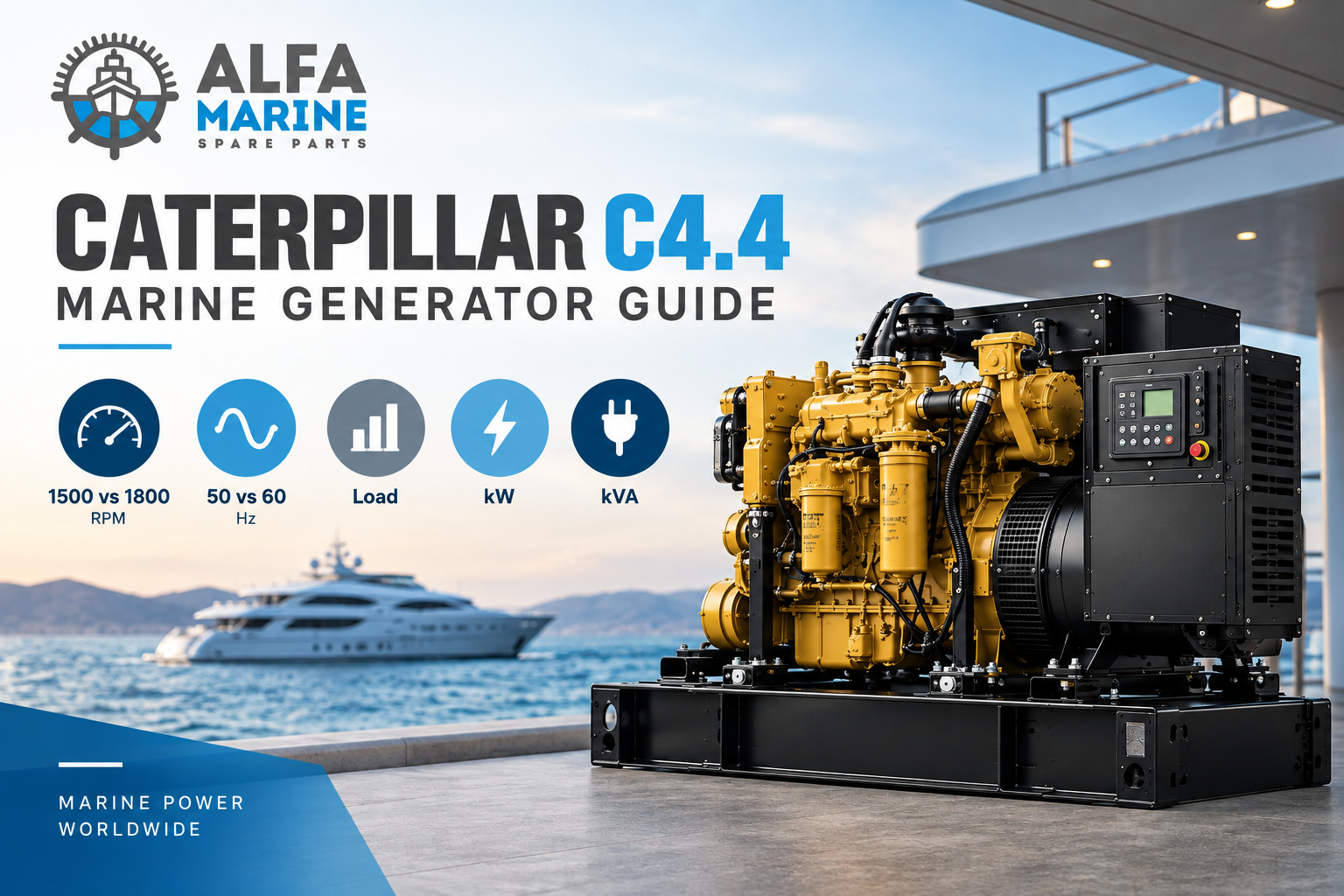

Caterpillar C4.4 1500 vs 1800 RPM: 50 Hz & 60 Hz Marine Generator Guide
Why does one Caterpillar C4.4 marine generator operate at 1500 RPM while another runs at 1800 RPM?
The difference is closely connected to generator frequency.
For the applicable four-pole C4.4 marine generator configurations:
1500 RPM → 50 Hz
1800 RPM → 60 Hz
These are not arbitrary engine speeds. Generator rotational speed and electrical frequency are directly related.
That relationship becomes particularly useful when something goes wrong.
If engine speed falls when electrical load is applied, generator frequency normally falls with it. If engine RPM is correct but the measured frequency is not, the investigation needs to move in a different direction.
This guide looks specifically at Caterpillar C4.4 generator RPM, 50 versus 60 Hz operation, electrical load, kW, kVA and frequency troubleshooting.
For broader information about the engine itself, including applications, cooling arrangements and available configurations, see our Caterpillar C4.4 Marine Engine Parts and Specifications page.
Caterpillar C4.4 Marine Generator Quick Technical Data
The C4.4 has been offered in different marine generator configurations, which is why there is no single power rating that applies to every C4.4 generator set.
The fundamental engine architecture includes:
| SpecificationCaterpillar C4.4 | |
| Engine configuration | Inline 4-cylinder |
| Cycle | Four-stroke diesel |
| Displacement | 4.4 litres |
| Bore | 105 mm |
| Stroke | 127 mm |
| Generator frequency | 50 / 60 Hz |
| Rated engine speed | 1500 / 1800 RPM |
| Control | Configuration dependent; electronic control on C4.4 Electronic versions |
Caterpillar has published different C4.4 marine generator families.
One C4.4 generator family covers approximately 36–99 ekW, while the separate C4.4 Electronic marine generator range covers approximately 58–118 ekW.
Those figures should not be combined and presented as one universal C4.4 rating.
Why Does a C4.4 Generator Run at 1500 or 1800 RPM?
Generator frequency depends on rotational speed and the number of magnetic poles in the generator.
The basic relationship is:
RPM = (120 × Frequency) ÷ Number of Poles
For a four-pole generator operating at 50 Hz:
(120 × 50) ÷ 4 = 1500 RPM
For a four-pole generator operating at 60 Hz:
(120 × 60) ÷ 4 = 1800 RPM
So, for the applicable four-pole arrangement:
4 poles + 50 Hz = 1500 RPM
4 poles + 60 Hz = 1800 RPM
The four-pole qualification matters.
It would not be technically correct to say that every 50 Hz generator must rotate at 1500 RPM. Generator synchronous speed also depends on the number of poles.
For the applicable C4.4 marine generator configurations discussed here, however, 1500 and 1800 RPM are the relevant rated engine speeds.
What Does 50 Hz or 60 Hz Actually Mean?
Hertz measures electrical frequency.
50 Hz means 50 electrical cycles per second.
60 Hz means 60 electrical cycles per second.
A vessel's electrical distribution system is designed around a specified frequency.
Equipment operating from that supply can include pumps, electric motors, fans, compressors, HVAC equipment, transformers, battery chargers, galley equipment and numerous control systems.
Frequency is therefore not simply another number on the generator nameplate.
It is a fundamental characteristic of the vessel's electrical supply.
Is a Caterpillar C4.4 a 50 Hz or 60 Hz Engine?
Potentially either.
The C4.4 itself should not simply be described as a "50 Hz engine" or a "60 Hz engine."
Frequency relates to the generator application and electrical system.
C4.4 marine generator configurations exist for both:
50 Hz
and
60 Hz
with corresponding rated engine speeds of:
1500 RPM
and
1800 RPM
for the applicable configurations.
When identifying an installed C4.4 generator, check the generator nameplate and applicable technical documentation rather than assuming its frequency from the engine model alone.
This is also one reason the exact configuration matters when planning maintenance. Our Caterpillar C4.4 Marine Engine Maintenance Schedule explains how engine version, cooling arrangement and application affect the maintenance information that should be followed.
Why Engine RPM Matters to Generator Frequency
Imagine a C4.4 generator operating normally at:
1500 RPM
and
50 Hz
A substantial electrical load is then switched on.
The generator suddenly requires more mechanical power from the engine.
The governing system responds to that additional demand and attempts to maintain the required engine speed.
If the engine recovers and stabilizes around 1500 RPM, generator frequency should also return to the intended value for the applicable four-pole arrangement.
Now suppose the engine only manages:
1440 RPM
For a four-pole generator:
(1440 × 4) ÷ 120 = 48 Hz
So approximately:
1440 RPM → 48 Hz
The lower electrical frequency is consistent with the lower rotational speed.
That relationship is extremely useful during troubleshooting.
C4.4 Frequency Drops When Load Is Applied
Consider a vessel where the generator operates normally under relatively light electrical load:
1500 RPM
50 Hz
A large electrical consumer starts.
The engine slows and does not completely recover.
Frequency also remains below 50 Hz.
It would be premature to conclude:
"The alternator has failed."
A more useful question is:
"Why isn't the engine-generator set maintaining its required speed under this load?"
Depending on the exact installation and symptoms, areas that may require investigation include:
- Actual generator load
- Fuel supply
- Fuel-filter condition
- Air supply
- Engine-control response
- Governor response
- Relevant sensor information
- Intake restriction
- Exhaust restriction
- Turbocharger and charge-air performance where applicable
- General engine condition
These are possible investigation areas, not a diagnosis.
Measurements should determine which direction the troubleshooting takes.
Low RPM and Low Frequency
One of the simplest first checks is to compare actual engine RPM with actual generator frequency.
If both are low:
Low RPM + low frequency
the frequency may simply be following the reduction in rotational speed.
The next question becomes:
Why isn't the generator set maintaining its rated speed?
This is particularly useful when the problem only appears after electrical load increases.
Correct RPM but Incorrect Frequency
Now consider a different situation.
The engine is independently verified at approximately:
1500 RPM
but the indicated generator frequency is significantly different from the expected 50 Hz for the applicable four-pole arrangement.
That points the investigation in another direction.
First verify both measurements with appropriate equipment.
If rotational speed is genuinely correct while frequency is not, attention should move toward the generator, instrumentation, controls, configuration or measurement rather than assuming the diesel engine is losing speed.
A useful diagnostic distinction is therefore:
RPM incorrect + frequency incorrect → investigate the speed problem first.
RPM verified correct + frequency incorrect → investigate measurement and the generator/electrical side.
1500 vs 1800 RPM: Is One Better?
Neither is inherently better.
For the applicable C4.4 four-pole generator arrangement:
1500 RPM is associated with 50 Hz.
1800 RPM is associated with 60 Hz.
The correct configuration depends on the vessel's electrical system and generator package.
It would therefore be misleading to say that 1500 RPM is automatically better because the engine turns more slowly.
Likewise, 1800 RPM should not automatically be considered better simply because the rotational speed is higher.
They serve different electrical requirements.
Does 1800 RPM Mean More Generator Power?
Not automatically.
Engine speed alone does not determine the generator's electrical output.
The available output depends on the complete generator-set rating and configuration.
Factors can include:
- Engine calibration
- Generator specification
- Frequency
- Aspiration
- Cooling configuration
- Emissions configuration
- Generator efficiency
- Application rating
An 1800 RPM C4.4 should therefore not automatically be assumed to produce more electrical power than a 1500 RPM version.
Always use the rating information for the exact generator set.
Why Are There Different Caterpillar C4.4 Power Ratings?
This is one of the easiest places to become confused when researching the C4.4.
Caterpillar has published more than one C4.4 marine generator configuration.
C4.4 Marine Generator Family
One published C4.4 marine generator family covers approximately:
36–99 ekW
with:
50 / 60 Hz
and:
1500 / 1800 RPM
The published range extends from approximately:
36 ekW / 45 kVA
to:
99 ekW / 123 kVA
This family includes naturally aspirated, turbocharged and turbocharged-aftercooled configurations depending on the particular rating.
C4.4 Electronic Marine Generator
A separate C4.4 Electronic marine generator range is published at approximately:
58–118 ekW
with:
50 / 60 Hz
and:
1500 / 1800 RPM
Electronic C4.4 versions use electronic engine management and governing appropriate to their configuration.
These different C4.4 generator families should not be merged into one specification.
If you want to understand where the C4.4 sits relative to larger Caterpillar marine engines, our Caterpillar Marine Engine Types and Applications guide compares the different Caterpillar engine families and their typical marine roles.
Older C4.4 vs C4.4 Electronic
The existence of different C4.4 configurations explains why two apparently reliable specification sheets can show different figures.
The published 36–99 ekW C4.4 family includes aspiration arrangements described as:
NA — Naturally Aspirated
T — Turbocharged
TA — Turbocharged Aftercooled
The separate C4.4 Electronic family represents a different specification and emissions generation.
Therefore, before applying any technical figure found online, establish which C4.4 generator configuration is actually installed.
The engine model alone does not tell the entire story.
C4.4 Engine Architecture
Despite the differences between generator configurations, the fundamental C4.4 engine dimensions include:
Configuration: Inline four-cylinder
Cycle: Four-stroke diesel
Bore: 105 mm
Stroke: 127 mm
Displacement: 4.4 litres
These figures describe the basic engine architecture.
They do not establish the complete generator rating.
Two C4.4 engines can share the same displacement, bore and stroke while having different power ratings, aspiration arrangements, emissions configurations and generator packages.
Mechanical Power vs Electrical Power
Another common source of confusion is comparing engine mechanical power directly with generator electrical output.
Engine output may be expressed in:
bkW — brake kilowatts
Generator output may be expressed in:
ekW — electrical kilowatts
The energy path is essentially:
Fuel → diesel engine → mechanical power → generator → electrical power
The generator converts mechanical energy into electrical energy.
Mechanical engine power and generator electrical output should therefore not simply be treated as identical figures.
Always check which unit the specification is describing.
What Does kVA Mean?
Marine generator specifications also commonly use kVA.
kVA means kilovolt-amperes and represents apparent electrical power.
kW represents real electrical power.
The relationship is:
kW = kVA × power factor
C4.4 published generator ratings provide a useful example.
At one end of the range:
36 ekW / 45 kVA
36 ÷ 45 = 0.8
At the upper end:
99 ekW / 123 kVA
which is approximately consistent with the same relationship, allowing for rating presentation and rounding.
This is why kW and kVA should never automatically be treated as interchangeable numbers.
What Happens When Generator Load Increases?
As electrical demand increases, the alternator requires more mechanical torque from the engine.
A large pump motor is a good example.
During startup, its electrical demand can be considerably different from its steady running condition.
The generator responds to that demand, and the engine must provide enough mechanical power while maintaining the required rotational speed.
A brief RPM change during a load transition is different from an engine that drops speed and remains below its rated speed after the electrical load has stabilized.
That distinction matters.
C4.4 Frequency Hunting Up and Down
Another complaint might be:
"The generator frequency keeps moving between 48 and 52 Hz."
Before replacing anything, look at engine RPM.
Is RPM moving at the same time?
If RPM and frequency rise and fall together, the frequency movement may be following unstable rotational speed.
Depending on the installation and symptoms, investigation may include:
- Changing electrical load
- Fuel supply
- Engine-control response
- Governor response
- Relevant sensor signals
- Air supply
- Engine operating condition
The important point is to establish the relationship between:
RPM + frequency + load
before deciding which system is responsible.
Voltage and Frequency Are Not the Same Thing
Voltage and frequency are separate electrical parameters.
A generator can potentially experience:
Correct frequency + incorrect voltage
or:
Incorrect frequency + relatively normal voltage
Frequency is closely related to generator rotational speed.
Voltage regulation involves additional generator and control functions.
Therefore:
Low frequency does not automatically mean low voltage.
And:
A voltage problem does not automatically indicate an engine-speed problem.
Keeping these symptoms separate makes troubleshooting more logical.
Turbocharger and Air-System Condition
Some C4.4 configurations are turbocharged or turbocharged-aftercooled.
If an applicable engine struggles to maintain its rated RPM under increasing load, the air and exhaust systems may form part of a wider investigation.
However, low generator frequency by itself does not prove that a turbocharger is defective.
Actual boost, air restriction, exhaust condition, fuel delivery, engine load and other operating information should be considered together.
For broader information about turbocharger inspection across Caterpillar C-Series engines, see our Caterpillar C-Series Turbocharger Inspection and Repair guide.
Cooling Configuration Matters Too
C4.4 marine installations can use different cooling arrangements, including heat-exchanger and keel-cooling configurations.
That difference matters when diagnosing temperature-related problems or comparing technical specifications.
A keel-cooled installation should not automatically be investigated using assumptions that apply only to a heat-exchanger-cooled engine.
The cooling arrangement also needs to be considered when identifying the exact C4.4 configuration.
Why Two C4.4 Data Sheets Can Both Be Correct
Suppose one technical document states:
C4.4 — 36–99 ekW
while another states:
C4.4 Electronic — 58–118 ekW
It would be easy to assume one must be wrong.
That is not necessarily the case.
They describe different C4.4 marine generator configurations.
Differences between published C4.4 specifications can result from:
- Engine generation
- Generator configuration
- 50 vs 60 Hz operation
- Power rating
- Aspiration
- Emissions level
- Cooling arrangement
- Electronic controls
- Application
The useful question is therefore not:
"What is the Caterpillar C4.4 power rating?"
It is:
"What is the power rating of this particular Caterpillar C4.4 generator configuration?"
How to Identify Your C4.4 Generator
Before comparing specifications, inspect both the engine and generator identification information.
Record:
- Engine model
- Engine serial number
- Generator model
- Generator serial number
- Rated RPM
- Rated frequency
- Rated voltage
- Rated kW
- Rated kVA
- Phase
- Power factor
- Relevant arrangement or rating information
A clear photograph of the complete identification plate can be more useful than manually copying only one or two numbers.
The C4.4 designation alone does not identify every characteristic of the complete generator set.
Practical Example: C4.4 Producing 48 Hz
An engineer reports:
"Our C4.4 generator is only producing 48 Hz."
That statement does not identify the fault.
The next useful measurement is:
What is the actual engine RPM?
If a four-pole 50 Hz installation is running at approximately:
1440 RPM
then:
(1440 × 4) ÷ 120 = 48 Hz
The measured frequency is therefore consistent with the measured rotational speed.
The investigation should focus on why the system is operating below the required 1500 RPM.
But suppose a reliable independent measurement confirms approximately 1500 RPM while the frequency remains significantly abnormal.
Now the investigation changes direction.
The generator, electrical controls, instrumentation, configuration and measurement should be examined rather than assuming the engine cannot maintain speed.
One RPM measurement can therefore prevent two very different problems from being treated as the same fault.
Practical Example: Frequency Falls When a Pump Starts
Consider another vessel.
Before a large electrical pump starts:
1500 RPM
50 Hz
The pump is switched on.
The engine drops to:
1410 RPM
For the applicable four-pole arrangement:
1410 RPM ≈ 47 Hz
The engine remains at the lower speed while the pump is operating.
When the pump is switched off, the engine returns to approximately:
1500 RPM / 50 Hz
That tells the engineer something useful.
The generator set can achieve its target speed under the lighter load but cannot maintain it under the additional demand.
The investigation can now concentrate on the actual electrical load, engine power delivery and governing response instead of immediately assuming the alternator has failed.
Should You Adjust the Governor Because Frequency Is Low?
Not automatically.
If a C4.4 previously maintained its required speed but now loses RPM under load, changing the speed setting may hide the symptom instead of identifying its cause.
First establish:
Actual RPM
Actual frequency
Electrical load
When the problem occurs
Whether RPM recovers after the load changes
Then investigate why the speed has changed.
Governor or electronic-control adjustments should follow the correct technical procedures for the specific C4.4 configuration.
Caterpillar C4.4 1500 vs 1800 RPM Summary
For the applicable four-pole Caterpillar C4.4 marine generator configurations:
1500 RPM corresponds to 50 Hz.
1800 RPM corresponds to 60 Hz.
But those numbers are only the beginning.
Different C4.4 marine generator configurations have been published, including a 36–99 ekW C4.4 range and a separate 58–118 ekW C4.4 Electronic range.
They share the fundamental 4.4-litre inline-four engine architecture but can differ in rating, aspiration, emissions, cooling and electronic control.
When troubleshooting generator frequency, compare:
RPM + Hz + electrical load
If RPM falls and frequency follows it, determine why the generator set cannot maintain the required rotational speed.
If RPM is independently verified as correct while frequency remains incorrect, the investigation should move toward the generator, electrical system, controls, configuration and measurement.
And when comparing C4.4 specifications, always identify the exact generator configuration before deciding which figures apply.
Frequently Asked Questions
Why does a Caterpillar C4.4 marine generator run at 1500 RPM?
For an applicable four-pole 50 Hz C4.4 generator configuration, 1500 RPM corresponds to the required 50 Hz frequency. Confirm the rated RPM and frequency on the individual generator-set identification plate.
Can a Caterpillar C4.4 marine generator run at 1800 RPM?
Yes. C4.4 marine generator configurations are available at 1800 RPM for 60 Hz operation. The exact electrical output depends on the individual generator configuration and rating.
Why does C4.4 generator frequency fall when electrical load increases?
If engine RPM falls under load, frequency will normally fall with it on the applicable generator arrangement. Compare actual RPM, frequency and electrical load first, then investigate why the engine-generator system is not maintaining its required speed.
Related Caterpillar C4.4 Information
This guide focuses specifically on C4.4 generator RPM, frequency, loading and electrical ratings.
For general engine specifications and C4.4 configuration information, see the Caterpillar C4.4 Marine Engine Parts and Specifications page.
For service intervals, oil changes, cooling-system checks and scheduled inspections, read the Caterpillar C4.4 Marine Engine Maintenance Schedule.
For a wider comparison of Caterpillar marine engine families and their applications, see Caterpillar Marine Engine Types: Differences & Applications.
Technical Information Notice
Technical specifications can vary according to C4.4 generation, rating, emissions configuration, cooling arrangement and generator package.
Always verify specifications against the identification data and technical documentation applicable to the individual engine and generator set.
Alfa Marine Spare Parts is an independent supplier and is not an authorized Caterpillar dealer or official representative. Caterpillar names and model designations are used solely for identification and technical reference purposes.
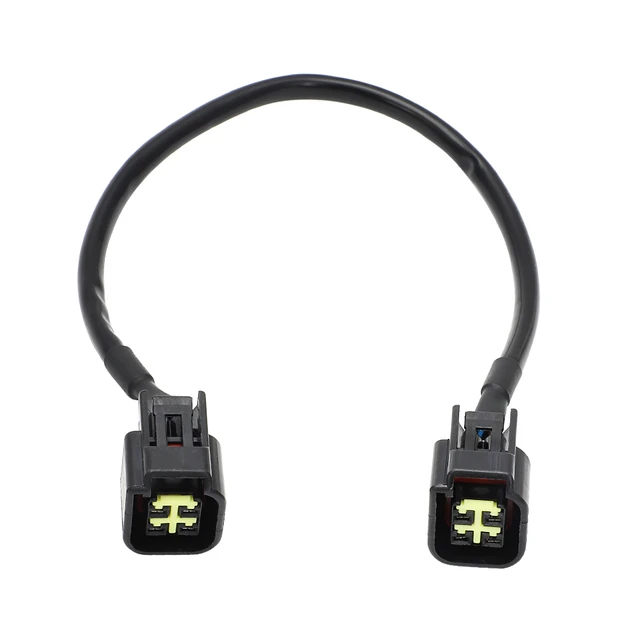 HARNESSES AND WIRE SENSORS
 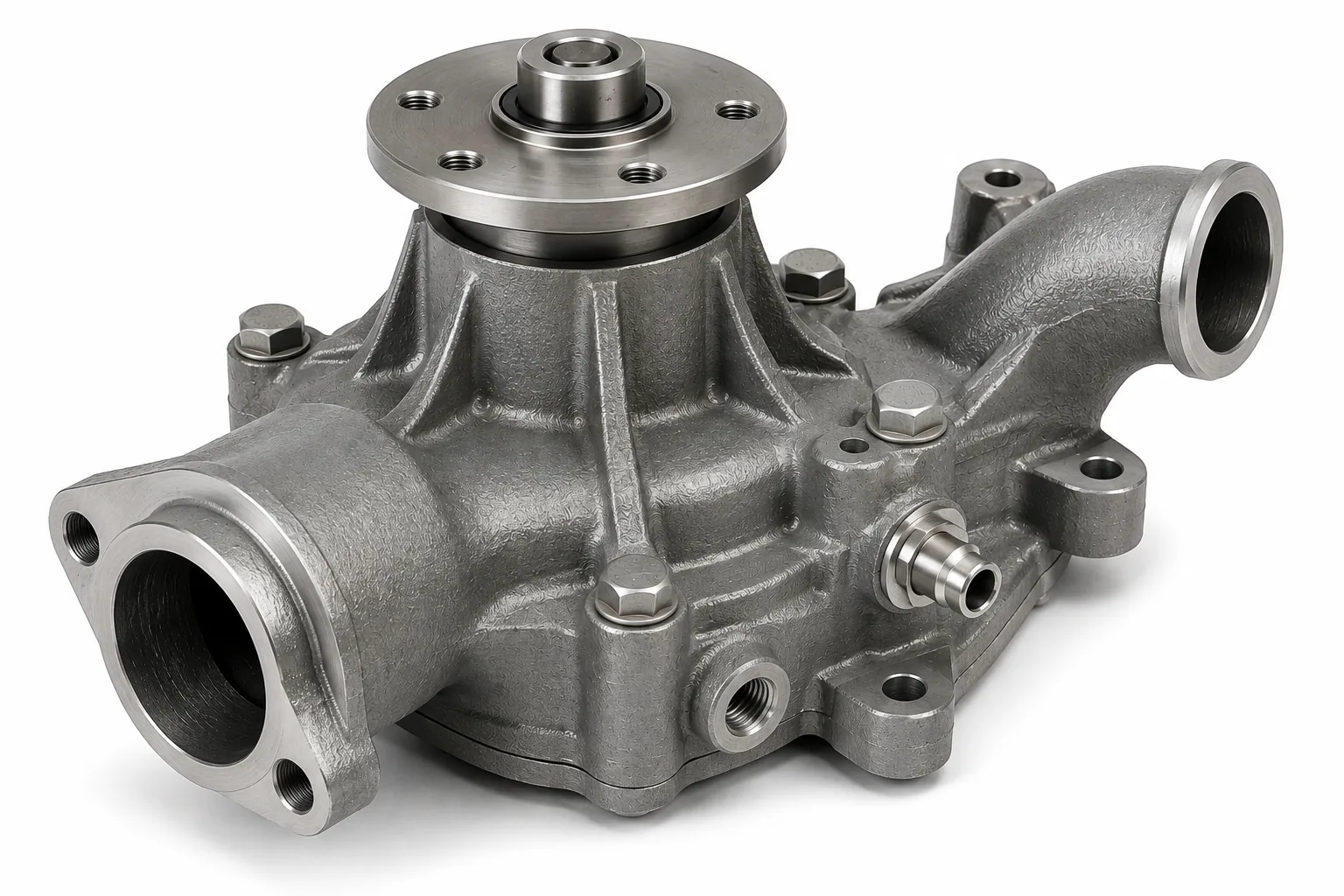 WATER PUMP
 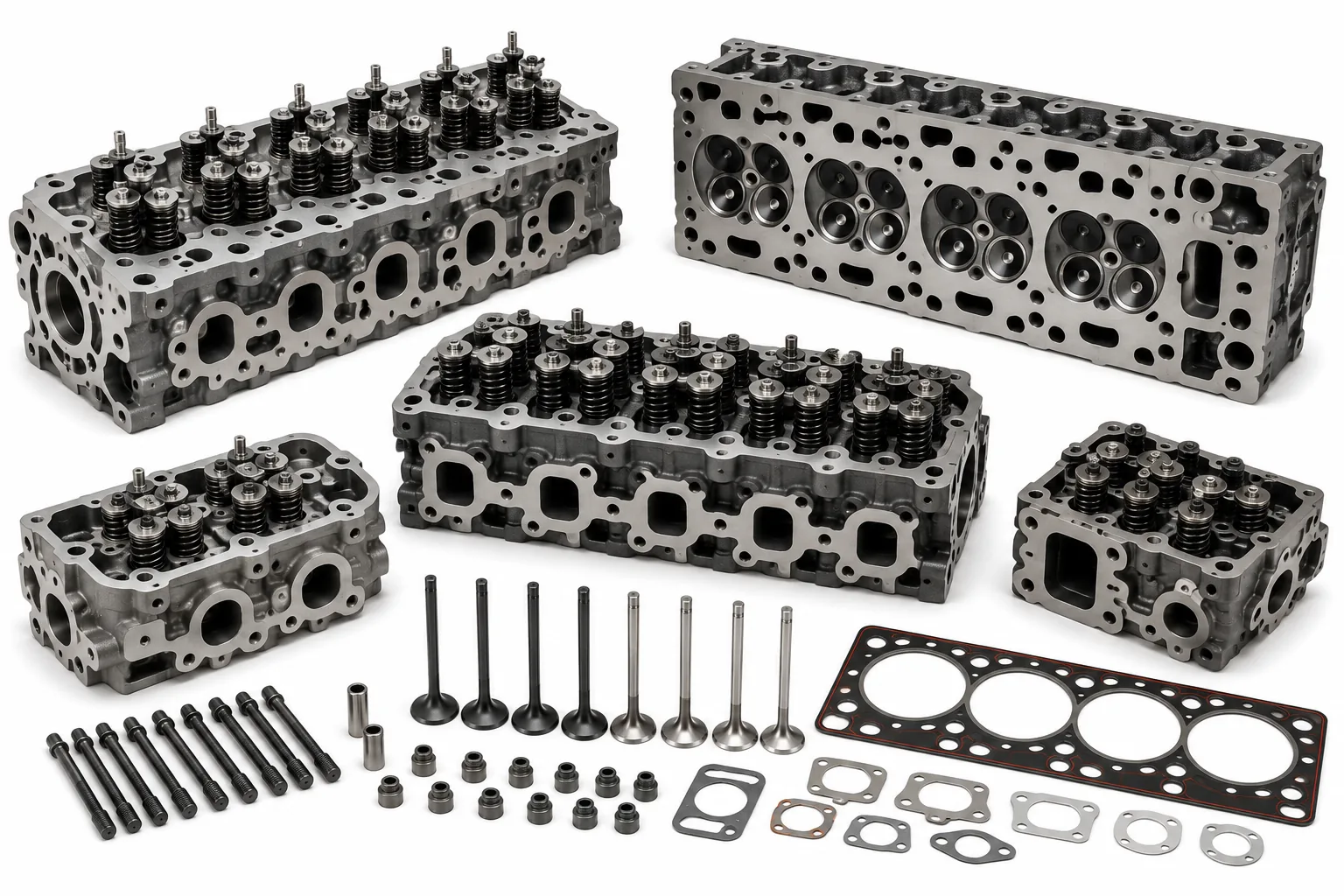 CYLINDER HEAD
 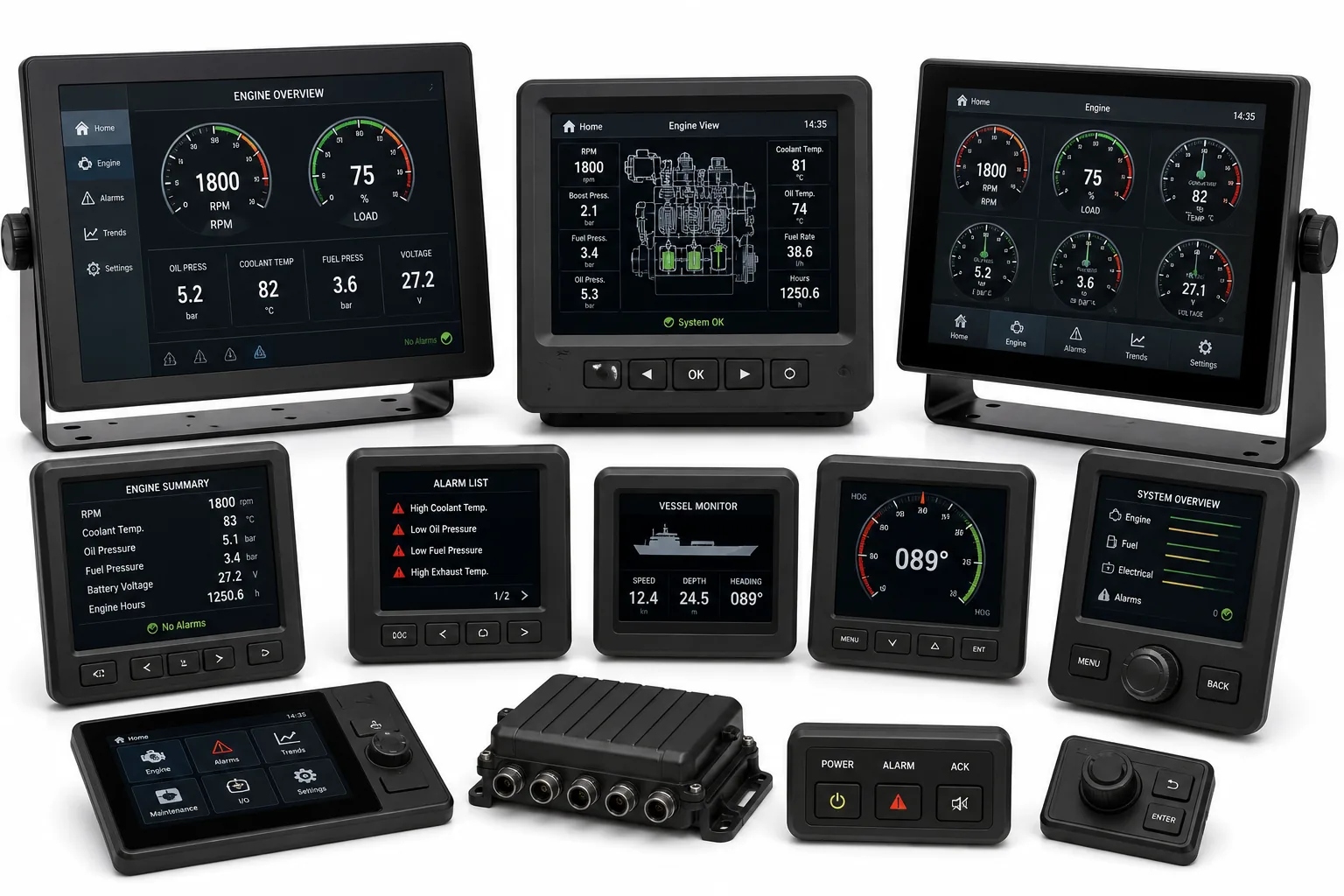 DISPLAY MONITORS
 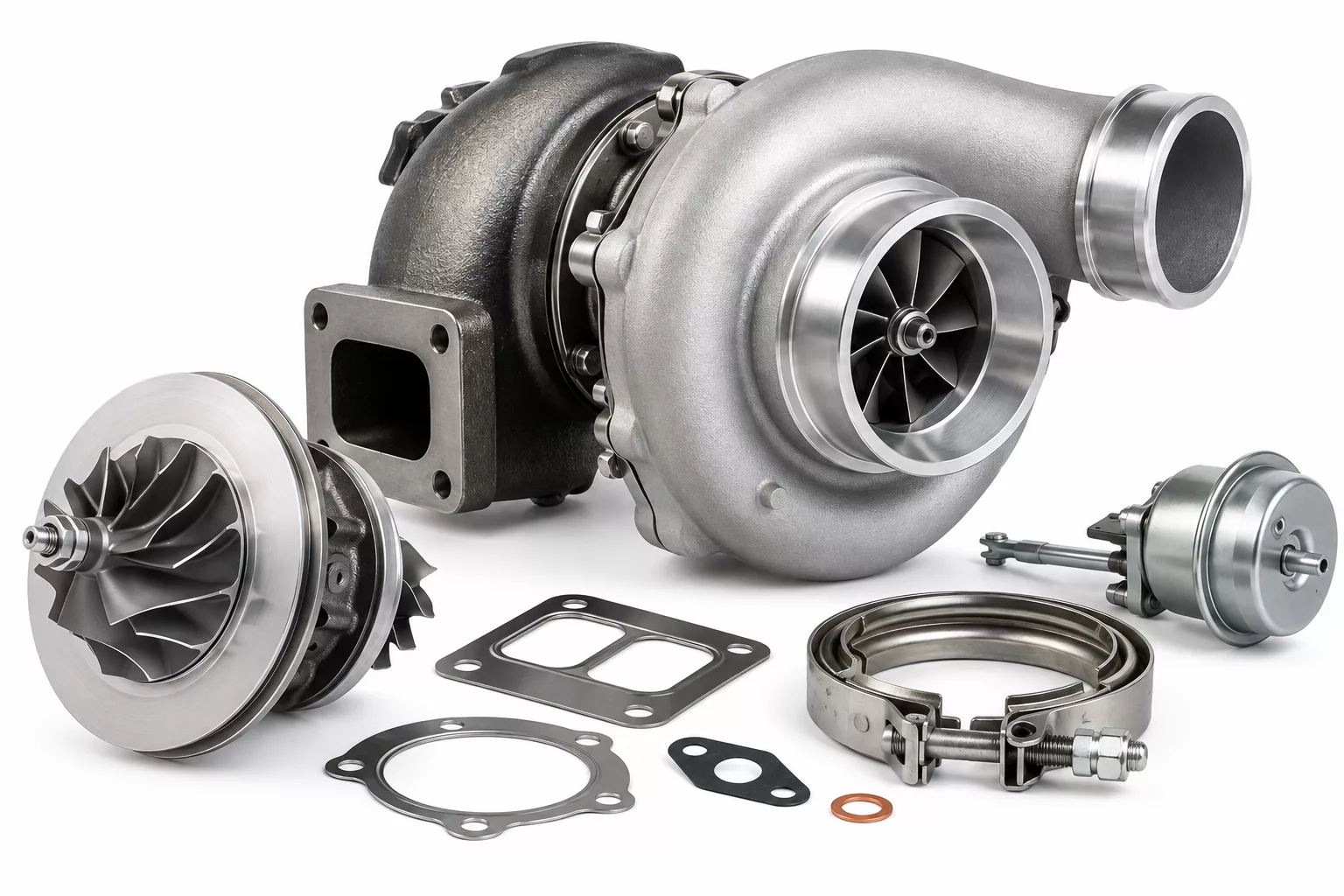 Turbocharger & Cartridge
 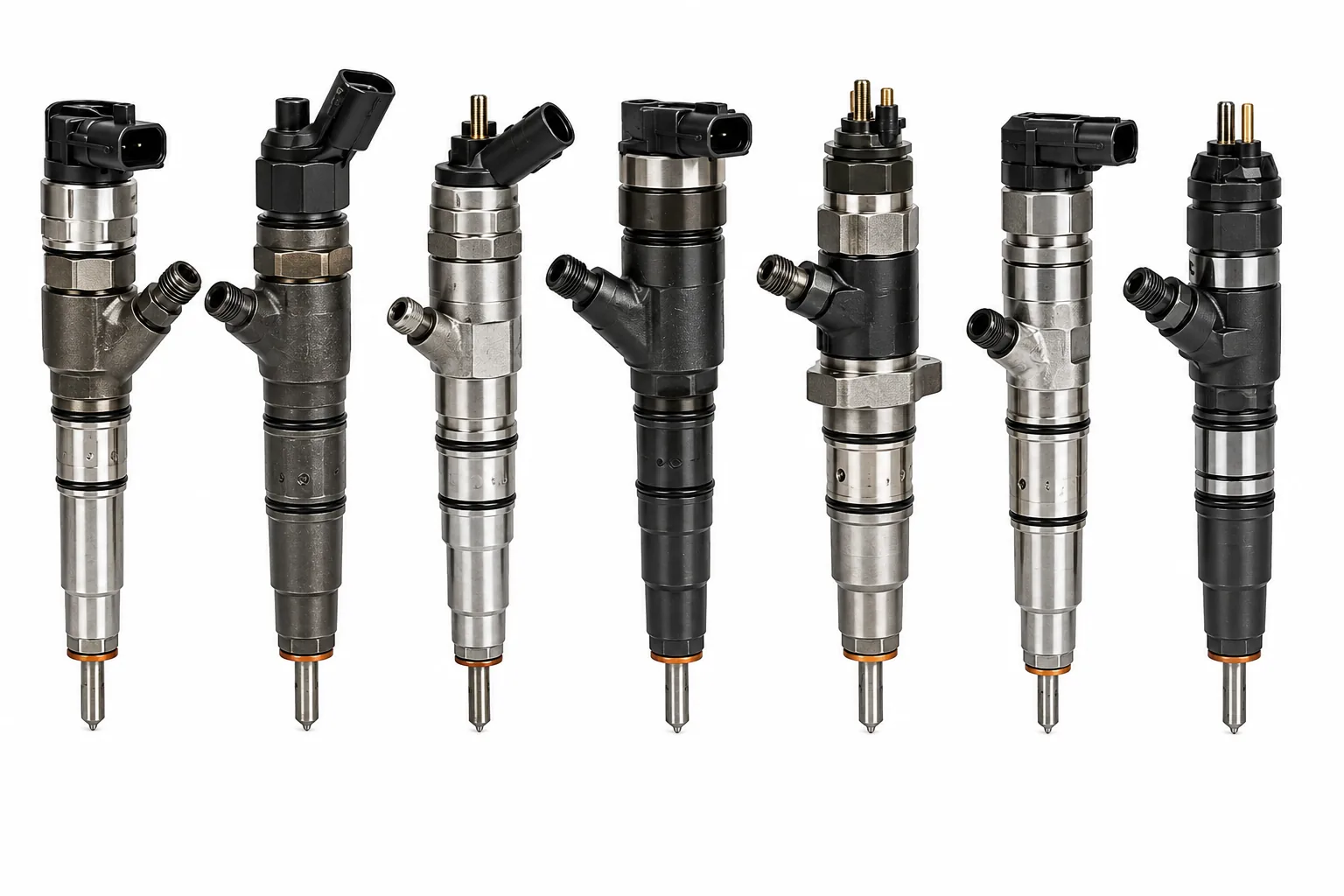 INJECTORS