
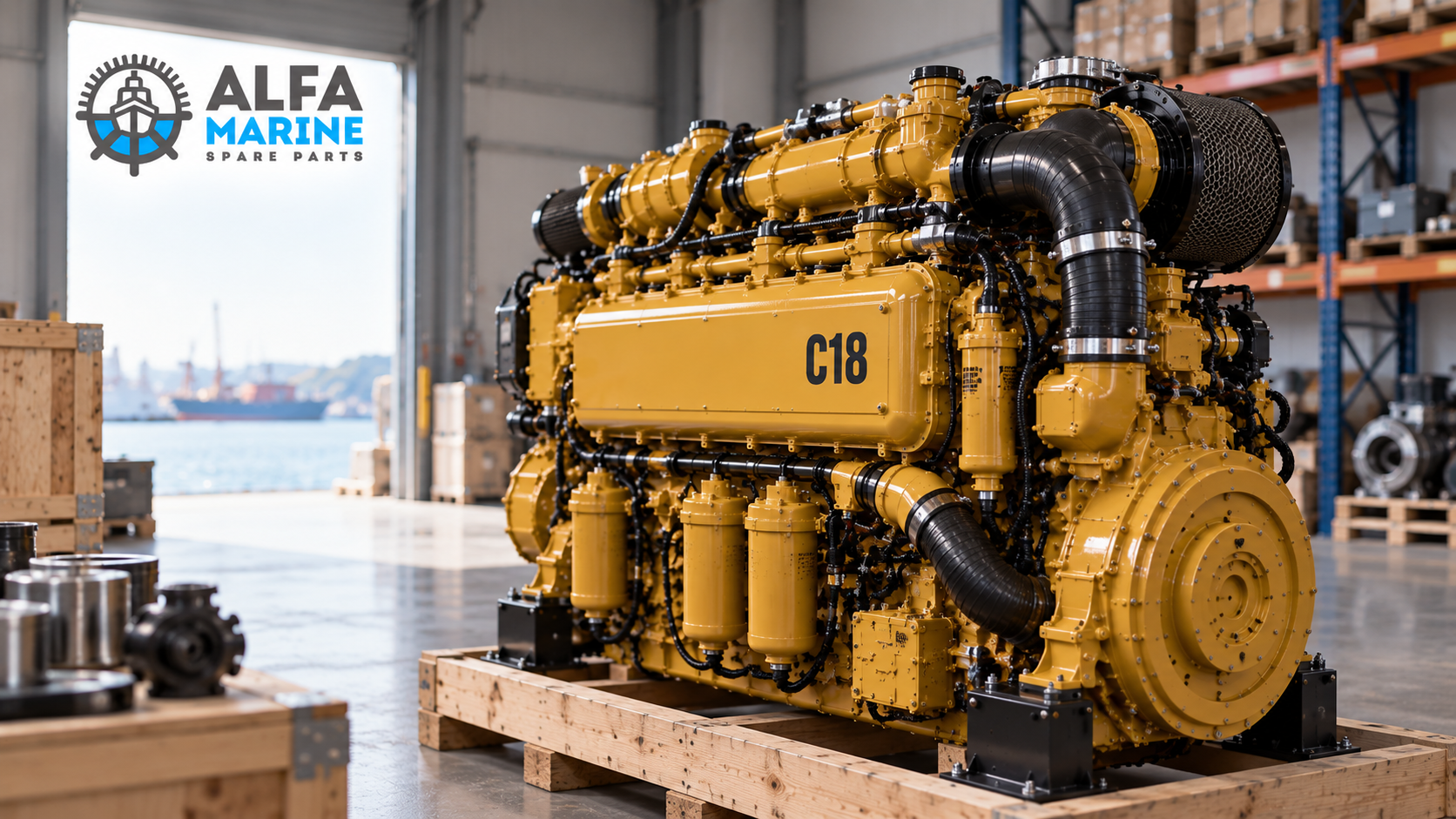
Caterpillar C18 Marine Engine Specifications, Horsepower & Technical Guide
If you search for Caterpillar C18 marine engine specifications, one thing becomes obvious fairly quickly: not every C18 has the same horsepower.
You may find a commercial C18 running at one rating, another installation with considerably more power, and then a C18 generator running at 1500 or 1800 RPM.
They're all called C18.
So what's going on?
The easiest way to understand the C18 is to stop thinking of it as one engine with one horsepower figure. It's better to think of it as an 18.1-litre engine platform that Caterpillar has configured for different marine jobs.
That distinction matters whether you're comparing engines, troubleshooting a vessel or trying to identify the correct spare parts.
For general parts information, see our Caterpillar C18 Marine Engine Parts page.
What Is the Caterpillar C18 Marine Engine?
The C18 is an inline six-cylinder, four-stroke diesel with a displacement of 18.1 litres.
Its basic marine engine architecture includes:
| SpecificationCaterpillar C18 Marine | |
| Configuration | Inline 6-cylinder |
| Cycle | Four-stroke diesel |
| Displacement | 18.1 L |
| Bore | 145 mm |
| Stroke | 183 mm |
| Aspiration | Turbocharged and aftercooled |
| Rotation from flywheel end | Counterclockwise |
| Cooling | Heat exchanger or keel cooled depending on configuration |
| Governor | Electronic |
| Fuel system | Configuration dependent; MEUI used on current generator specification |
Those figures give us the physical foundation of the engine.
They don't, however, tell us exactly how much power the C18 in a particular vessel produces.
That's where the rating becomes important.
How Much Horsepower Does a Caterpillar C18 Marine Engine Have?
Caterpillar's current C18 marine information shows just how wide the range can be.
For the C18 marine platform, Caterpillar publishes an overall power range extending from approximately:
454 to 1,136 bhp
or:
339 to 847 bkW
But don't read that as:
“Every C18 can produce anywhere up to 1,136 hp.”
That's not what the range means.
The engine is offered for different marine applications and ratings.
For current commercial propulsion, Caterpillar specifically describes C18 application ratings from approximately:
454 to 803 bhp
at:
1800 to 2100 RPM
Higher-output C18 configurations also exist.
This is exactly why someone asking:
“How much horsepower is a C18?”
needs a slightly longer answer.
We need to know which C18 and what it was built to do.
Why Can the Same 18.1-Litre Engine Have Different Horsepower?
Imagine two vessels tied up next to each other.
One is a fishing vessel that spends long days working and may keep its engines under substantial load for hours at a time.
The other is a fast yacht that uses its engines very differently.
They may both have C18 engines.
But the engines aren't necessarily expected to spend their lives doing the same job.
That's where marine ratings come in.
A horsepower figure only becomes useful when you also understand:
- Rated RPM
- Intended application
- Duty
- Engine configuration
- Operating profile
This is why simply choosing the highest C18 horsepower number you can find online doesn't tell you much about the engine actually installed on a vessel.
Commercial C18 Propulsion
The commercial side of the C18 is where you'll find engines working in applications such as fishing vessels, offshore vessels and other working boats.
Caterpillar describes current commercial C18 propulsion ratings from approximately 454 to 803 bhp at 1800–2100 RPM.
That tells us something important.
Commercial propulsion isn't simply about getting the highest possible horsepower from 18.1 litres.
The engine rating has to make sense for the way the vessel works.
A boat that operates day after day under demanding conditions has a different operating profile from a vessel that only uses maximum power for short periods.
So when comparing two commercial C18s, don't be surprised if the nameplates show different power and RPM figures.
What About the Higher-Horsepower C18?
This is where people sometimes think they've found contradictory specifications.
You may see one C18 around the commercial ratings and another C18 with a power figure exceeding 1,000 hp.
The engines still belong to the C18 family.
The difference is in the application and rating.
Higher-performance C18 configurations can operate at higher output because they're intended for a different operating profile.
That's why the rating should never be separated from the intended duty.
If you're standing in front of a C18 showing a particular horsepower figure on its nameplate, that figure is much more useful than the maximum C18 number found during an internet search.
Why Rated RPM Matters
Horsepower gets most of the attention, but RPM is just as important.
Suppose you have one C18 rated at 1800 RPM and another at 2100 RPM.
They're both C18 engines.
But they're not the same rating.
Now imagine somebody takes the expected RPM from the second engine and uses it to judge the first one.
Suddenly a perfectly normal engine can look as though it isn't reaching full speed.
This is why we always want to know:
Rated horsepower + rated RPM
rather than horsepower alone.
Rated RPM Isn't Your Everyday Cruising RPM
Another common misunderstanding is that a 2100 RPM-rated engine should spend its life running at 2100 RPM.
That's not what rated speed means.
A vessel may normally operate below rated RPM depending on load, sea conditions, desired speed and operating requirements.
The important question comes when the engine is supposed to reach its rated condition but can't.
Then we have something worth investigating.
Maybe the engine isn't producing the expected power.
Or maybe the engine is being asked to turn a propulsion system carrying more load than before.
Those are two very different problems.
The C18 Is More Than a Propulsion Engine
This is one of the interesting things about the C18.
You can find the same basic 18.1-litre engine family doing a completely different job aboard another vessel.
Instead of turning a propeller, it may be driving a generator.
Caterpillar's current C18 marine generator range is approximately:
260 to 565 ekW
with:
50 Hz at 1500 RPM
and:
60 Hz at 1800 RPM
Now the RPM makes sense for a completely different reason.
The engine speed is tied to electrical frequency.
So a C18 running steadily at 1500 RPM may be doing exactly what it was designed to do.
You can't compare that engine directly with a propulsion C18 and say:
“This one runs too slowly.”
They're doing different jobs.
Horsepower, kW and ekW Aren't the Same Thing
This is another reason C18 specification sheets can look confusing.
A propulsion engine is commonly described using bhp or bkW.
A generator set may be described using ekW and kVA.
Those figures aren't interchangeable.
For propulsion, we're interested in the mechanical power being delivered by the engine.
For the generator set, we're interested in electrical output after the engine's mechanical power has been converted through the generator.
So if you see:
565 ekW
on a C18 generator specification, don't compare that directly with:
803 bhp
on a C18 propulsion specification.
They're measuring different things.
Why Is the C18 an Inline-Six?
The C18 uses six cylinders arranged in one straight line.
With 18.1 litres divided across six cylinders, each cylinder is doing a substantial amount of work.
The inline-six arrangement is familiar in large diesel engines because it gives a straightforward layout and naturally smooth mechanical balance.
For an engineer working around the engine, it also makes the major systems fairly easy to follow physically.
You can trace the cylinder head, exhaust side, intake side, fuel equipment, cooling connections and lubrication system along one long engine block.
Of course, the surrounding installation can make access another story entirely.
Anyone who has tried reaching the back of a marine engine installed too close to a bulkhead knows that the engine drawing and the real engine room aren't always the same experience.
What Do the 145 mm Bore and 183 mm Stroke Tell Us?
Each C18 cylinder has a bore of 145 mm and a stroke of 183 mm.
Together with six cylinders, those dimensions give the engine its 18.1-litre displacement.
The longer stroke also helps explain the physical character of the engine.
But bore, stroke and displacement don't determine the final marine rating on their own.
Two C18 engines can have exactly the same 18.1-litre displacement while carrying different horsepower ratings.
That's normal.
The rating and application still matter.
Turbocharged and Aftercooled
The C18 is turbocharged and aftercooled.
The turbocharger uses energy in the exhaust gases to compress the incoming air.
More air allows the engine to burn the required amount of fuel and produce substantially more power than a naturally aspirated engine of similar displacement could provide.
But compressing air also heats it.
That's where the aftercooler comes in.
The aftercooler reduces the temperature of the compressed intake air before it enters the engine.
Both sides need to work properly when the C18 is under load.
Why Can a C18 Feel Fine at the Dock but Struggle at Sea?
This is one of the most useful ways to think about a marine engine.
At the dock, the C18 may start perfectly.
It idles smoothly.
You raise the RPM and everything sounds normal.
Then the vessel gets underway and the engine doesn't feel right.
Why didn't the problem show up earlier?
Because now the propeller is asking the engine to work.
As load increases, the C18 needs more air and fuel. Exhaust flow increases. Turbocharger demand rises. Cooling demand increases.
A restriction or performance problem that barely matters at light load can suddenly become obvious.
So when someone says:
“The engine runs perfectly until we leave the harbour,”
that's actually valuable information.
What Should You Look at When a C18 Won't Make Full Power?
Start by finding out what has actually changed.
Does the engine reach its expected RPM?
Is there more exhaust smoke than before?
Has boost changed?
Are there fault codes?
Has fuel consumption changed?
Is engine temperature normal?
Does the other engine behave differently on a twin-engine vessel?
Has the vessel recently been lifted, repowered or had propeller work?
Don't start with:
“Which part should we replace?”
Start with:
“What is the engine doing differently?”
That usually leads to a much better diagnosis.
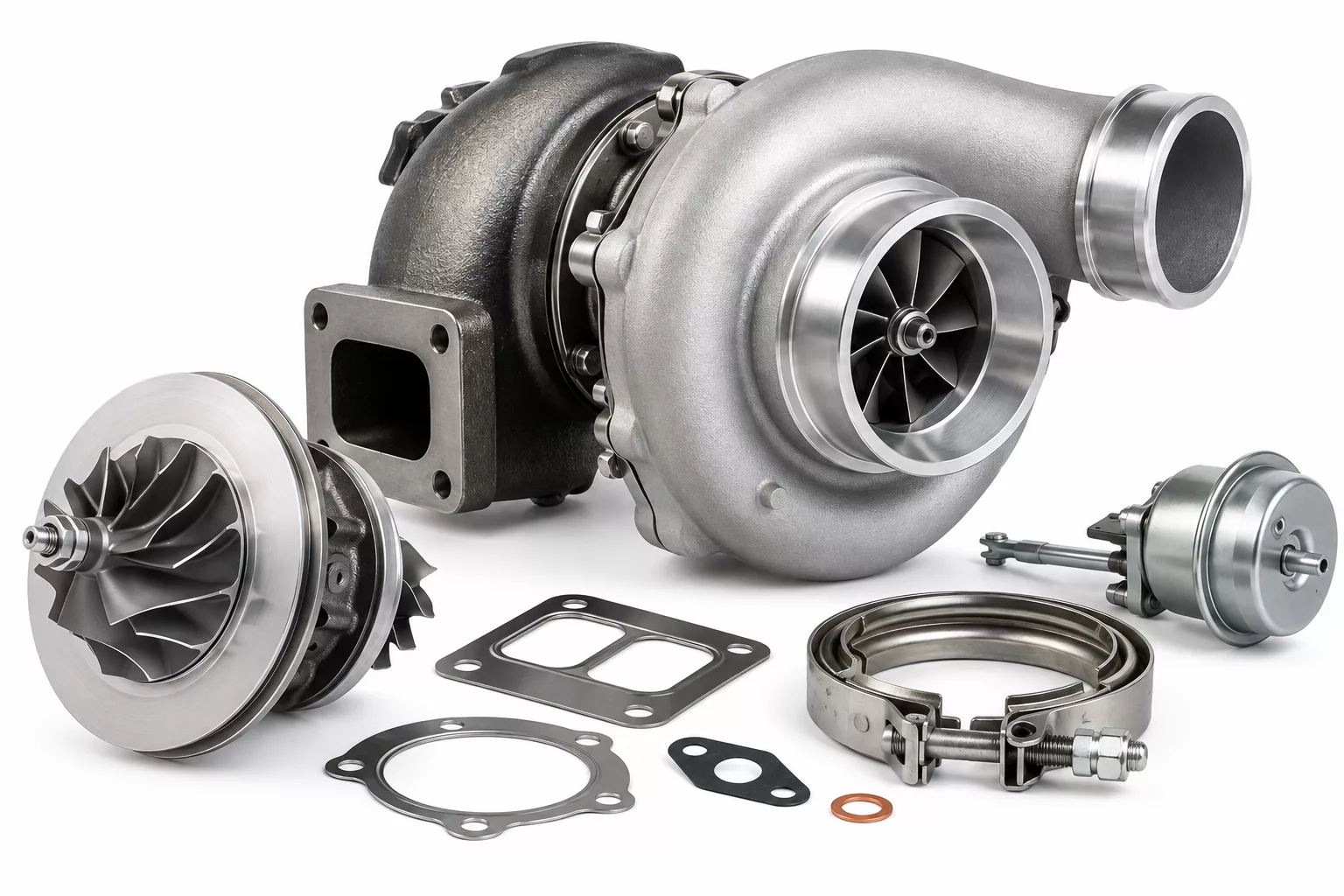
Don't Blame the Turbocharger Too Quickly
A C18 that feels weak under load naturally puts the turbocharger under suspicion.
Sometimes the turbo really is the problem.
But a turbocharger is only one part of the air and exhaust path.
An intake restriction, charge-air leak, aftercooler problem, exhaust restriction, fuel issue or excessive propulsion load can produce similar complaints.
The symptoms need to be looked at together.
For more detail on this area, see our Caterpillar C-Series Turbocharger Inspection & Repair guide.
The C18 Aftercooling System
Caterpillar uses aftercooling on the C18 because compressed intake air needs to be cooled before entering the cylinders.
On applicable C18 configurations, Caterpillar also uses separate-circuit aftercooling, often shortened to SCAC.
The useful thing about this arrangement is that the aftercooling circuit can be managed separately from other engine cooling requirements.
For an engineer, the important point isn't memorizing the abbreviation.
It's understanding that a restriction or cooling problem on the charge-air side can affect how the engine performs when it's working hard.
That is different from a jacket-water temperature problem.
How Is the C18 Cooled?
Current C18 marine configurations can use heat-exchanger or keel-cooled arrangements, depending on the application.
Generator installations can also have radiator-cooled configurations.
This is another example of why the engine model alone doesn't describe the complete installation.
If someone says:
“We have a C18 cooling problem,”
the next question should be:
“Which cooling arrangement?”
The answer changes where you start looking.
C18 Lubrication and Oil Capacity
The lubrication system is doing a lot of work on an engine this size.
It supplies oil to heavily loaded internal surfaces, helps control heat and carries contamination toward the filtration system.
Caterpillar's current C18 marine information also shows different oil refill capacities and oil-change intervals depending on configuration.
That matters because even two C18 engines can have different sump arrangements.
We already cover those service differences in detail in our Caterpillar C18 Marine Engine Maintenance Schedule, so there is no reason to repeat the entire maintenance schedule here.
The important technical point is simple:
Identify the actual C18 configuration before applying an oil quantity or service interval.
What Fuel System Does the C18 Use?
The fuel arrangement depends on the particular C18 configuration and generation.
For example, Caterpillar's current C18 marine generator specification identifies an MEUI fuel system with electronic governing.
That doesn't mean every C18 ever built should be described from one generator data sheet.
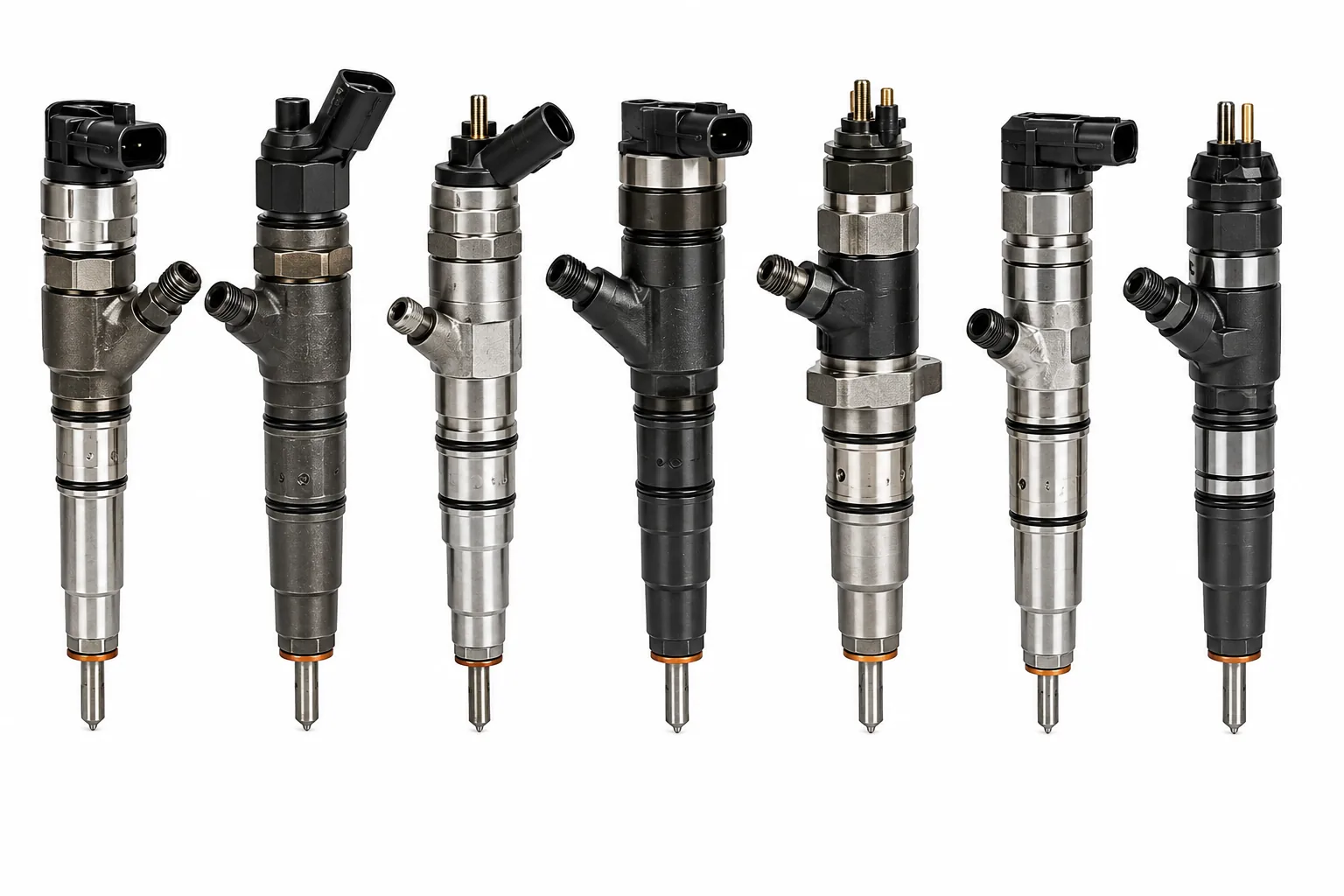
If you're identifying injectors, fuel-system parts, sensors or electronic controls, use the engine serial information rather than relying only on the C18 name.
That becomes even more important on older vessels where engines may have been in service for many years.
Electronic Controls Can Help, but They Don't Diagnose Everything for You
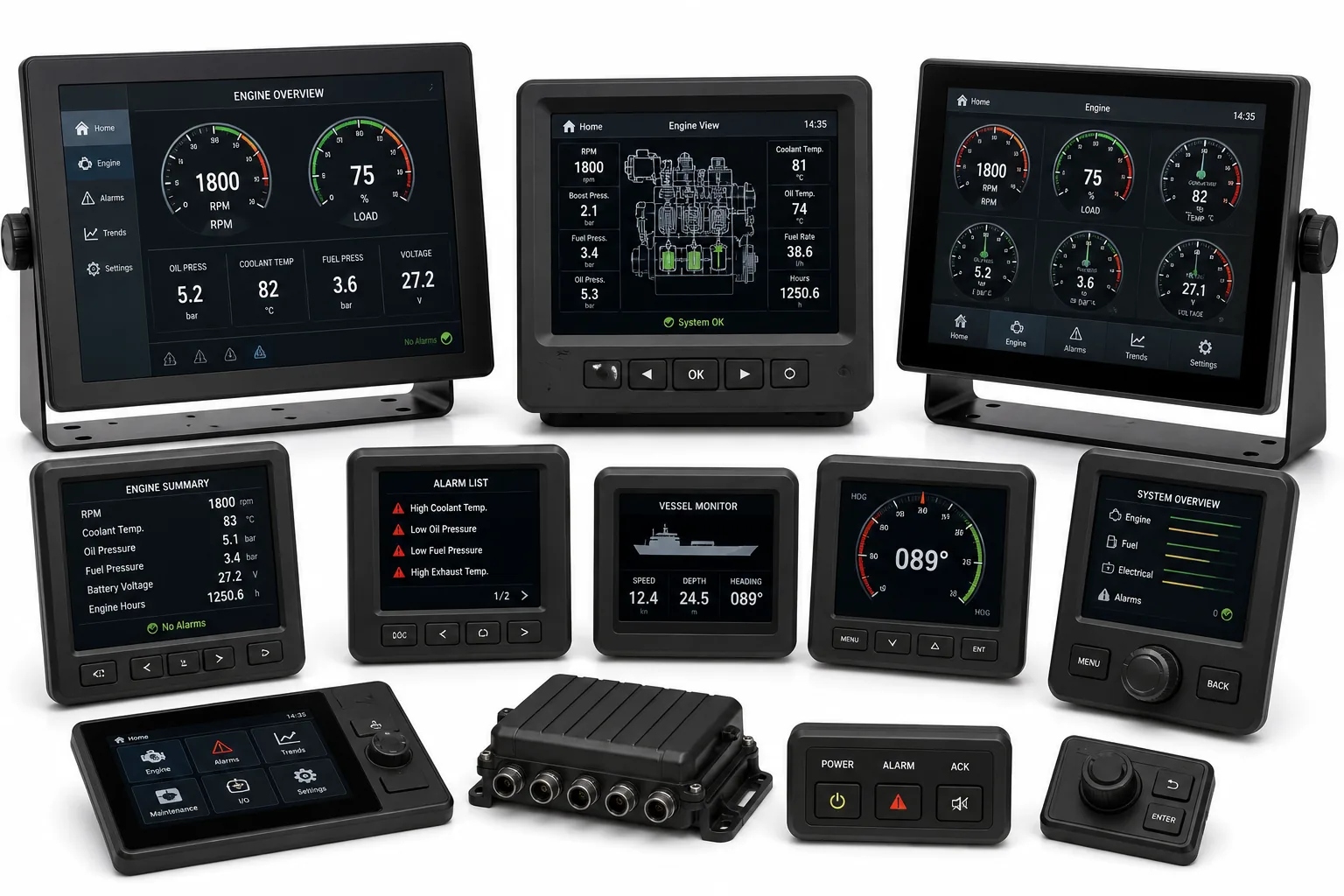
An electronically controlled C18 can provide useful engine data and fault information.
That's a big advantage when something changes.
But a fault code is still information, not necessarily an instruction to replace a part.
Suppose a sensor-related code appears.
The sensor might have failed.
But the sensor could also be reporting a real engine condition, or the problem could be in the wiring or connector.
A good engineer uses the code to decide where to investigate next.
Simply replacing whatever appears in the fault description can become expensive very quickly.
Sometimes the Problem Isn't Inside the C18
Here's a good example.
A vessel with twin C18 engines normally reaches the expected RPM.
After some time, the captain reports that one or both engines no longer reach the same speed and the vessel feels slower.
You could immediately start looking at fuel systems and turbochargers.
But what about the boat?
Is the hull heavily fouled?
What condition are the propellers in?
Has a propeller been repaired or changed?
Is the transmission operating correctly?
Has vessel displacement increased?
The engine only knows how much load it sees.
It doesn't know whether that load is coming from a dirty propeller, the vessel, the gearbox or an internal engine problem.
Marine troubleshooting has to look beyond the engine room sometimes.
Engine RPM Isn't Propeller RPM
The C18 normally drives the propeller through a marine transmission.
That transmission reduces engine speed before it reaches the propeller shaft.
For example, if a C18 were running at 2000 RPM through a hypothetical 2.5:1 reduction gearbox, simplified propeller speed would be:
2000 ÷ 2.5 = 800 RPM
That doesn't mean every C18 should use a 2.5:1 gearbox.
It's simply an example showing why engine RPM and propeller RPM shouldn't be confused.
When discussing propulsion performance, always record the transmission model and reduction ratio as well.
A Real C18 Vessel Example
Imagine you've just taken over engineering responsibility for a vessel with two Caterpillar C18s.
The previous engineer left several specification sheets onboard.
One says 600-something horsepower.
Another shows more than 800.
Another C18 document refers to generator ratings.
Which one belongs to your engines?
Don't guess.
Walk down to the engine room.
Take a photograph of each nameplate.
Record the serial numbers.
Record the rated power.
Record the rated RPM.
Check the transmission model and ratio.
Now you have something useful.
Once those details are known, you can match the technical information to the actual engines instead of trying to make the engines fit whatever specification sheet happens to be in the vessel's folder.
What About C18 Rebuild Specifications?
That's a separate subject.
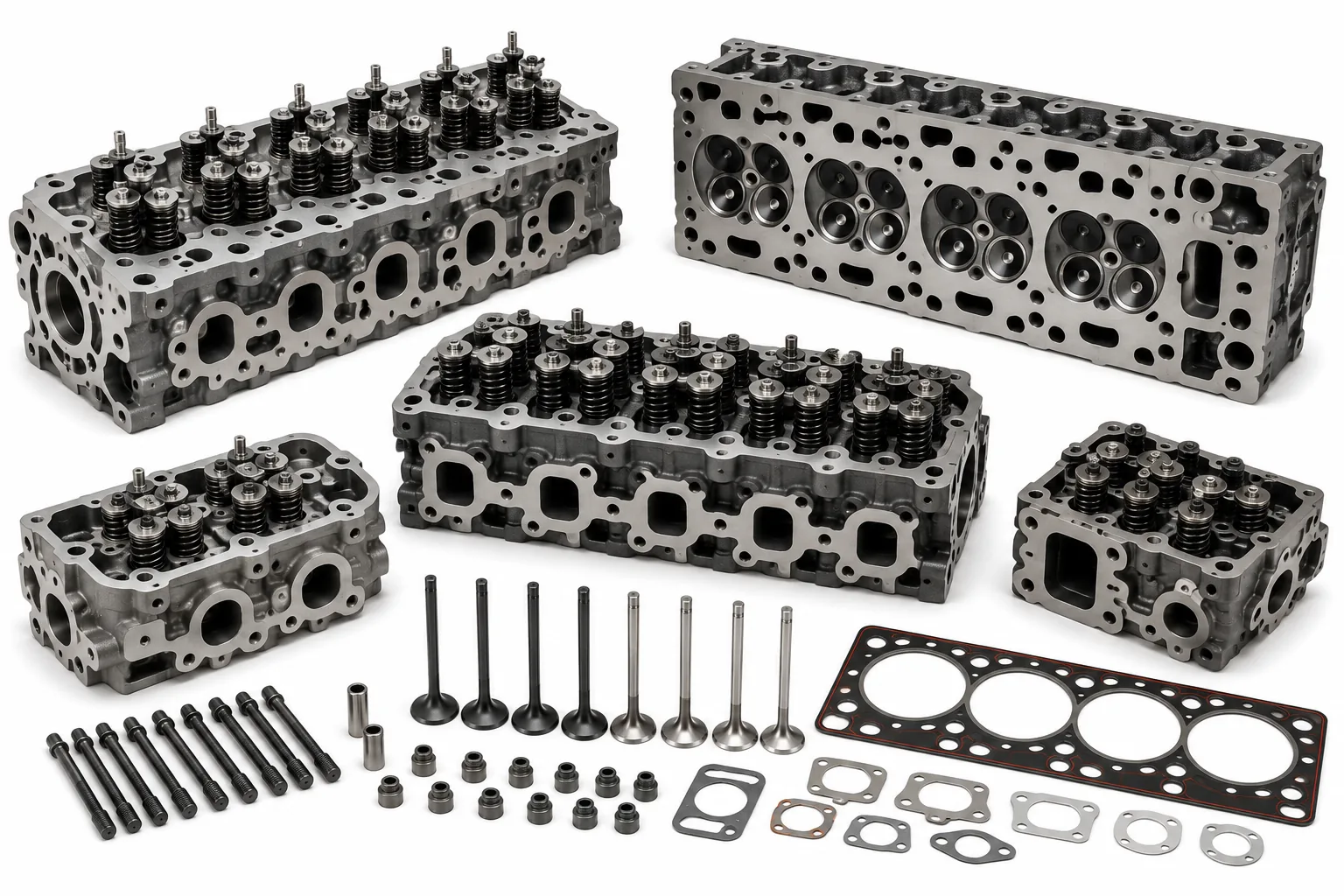
Once a C18 is being opened for an overhaul, you move into measurements, cylinder condition, pistons, liners, bearings, cylinder-head work, gasket sets and exact rebuild-part identification.
We've deliberately kept that out of this article because it already has its own guide.
If you're at that stage, see Caterpillar C18 Marine Engine Rebuild Parts & Overhaul Kits.
That keeps this guide about how the C18 works and how its specifications fit together, rather than turning it into another rebuild article.
Where Does the C18 Fit in the Caterpillar Marine Range?
The C18 sits above engines such as the C15 in displacement and moves Caterpillar's C-Series range into a substantial power class for commercial and higher-performance marine applications.
But bigger displacement doesn't automatically make it the right engine for every vessel.
The correct engine depends on what the boat needs to do.
A commercial vessel expected to work for long periods under load has different requirements from a fast yacht, and both are different again from a generator installation.
That's why engine selection is about application and duty, not simply choosing the biggest horsepower number.
For a wider look at the range, see Caterpillar Marine Engine Types & Applications.
You can also browse the Caterpillar C-Series Marine Engine Parts page.
How Do You Identify the Exact C18?
If you're checking specifications or trying to identify parts, collect as much information from the engine as possible.
Useful details include:
- Complete engine model
- Engine serial number
- Serial-number prefix
- Arrangement number where available
- Rated horsepower or kW
- Rated RPM
- Propulsion, auxiliary or generator application
- Existing part number when identifying a part
For propulsion engines, also record the:
- Transmission model
- Reduction ratio
A clear photograph of the engine nameplate is one of the most useful things you can send.
It removes a lot of guesswork.
Why “C18” Alone Isn't Enough for Parts
Imagine the request says:
“Need injectors for CAT C18.”
We know the engine family.
That's useful.
But we still don't know enough to safely assume which injectors are fitted.
The same applies to turbochargers, pumps, sensors, coolers and many other parts.
C18 tells us where to start.
The serial number, arrangement and existing part number tell us where to finish.
Caterpillar C18 Technical Summary
The C18 is an 18.1-litre inline-six, four-stroke marine diesel with a 145 mm bore and 183 mm stroke.
It is turbocharged and aftercooled, with different configurations available for marine propulsion, auxiliary and generator applications.
Caterpillar's current marine information shows an overall C18 power range reaching approximately 454–1,136 bhp, while current commercial propulsion ratings are specifically described in the 454–803 bhp at 1800–2100 RPM range.
The C18 generator tells another part of the story. Current marine generator configurations run at 1500 RPM for 50 Hz or 1800 RPM for 60 Hz, with electrical ratings rather than propulsion horsepower used to describe their output.
That's why the most useful C18 specification is never simply:
“18.1 litres and X horsepower.”
You need to know what the engine was built to do.
Once you have the application, rating, RPM and engine identification, all those different C18 specifications start to make sense.
Frequently Asked Questions
Why do I find so many different horsepower figures for the Caterpillar C18?
Because the C18 has been offered in different marine ratings and applications. Commercial propulsion, higher-performance propulsion and generator installations don't use the engine in exactly the same way. Always compare the horsepower together with rated RPM, application and the identification on your actual engine.
My C18 doesn't reach the RPM shown on another C18. Is something wrong?
Not necessarily. First check the rated RPM on your own engine. If your C18 genuinely cannot reach its specified speed under the correct operating conditions, then engine performance, fuel and air supply, turbocharging, exhaust, cooling, propeller load, transmission and vessel condition can be investigated as appropriate.
What information should I send when I need C18 technical information or spare parts?
Send the complete engine model, serial number, rated power and RPM, arrangement number where available, and any existing part number. A clear engine-nameplate photograph is extremely useful. For propulsion questions, include the marine transmission model and reduction ratio as well.
Related Caterpillar C18 Information
For engine and spare-parts information, see Caterpillar C18 Marine Engine Parts.
For the wider engine family, visit Caterpillar C-Series Marine Engine Parts.
For scheduled service information, read Caterpillar C18 Marine Engine Maintenance Schedule.
For overhaul work, see Caterpillar C18 Marine Engine Rebuild Parts & Overhaul Kits.
For turbocharger inspection, see Caterpillar C-Series Turbocharger Inspection & Repair.
For the wider Caterpillar marine range, read Caterpillar Marine Engine Types & Applications.
Technical Information Notice
Caterpillar C18 specifications vary by engine rating, generation, emissions configuration, application and installation. Always verify rated power, RPM, technical information and replacement parts against the identification data for the individual engine.
Alfa Marine Spare Parts is an independent supplier and is not an authorized Caterpillar dealer or official representative. Caterpillar names, engine models and part numbers are used only for identification and technical reference.
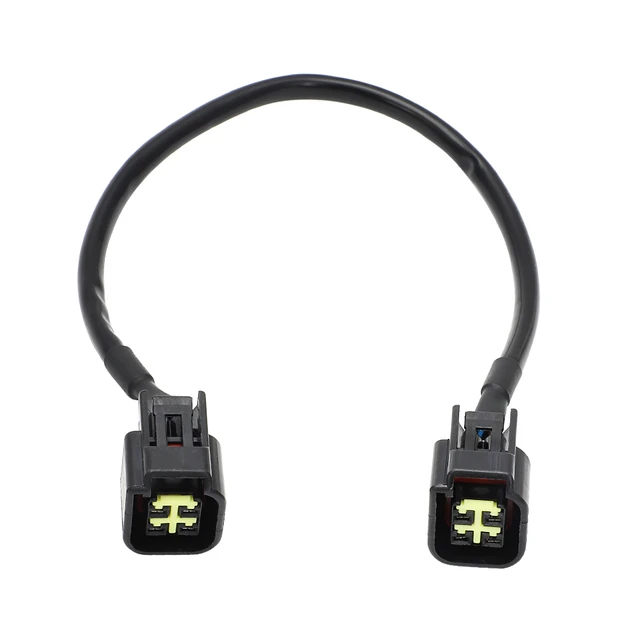 HARNESSES AND WIRE SENSORS
 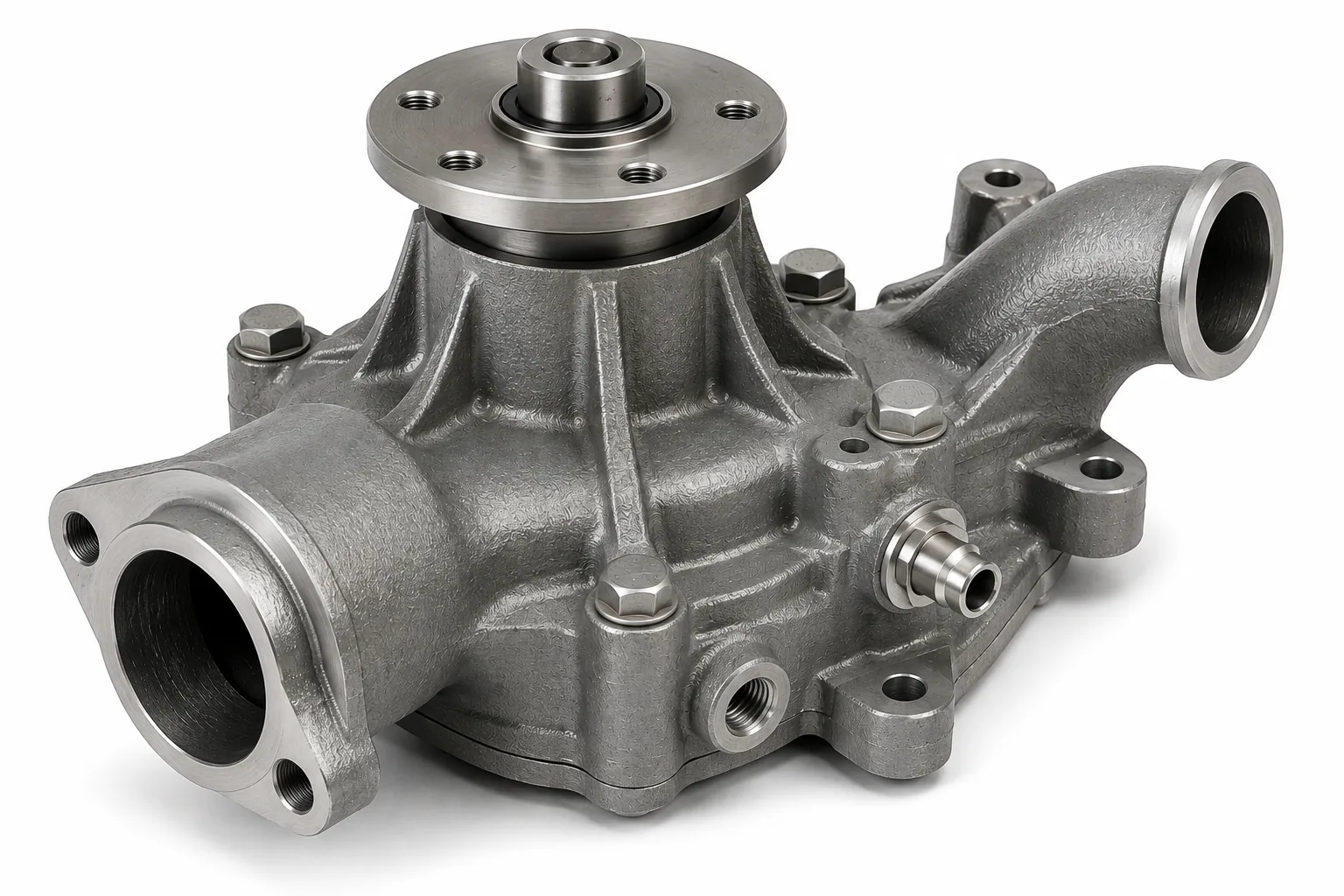 WATER PUMP
  CYLINDER HEAD
  DISPLAY MONITORS
  Turbocharger & Cartridge
  INJECTORS