
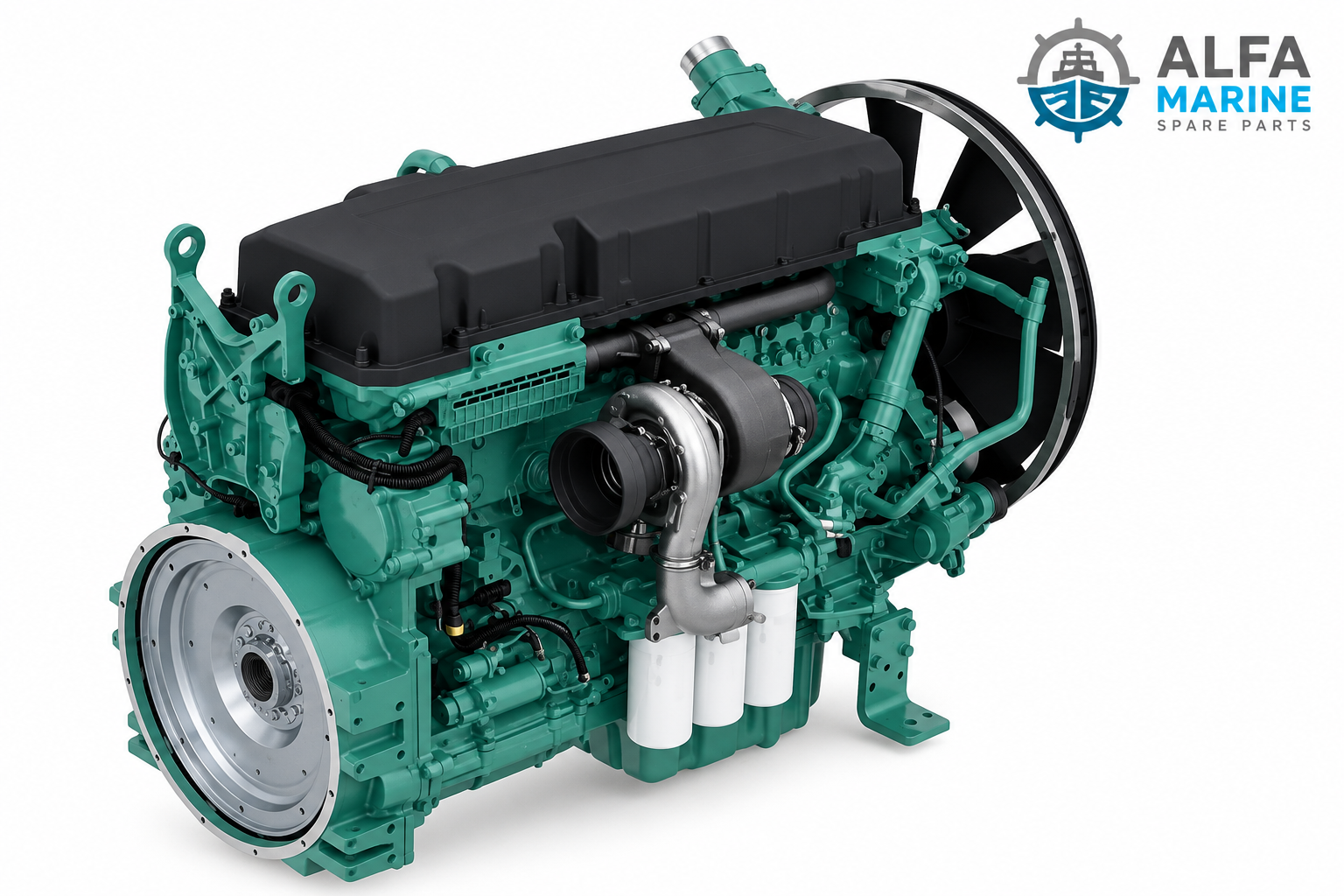

Volvo Penta D13 Low Boost & Black Smoke: Is the Turbocharger the Problem?
Your Volvo Penta D13 starts normally and sounds fine at low RPM.
But once you open the throttle and put the engine under load, something doesn't feel right.
Maybe it takes longer to build power. You see more black smoke than usual, or the engine simply won't reach the RPM it normally does.
The first thought is often:
“Is the turbo going bad?”
It could be. But don't order a turbocharger yet.
A problem elsewhere on the engine can give you very similar symptoms.
For parts and engine information, see our Volvo Penta Marine Engine Parts page.
Start With the Air Side
Before blaming the turbo, have a look at how air is getting into the engine.
Is the air filter or intake restricted?
Is there a loose connection?
Can you see a damaged hose or pipe?
A D13 needs enough clean air when it's working hard. If the airflow is restricted, the problem may hardly be noticeable at low RPM but become much more obvious once you ask for power.
Check for a Boost Leak
This is an important one.
The turbo may be producing boost, but that doesn't mean all of that air is reaching the engine.
Check the charge-air pipes or hoses, connections and charge-air cooler, depending on the installation.
A damaged hose or loose connection can let pressurized air escape.
Sometimes you'll hear it. Sometimes you'll see an oily mark around the leaking connection.
If the engine suddenly started smoking and losing power, have a good look around the boost side before assuming the turbocharger itself has failed.
What Is the Black Smoke Telling You?
Black smoke can appear when the engine is getting more fuel than the available air can burn cleanly.
A turbo problem can contribute to that, but so can restricted airflow, a boost leak or another engine problem.
That's why I wouldn't diagnose the turbo from the smoke alone.
Ask yourself:
Does it smoke only when accelerating?
Does the smoke continue once the engine reaches speed?
Is the engine also struggling to reach its normal RPM?
Those details help narrow things down.
Listen to the Turbo
Has the sound changed?
A new whistle, rubbing noise or noticeable change in turbo sound deserves attention.
With the engine safely shut down, the turbocharger and surrounding connections can be checked for obvious damage, oil leakage or anything unusual.
Any internal turbo inspection should follow the correct procedure for the exact D13 version.
Don't Forget the Oil Supply
The turbocharger depends on the engine's lubrication system.
If you're checking a suspected turbo problem, the turbo oil supply and drain also deserve attention.
Problems with the turbocharger oil supply or drain can contribute to turbo damage.
And if the old turbo really has failed, find out why it failed before fitting another one.
Otherwise, the replacement could end up with the same problem.
Could It Be Something Other Than the Turbo?
Yes.
If the air and boost system look good, don't keep replacing turbo parts hoping the problem disappears.
Fuel delivery, injectors, sensors, exhaust restriction, engine-management faults or an engine working harder than normal can produce similar symptoms.
The way the problem started matters too.
Did it happen suddenly?
Did it appear after maintenance?
Has the boat recently lost speed at the same RPM?
Those clues can point you in a completely different direction.
Need Volvo Penta D13 Parts?
Once you know what you need, make sure you're ordering the correct part for your particular D13.
There are different D13 versions and installations, so “Volvo Penta D13” alone is not enough to identify the correct turbocharger.
Check the complete engine designation and serial number before ordering.
For a quote, send us your:
Engine model · Serial number · Existing part number · Quantity · Delivery destination
Don't know the part number?
Send us a clear photo of the complete engine nameplate and the part you need.
Request a Quote
Frequently Asked Questions
Does black smoke mean my Volvo Penta D13 turbo is bad?
Not necessarily. A turbocharger problem can contribute to black smoke and poor power, but a restricted air intake, boost leak, fuel problem or another engine fault can produce similar symptoms.
Why does my D13 have power at low RPM but struggle under load?
The problem may only become noticeable when the engine needs more air and fuel. Check the intake and charge-air system first, including pipes or hoses and their connections, before assuming the turbocharger has failed.
Should I replace the turbo if the engine has low boost?
Not until you know why the boost is low. Check for air restrictions and charge-air leaks first. If the turbocharger itself is damaged, the cause of the damage should also be found before installing a replacement.