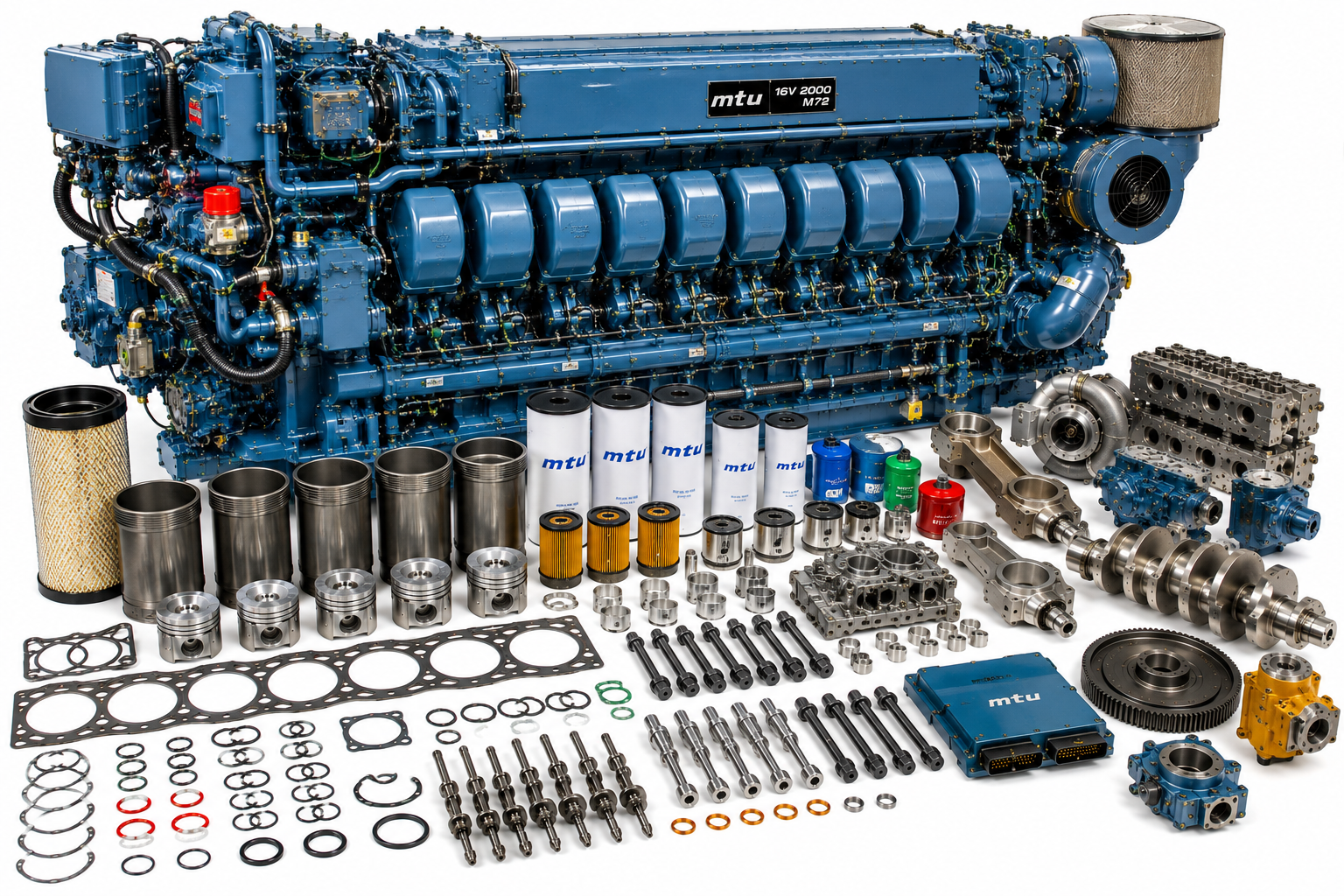
MTU 16V 2000 M72 Marine Engine Spare Parts
What Is the MTU 16V 2000 M72 Marine Engine?
The MTU 16V 2000 M72 Marine Engine is a high-performance V16 marine diesel engine from the trusted MTU Series 2000 family. Designed for demanding marine propulsion applications, the 16V 2000 M72 delivers exceptional horsepower, rapid acceleration, excellent fuel efficiency, and outstanding long-term reliability. It has become a preferred propulsion engine for luxury yachts, commercial operators, and government fleets operating around the world.
The engine features MTU Electronic Diesel Control (MDEC), electronically controlled direct fuel injection, twin turbochargers, charge air cooling, and a closed-circuit freshwater cooling system. Together, these technologies provide precise fuel management, improved combustion efficiency, dependable performance, and reduced operating costs throughout the engine's service life.
The MTU 16V 2000 M72 is widely installed in superyachts, luxury yachts, patrol vessels, pilot boats, crew transfer vessels, offshore support vessels, passenger ferries, commercial fishing vessels, fast workboats, rescue boats, and Coast Guard vessels.
At Alfa Marine Spare Parts, we supply a complete range of OEM, genuine, aftermarket, and remanufactured MTU 16V 2000 M72 marine engine spare parts for preventive maintenance, emergency repairs, and complete engine overhauls.
MTU 16V 2000 M72 Marine Engine Technical SpecificationsSpecificationDetailsEngine TypeFour-stroke marine diesel engineEngine FamilyMTU Series 2000Engine Model16V 2000 M72Configuration90° V16Fuel SystemElectronically controlled direct fuel injectionAspirationTwin turbocharged with charge air coolingCooling SystemClosed freshwater cooling with seawater heat exchangerEngine ManagementMTU Electronic Diesel Control (MDEC)ApplicationsMarine propulsion and auxiliary powerMTU 16V 2000 M72 Marine Engine Applications
The MTU 16V 2000 M72 is commonly installed in:
- Luxury yachts
- Superyachts
- Sport fishing yachts
- Patrol boats
- Pilot boats
- Crew transfer vessels
- Passenger ferries
- Offshore support vessels
- Commercial fishing vessels
- Fast workboats
- Rescue boats
- Fireboats
- Government vessels
- Coast Guard vessels
- High-speed commercial craft
Its powerful V16 configuration and proven MTU engineering make it an ideal propulsion engine for demanding marine applications.
Why Is the MTU 16V 2000 M72 Marine Engine So Popular?
The MTU 16V 2000 M72 has earned an excellent reputation because it offers:
- Outstanding power-to-weight ratio
- Proven MTU engineering
- Excellent fuel efficiency
- Fast throttle response
- Low vibration and noise levels
- Advanced electronic engine management
- Long service life
- Reliable continuous-duty performance
- Worldwide spare parts availability
- Lower operating costs
These advantages make it one of the most respected engines in the MTU Series 2000 family.
Major Components of the MTU 16V 2000 M72 Marine Engine
The MTU 16V 2000 M72 is built using precision-engineered components designed for reliable operation and extended service life.
Fuel Injection System
The electronically controlled fuel injection system delivers accurately metered fuel into each combustion chamber to maximize efficiency and engine performance.
Routine inspections should include:
- Fuel injectors
- High-pressure fuel lines
- Fuel pumps
- Fuel filters
- Electronic fuel sensors
Twin Turbochargers
Twin turbochargers compress intake air before combustion to improve engine power and fuel efficiency.
Routine inspections include:
- Bearing condition
- Compressor wheels
- Turbine housings
- Shaft movement
- Oil supply and return lines
Charge Air Cooler
The charge air cooler lowers compressed intake air temperature before combustion.
Benefits include:
- Increased engine power
- Improved combustion efficiency
- Lower exhaust temperatures
- Better fuel economy
Routine cleaning helps maintain optimum cooling efficiency.
Cylinder Heads
The cylinder heads contain:
- Intake valves
- Exhaust valves
- Fuel injectors
- Combustion chambers
- Cooling passages
Routine inspections help detect cracks, valve wear, and gasket failures before major repairs become necessary.
Pistons
Heavy-duty pistons convert combustion pressure into mechanical energy while operating under high temperatures and heavy engine loads.
Cylinder Liners
Replaceable cylinder liners provide a durable wear surface that maintains compression and contributes to extended engine service life.
Connecting Rods
Connecting rods transfer combustion forces from the pistons to the crankshaft while maintaining smooth engine operation.
Crankshaft
The forged steel crankshaft converts piston movement into rotational power that drives the vessel's propulsion system.
Routine oil analysis and bearing inspections help maximize crankshaft service life.
Camshaft
The camshaft controls valve timing and ensures efficient airflow and combustion throughout the engine's operating range.
Fresh Water Pump
The freshwater pump circulates coolant through the engine block and cylinder heads to maintain proper operating temperatures.
Sea Water Pump
The seawater pump circulates seawater through the heat exchanger to remove engine heat efficiently.
Routine inspection of the impeller, bearings, seals, shaft, and housing helps maintain dependable cooling performance.
Heat Exchanger
The heat exchanger transfers heat from the freshwater cooling circuit to seawater, maintaining stable engine temperatures during continuous marine operation.
Lubrication System
The lubrication system consists of:
- Oil pump
- Oil cooler
- Oil filters
- Pressure relief valves
- Oil galleries
This system minimizes friction, removes heat, and protects internal engine components from premature wear.
Why Preventive Maintenance Matters
Routine preventive maintenance is essential for maximizing the reliability and service life of the MTU 16V 2000 M72 Marine Engine. Regular inspection of the fuel system, turbochargers, lubrication system, cooling system, and internal engine components helps improve fuel efficiency, reduce operating costs, extend engine life, and minimize unexpected downtime.
Using high-quality replacement parts during scheduled maintenance helps preserve engine performance and ensures dependable operation throughout the engine's service life.