Quote

Menu

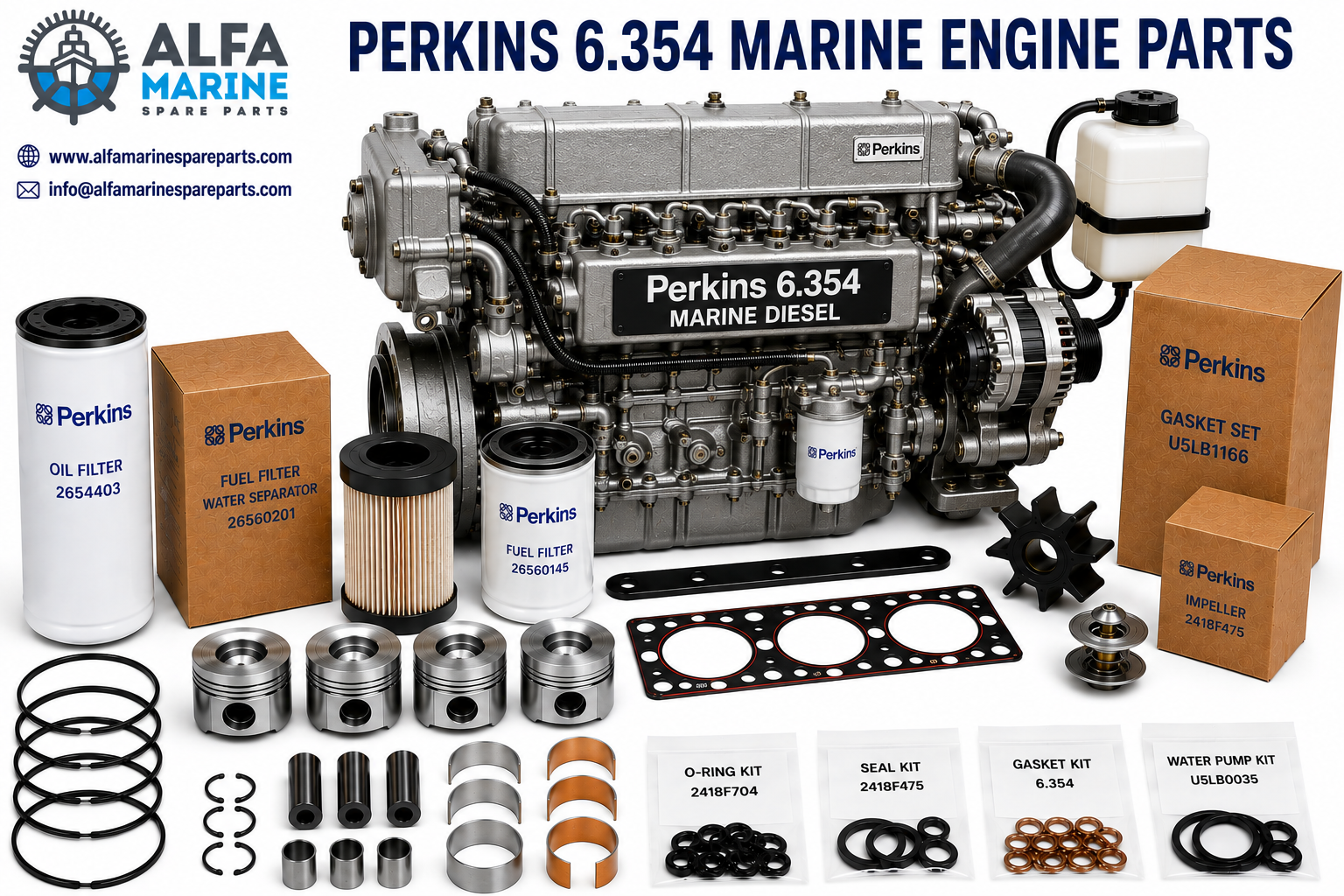
Perkins 6.354 Marine Engine Parts

Perkins 6.354 Marine Engine Parts

Perkins 6.354 Marine Engine Spare Parts

The Perkins 6.354 Marine Engine is one of the best-known older Perkins diesel engine families used in marine propulsion and auxiliary applications. The 6.354 designation is closely associated with its six-cylinder configuration and approximately 354 cubic-inch displacement.

These engines have been installed in many types of vessels over the years, including motor yachts, sailing vessels, fishing boats, workboats and commercial craft.

Because many Perkins 6.354 engines have been operating for decades, sourcing the correct replacement component requires more than simply saying, "I need a part for a Perkins 6.354."

Engine version, serial number, build information and the identification on the currently installed component can all be important.

Alfa Marine Spare Parts supports Perkins 6.354 Marine Engine Spare Parts requirements for:

  • Planned Maintenance
  • Engine-Room Repairs
  • Yacht Refits
  • Commercial Vessel Repairs
  • Fuel-System Repairs
  • Cooling-System Repairs
  • Cylinder Head Repairs
  • Internal Engine Repairs
  • Major Overhauls
  • Spare Parts Planning
  • Restoration of Older Marine Engines

Depending on the component and availability, supply options can include:

  • Genuine Parts
  • OEM-Quality Components
  • Selected Aftermarket Parts
  • Remanufactured Components
  • Maintenance Parts
  • Repair Components
  • Overhaul Parts

What Are the Technical Specifications of the Perkins 6.354?

The 6.354 family was produced in multiple versions and configurations, so specifications should always be checked against the particular engine.

SpecificationPerkins 6.354ManufacturerPerkinsEngine Family6.354ApplicationMarine Propulsion / Marine AuxiliaryConfigurationInline 6-CylinderCycleFour-Stroke DieselFuelDieselDisplacementApprox. 5.8 Litres / 354 cu inCoolingLiquid-Cooled Marine InstallationAspirationVaries by 6.354 VersionFuel SystemMechanical Diesel InjectionTypical ApplicationsYachts, Fishing Vessels, Workboats & Commercial Craft

Power output, rated speed, aspiration, cooling arrangement and individual components can differ between versions and installations.

For this reason, parts should not be selected from the 6.354 designation alone.

What Does 6.354 Mean?

The model designation reflects two important characteristics of the engine family:

6 — Six cylinders.

354 — Approximately 354 cubic inches of engine displacement.

This corresponds to roughly 5.8 litres.

Are All Perkins 6.354 Marine Engines the Same?

No.

This is especially important when sourcing parts for this engine family.

Different versions and production periods can have differences in areas such as:

  • Aspiration
  • Fuel Injection Equipment
  • Cooling Arrangement
  • Exhaust Arrangement
  • Raw-Water Pump
  • Electrical Equipment
  • Pistons
  • Cylinder Head Components
  • Gaskets
  • Internal Engine Components
  • Marine Accessories

Previous repairs can introduce additional differences.

Why Is the Perkins 6.354 Serial Number So Important?

The 6.354 is an established engine family with many engines having undergone years or decades of maintenance.

During that time, components may have been:

  • Rebuilt
  • Reconditioned
  • Exchanged
  • Replaced
  • Modified
  • Superseded
  • Updated

When requesting parts, the engine identification should therefore be combined with information from the currently installed component whenever possible.

Perkins 6.354 Routine Maintenance Parts

Common requirements can include:

  • Engine Oil Filters
  • Fuel Filters
  • Fuel-Water Separator Elements
  • Air Cleaner Components
  • Raw-Water Pump Impellers
  • Drive Belts
  • Thermostats
  • Gaskets
  • O-Rings
  • Seals
  • Cooling-System Components
  • Service Kits

Does an Older Perkins 6.354 Need Different Maintenance?

Age alone does not determine maintenance requirements, but older engines often need additional attention to systems affected by corrosion, deterioration and previous repairs.

Important areas can include:

  • Cooling-System Condition
  • Fuel-System Condition
  • Lubricating-Oil Pressure
  • Oil and Coolant Leakage
  • Exhaust Condition
  • Electrical Connections
  • Engine Mounts
  • Hoses
  • Seals
  • Gaskets

Operating hours and maintenance history remain important.

Perkins 6.354 Fuel-System Parts

Potential requirements can include:

  • Fuel Injectors
  • Injector Nozzles
  • Fuel Injection Pump Components
  • Fuel Lift Pump
  • Primary Fuel Filters
  • Secondary Fuel Filters
  • Fuel-Water Separator Components
  • Injector Pipes
  • Fuel Supply Pipes
  • Fuel Return Components
  • Fuel Connections
  • Gaskets
  • Seals
  • O-Rings

Perkins 6.354 Fuel Injectors

Potential requirements can include:

  • Complete Fuel Injectors
  • Injector Nozzles
  • Injector Seals
  • Injector Pipes
  • Fuel Return Components
  • Associated Hardware

What Are Possible Signs of Perkins 6.354 Injector Problems?

Possible symptoms can include:

  • Difficult Starting
  • Rough Running
  • Uneven Cylinder Operation
  • Excessive Exhaust Smoke
  • Reduced Engine Power
  • Increased Fuel Consumption
  • Abnormal Combustion Noise

Injector failure should not automatically be assumed from these symptoms.

Fuel quality, filtration, injection-pump condition, compression and air supply can produce similar problems.

Perkins 6.354 Fuel Injection Pump Parts

The mechanical fuel-injection system is an important part of the 6.354 engine.

Potential requirements can include:

  • Complete Fuel Injection Pump
  • Injection Pump Components
  • Pump Seals
  • Fuel Connections
  • Fuel Pipes
  • Associated Gaskets
  • Related Fuel-System Components

Why Should the Existing Injection Pump Be Identified?

On an older Perkins 6.354, the fuel-injection pump may have been rebuilt or exchanged previously.

When requesting a replacement or repair component, useful information can include:

  • Engine Serial Number
  • Injection Pump Manufacturer
  • Pump Model
  • Pump Identification Number
  • Existing Part Number
  • Clear Photographs of the Pump Identification Plate

This is generally more reliable than assuming every 6.354 uses identical fuel equipment.

Perkins 6.354 Fuel Lift Pump

Potential requirements can include:

  • Complete Fuel Lift Pump
  • Pump Components
  • Seals
  • Gaskets
  • Connections
  • Associated Fuel Lines

A weak or defective lift pump can contribute to poor fuel supply, difficult starting and unstable engine operation.

Perkins 6.354 Fuel Filter Parts

Potential requirements can include:

  • Primary Fuel Filters
  • Secondary Fuel Filters
  • Filter Elements
  • Fuel-Water Separators
  • Filter Housings
  • Filter Seals
  • O-Rings
  • Drain Components

Why Is Fuel Filtration Important on an Older 6.354?

Older marine fuel tanks can contain:

  • Water
  • Sediment
  • Rust
  • Tank Debris
  • Microbial Contamination

Contamination can contribute to injector wear, injection-pump problems and unreliable engine operation.

Perkins 6.354 Air Intake Parts

Depending on the particular engine version, potential requirements can include:

  • Air Cleaner Components
  • Air Filter Components
  • Intake Hoses
  • Intake Pipes
  • Intake Manifold Components
  • Clamps
  • Gaskets
  • Seals
  • Associated Air-System Components

Because the 6.354 family exists in different configurations, the exact intake and aspiration arrangement should be confirmed from the individual engine.

Perkins 6.354 Raw-Water Cooling System Parts

For marine installations using a raw-water circuit, potential requirements can include:

  • Complete Raw-Water Pump
  • Seawater Pump Components
  • Flexible Impeller
  • Pump Cover
  • Pump Shaft
  • Pump Bearings
  • Mechanical Seals
  • Cooling Hoses
  • Seawater Pipes
  • Connections
  • Gaskets
  • O-Rings

Why Is the Perkins 6.354 Raw-Water Pump Important?

The raw-water pump maintains seawater circulation through the marine cooling circuit.

Reduced seawater flow can contribute to:

  • Engine Overheating
  • Rising Coolant Temperature
  • High Exhaust Temperature
  • Reduced Heat Exchanger Performance
  • Wet-Exhaust Cooling Problems

Low seawater flow does not automatically mean that the pump itself has failed.

The complete circuit should be inspected.

What Should Be Checked When 6.354 Seawater Flow Drops?

Areas to investigate can include:

  • Seacock
  • Raw-Water Intake
  • Sea Strainer
  • Intake Hose
  • Raw-Water Pump
  • Flexible Impeller
  • Pump Cover
  • Cooling Hoses
  • Heat Exchanger
  • Exhaust Cooling Components
  • Downstream Cooling Passages

Perkins 6.354 Raw-Water Pump Impeller

The flexible impeller is a relatively small component, but failure can have serious consequences.

If an impeller has missing blades, fragments can potentially become trapped inside:

  • Cooling Hoses
  • Pipe Connections
  • Heat Exchanger Passages
  • Other Cooling Components

This means fitting a new impeller may not completely solve a low-flow problem.

Perkins 6.354 Freshwater Pump Parts

Potential requirements can include:

  • Complete Freshwater Pump
  • Coolant Circulation Pump
  • Pump Housing
  • Pump Shaft
  • Bearings
  • Seals
  • Gaskets
  • O-Rings

Perkins 6.354 Heat Exchanger Parts

Depending on the marine installation, potential requirements can include:

  • Complete Heat Exchanger
  • Heat Exchanger Core
  • Tube Bundle
  • Housing
  • End Covers
  • End-Cap Seals
  • Raw-Water Connections
  • Coolant Connections
  • Gaskets
  • O-Rings
  • Seals

What Can Restrict a Perkins 6.354 Heat Exchanger?

Possible causes can include:

  • Salt Deposits
  • Scale
  • Marine Growth
  • Sediment
  • Corrosion
  • Broken Impeller Pieces
  • Other Debris

An older heat exchanger may also suffer from internal corrosion or deterioration of sealing components.

Why Can a Perkins 6.354 Overheat Under Load?

An engine may appear to operate normally at idle but begin running hot when propulsion load increases.

This can happen because the cooling system must remove considerably more heat under load.

Areas worth investigating can include:

  • Seacock
  • Sea Strainer
  • Raw-Water Intake
  • Raw-Water Pump
  • Impeller
  • Cooling Hoses
  • Heat Exchanger
  • Thermostat
  • Freshwater Pump
  • Coolant Level
  • Coolant Condition
  • Exhaust Cooling Circuit

A partially restricted system may provide adequate cooling at idle but insufficient cooling at higher engine load.

Perkins 6.354 Thermostat Parts

Potential requirements can include:

  • Thermostats
  • Thermostat Housing
  • Thermostat Gaskets
  • O-Rings
  • Seals
  • Associated Hardware

Perkins 6.354 Lubrication-System Parts

Potential requirements can include:

  • Engine Oil Filters
  • Oil Filter Elements
  • Oil Pump Components
  • Oil Cooler
  • Oil Cooler Components
  • Oil Pressure Components
  • Oil Pipes
  • Oil Lines
  • Oil Pan Components
  • Gaskets
  • O-Rings
  • Crankshaft Seals

Why Is Oil Pressure Important on an Older Perkins 6.354?

Lubricating oil protects components including:

  • Crankshaft Journals
  • Main Bearings
  • Connecting Rod Bearings
  • Pistons
  • Camshaft
  • Valve-Train Components

Abnormal oil pressure should be investigated rather than treated only as an instrumentation issue.

Possible causes can involve the oil itself, oil level, filters, pump condition, bearing clearances or pressure-monitoring components.

Perkins 6.354 Oil Cooler Parts

Depending on the marine configuration, potential requirements can include:

  • Complete Oil Cooler
  • Oil Cooler Core
  • Oil Cooler Housing
  • Oil Connections
  • Cooling Connections
  • Gaskets
  • O-Rings
  • Seals

Perkins 6.354 Cylinder Head Parts

Potential requirements can include:

  • Complete Cylinder Head
  • Intake Valves
  • Exhaust Valves
  • Valve Guides
  • Valve Seats
  • Valve Springs
  • Rocker Components
  • Valve-Train Components
  • Cylinder Head Gasket
  • Valve Cover Gaskets
  • Injector Sealing Components

When Should a Perkins 6.354 Cylinder Head Be Inspected?

Inspection may become necessary following:

  • Severe Overheating
  • Coolant Loss
  • Head-Gasket Failure
  • Low Compression
  • Valve Damage
  • Coolant Leakage
  • Abnormal Combustion
  • Major Engine Overhaul

Should an Old Perkins 6.354 Cylinder Head Automatically Be Replaced?

No.

Age alone does not determine whether a cylinder head is reusable.

Inspection should consider:

  • Cracking
  • Corrosion
  • Flatness
  • Valve Condition
  • Valve-Seat Condition
  • Valve-Guide Wear
  • Sealing Surfaces
  • Previous Machining
  • Overheating Damage

A serviceable cylinder head may be suitable for rebuilding.

Perkins 6.354 Pistons and Piston Rings

Potential requirements can include:

  • Pistons
  • Piston Ring Sets
  • Piston Pins
  • Piston Pin Bushings
  • Retaining Components

What Can Worn Perkins 6.354 Piston Rings Cause?

Possible symptoms can include:

  • Excessive Blow-By
  • Increased Oil Consumption
  • Reduced Compression
  • Difficult Starting
  • Exhaust Smoke
  • Reduced Engine Power

Piston, ring and cylinder condition should be evaluated together during an overhaul.

Perkins 6.354 Connecting Rod Parts

Potential requirements can include:

  • Connecting Rods
  • Connecting Rod Bearings
  • Small-End Bushings
  • Connecting Rod Bolts
  • Associated Hardware

Perkins 6.354 Main and Connecting Rod Bearings

Potential requirements can include:

  • Main Bearing Sets
  • Connecting Rod Bearing Sets
  • Thrust Bearings
  • Thrust Washers

Why Is Bearing Identification Especially Important on an Older 6.354?

The crankshaft may have been machined during a previous overhaul.

It may have been:

  • Polished
  • Reground
  • Repaired
  • Replaced

This means bearing selection should be based on the actual crankshaft dimensions, not simply the engine model.

Perkins 6.354 Crankshaft Parts

Potential requirements can include:

  • Complete Crankshaft
  • Main Bearings
  • Connecting Rod Bearings
  • Thrust Components
  • Crankshaft Gear Components
  • Front Crankshaft Seal
  • Rear Crankshaft Seal

What Should Be Checked on a 6.354 Crankshaft During Overhaul?

Inspection can include:

  • Journal Diameter
  • Journal Surface Condition
  • Scoring
  • Taper
  • Out-of-Round Condition
  • Heat Damage
  • Previous Machining
  • General Crankshaft Condition

Perkins 6.354 Camshaft and Timing Parts

Potential requirements can include:

  • Camshaft
  • Camshaft Bearings
  • Timing Gears
  • Gear-Train Components
  • Timing Covers
  • Timing Cover Gaskets
  • Valve-Train Components

Perkins 6.354 Gaskets and Seals

Potential requirements can include:

  • Cylinder Head Gasket
  • Valve Cover Gaskets
  • Intake Gaskets
  • Exhaust Gaskets
  • Raw-Water Pump Gaskets
  • Freshwater Pump Gaskets
  • Heat Exchanger Gaskets
  • Oil Cooler Gaskets
  • Injector Seals
  • Front Crankshaft Seal
  • Rear Crankshaft Seal
  • O-Rings
  • Complete Gasket Sets
  • Engine Seal Kits

Perkins 6.354 Starter Motor Parts

Potential requirements can include:

  • Complete Starter Motor
  • Starter Solenoid
  • Relays
  • Electrical Connections
  • Associated Hardware

Does Slow Cranking Mean the Starter Has Failed?

Not necessarily.

Other possible causes include:

  • Weak Batteries
  • Battery Terminal Corrosion
  • Damaged Battery Cables
  • Poor Ground Connections
  • Excessive Electrical Resistance
  • Relay Problems
  • Control-Wiring Problems

These should be investigated before automatically replacing the starter motor.

Perkins 6.354 Alternator Parts

Potential requirements can include:

  • Complete Alternator
  • Alternator Components
  • Drive Belts
  • Pulleys
  • Belt-Tensioning Components
  • Electrical Connections

Perkins 6.354 Electrical Components

Depending on the particular marine installation, potential requirements can include:

  • Temperature Senders
  • Oil Pressure Senders
  • Switches
  • Relays
  • Wiring Components
  • Electrical Connectors
  • Alarm Components
  • Shutdown Components
  • Starter Components
  • Alternator Components

Electrical equipment can vary considerably on older vessels because alternators, starters, instruments and wiring systems may have been replaced during previous refits.

Perkins 6.354 Exhaust-System Parts

Depending on configuration, potential requirements can include:

  • Exhaust Manifold Components
  • Exhaust Elbows
  • Mixing Elbows
  • Exhaust Connections
  • Exhaust Gaskets
  • Seals
  • Clamps
  • Associated Hardware

Why Should an Older Marine Exhaust Elbow Be Inspected?

Marine exhaust components operate in a difficult environment involving heat, moisture and—in wet-exhaust installations—seawater.

Internal corrosion or restriction can contribute to:

  • Poor Exhaust Flow
  • Reduced Engine Performance
  • Increased Exhaust Temperature
  • Cooling Problems

External appearance alone may not reveal the internal condition.

Perkins 6.354 Engine Overhaul Parts

Depending on inspection findings, overhaul requirements can include:

  • Pistons
  • Piston Rings
  • Piston Pins
  • Main Bearings
  • Connecting Rod Bearings
  • Connecting Rods
  • Small-End Bushings
  • Thrust Components
  • Cylinder Head Components
  • Intake Valves
  • Exhaust Valves
  • Crankshaft Seals
  • Complete Gasket Sets
  • Seal Kits
  • Fuel-System Components
  • Cooling-System Components
  • Lubrication-System Components

More extensive repairs may require:

  • Complete Cylinder Head
  • Crankshaft
  • Camshaft Components
  • Fuel Injectors
  • Fuel Injection Pump
  • Raw-Water Pump
  • Freshwater Pump
  • Heat Exchanger
  • Oil Cooler
  • Starter Motor
  • Alternator

Is There One Standard Perkins 6.354 Overhaul Kit?

Not necessarily.

Because the 6.354 family includes different versions and many individual engines have undergone previous repairs, the overhaul package should be matched to the actual engine.

Important considerations include:

  • Exact Engine Version
  • Engine Serial Number
  • Engine Build Information
  • Operating Hours
  • Maintenance History
  • Previous Overhauls
  • Cylinder Condition
  • Piston Condition
  • Bearing Condition
  • Crankshaft Measurements
  • Cylinder Head Condition
  • Fuel-System Condition
  • Cooling-System Condition

Why Is Inspection Important Before Ordering a Perkins 6.354 Overhaul Kit?

Suppose an engine has already had its crankshaft reground during a previous overhaul.

Ordering standard-size bearings simply because it is a Perkins 6.354 could result in the wrong components being supplied.

The same principle can apply to other internal engine components.

Measure first, identify correctly, then order.

Perkins 6.354 Parts for Older and Classic Vessels

The long service history of the 6.354 means these engines can still be encountered in older vessels and restoration projects.

Parts requirements can support:

  • Motor Yachts
  • Sailing Vessels
  • Fishing Boats
  • Workboats
  • Utility Craft
  • Commercial Vessels
  • Classic Boats
  • Vessel Restoration Projects
  • Repowered Older Vessels

What Information Should I Provide for Perkins 6.354 Parts?

For accurate Perkins 6.354 Marine Engine Spare Parts identification, provide:

  • Engine Model / Version
  • Engine Serial Number
  • Engine Build Information
  • Existing Perkins Part Number, if available
  • Manufacturer Number From the Existing Component
  • Fuel Injection Pump Identification, where relevant
  • Raw-Water Pump Identification, where relevant
  • Part Description
  • Quantity Required
  • Clear Photographs
  • Vessel Application
  • Marine Gear Information Where Relevant
  • Delivery Country or Nearest Port

For older 6.354 installations, photographs of the engine identification plate and the actual component being replaced can be particularly useful.

This is especially important when sourcing fuel-system, cooling-system, electrical and overhaul components for engines that may have undergone previous repairs or vessel refits.