What Is the Detroit Diesel Series 53 Marine Engine?
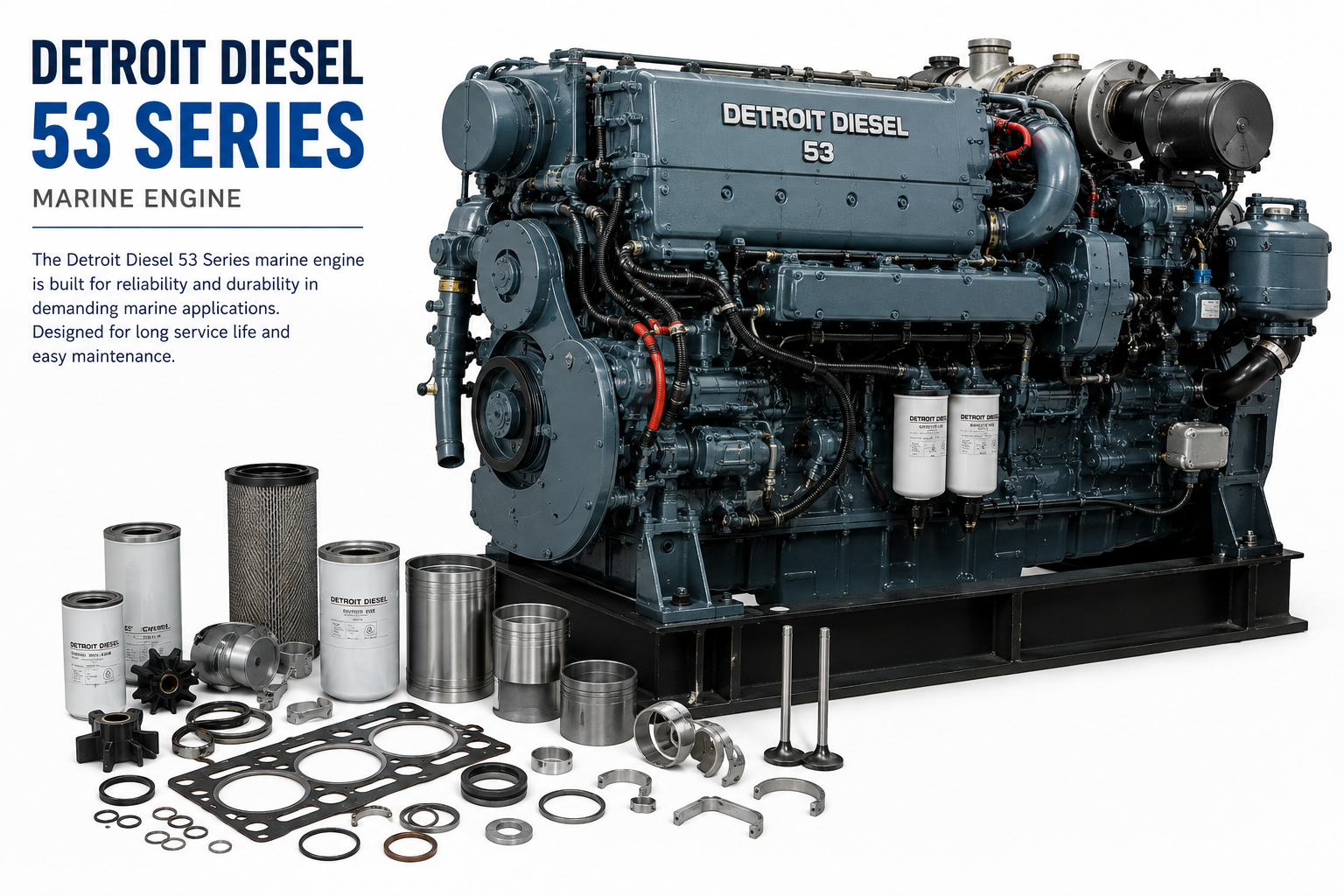
The Detroit Diesel Series 53 is a well-known family of compact, mechanically controlled two-stroke diesel engines developed for applications requiring strong power relative to engine size.
The “53” designation refers to approximately 53 cubic inches of displacement per cylinder, rather than the total displacement of the engine.
Series 53 engines were produced in several cylinder configurations and became widely used across industrial, military, construction, generator and marine applications. In marine service, these engines can still be found aboard older fishing vessels, workboats, auxiliary installations, commercial craft and repowered vessels.
One of the defining characteristics of the Series 53 is its two-stroke operating cycle. Unlike the four-stroke Detroit Diesel Series 60, the Series 53 uses a mechanically driven blower as an essential part of the engine's air-scavenging process.
At Alfa Marine Spare Parts, we supply OEM, genuine, aftermarket and remanufactured Detroit Diesel Series 53 marine engine spare parts for routine maintenance, repairs and complete engine overhauls.
Detroit Diesel Series 53 Technical OverviewSpecificationDetailsManufacturerDetroit DieselEngine FamilySeries 53Engine CycleTwo-stroke dieselDisplacement DesignationApprox. 53 cu in per cylinderFuel SystemMechanical unit injectionAir SystemBlower-assisted scavengingCoolingLiquid-cooledEngine ControlMechanical on traditional configurationsTypical ApplicationsMarine propulsion, auxiliary and generator installations
Exact specifications depend on the individual Series 53 model and marine configuration.
Detroit Diesel Series 53 Engine Models
The Series 53 family includes several configurations commonly identified by cylinder count and arrangement.
Examples include:
- 2-53
- 3-53
- 4-53
- 6V53
- 8V53
Some engines were also produced in naturally aspirated and turbocharged configurations.
Because Series 53 engines have been used for many decades, the engine model, serial number and existing part number should be confirmed when identifying replacement components.
How Does a Detroit Diesel Series 53 Two-Stroke Engine Work?
The Series 53 completes its operating cycle in one crankshaft revolution.
Fresh air is supplied to the cylinders through ports in the cylinder liner. Exhaust gases leave through valves located in the cylinder head.
As the piston moves downward, the liner ports become exposed and pressurized air from the blower enters the cylinder. This incoming air helps push remaining exhaust gases from the cylinder and supplies fresh air for the next combustion event.
This process is known as scavenging.
The basic operating sequence involves:
- Air entering through the cylinder-liner ports
- Exhaust gases leaving through the exhaust valves
- Fresh air filling the cylinder
- Fuel being injected near the top of the compression stroke
- Combustion forcing the piston downward
- The scavenging process beginning again
This design is one of the characteristics that made classic Detroit Diesel engines immediately recognizable.
Why Is the Blower Important on a Series 53?
The blower is not simply an optional performance component.
On a Detroit Diesel two-stroke engine, it is fundamental to normal engine operation because it supplies the airflow required to scavenge the cylinders.
Important blower-related components can include:
- Blower Assembly
- Blower Rotors
- Blower Bearings
- Blower Seals
- Blower Drive Components
- Blower Gaskets
- Airbox Components
Problems affecting blower performance can influence combustion, starting, smoke levels and overall engine performance.
Is the Series 53 Turbocharged?
Series 53 configurations vary.
Some engines are naturally aspirated in the Detroit Diesel two-stroke sense, relying on the mechanically driven blower for scavenging, while other versions use a turbocharger in addition to the blower.
On turbocharged engines, the turbocharger helps increase the amount of air supplied to the engine, while the blower remains part of the two-stroke scavenging system.
Turbocharger-related components can include:
- Complete Turbochargers
- Turbocharger Cartridges
- Bearings
- Seals
- Compressor Components
- Turbine Components
- Oil Lines
- Mounting Gaskets
The exact configuration should be established before ordering air-system components.
Detroit Diesel Series 53 Fuel Injection System
Traditional Series 53 engines use mechanically actuated unit injectors.
Rather than using a conventional high-pressure injection pump with separate high-pressure lines to each cylinder, the unit injector performs the fuel-metering and high-pressure injection functions at the cylinder.
The injector is mechanically actuated through the engine's valve-train system.
Important fuel-system components include:
- Unit Injectors
- Injector Seals
- Injector Hardware
- Fuel Pump
- Fuel Filters
- Fuel Lines
- Fuel Manifolds
- Fuel-System Gaskets
Correct injector specification is important because different engine configurations can require different injector arrangements.
Unit Injectors
The unit injectors have a direct influence on combustion quality.
Injector problems may contribute to:
- Difficult starting
- Uneven engine operation
- Excessive exhaust smoke
- Reduced power
- Increased fuel consumption
- Poor cylinder balance
Injector condition should be evaluated together with compression, valve adjustment, fuel supply and engine timing.
Cylinder Heads
The cylinder head is particularly important on a Detroit Diesel two-stroke engine because the exhaust valves and fuel injectors are located in the head.
Series 53 cylinder-head components can include:
- Complete Cylinder Heads
- Exhaust Valves
- Valve Guides
- Valve Seats
- Valve Springs
- Injector Components
- Rocker Components
- Cylinder Head Gaskets
- Seals
Unlike many conventional four-stroke engines, fresh intake air enters through ports in the cylinder liners rather than through intake valves in the cylinder head.
Cylinder Liners
Cylinder liners are central to Series 53 operation.
They provide the running surface for the pistons while also incorporating the air inlet ports used during scavenging.
Replacement components can include:
- Cylinder Liners
- Liner Seals
- Pistons
- Piston Rings
- Piston Pins
- Connecting Rod Components
Wear or damage around the liner, piston or rings can affect compression, oil consumption and scavenging efficiency.
Pistons and Piston Rings
The piston assembly must maintain combustion sealing while operating with the liner-port arrangement required by the two-stroke cycle.
Typical replacement components include:
- Pistons
- Piston Rings
- Piston Pins
- Retaining Components
- Connecting Rods
- Connecting Rod Bearings
During overhaul, piston and liner condition should be evaluated together.
Crankshaft and Bearings
The crankshaft converts piston movement into rotational output.
Major lower-engine components include:
- Crankshaft
- Main Bearings
- Connecting Rod Bearings
- Thrust Components
- Front Crankshaft Seal
- Rear Crankshaft Seal
- Vibration Damper
Correct lubrication is critical because bearing damage can quickly lead to expensive crankshaft repairs.
Camshaft and Valve Train
The camshaft performs several important functions in a mechanically controlled Series 53.
The valve train is involved not only in exhaust-valve operation but also in mechanically actuating the unit injectors.
Components can include:
- Camshaft
- Camshaft Bearings
- Rocker Arms
- Injector Rocker Components
- Exhaust Valve Components
- Valve Springs
- Followers
- Associated Hardware
Correct adjustment is important for both valve operation and fuel injection.
Detroit Diesel Series 53 Cooling System
The Series 53 is liquid-cooled.
Engine coolant removes heat from critical engine components, while the exact method used to reject that heat depends on the marine installation.
Typical engine cooling components can include:
- Engine Water Pump
- Thermostats
- Coolant Pipes
- Coolant Hoses
- Cooling-System Gaskets
- Temperature Components
Marine conversions may additionally incorporate heat exchangers, raw-water pumps and associated seawater-circuit components.
Marine Raw-Water Cooling Components
Depending on the marine configuration, the external cooling system may contain:
- Seawater Pump
- Raw-Water Pump Impeller
- Pump Shaft
- Pump Bearings
- Mechanical Seals
- Heat Exchanger
- Raw-Water Hoses
- Cooling-System Fittings
These components can differ between marine conversions, so identification should be based on the actual engine installation.
Lubrication System
The lubrication system protects the internal components of the Series 53 during continuous operation.
Important components include:
- Engine Oil Pump
- Oil Filters
- Oil Cooler
- Oil Pressure Components
- Oil Pan
- Oil Seals
- Lubrication Gaskets
Clean oil and correct oil pressure are particularly important for protecting bearings, camshaft components and other heavily loaded internal parts.
Exhaust System
The Series 53 exhaust system carries combustion gases away from the cylinder heads.
Depending on the marine installation, components may include:
- Exhaust Manifolds
- Exhaust Gaskets
- Turbocharger Components
- Exhaust Connections
- Marine Exhaust Components
Exhaust leaks should be corrected because they can affect engine-room safety and, on turbocharged engines, turbocharger performance.
Gaskets and Seals
Older Series 53 engines frequently require replacement sealing components during maintenance and overhaul.
Available components can include:
- Cylinder Head Gaskets
- Blower Gaskets
- Exhaust Manifold Gaskets
- Water Pump Gaskets
- Oil Pan Gaskets
- Crankshaft Seals
- Injector Seals
- O-Rings
- Complete Gasket Sets
- Complete Engine Seal Kits
Detroit Diesel Series 53 Overhaul Parts
The Series 53's rebuildable construction has helped many of these engines remain operational for decades.
A major overhaul may require:
- Cylinder Liners
- Pistons
- Piston Rings
- Piston Pins
- Main Bearings
- Connecting Rod Bearings
- Cylinder Head Components
- Unit Injectors
- Blower Components
- Crankshaft Seals
- Gasket Sets
- Complete Seal Kits
The exact overhaul requirements depend on engine condition, configuration and measurements taken during disassembly.
Where Are Detroit Diesel Series 53 Marine Engines Used?
Depending on engine model and rating, Series 53 engines can be found in:
- Fishing vessels
- Commercial workboats
- Utility boats
- Tugboat auxiliary applications
- Inland waterway vessels
- Marine generator sets
- Patrol and service craft
- Older commercial vessels
- Repowered boats
- Auxiliary machinery
Their relatively compact dimensions and rugged mechanical construction helped make the Series 53 particularly useful where dependable diesel power was required in limited machinery spaces.
Identifying the Correct Detroit Diesel Series 53 Spare Parts
Series 53 engines have been in service for many years, and individual engines may have been rebuilt, modified or marinized differently during their working lives.
Accurate identification should therefore use:
- Engine Model
- Engine Serial Number
- Existing Part Number
- Component Description
- Marine Configuration
- Clear Component Photographs where required
For parts such as injectors, blowers, turbochargers, heat exchangers and seawater pumps, accurate engine and component identification is especially important.
Preventive Maintenance for the Detroit Diesel Series 53
Long-term Series 53 reliability depends on maintaining the complete engine rather than focusing on a single system.
Important inspection areas include:
- Engine Oil and Filters
- Fuel Filters
- Unit Injectors
- Blower
- Airbox
- Cooling System
- Raw-Water Circuit
- Exhaust System
- Valve Train
- Turbocharger where fitted
- Belts and Hoses
- Gaskets and Seals
Because many Series 53 engines are now older installations, careful inspection for deterioration, corrosion, leakage and previous repairs is an important part of ongoing maintenance.