Cummins QSB Marine Engine Spare Parts | OEM & Replacement Parts
OEM, genuine, aftermarket & reman Cummins QSB marine engine spare parts. Worldwide shipping | Alfa Marine Spare Parts
Cummins QSB
Cummins QSB Marine Engine Spare PartsWhat Is the Cummins QSB Marine Engine?
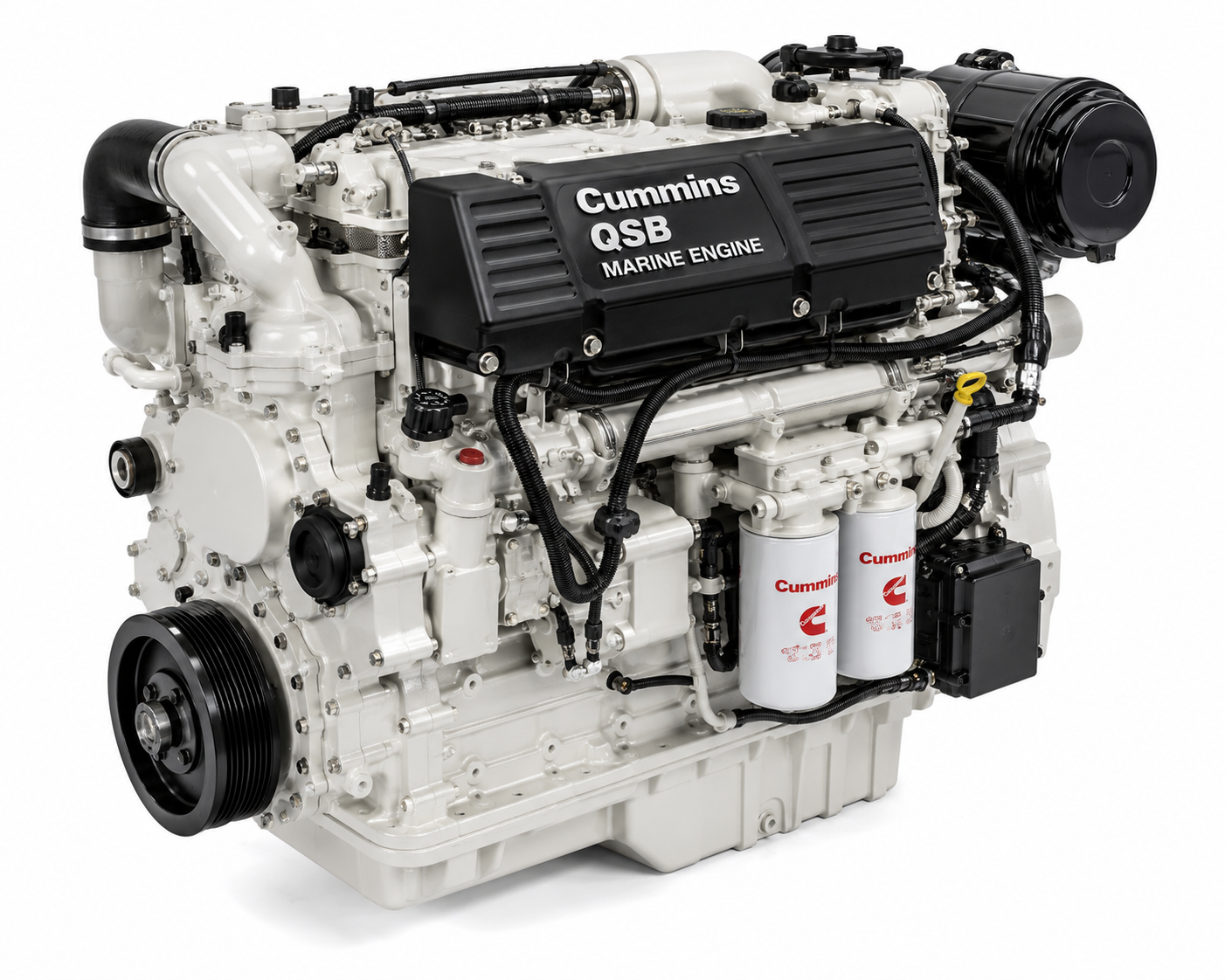
The Cummins QSB Marine Engine is a compact, electronically controlled, turbocharged marine diesel engine designed for exceptional reliability, fuel efficiency, and low emissions. Based on the proven Cummins B Series platform, the QSB is widely used in both recreational and commercial marine applications where dependable performance and low operating costs are essential.
Available in several power ratings, the Cummins QSB is commonly found in patrol boats, pilot boats, commercial fishing vessels, passenger ferries, workboats, tugboats, offshore support craft, and luxury yachts. Its combination of compact size, excellent torque, and advanced electronic engine management makes it one of the most popular marine diesel engines in its class.
The Cummins QSB features a high-pressure common rail (HPCR) fuel system, electronic engine controls, freshwater cooling with seawater heat exchangers, advanced turbocharging, and emissions technology designed to meet modern marine regulations while maintaining excellent fuel economy.
At Alfa Marine Spare Parts, we supply a complete range of OEM, genuine, aftermarket, and remanufactured Cummins QSB marine engine spare parts for routine servicing, emergency repairs, and complete engine overhauls.
Cummins QSB Marine Engine Technical SpecificationsSpecificationDetailsEngine TypeFour-stroke marine diesel engineEngine FamilyCummins QSBConfigurationInline 6-cylinderDisplacement6.7 LitresFuel SystemHigh Pressure Common Rail (HPCR)AspirationTurbocharged and aftercooledCooling SystemClosed freshwater cooling with seawater heat exchangerElectronic ControlsECM controlledApplicationsPropulsion and auxiliary marine powerCummins QSB Marine Engine Models
The Cummins QSB family is available in multiple marine ratings, including:
- Cummins QSB 230
- Cummins QSB 250
- Cummins QSB 305
- Cummins QSB 355
- Cummins QSB 380
- Cummins QSB 425
- Cummins QSB 480
- Cummins QSB 550
Depending on the application, these engines are configured for continuous-duty commercial service or high-performance recreational marine use.
Marine Applications
The Cummins QSB Marine Engine is widely used in:
- Commercial fishing vessels
- Passenger ferries
- Crew transfer vessels
- Pilot boats
- Patrol boats
- Offshore support vessels
- Tugboats
- Workboats
- Utility vessels
- Fast rescue craft
- Government vessels
- Coast Guard vessels
- Fireboats
- Luxury yachts
- Sport fishing boats
- Marine generator sets
Its compact design and high power-to-weight ratio make it suitable for a broad range of marine propulsion systems.
Why Is the Cummins QSB Marine Engine So Popular?
The Cummins QSB has earned a strong reputation throughout the marine industry because it offers:
- Excellent fuel efficiency
- Reliable electronic engine management
- High-pressure common rail fuel technology
- Low exhaust emissions
- Compact installation dimensions
- Excellent torque characteristics
- Long service intervals
- Worldwide Cummins support
- Proven commercial reliability
- Low maintenance costs
These qualities have made the Cummins QSB one of the most trusted engines for commercial operators and recreational vessel owners alike.
Major Components of the Cummins QSB Marine Engine
The Cummins QSB consists of precision-engineered components designed for long service life under demanding marine conditions.
High-Pressure Common Rail Fuel System
The HPCR fuel system delivers precisely metered fuel at very high pressure, improving combustion efficiency, reducing fuel consumption, and lowering exhaust emissions.
Routine maintenance includes inspection of:
- Fuel injectors
- High-pressure fuel pump
- Fuel rail
- Fuel pressure sensors
- Fuel lines
Fuel Injectors
Electronically controlled fuel injectors provide accurate fuel delivery for improved combustion and engine performance.
Periodic testing and cleaning help maintain fuel efficiency and reduce smoke emissions.
High-Pressure Fuel Pump
The fuel pump supplies consistent high-pressure fuel to the common rail system.
Routine inspections help prevent pressure loss and fuel delivery problems.
Turbocharger
The turbocharger compresses intake air, increasing engine power while improving combustion efficiency.
Routine maintenance includes inspection of:
- Bearings
- Compressor wheel
- Turbine housing
- Shaft movement
- Lubrication system
Charge Air Cooler
The charge air cooler lowers compressed intake air temperature, improving combustion efficiency and reducing exhaust gas temperatures.
Routine cleaning maintains optimum heat transfer and engine performance.
Cylinder Head
The cylinder head houses:
- Intake valves
- Exhaust valves
- Fuel injectors
- Cooling passages
- Combustion chambers
Regular inspections help detect valve wear, cracks, and cooling issues.
Pistons
Heavy-duty aluminum alloy pistons convert combustion pressure into mechanical power while operating under high thermal loads.
Cylinder Liners
Cylinder liners provide a durable wear surface that helps maintain compression and extend engine service life.
Connecting Rods
Connecting rods transfer combustion forces from the pistons to the crankshaft while ensuring smooth engine operation.
Crankshaft
The forged steel crankshaft converts piston movement into rotational power that drives the vessel's propulsion system.
Camshaft
The camshaft synchronizes valve timing and fuel injection events to ensure efficient combustion and smooth engine operation.
Fresh Water Pump
The freshwater pump circulates coolant throughout the engine block and cylinder head, maintaining stable operating temperatures.
Sea Water Pump
The seawater pump circulates seawater through the heat exchanger to remove engine heat efficiently.
Heat Exchanger
The heat exchanger transfers heat from the freshwater cooling circuit to seawater, protecting the engine from overheating.
Lubrication System
The lubrication system includes:
- Oil pump
- Oil cooler
- Oil filters
- Pressure relief valve
- Oil galleries
This system reduces friction, dissipates heat, and protects internal engine components from premature wear.
Why Preventive Maintenance Matters
The Cummins QSB is designed for dependable marine service, but regular preventive maintenance is essential to maintain fuel efficiency, reduce operating costs, and maximize engine life. Routine inspection of the HPCR fuel system, turbocharger, cooling system, lubrication system, and internal engine components helps prevent unexpected failures and keeps vessels operating safely and efficiently.
Parts guide
Complete Cummins QSB Marine Engine Spare Parts Guide
The Cummins QSB Marine Engine is designed for dependable operation in demanding commercial and recreational marine environments. Its electronically controlled fuel system, turbocharged air handling, and efficient cooling design provide excellent performance, fuel economy, and long service life.
Routine maintenance using high-quality replacement components helps maximize engine reliability, reduce operating costs, and minimize unexpected downtime. Whether your engine powers a commercial fishing vessel, pilot boat, ferry, patrol craft, offshore support vessel, or luxury yacht, preventive maintenance is essential to maintaining peak performance.
At Alfa Marine Spare Parts, we supply a complete range of OEM, genuine, aftermarket, and remanufactured Cummins QSB marine engine spare parts for scheduled maintenance, emergency repairs, and complete engine overhauls.
Fuel System Components
The Cummins QSB uses a High Pressure Common Rail (HPCR) fuel system that delivers precise fuel injection for cleaner combustion, improved fuel efficiency, and lower emissions.
High-Pressure Fuel Pump
The high-pressure fuel pump supplies fuel to the common rail at extremely high pressures for accurate injector performance.
Routine inspections should include:
- Pump pressure output
- Fuel leakage
- Internal wear
- Drive gear condition
- Mounting hardware
Proper maintenance helps ensure consistent engine performance and protects the fuel injection system.
Fuel Injectors
Electronically controlled fuel injectors precisely meter fuel into each combustion chamber.
Routine servicing helps prevent:
- Poor fuel atomization
- Rough engine operation
- Increased fuel consumption
- Hard starting
- Excessive exhaust smoke
Fuel Rail
The common rail distributes high-pressure fuel evenly to all injectors.
Routine inspections include:
- Fuel pressure
- Sensor operation
- Internal cleanliness
- Fuel line integrity
Fuel Filters
Fuel filters remove water and contaminants before they reach the fuel injection equipment.
Regular replacement protects:
- High-pressure fuel pump
- Fuel injectors
- Pressure sensors
- Fuel rail
- Electronic fuel system components
Air Intake & Turbocharging Components
Efficient airflow is essential for maximizing power output and reducing fuel consumption.
Turbocharger
The turbocharger increases intake air pressure to improve combustion efficiency and engine performance.
Routine inspections include:
- Shaft end play
- Bearing condition
- Compressor wheel damage
- Turbine housing
- Oil supply
- Oil leakage
Proper turbocharger maintenance improves fuel economy and extends service life.
Charge Air Cooler
The charge air cooler reduces compressed intake air temperature before combustion.
Benefits include:
- Increased engine power
- Lower exhaust temperatures
- Improved combustion
- Better fuel efficiency
Routine cleaning helps maintain maximum cooling efficiency.
Air Filters
Air filters protect the turbocharger and engine by preventing dirt, salt particles, and airborne contaminants from entering the intake system.
Routine replacement helps reduce engine wear and maintain performance.
Cooling System Components
An efficient cooling system protects the Cummins QSB from overheating and thermal stress.
Fresh Water Pump
The freshwater pump circulates coolant through the engine block and cylinder head.
Routine inspections include:
- Bearings
- Mechanical seals
- Coolant circulation
- Housing condition
- Impeller wear
Sea Water Pump
The seawater pump circulates seawater through the heat exchanger.
Routine maintenance includes inspection of:
- Flexible impeller
- Bearings
- Mechanical seals
- Pump shaft
- Housing
Replacing worn impellers at recommended intervals helps prevent overheating.
Heat Exchanger
The heat exchanger transfers engine heat from the closed freshwater circuit to seawater.
Routine maintenance includes:
- Cleaning heat transfer surfaces
- Corrosion inspection
- Pressure testing
- Removal of marine scale and fouling
Thermostat
The thermostat regulates coolant flow, helping the engine maintain the correct operating temperature under varying loads.
Expansion Tank
The expansion tank accommodates coolant expansion while maintaining system pressure and proper coolant circulation.
Lubrication System Components
The lubrication system reduces friction, cools internal components, and extends engine life.
Oil Pump
The oil pump supplies lubricating oil to:
- Crankshaft bearings
- Camshaft bearings
- Connecting rod bearings
- Pistons
- Valve train components
Routine inspection ensures consistent oil pressure.
Oil Cooler
The oil cooler maintains the proper lubricant temperature during continuous marine operation.
Oil Filters
Oil filters remove contaminants from the lubrication system.
Routine replacement protects:
- Bearings
- Crankshaft
- Camshaft
- Pistons
- Turbocharger bearings
Internal Engine Components
The Cummins QSB is engineered using durable components designed for continuous marine service.
Cylinder Head
The cylinder head houses:
- Intake valves
- Exhaust valves
- Fuel injectors
- Combustion chambers
- Cooling passages
Routine inspections help identify cracks, valve wear, and gasket failures before major engine damage occurs.
Pistons
Heavy-duty pistons convert combustion pressure into mechanical energy while withstanding high operating temperatures.
Cylinder Liners
Cylinder liners provide a replaceable wear surface that maintains compression and extends engine life.
Piston Rings
Piston rings:
- Seal combustion gases
- Control oil consumption
- Transfer heat to the cylinder liner
Routine replacement during overhauls helps restore engine performance.
Connecting Rods
Connecting rods transfer combustion forces from the pistons to the crankshaft while maintaining smooth engine operation.
Crankshaft
The forged crankshaft converts piston movement into rotational energy for propulsion.
Routine oil analysis and bearing inspections help maximize crankshaft service life.
Camshaft
The camshaft synchronizes valve timing and fuel injection events for efficient combustion and smooth engine performance.
Main Bearings
Main bearings support the crankshaft while reducing friction during continuous engine operation.
Connecting Rod Bearings
Connecting rod bearings absorb combustion forces while allowing smooth crankshaft rotation.
Routine oil analysis helps identify early bearing wear.
Valve Train Components
The valve train includes:
- Intake valves
- Exhaust valves
- Valve guides
- Valve seats
- Valve springs
- Rocker arms
- Push rods
These components ensure accurate airflow and combustion timing.
Gaskets and Seal Kits
High-quality sealing components help prevent leakage of oil, coolant, fuel, and combustion gases.
Available replacement components include:
- Cylinder head gaskets
- Valve cover gaskets
- Intake manifold gaskets
- Exhaust manifold gaskets
- Front and rear crankshaft seals
- O-ring kits
- Complete seal kits
Complete Overhaul Kits
Complete overhaul kits simplify major engine maintenance by including many of the essential components required during a rebuild.
Typical overhaul kits include:
- Pistons
- Cylinder Liners
- Piston Rings
- Main Bearings
- Connecting Rod Bearings
- Gasket Sets
- Seal Kits
- Valve Train Components
Industries We Supply
Alfa Marine Spare Parts supplies Cummins QSB engine components to customers operating in a wide range of marine industries.
We regularly support:
- Shipyards
- Ship Repair Companies
- Marine Engineers
- Chief Engineers
- Technical Superintendents
- Fleet Operators
- Commercial Fishing Companies
- Offshore Operators
- Passenger Ferry Operators
- Government Fleets
- Coast Guard Vessels
- Marine Service Companies
- Boat Builders
- Marine Equipment Distributors
Worldwide Supply for Cummins QSB Marine Engine Spare Parts
Alfa Marine Spare Parts supplies Cummins QSB spare parts worldwide.
Europe
- Rotterdam
- Antwerp
- Hamburg
- Amsterdam
- Genoa
- Barcelona
- Marseille
- Oslo
Middle East
- Dubai
- Abu Dhabi
- Doha
- Muscat
- Dammam
Africa
- Lagos
- Port Harcourt
- Durban
- Cape Town
- Mombasa
North America
- Houston
- Miami
- New Orleans
- New York
- Vancouver
- Toronto
South America
- Santos
- Rio de Janeiro
- Buenos Aires
Asia-Pacific
- Singapore
- Shanghai
- Busan
- Hong Kong
- Yokohama
- Sydney
- Perth
Our global logistics network allows us to deliver Cummins QSB marine engine spare parts quickly to major ports, shipyards, and marine service facilities, helping customers reduce downtime and keep vessels in operation.
Cummins Marine Parts Supplier in Europe
Alfa Marine Spare Parts is a trusted Cummins Marine Parts Supplier in Europe, supplying OEM, genuine, aftermarket, and remanufactured spare parts for the complete Cummins QSB marine engine family.
We support shipowners, marine engineers, chief engineers, technical superintendents, fleet operators, commercial fishing companies, offshore operators, government fleets, marine service companies, and shipyards throughout Europe, North America, South America, the Middle East, Africa, and Asia-Pacific with reliable spare parts, technical expertise, and worldwide shipping.
Browse catalogue
Why Choose Alfa Marine Spare Parts for Cummins QSB Marine Engine Spare Parts?
The Cummins QSB Marine Engine has earned a worldwide reputation for reliability, fuel efficiency, and outstanding performance in both commercial and recreational marine applications. Whether installed in a commercial fishing vessel, passenger ferry, patrol boat, pilot boat, workboat, offshore support vessel, or luxury yacht, the QSB is engineered to deliver dependable service under demanding operating conditions.
At Alfa Marine Spare Parts, we supply a comprehensive range of OEM, genuine, aftermarket, and remanufactured Cummins QSB marine engine spare parts to support preventive maintenance, emergency repairs, and complete engine overhauls. Our experienced team assists shipowners, marine engineers, chief engineers, technical superintendents, fleet operators, shipyards, and marine service companies with dependable spare parts and professional technical support.
Why Customers Choose Alfa Marine Spare Parts
Customers worldwide choose Alfa Marine Spare Parts because we provide:
- OEM, genuine, aftermarket, and remanufactured Cummins QSB spare parts
- Fast and competitive quotations
- Worldwide shipping to major ports and shipyards
- Technical assistance with part identification
- Extensive inventory covering Cummins marine engine families
- Support for scheduled maintenance and emergency repairs
- Spare parts for current and legacy Cummins marine engines
- Experienced marine spare parts specialists
- Reliable solutions for commercial, offshore, and recreational marine applications
As a trusted Cummins Marine Parts Supplier in Europe, we help customers minimize downtime, extend engine life, and maintain reliable vessel operations.
Related Products
We supply a complete range of replacement components for the Cummins QSB Marine Engine.
Fuel System Components
- Cummins QSB Fuel Injectors
- Cummins QSB High-Pressure Fuel Pumps
- Cummins QSB Common Rail Assemblies
- Cummins QSB Fuel Rails
- Cummins QSB Fuel Filters
- Cummins QSB Fuel Pressure Sensors
- Cummins QSB Fuel Transfer Pumps
- Cummins QSB Fuel Lines
Cooling System Components
- Cummins QSB Fresh Water Pumps
- Cummins QSB Sea Water Pumps
- Cummins QSB Heat Exchangers
- Cummins QSB Oil Coolers
- Cummins QSB Thermostats
- Cummins QSB Expansion Tanks
- Cummins QSB Cooling Pipes
Lubrication System Components
- Cummins QSB Oil Pumps
- Cummins QSB Oil Filters
- Cummins QSB Oil Coolers
- Cummins QSB Oil Pressure Regulators
- Cummins QSB Lubrication System Components
Air Intake & Exhaust Components
- Cummins QSB Turbochargers
- Cummins QSB Charge Air Coolers
- Cummins QSB Air Filters
- Cummins QSB Intake Manifolds
- Cummins QSB Exhaust Manifolds
Internal Engine Components
- Cummins QSB Cylinder Heads
- Cummins QSB Pistons
- Cummins QSB Cylinder Liners
- Cummins QSB Piston Rings
- Cummins QSB Connecting Rods
- Cummins QSB Crankshafts
- Cummins QSB Camshafts
- Cummins QSB Main Bearings
- Cummins QSB Connecting Rod Bearings
- Cummins QSB Valve Components
- Cummins QSB Gasket Sets
- Cummins QSB Seal Kits
- Cummins QSB Complete Overhaul Kits
Related Cummins Engine Pages
You can also explore spare parts and technical information for other Cummins marine engine platforms:
- Cummins B Series Marine Engine Spare Parts
- Cummins QSL Marine Engine Spare Parts
- Cummins QSC Marine Engine Spare Parts
- Cummins QSM Marine Engine Spare Parts
- Cummins KTA19 Marine Engine Spare Parts
- Cummins KTA38 Marine Engine Spare Parts
- Cummins KTA50 Marine Engine Spare Parts
- Cummins QSK19 Marine Engine Spare Parts
- Cummins QSK38 Marine Engine Spare Parts
- Cummins QSK50 Marine Engine Spare Parts
- Cummins QSK60 Marine Engine Spare Parts
Each engine page includes detailed technical specifications, maintenance recommendations, common spare parts, and application information.
Browse Our Complete Catalog
Explore our extensive inventory of marine engine spare parts and complete engine solutions for commercial and recreational vessels worldwide.
In addition to Cummins engines, Alfa Marine Spare Parts supplies replacement components for:
- MTU
- Caterpillar
- Wärtsilä
- MAN
- Volvo Penta
- Scania
- Detroit Diesel
- Deutz
- Perkins
- Mitsubishi
- John Deere
- Doosan
- Yanmar
Our inventory supports propulsion engines, auxiliary engines, marine generator sets, offshore vessels, commercial fleets, fishing vessels, passenger ferries, tugboats, pilot boats, patrol vessels, and luxury yachts.
Contact Alfa Marine Spare Parts
Whether you require a fuel injector, turbocharger, seawater pump, cylinder head, heat exchanger, overhaul kit, or any other Cummins QSB engine component, our experienced team is ready to assist.
Contact Information
Website
request@alfamarinespareparts.com
We can assist you with:
- Product availability
- Technical support
- Part identification
- Competitive quotations
- Worldwide shipping
- OEM, genuine, aftermarket, and remanufactured spare parts
- Preventive maintenance planning
- Complete engine overhaul components
Browse Our Complete Engine Catalog
Alfa Marine Spare Parts supplies spare parts for many of the world's leading marine engine manufacturers.
Our engine portfolio includes:
- Cummins
- MTU
- Caterpillar
- Wärtsilä
- MAN
- Volvo Penta
- Scania
- Detroit Diesel
- Deutz
- Perkins
- Mitsubishi
- John Deere
- Doosan
- Yanmar
Whether your vessel operates in commercial shipping, offshore energy, fishing, government service, passenger transport, or private yachting, our extensive inventory supports routine maintenance, emergency repairs, and complete engine rebuilds.
Ready to Source Cummins QSB Marine Engine Spare Parts?
The Cummins QSB Marine Engine combines compact design, advanced electronic controls, and high-pressure common rail fuel technology to deliver dependable power, fuel efficiency, and long service life. Regular maintenance using high-quality replacement components is essential for maximizing engine reliability, reducing operating costs, and minimizing unplanned downtime.
Alfa Marine Spare Parts supports shipowners, marine engineers, chief engineers, technical superintendents, fleet operators, commercial fishing companies, offshore operators, government fleets, marine service companies, and shipyards worldwide with a complete range of OEM, genuine, aftermarket, and remanufactured Cummins QSB marine engine spare parts. Whether you are carrying out routine servicing or a complete engine overhaul, our experienced team is committed to providing expert technical support, reliable parts availability, and worldwide delivery to keep your vessels operating efficiently.
FAQS
Frequently Asked Questions About Cummins QSB Marine Engine Spare Parts
Below are answers to some of the most common questions asked by shipowners, chief engineers, marine engineers, technical superintendents, fleet operators, boat owners, and shipyards regarding the Cummins QSB Marine Engine and its spare parts.
What is the Cummins QSB Marine Engine?
The Cummins QSB Marine Engine is a turbocharged, electronically controlled 6.7-litre marine diesel engine built on the proven Cummins B Series platform. It is designed for commercial and recreational marine applications, offering excellent fuel efficiency, dependable performance, and low emissions.
Which Cummins QSB marine engine models are available?
The Cummins QSB marine family includes several power ratings, including:
- Cummins QSB 230
- Cummins QSB 250
- Cummins QSB 305
- Cummins QSB 355
- Cummins QSB 380
- Cummins QSB 425
- Cummins QSB 480
- Cummins QSB 550
Different ratings are optimized for commercial-duty and high-performance recreational applications.
What type of fuel system does the Cummins QSB use?
The Cummins QSB uses a High Pressure Common Rail (HPCR) fuel system with electronically controlled injectors. This system delivers precise fuel injection for:
- Improved fuel economy
- Lower exhaust emissions
- Better engine response
- Reduced engine noise
- Cleaner combustion
What marine applications use the Cummins QSB?
The Cummins QSB is widely installed in:
- Commercial fishing vessels
- Passenger ferries
- Patrol boats
- Pilot boats
- Offshore support vessels
- Tugboats
- Crew transfer vessels
- Fireboats
- Government vessels
- Coast Guard vessels
- Luxury yachts
- Sport fishing boats
- Marine generator sets
Its compact size and excellent power-to-weight ratio make it suitable for a wide variety of marine propulsion systems.
What spare parts are available for the Cummins QSB?
Alfa Marine Spare Parts supplies a comprehensive range of replacement components, including:
- Fuel Injectors
- High-Pressure Fuel Pumps
- Common Rail Assemblies
- Fuel Filters
- Turbochargers
- Charge Air Coolers
- Air Filters
- Cylinder Heads
- Pistons
- Cylinder Liners
- Piston Rings
- Connecting Rods
- Crankshafts
- Camshafts
- Main Bearings
- Connecting Rod Bearings
- Fresh Water Pumps
- Sea Water Pumps
- Heat Exchangers
- Oil Pumps
- Oil Coolers
- Oil Filters
- Thermostats
- Valve Train Components
- Gasket Sets
- Seal Kits
- Complete Overhaul Kits
Do you supply OEM, genuine, aftermarket, and remanufactured Cummins QSB parts?
Yes. Alfa Marine Spare Parts supplies OEM, genuine, aftermarket, and professionally remanufactured Cummins QSB marine engine spare parts, depending on product availability and customer requirements.
Why are fuel injectors important?
Fuel injectors deliver accurately metered fuel into each combustion chamber.
Proper injector maintenance helps:
- Improve fuel efficiency
- Reduce smoke emissions
- Improve engine starting
- Maintain smooth engine operation
- Lower operating costs
Does the Cummins QSB use a turbocharger?
Yes. The Cummins QSB is equipped with a high-efficiency turbocharger that compresses intake air before combustion.
Routine inspection of bearings, shaft movement, compressor wheels, lubrication, and turbine housings helps maintain engine performance and extend turbocharger life.
Why is the charge air cooler important?
The charge air cooler lowers compressed intake air temperature before combustion.
Benefits include:
- Higher engine efficiency
- Better fuel economy
- Lower exhaust temperatures
- Improved combustion
- Increased engine power
Routine cleaning helps maintain maximum cooling performance.
How often should the cooling system be inspected?
Cooling system components—including the freshwater pump, seawater pump, heat exchanger, oil cooler, thermostat, and expansion tank—should be inspected according to Cummins' recommended maintenance schedule and the vessel's operating conditions.
Preventive maintenance helps reduce the risk of overheating and unexpected downtime.
Do you supply complete overhaul kits?
Yes. Alfa Marine Spare Parts supplies complete overhaul kits as well as individual replacement components.
Typical overhaul kits include:
- Pistons
- Cylinder Liners
- Piston Rings
- Main Bearings
- Connecting Rod Bearings
- Gasket Sets
- Seal Kits
- Valve Train Components
Do you ship Cummins QSB spare parts worldwide?
Yes. We supply Cummins QSB marine engine spare parts throughout:
- Europe
- North America
- South America
- Middle East
- Africa
- Asia-Pacific
We regularly support commercial operators, recreational vessel owners, offshore companies, and marine service providers around the world.
Which countries do you regularly supply?
We frequently supply customers in:
- Netherlands
- Belgium
- Germany
- France
- Italy
- Spain
- Norway
- Denmark
- United Kingdom
- United States
- Canada
- Brazil
- Nigeria
- South Africa
- United Arab Emirates
- Saudi Arabia
- Qatar
- Oman
- Singapore
- Australia
Do you supply parts to shipyards and marine service companies?
Yes. We regularly supply:
- Shipyards
- Ship Repair Companies
- Marine Engineers
- Chief Engineers
- Technical Superintendents
- Fleet Operators
- Commercial Fishing Companies
- Offshore Operators
- Government Fleets
- Marine Service Companies
- Boat Builders
- Marine Equipment Distributors
Can you help identify the correct Cummins QSB part?
Yes. If you provide your engine model, engine serial number, or the original Cummins part number, our technical team can help identify the correct replacement component for your Cummins QSB marine engine.
Are cooling system components available?
Yes. We supply a complete range of cooling system components, including:
- Fresh Water Pumps
- Sea Water Pumps
- Heat Exchangers
- Oil Coolers
- Thermostats
- Cooling Pipes
- Expansion Tanks
Routine maintenance of these components helps maintain proper operating temperatures and improve engine reliability.
Why are oil filters important?
Oil filters remove contaminants from the lubrication system before they circulate through bearings, crankshafts, camshafts, pistons, and turbocharger bearings.
Replacing oil filters at recommended service intervals helps reduce engine wear and extend service life.
Why choose Alfa Marine Spare Parts?
Customers choose Alfa Marine Spare Parts because we provide:
- OEM, genuine, aftermarket, and remanufactured spare parts
- Worldwide shipping
- Experienced marine technical support
- Competitive quotations
- Extensive inventory
- Support for both current and legacy Cummins marine engines
- Reliable solutions for routine maintenance and complete engine overhauls
Related Cummins Engine Pages
You can also explore technical information and spare parts for other Cummins marine engine platforms:
- Cummins B Series Marine Engine Spare Parts
- Cummins QSC Marine Engine Spare Parts
- Cummins QSL Marine Engine Spare Parts
- Cummins QSM Marine Engine Spare Parts
- Cummins KTA19 Marine Engine Spare Parts
- Cummins KTA38 Marine Engine Spare Parts
- Cummins KTA50 Marine Engine Spare Parts
- Cummins QSK19 Marine Engine Spare Parts
- Cummins QSK38 Marine Engine Spare Parts
- Cummins QSK50 Marine Engine Spare Parts
- Cummins QSK60 Marine Engine Spare Parts
Each page provides technical specifications, maintenance recommendations, common spare parts, and marine applications.
Browse Our Complete Catalog
Alfa Marine Spare Parts supplies marine engine spare parts for many of the world's leading manufacturers, including:
- Cummins
- Caterpillar
- MTU
- Wärtsilä
- MAN
- Volvo Penta
- Scania
- Detroit Diesel
- Deutz
- Perkins
- Mitsubishi
- John Deere
- Doosan
- Yanmar
Our inventory supports commercial shipping, offshore operations, passenger ferries, workboats, patrol vessels, fishing fleets, luxury yachts, and marine generator sets worldwide.
Contact Alfa Marine Spare Parts
Whether you are carrying out routine maintenance, sourcing a specific component, or planning a complete engine overhaul, our experienced team is ready to assist.
Website
request@alfamarinespareparts.com
Contact us for:
- Product availability
- Technical support
- Part identification
- Competitive quotations
- Worldwide shipping
- OEM, genuine, aftermarket, and remanufactured spare parts
- Preventive maintenance planning
- Complete engine overhaul support
Conclusion
The Cummins QSB Marine Engine is one of the most trusted compact marine diesel engines available today, offering outstanding reliability, fuel efficiency, and long service life for commercial and recreational marine applications. Its advanced High Pressure Common Rail (HPCR) fuel system, turbocharged performance, and electronic engine controls provide dependable operation across a wide range of vessel types.
Routine maintenance of the fuel system, turbocharger, cooling system, lubrication system, and internal engine components is essential for maximizing engine performance, extending service intervals, and reducing unexpected downtime. Using high-quality replacement parts helps protect your investment and ensures reliable operation throughout the engine's service life.
Alfa Marine Spare Parts supports shipowners, fleet operators, marine engineers, chief engineers, technical superintendents, commercial fishing companies, offshore operators, government fleets, marine service companies, boat builders, and shipyards worldwide with a complete range of OEM, genuine, aftermarket, and remanufactured Cummins QSB Marine Engine spare parts. Whether you require components for routine maintenance or a complete engine rebuild, our experienced team is ready to provide expert technical support and worldwide delivery.