Caterpillar 3512E Marine Engine Spare Parts | Complete Guide to Specifications, Maintenance & Applications
Caterpillar 3512E Marine Engine Spare Parts
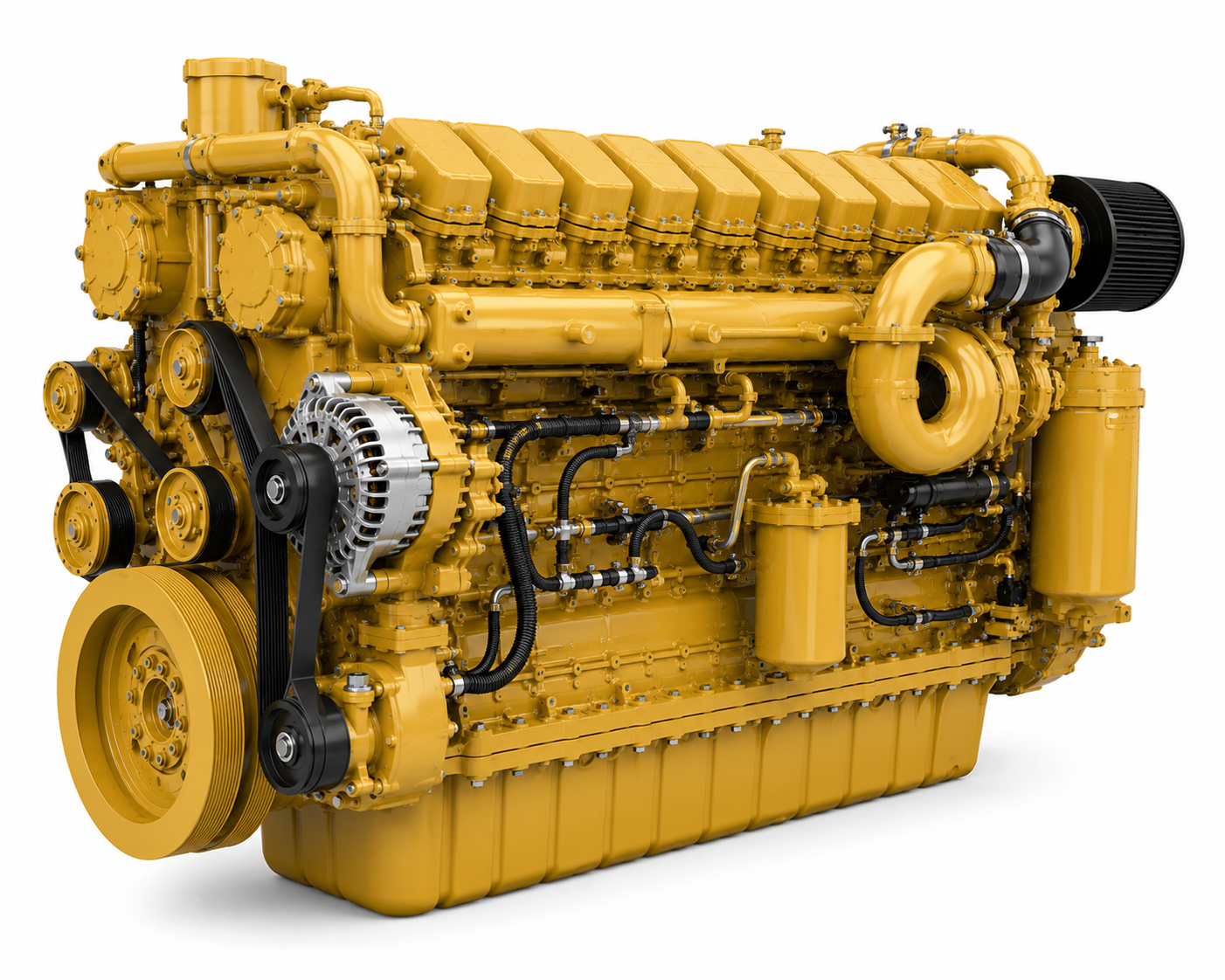
The Caterpillar 3512E Marine Engine represents the next generation of Caterpillar's legendary 3500 Series marine diesel engines. Developed for modern commercial propulsion, offshore operations, and large yacht applications, the 3512E combines higher power output, improved fuel efficiency, advanced electronic engine management, and lower emissions while maintaining the durability that has made Caterpillar engines trusted throughout the marine industry.
Designed for demanding continuous-duty service, the 3512E is widely installed in offshore support vessels, tugboats, ferries, patrol vessels, government vessels, research ships, heavy workboats, and large luxury yachts where dependable performance is essential.
Unlike the earlier 3512 and 3512B models, the 3512E incorporates advanced electronic fuel injection, twin turbochargers, upgraded cylinder heads, improved cooling capacity, and Caterpillar's latest A5 Electronic Control Module (ECM) technology for precise fuel delivery and engine monitoring. Depending on the configuration, the engine also meets emissions standards including IMO II, IMO III, U.S. EPA Tier 4 Final, and EU Stage V.
Whether you operate a commercial fleet, offshore support vessel, tugboat, or mega yacht, understanding the Caterpillar 3512E and its critical spare parts is essential for maximizing reliability and minimizing downtime.
About the Caterpillar 3512E Marine Engine
The Caterpillar 3512E is a V12 four-stroke diesel engine engineered for heavy-duty commercial propulsion. It is designed to deliver exceptional torque, outstanding fuel economy, and long service intervals while complying with modern environmental regulations.
The engine incorporates numerous improvements over previous generations, including:
- Twin turbocharged aftercooled air system
- Dual A5 Electronic Control Modules
- Electronic Unit Injection (EUI)
- Improved combustion efficiency
- Strengthened cylinder heads
- Higher cooling capacity
- Water-cooled turbocharger bearings
- Duplex fuel filtration
- Enhanced diagnostics and engine monitoring
These improvements allow the engine to produce more power while maintaining excellent durability under continuous heavy-load operation.
Marine Applications
The Caterpillar 3512E is commonly used in:
- Offshore Support Vessels (OSV)
- Platform Supply Vessels (PSV)
- Tugboats
- Harbour Tugs
- Passenger Ferries
- Patrol Boats
- Coast Guard Vessels
- Naval Support Vessels
- Fireboats
- Heavy Workboats
- Research Vessels
- Mega Yachts
- Crew Transfer Vessels
- Commercial Marine Generator Sets
Its combination of high horsepower, electronic engine management, and long operating life makes it one of Caterpillar's flagship commercial marine propulsion engines.
Caterpillar 3512E Marine Engine Specifications
Typical specifications include:
- Engine Type: V12 Diesel
- Four-Stroke Cycle
- Displacement: 58.6 Litres
- Bore: 170 mm
- Stroke: 215 mm
- Aspiration: Twin Turbocharged & Aftercooled
- Engine Speed: 1600–1800 rpm
- Power Range: 1,341–2,550 bhp (1,000–1,902 bkW)
- Electronic Unit Injection
- Dual A5 Electronic Control Modules
- Rotation: Clockwise or Counterclockwise
- Approximate Engine Weight: 5,817 kg
- Oil Change Intervals: 250 / 500 / 1,000 hours, depending on operating conditions
- Emissions Compliance: IMO II, IMO III, U.S. EPA Tier 4 Final, EU Stage V (configuration dependent)
Why Choose the Caterpillar 3512E?
The Caterpillar 3512E offers several advantages for modern marine operators:
- High horsepower in a compact package
- Excellent continuous-duty reliability
- Lower fuel consumption
- Reduced emissions
- Advanced electronic diagnostics
- Worldwide Caterpillar dealer support
- Long overhaul intervals
- Excellent resale value
- Proven performance in commercial marine service
For operators seeking maximum uptime and lower total operating costs, the 3512E remains one of the leading choices in its class.
Caterpillar 3512E Marine Engine Spare Parts
Routine maintenance begins with understanding the engine's major systems.
Cooling System Parts
The cooling system is designed to maintain stable operating temperatures even during continuous heavy-load operation.
Common replacement components include:
- Auxiliary freshwater pumps
- Jacket water pumps
- Auxiliary seawater pumps
- Heat exchangers
- Aftercoolers
- Thermostats
- Expansion tanks
- Coolant hoses
- Cooling pipes
- Temperature sensors
- Pressure caps
The 3512E features a higher-capacity gear-driven jacket water pump compared with earlier models to improve cooling performance.
Fuel System Parts
The Caterpillar 3512E uses an electronically controlled fuel system for precise fuel delivery.
Common service components include:
- Electronic unit injectors
- Fuel transfer pumps
- Duplex fuel filters
- Fuel pressure regulators
- Fuel lines
- Fuel manifolds
- Priming pumps
Routine fuel filtration is essential for protecting the injectors and maintaining engine efficiency.
Turbocharger & Air Intake Components
The twin turbocharging system is critical for engine performance.
Frequently serviced parts include:
- Twin turbochargers
- Turbocharger cartridges
- Compressor housings
- Turbine housings
- Water-cooled turbocharger bearings
- Charge air coolers
- Intake manifolds
- Air cleaners
Routine inspection helps prevent power loss and excessive exhaust temperatures.
Lubrication System Components
Proper lubrication protects the engine under high-load operating conditions.
Key components include:
- Oil pumps
- Oil coolers
- Oil filters
- Oil pressure sensors
- Oil pans
- Breather assemblies
- Oil lines
Using the recommended engine oil and following Caterpillar service intervals helps maximize engine life.
Internal Engine Components
Major overhaul components include:
- Cylinder heads
- Cylinder liners
- Pistons
- Piston rings
- Connecting rods
- Crankshaft
- Camshaft
- Main bearings
- Connecting rod bearings
- Valve train assemblies
The strengthened cylinder heads and valves introduced on the 3512E improve durability and allow for higher cylinder pressures compared with earlier models.
Electrical & Electronic Components
The advanced electronic systems used on the 3512E include:
- Dual A5 Electronic Control Modules (ECM)
- Wiring harnesses
- Engine sensors
- Speed sensors
- Pressure sensors
- Temperature sensors
- Starter motors
- Alternators
- Engine monitoring displays
Electronic diagnostics provide operators with detailed engine performance information and fault codes, simplifying troubleshooting.
Gaskets & Seal Kits
Complete overhaul kits commonly include:
- Cylinder head gaskets
- Valve cover gaskets
- Intake manifold gaskets
- Exhaust manifold gaskets
- Turbocharger gasket kits
- Complete engine gasket sets
- O-rings
- Front crankshaft seals
- Rear crankshaft seals
- Water pump seals
Replacing seals and gaskets during scheduled maintenance helps prevent oil leaks, coolant leaks, and unnecessary downtime while extending engine reliability.
Caterpillar 3512E Marine Engine Spare Parts | Maintenance, Troubleshooting & FAQs Common Caterpillar 3512E Marine Engine Problems
The Caterpillar 3512E Marine Engine is designed for continuous heavy-duty marine operation, but like every high-performance diesel engine, its reliability depends on proper maintenance. Modern electronic controls allow many problems to be identified before they become major failures, helping operators reduce downtime and repair costs.
Routine monitoring of engine temperatures, oil pressure, coolant pressure, fuel pressure, turbocharger boost, and electronic diagnostic codes allows engineers to detect abnormal operating conditions early.
Why Is My Caterpillar 3512E Marine Engine Running Hot?
Although the 3512E has an upgraded cooling system compared to earlier Caterpillar 3500 Series engines, overheating can still occur if the cooling system is not properly maintained.
Common causes include:
- Blocked seawater intake
- Dirty sea strainer
- Fouled heat exchanger
- Restricted aftercooler
- Worn auxiliary seawater pump
- Low coolant level
- Faulty thermostat
- Air trapped in the cooling system
- Damaged coolant hoses
- Cooling system pressure loss
Marine operators should regularly inspect the raw water circuit, especially when operating in saltwater where marine growth, scale, and debris can reduce cooling efficiency.
Why Has Engine Power Dropped?
Loss of horsepower or slow engine acceleration may be caused by:
- Restricted fuel filters
- Fuel contamination
- Worn electronic unit injectors
- Turbocharger wear
- Charge air cooler restrictions
- Dirty air filters
- Exhaust restrictions
- Electronic engine derating
- Low fuel pressure
Electronic monitoring systems on the 3512E can often identify fuel and boost-related faults before they become serious.
Why Is My Caterpillar 3512E Producing Black Smoke?
Black smoke indicates incomplete combustion.
Typical causes include:
- Dirty air filters
- Turbocharger damage
- Charge air cooler fouling
- Faulty injectors
- Excessive engine loading
- Incorrect fuel delivery
- Restricted intake system
Ignoring excessive black smoke can increase fuel consumption and accelerate carbon deposits inside the turbochargers and exhaust system.
Why Is My Engine Producing White Smoke?
Persistent white smoke may indicate:
- Poor fuel atomization
- Injector problems
- Low cylinder compression
- Water entering the combustion chamber
- Head gasket leakage
- Cold engine operation
If white smoke continues after the engine reaches operating temperature, further inspection is recommended.
Why Is My Engine Producing Blue Smoke?
Blue smoke generally indicates lubricating oil entering the combustion chamber.
Possible causes include:
- Turbocharger oil seal wear
- Worn piston rings
- Cylinder liner wear
- Valve guide wear
- High crankcase pressure
Routine oil analysis can help detect abnormal engine wear before major failures occur.
Electronic Diagnostic System
One of the major advantages of the Caterpillar 3512E is its advanced electronic engine management.
The Electronic Control Modules continuously monitor:
- Coolant temperature
- Engine oil pressure
- Fuel pressure
- Intake manifold pressure
- Boost pressure
- Exhaust temperature
- Engine speed
- Sensor performance
- Active and logged fault codes
This information allows engineers to troubleshoot faults more quickly and helps reduce unnecessary component replacement.
Preventive Maintenance
Preventive maintenance is essential for achieving the maximum service life from the Caterpillar 3512E.
Daily Inspections
Before each voyage inspect:
- Engine oil level
- Coolant level
- Fuel leaks
- Oil leaks
- Belt condition
- Cooling hoses
- Turbocharger area
- Exhaust colour
- Engine temperature
- Oil pressure
- Electronic warning messages
Every 250 Operating Hours
Recommended maintenance includes:
- Replace engine oil (where applicable)
- Replace oil filters
- Inspect fuel filters
- Drain fuel water separators
- Inspect cooling hoses
- Check coolant concentration
- Inspect turbochargers
- Check engine mounting hardware
- Inspect belts
Every 500 Operating Hours
Recommended inspections include:
- Replace fuel filters
- Inspect electronic unit injectors
- Check valve clearances
- Inspect starter motors
- Inspect alternators
- Inspect seawater pumps
- Clean sea strainers
- Inspect aftercoolers
Every 1,000 Operating Hours
Recommended service includes:
- Pressure test cooling system
- Clean heat exchangers
- Inspect turbochargers
- Inspect oil coolers
- Flush coolant if recommended
- Inspect exhaust system
- Inspect engine mounts
- Perform electronic diagnostic scan
Always follow the Caterpillar maintenance schedule that matches your engine serial number and duty cycle.
Caterpillar 3512E Marine Engine Overhaul
One of the advantages of the Caterpillar 3512E is its rebuildable design.
During a major overhaul, marine engineers commonly inspect or replace:
- Cylinder liners
- Pistons
- Piston rings
- Connecting rods
- Main bearings
- Connecting rod bearings
- Camshaft bearings
- Cylinder heads
- Turbochargers
- Electronic unit injectors
- Oil pump
- Water pumps
- Thermostats
- Complete gasket kits
- Front and rear crankshaft seals
A properly planned overhaul restores engine reliability and can significantly extend the operational life of the engine.
Frequently Asked QuestionsWhat type of engine is the Caterpillar 3512E?
The Caterpillar 3512E is a V12 four-stroke turbocharged and aftercooled marine diesel engine designed for commercial propulsion and auxiliary applications.
What is the displacement of the Caterpillar 3512E?
The engine has a displacement of 58.6 litres.
How much power does the Caterpillar 3512E produce?
Depending on the configuration, the Caterpillar 3512E produces approximately 1,341 to 2,550 bhp (1,000–1,902 bkW).
What is the difference between the Caterpillar 3512 and the 3512E?
The 3512E features a larger displacement, upgraded electronic controls, improved fuel injection, higher power output, enhanced cooling capacity, lower emissions, and advanced engine diagnostics compared with earlier 3512 models.
Which Caterpillar 3512E marine engine parts wear most frequently?
Frequently serviced components include:
- Auxiliary seawater pumps
- Jacket water pumps
- Fuel injectors
- Turbochargers
- Heat exchangers
- Aftercoolers
- Oil coolers
- Thermostats
- Fuel filters
- Oil filters
- Sensors
- Cooling hoses
- Belts
- Gasket kits
Can the Caterpillar 3512E be rebuilt?
Yes. Major components are designed to be rebuilt or replaced during scheduled overhauls, helping extend engine life and reduce lifecycle costs.
How Can I Extend the Life of My Caterpillar 3512E?
Best practices include:
- Follow Caterpillar maintenance intervals
- Use approved engine oil and coolant
- Replace filters on schedule
- Monitor electronic diagnostic codes
- Keep the cooling system clean
- Maintain fuel cleanliness
- Inspect turbochargers regularly
- Repair leaks promptly
Worldwide Shipping to Major SeaportsUnited States
We support customers shipping to major U.S. ports including:
- Port of Houston, Texas
- Port of New Orleans, Louisiana
- Port of Savannah, Georgia
- Port of Jacksonville, Florida
- Port of Miami, Florida
- Port of New York & New Jersey
- Port of Norfolk, Virginia
- Port of Los Angeles, California
- Port of Long Beach, California
- Port of Seattle, Washington
United Kingdom
We also serve customers through major UK ports:
- Port of Southampton
- Port of Felixstowe
- Port of Liverpool
- Port of Immingham
- Port of Aberdeen
- Port of Portsmouth
United Arab Emirates
Marine spare parts are regularly supplied through:
- Jebel Ali Port, Dubai
- Khalifa Port, Abu Dhabi
- Port Rashid, Dubai
- Fujairah Port
- Mina Zayed, Abu Dhabi
Why Quality Caterpillar 3512E Marine Engine Parts Matter
The Caterpillar 3512E is engineered for maximum reliability in demanding commercial marine environments. Using high-quality replacement components—including injectors, turbochargers, seawater pumps, heat exchangers, oil coolers, sensors, and overhaul kits—helps maintain engine efficiency and minimise unexpected downtime.
Routine inspections, preventive maintenance, and timely replacement of worn components help lower operating costs, improve fuel efficiency, and maximise engine availability.
Conclusion
The Caterpillar 3512E Marine Engine represents the latest evolution of Caterpillar's proven 3500 Series. Its increased displacement, advanced electronic engine management, improved fuel efficiency, and emissions compliance make it one of the most capable high-horsepower marine diesel engines available today.
Whether powering offshore support vessels, tugboats, ferries, government vessels, or large yachts, the 3512E delivers dependable performance under demanding operating conditions. By following Caterpillar's recommended maintenance practices and replacing worn Caterpillar 3512E marine engine spare parts before failure occurs, vessel owners and marine engineers can maximise reliability, extend engine life, and reduce total operating costs.
Contact Alfa Marine Spare Parts for assistance with Caterpillar 3512E cooling parts, fuel-system components, turbochargers, electronic parts, generator components and engine overhaul parts.
Browse Caterpillar marine engine parts Marine Spare Parts Categories | Alfa Marine Spare Parts
Explore Caterpillar auxiliary engines Marine Engines | Alfa Marine Spare Parts
Contact our marine parts specialists Request A Quote | Alfa Marine Spare Parts