Yanmar 3YM20 Oil Filter 119305-35170: Inspection Guide
Changing the oil filter on a Yanmar 3YM20 marine engine is routine maintenance, but the removed filter can also provide useful information about what has been circulating through the lubrication system.
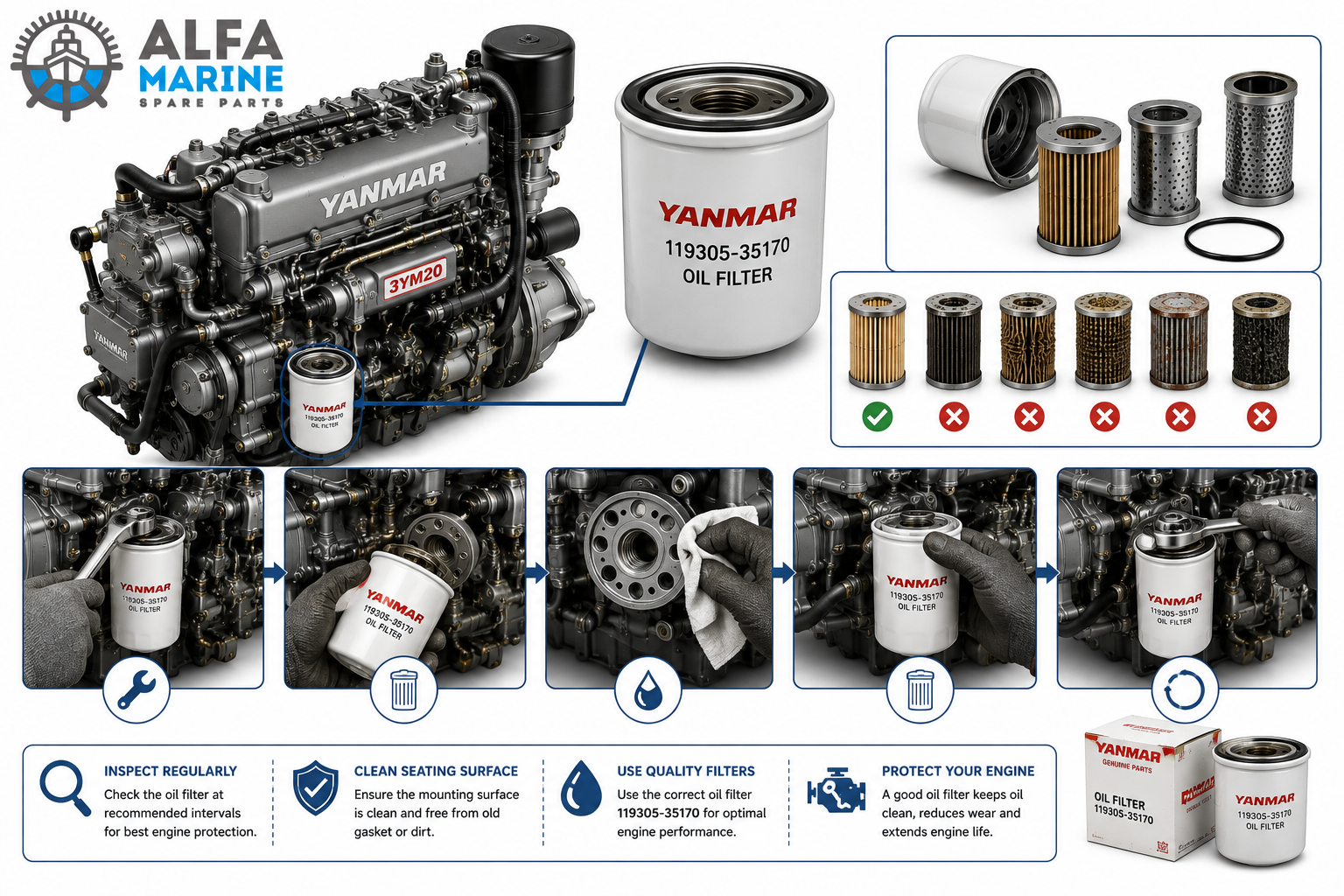
The Yanmar 119305-35170 oil filter assembly is used in the 3YM20 lubrication system. Its purpose is to capture contamination carried by the engine oil before that material continues circulating through lubricated engine components.
Installing a new filter restores filtration capacity. But before disposing of the old filter, its condition can be worth examining.
Metallic particles, excessive sludge or signs of moisture contamination may indicate that further investigation is needed—even when the engine has not yet produced an obvious warning or alarm.
For replacement components and related engines, visit Yanmar Marine Engine Parts.
Yanmar 3YM20 Oil Filter Part Number
The oil-filter reference covered in this guide is:
| EngineComponentPart Number | ||
| Yanmar 3YM20 | Oil Filter Assembly | 119305-35170 |
Yanmar identifies 119305-35170 as:
FILTER ASSY, D68×L65
Although this reference is associated with the Yanmar 3YM20, parts should still be verified against the exact engine before ordering.
A good identification practice is:
Engine model + engine serial number + existing part number
This becomes particularly important when servicing older engines or installations where components may previously have been replaced.
Why Inspect the Old Yanmar 3YM20 Oil Filter?
An oil filter captures contamination that would otherwise continue circulating with the lubricating oil.
That makes the removed filter potentially useful as a source of diagnostic evidence.
During an oil and filter change, pay attention to anything unusual in the drained oil and removed filter.
Possible findings include:
- Metallic particles
- Excessive sludge
- Unusual deposits
- Signs of moisture contamination
- Abnormally dirty oil
- Foreign debris
Finding contamination does not automatically identify a failed component.
Instead, it tells the engineer that something may deserve further investigation.
A useful engine-room principle is:
The new filter restores filtration. The old filter may provide evidence about engine condition.
What Can Metal in a Yanmar Oil Filter Mean?
Metallic debris deserves particular attention.
Extremely fine material should not automatically be interpreted as catastrophic engine damage. The quantity, size, appearance and change from previous services all matter.
However, clearly visible or unusual metallic particles can indicate abnormal wear somewhere in the lubrication system.
Potential sources can involve lubricated components such as:
- Bearings
- Crankshaft-related surfaces
- Camshaft and valve-train components
- Pistons and cylinder-related components
- Gears
- Oil-pump components
The filter alone normally cannot tell you exactly which component produced the material.
That is why metallic contamination should be considered together with:
Oil pressure + engine hours + engine noise + oil consumption + maintenance history + recent repairs + oil analysis
If significant metallic debris is discovered, simply fitting a new filter should not be considered a complete diagnosis.
Excessive Sludge in the Oil Filter
Sludge or heavy deposits can also provide useful information.
Engine oil gradually deteriorates during service. Heat, combustion contamination and operating conditions can all affect lubricant condition.
Excessive sludge may be associated with factors such as:
- Extended oil-change intervals
- Incorrect lubricant specification
- Repeated short operating periods
- Low-temperature operation
- Contamination
- Poor previous maintenance
- Combustion-related contamination
The condition of the drained engine oil should therefore be considered alongside the filter.
If both the oil and filter appear unusually contaminated, investigate the cause rather than assuming that fresh oil and a new filter have permanently solved the problem.
Look for Signs of Moisture Contamination
Signs of water or moisture contamination in the engine oil or filter media should not be ignored.
Water can reduce the effectiveness of lubrication and contribute to corrosion.
However, moisture contamination does not automatically prove that a particular engine component has failed.
The source needs to be diagnosed.
Depending on the circumstances, possible causes can include condensation or leakage associated with the engine's cooling or lubrication systems.
If contamination is suspected, consider:
- Condition of the drained oil
- Cooling-system condition
- Coolant level trends
- Engine operating temperature
- Engine operating pattern
- Oil-analysis results
- Previous maintenance history
Changing contaminated oil and replacing the filter removes the affected lubricant, but it does not repair the source of contamination.
If the underlying problem remains, the replacement oil can become contaminated again.
Inspect the Filter as Part of a Trend
One filter inspection provides information about one service interval.
Repeated inspections can provide much more useful information.
If an engineer maintains the same Yanmar 3YM20 over many services, changes in filter condition can help reveal developing trends.
For example, an engine that historically produces clean filters but suddenly shows visible metallic contamination deserves attention.
The same applies if sludge or other contamination begins increasing from one service to the next.
Useful information to record includes:
| Maintenance RecordWhat to Record | |
| Engine hours | Hours at oil/filter change |
| Engine oil | Specification and quantity |
| Oil filter | Part number installed |
| Oil condition | Normal, dirty, unusual deposits |
| Filter condition | Clean, sludge, metallic debris |
| Oil pressure | Any change from normal |
| Oil consumption | Stable or increasing |
| Engine symptoms | Noise, smoke, temperature, performance |
Maintenance trends often provide more diagnostic value than a single observation.
How to Inspect a Used Oil Filter
Start by examining the removed filter and drained engine oil.
Look for anything noticeably different from previous services.
For more detailed diagnostic inspection, workshops may open the filter canister using an appropriate oil-filter cutting tool and examine the internal filter media.
The pleated media can then be inspected for unusual material such as:
- Metallic flakes
- Fine metallic accumulation
- Heavy carbon deposits
- Sludge
- Foreign debris
- Signs of moisture contamination
One important point is to avoid contaminating the filter during inspection.
Using an unsuitable cutting method can introduce fresh metallic particles into the filter and make the findings misleading.
If significant abnormal debris is discovered, further inspection or professional oil analysis may be appropriate.
Don't Diagnose the Engine From the Filter Alone
A used oil filter is a diagnostic clue—not a complete engine diagnosis.
For example:
Metal in the filter ≠ automatically a failed bearing
Sludge ≠ automatically incorrect oil
Moisture ≠ automatically an internal coolant leak
Each finding needs to be considered in context.
A more reliable diagnostic picture combines:
Filter condition + oil condition + oil pressure + engine temperature + engine noise + operating history + oil analysis + physical inspection
This helps prevent unnecessary component replacement based on assumptions.
Why Oil Analysis Can Be Useful
If unusual contamination is discovered, laboratory oil analysis can provide additional information.
Depending on the testing performed, oil analysis can help identify changes involving:
- Wear metals
- Lubricant condition
- Contamination
- Viscosity
- Fuel dilution
- Water or coolant indicators
The greatest value often comes from trend analysis.
One sample shows the condition of the oil at one point in time.
Repeated samples taken at consistent intervals can show whether particular wear indicators are stable or increasing.
For engines operating regularly, this can complement routine filter inspection.
Replacing the Yanmar 3YM20 Oil Filter
When replacing the oil filter, follow the applicable Yanmar service instructions for the exact engine.
Before fitting the replacement filter, make sure the mounting and sealing areas are clean.
Install the filter according to the manufacturer's specified procedure.
After completing the oil and filter change:
- Confirm the correct engine-oil level.
- Start the engine according to the normal operating procedure.
- Check the oil-filter mounting area for leakage.
- Monitor oil pressure.
- Stop the engine as required and recheck the oil level.
A correct replacement filter can still leak if a sealing surface is dirty, the seal is damaged or installation is incorrect.
The post-service leak check is therefore an important part of the maintenance procedure.
Yanmar 3YM20 Oil Filter 119305-35170 Parts Identification
The verified oil-filter reference discussed in this guide is:
Yanmar 3YM20 — 119305-35170 — Oil Filter Assembly
When requesting this or other Yanmar marine engine parts, provide:
Complete engine model + engine serial number + existing part number
A photograph of the engine identification plate and existing filter can also help when identification is uncertain.
Alfa Marine Spare Parts can assist with Yanmar marine engine components for maintenance and repair, subject to exact engine identification and availability.
Email: request@alfamarinespareparts.com
Request a Quote
Frequently Asked Questions
What is the oil filter part number for a Yanmar 3YM20?
The oil-filter reference covered in this guide is 119305-35170. Yanmar identifies this part as FILTER ASSY, D68×L65.
Is Yanmar 119305-35170 an oil filter?
Yes. 119305-35170 is an oil filter assembly used in the lubrication system of applicable Yanmar engines, including the 3YM20.
Should I inspect the old oil filter during an oil change?
It can be useful as part of engine-condition monitoring. The removed filter may contain metallic debris, excessive sludge or other contamination that deserves further investigation.
Does metal in a Yanmar 3YM20 oil filter mean the engine needs an overhaul?
Not necessarily. The quantity, size and type of material need to be considered together with oil pressure, engine noise, operating history, oil analysis and other inspection findings.
What does sludge in an oil filter mean?
Excessive sludge can be associated with degraded lubricant, contamination, operating conditions or maintenance history. Its presence should be investigated rather than attributed to one cause without further evidence.
What should I do if I find signs of moisture contamination?
Investigate the source. Changing the oil and filter removes contaminated lubricant but does not correct an underlying source of moisture or water entry.
Should I check for leaks after replacing the 3YM20 oil filter?
Yes. After replacement and engine start-up, inspect the oil-filter mounting area for leakage and confirm the engine oil level and normal oil pressure.
What information should I provide when ordering Yanmar 3YM20 parts?
Provide the complete engine model, engine serial number and existing part number whenever possible.
Conclusion
Changing the Yanmar 3YM20 oil filter 119305-35170 should not simply be a remove-and-discard maintenance job.
Before disposing of the old filter, consider what it may reveal about the lubrication system.
Metallic particles, excessive sludge, foreign debris or signs of moisture contamination can provide an early reason to investigate engine or oil condition further.
The filter should never be used to diagnose a specific failure by itself. Instead, combine what you find with oil condition, oil pressure, engine operating history and, when appropriate, laboratory oil analysis.
A simple engine-room habit can therefore provide valuable information:
Change the filter. Inspect the evidence. Watch the trend.
For Yanmar 3YM20 filters and other Yanmar Marine Engine Parts, contact Alfa Marine Spare Parts.
Email: request@alfamarinespareparts.com