
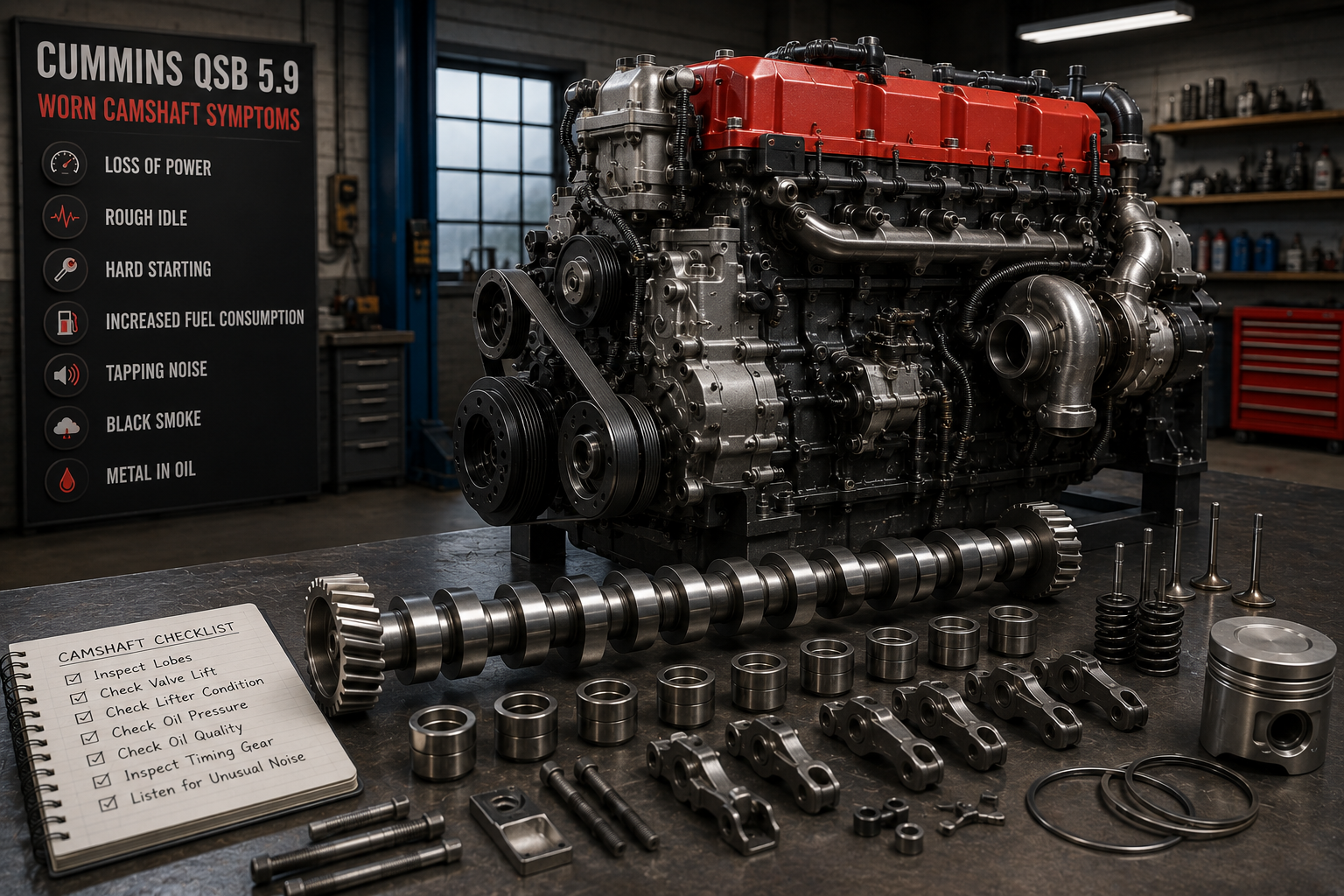

Worn Camshaft Symptoms in Cummins QSB 5.9 Diesel Engines (Part 2): Diagnosis, Repairs, and Preventive Maintenance
Welcome Back!
In Part 1Cummins QSB 5.9 Diesel Engines: Worn Camshaft Symptoms Explained | Alfa Marine Spare Parts , we discussed the most common symptoms of a worn camshaft in Cummins QSB 5.9 diesel engines, including power loss, rough idling, hard starting, increased fuel consumption, unusual valve train noise, and black exhaust smoke.
Now comes the important question.
How do you know if the camshaft is really the problem?
Let's continue the conversation with the questions marine engineers, mechanics, and equipment owners ask every day.
"How Can I Tell If It's Really the Camshaft?"
That's probably the biggest question.
The truth is, many camshaft symptoms are similar to problems caused by injectors, turbochargers, or even restricted fuel filters.
That's why experienced technicians never replace a camshaft based on symptoms alone.
Instead, they investigate step by step.
A proper diagnosis usually starts with:
- Reviewing the engine's maintenance history
- Checking active or stored fault codes (if equipped with electronic diagnostics)
- Listening carefully to engine noises
- Monitoring engine performance under load
- Inspecting the lubrication system
- Checking valve train operation
Replacing expensive parts without confirming the cause can waste both time and money.
"What Does a Mechanic Inspect First?"
Most technicians begin with the simple checks.
They'll usually inspect:
Engine Oil
Is the oil level correct?
Does the oil look unusually dirty?
Are there signs of fuel dilution?
Any metallic particles?
The oil often tells part of the engine's story.
Oil Filter
Many experienced mechanics cut open the oil filter.
Why?
Because tiny metal particles trapped inside may indicate internal engine wear long before major damage occurs.
Valve Train
The valve cover may be removed to inspect:
- Rocker arms
- Push rods
- Valve movement
- Valve lash
- Overall valve train condition
Any abnormal movement can point toward further inspection.
"Can Oil Analysis Help?"
Absolutely.
Oil analysis is one of the most valuable tools for monitoring engine health.
Instead of guessing what's happening inside the engine, a laboratory can measure microscopic wear metals and contaminants.
An oil sample may reveal increased levels of:
- Iron
- Chromium
- Copper
- Aluminum
While these results don't identify the exact failed component on their own, they can indicate abnormal internal wear and help determine whether further inspection is needed.
For fleet operators, routine oil analysis can help identify developing problems before they lead to unexpected downtime.
"What Happens If I Ignore Camshaft Wear?"
Let's be honest.
Many operators do.
The engine still starts.
It still runs.
It still gets the job done.
So it's tempting to keep going.
Unfortunately, camshaft wear rarely gets better on its own.
As wear increases, you may experience:
- Reduced engine efficiency
- More fuel consumption
- Lower power output
- Additional valve train wear
- Longer repair times
- Higher repair costs
A repair that could have been planned during scheduled maintenance may eventually become an emergency breakdown.
"Can a Worn Camshaft Damage the Turbo?"
Not directly.
However, poor engine breathing can affect overall combustion efficiency.
When combustion becomes less efficient, operators may notice:
- Increased exhaust smoke
- Higher exhaust temperatures
- Reduced engine response
These symptoms are often blamed on the turbocharger first.
That's why a complete diagnosis is important before replacing expensive components.
"Should I Replace Just the Camshaft?"
Not always.
This depends on the amount of wear.
If the camshaft has suffered significant damage, technicians may also inspect or replace:
- Lifters
- Followers
- Push rods
- Rocker arms
- Bearings (where applicable)
- Valve train hardware
Replacing only one worn component while leaving damaged mating parts in service may shorten the life of the repair.
"Can I Keep Operating the Engine?"
Technically…
Probably.
Should you?
Usually not.
If the engine is already showing clear symptoms such as power loss, excessive valve train noise, or abnormal metal in the oil, continuing to operate it increases the risk of further damage.
Every additional operating hour allows worn components to continue rubbing against each other.
That's why early diagnosis almost always reduces repair costs.
"How Can I Prevent Camshaft Wear?"
Here's the good news.
Most camshaft wear develops gradually, which means there are several things you can do to reduce the risk.
Keep Up With Oil Changes
Fresh engine oil provides a protective film between moving components.
Old oil loses its ability to protect against wear.
Never extend oil change intervals without a maintenance strategy.
Use the Correct Oil
Not every diesel engine oil is the same.
Using an oil that meets the engine manufacturer's specifications helps maintain proper lubrication under varying operating conditions.
Replace Filters on Schedule
Oil filters remove contaminants before they circulate through the engine.
Fuel filters protect the injection system.
Air filters prevent dirt from entering the cylinders.
Skipping filter changes may seem like a small saving, but it can lead to much higher repair costs later.
Warm the Engine Properly
Applying full load immediately after startup isn't good practice.
Allowing the engine to reach normal operating temperature gives the oil time to circulate and provide full lubrication.
Listen to Your Engine
Experienced operators often notice problems before any warning light appears.
If your engine suddenly sounds different, don't ignore it.
A new ticking sound, vibration, or change in performance deserves attention.
"Can High Operating Hours Cause Camshaft Wear?"
Yes—but hours alone don't tell the whole story.
Two identical Cummins QSB 5.9 diesel engines can have the same number of operating hours and still show very different levels of wear.
Why?
Because engine life depends on factors such as:
- Maintenance quality
- Oil cleanliness
- Load conditions
- Cooling system performance
- Fuel quality
- Operating environment
A well-maintained engine with high hours may be in better condition than a neglected engine with far fewer hours.
A Real Workshop Conversation
Boat Owner:
"My engine has lost power, but there aren't any warning lights. Could the turbocharger be failing?"
Marine Technician:
"It could be, but let's not assume. Have you noticed any ticking noises or changes in fuel consumption?"
Boat Owner:
"Actually, yes. It uses more fuel than last season."
Marine Technician:
"We'll inspect the turbocharger, but we'll also check the valve train, engine oil, and maintenance history. Several different issues can produce the same symptoms."
That's exactly how experienced technicians approach diagnostics.
They don't guess.
They investigate.
Frequently Asked Questions
Does every ticking noise mean the camshaft is worn?
No.
Valve lash, rocker arms, lifters, injectors, and other components can also produce similar sounds.
A proper inspection is always recommended.
Can injector problems look like camshaft wear?
Yes.
Both may cause rough idling, power loss, smoke, and poor fuel economy.
That's why diagnosis should follow a logical process rather than replacing parts based on assumptions.
Is camshaft replacement part of normal maintenance?
No.
A camshaft isn't considered a routine service item.
With proper lubrication and regular maintenance, it is designed to provide a long service life.
How often should I inspect the valve train?
Visual inspections during scheduled maintenance are good practice, especially on engines with high operating hours or when abnormal noises develop.
Five Habits That Help Cummins QSB 5.9 Diesel Engines Last Longer
After talking with marine engineers and diesel mechanics over the years, these five habits come up again and again:
- Never ignore changes in engine sound.
- Change oil and filters on time.
- Monitor oil pressure and coolant temperature.
- Investigate small problems before they become expensive ones.
- Keep accurate maintenance records.
Simple habits often prevent major repairs.
Final Thoughts
One of the reasons Cummins QSB 5.9 diesel engines are trusted around the world is their proven reliability. Whether they're powering a workboat, generator, construction machine, or industrial application, these engines are built for long service life.
But even the most dependable engine relies on one thing—consistent maintenance.
A worn camshaft is rarely the first component technicians suspect, yet it can affect power, fuel efficiency, starting performance, and overall engine operation. The key is recognizing the warning signs early and carrying out a proper diagnosis instead of guessing.
If you notice reduced performance, unusual valve train noise, increased fuel consumption, or changes in engine behavior, don't wait until the problem becomes a major repair. A careful inspection today could prevent an expensive overhaul tomorrow.
When it comes to Cummins QSB 5.9 diesel engines, preventive maintenance isn't just about protecting parts—it's about protecting your vessel, your equipment, and your operating budget.
What's Next?
In our next article, we'll cover another common topic for Cummins QSB 5.9 diesel engines:
"Cummins QSB 5.9 Overheating Problems Explained: Causes, Troubleshooting, and How to Prevent Costly Engine Damage."
We'll answer real-world questions from operators and mechanics, explain why these engines overheat, and share practical maintenance tips to help keep your engine running at its best.