MTU 8V 2000 M84 Seawater Pump Maintenance: How to Prevent Cooling System Failures
The MTU 8V 2000 M84 marine engine is widely recognized for its reliability, compact design, and impressive power-to-weight ratio. It is commonly installed in luxury yachts, patrol boats, pilot vessels, rescue boats, and other high-performance marine applications where dependable cooling is essential.
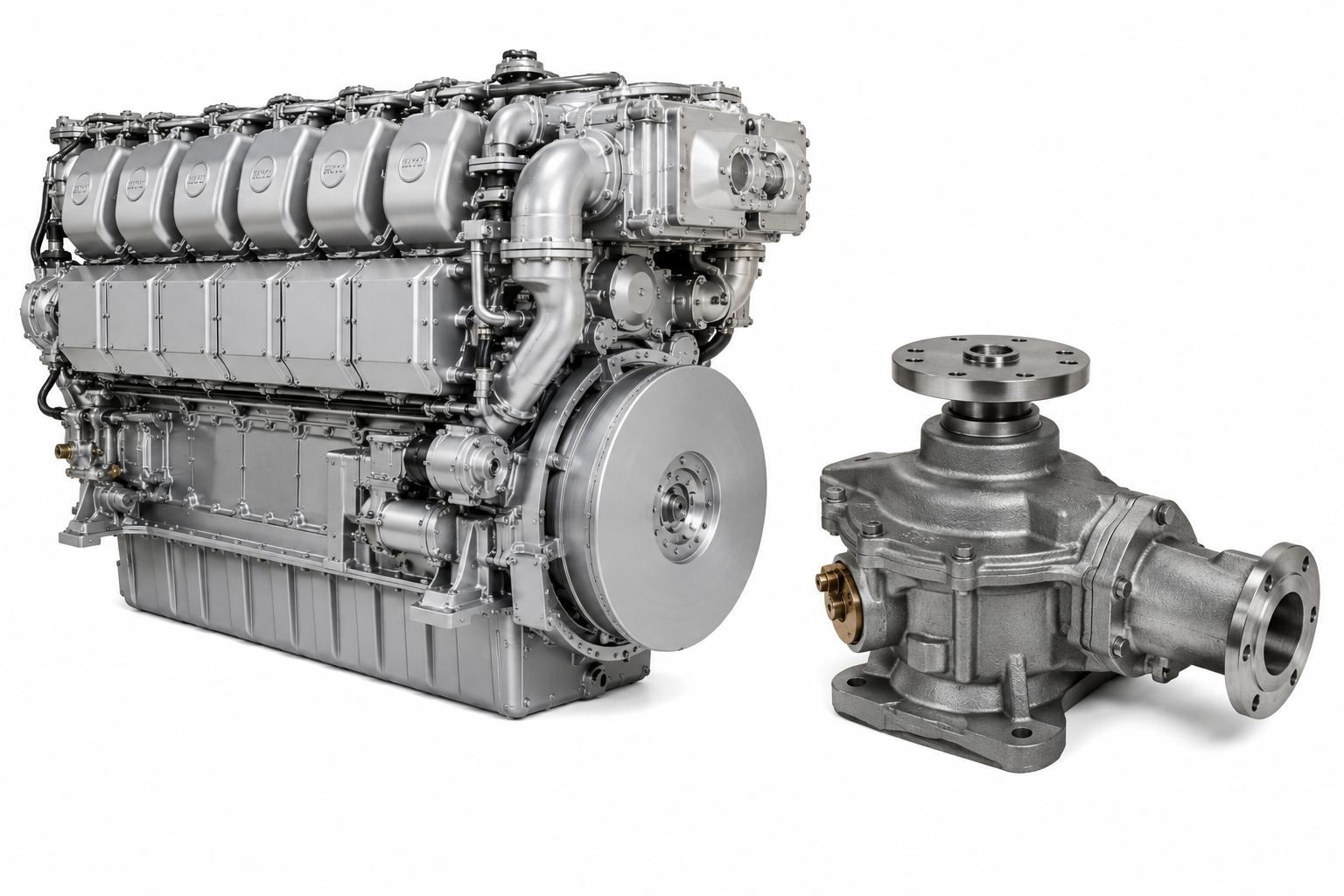
One of the most critical components in this engine is the seawater pump. While often overlooked during routine servicing, the seawater pump is responsible for circulating seawater through the engine's cooling system, ensuring that the heat exchanger, oil cooler, and charge air cooler can remove excess heat efficiently.
A worn seawater pump or damaged impeller can quickly lead to overheating, reduced engine performance, and expensive repairs. Understanding how this component works and maintaining it correctly can significantly improve engine reliability and reduce unplanned downtime.
What Does the Seawater Pump Do?
The seawater pump draws seawater through the vessel's sea inlet and circulates it through the cooling system. The seawater absorbs heat from the heat exchanger and oil cooler before being discharged overboard.
Unlike the freshwater cooling circuit, the seawater circuit is constantly exposed to saltwater, sand, marine growth, and debris. This makes the seawater pump one of the hardest-working components on the engine.
Without adequate seawater flow, the MTU 8V 2000 M84 cannot maintain its correct operating temperature.
Why Is the Seawater Pump So Important?
A healthy seawater pump helps protect several major engine systems, including:
- Heat exchanger
- Charge air cooler
- Engine oil cooler
- Freshwater cooling circuit
- Turbocharger
- Cylinder heads
- Exhaust system
If the pump cannot deliver sufficient cooling water, temperatures throughout the engine begin to rise, placing additional stress on internal components.
Common Causes of Seawater Pump Failure
Although seawater pumps are designed for marine service, they experience continuous wear.
Common causes of failure include:
Worn Impeller
Flexible impellers naturally wear over time and may crack, lose blades, or become permanently deformed.
Corrosion
Saltwater exposure can corrode pump housings, shafts, and internal components.
Damaged Mechanical Seals
Failed seals may allow seawater to leak, reducing pump efficiency and damaging bearings.
Bearing Wear
Continuous operation eventually wears bearings, leading to shaft movement and abnormal noise.
Marine Debris
Seaweed, shells, sand, and other debris may restrict water flow or damage the impeller.
Dry Running
Operating the pump without water for even a short period can permanently damage the impeller.
Warning Signs of a Failing Seawater Pump
Marine engineers should investigate immediately if they notice:
- Rising coolant temperature
- High engine temperature alarms
- Reduced seawater discharge
- Water leaking from the pump
- Squealing or grinding noises
- Visible corrosion
- Steam from the exhaust outlet
- Higher exhaust temperatures
- Engine overheating under load
These warning signs should never be ignored, as cooling system failures can escalate rapidly.
Inspect the Entire Cooling System
A seawater pump should never be inspected in isolation. During routine maintenance, also examine:
- Heat exchanger
- Charge air cooler
- Oil cooler
- Thermostats
- Seawater strainer
- Cooling hoses
- Hose clamps
- Freshwater pump
- Expansion tank
- Coolant quality
- Temperature sensors
A restriction anywhere in the cooling system can reduce overall efficiency.
Why the Heat Exchanger Matters
The seawater pump supplies cooling water to the heat exchanger.
If the heat exchanger becomes blocked by marine growth or mineral deposits, even a perfectly functioning pump cannot maintain proper cooling.
Routine cleaning of both components helps maximize engine efficiency and minimize overheating.
The Importance of the Seawater Strainer
The seawater strainer is the first line of defense against debris entering the cooling system.
Regularly inspect and clean the strainer to prevent:
- Reduced water flow
- Pump cavitation
- Impeller damage
- Overheating
- Blocked heat exchanger tubes
A neglected strainer can quickly reduce cooling system performance.
Preventive Maintenance Checklist
To maximize the life of the MTU 8V 2000 M84 seawater pump:
✔ Inspect the seawater strainer before each voyage.
✔ Replace worn impellers at recommended intervals.
✔ Check pump bearings for excessive play.
✔ Inspect mechanical seals for leakage.
✔ Flush the cooling system when required.
✔ Clean the heat exchanger.
✔ Inspect hoses for cracks and leaks.
✔ Monitor engine operating temperatures.
✔ Replace damaged gaskets during servicing.
✔ Record all maintenance activities.
Marine Engineer Tip
Many overheating problems blamed on the thermostat or heat exchanger actually begin with a worn seawater pump impeller. During routine maintenance, always inspect the impeller carefully—even if it appears intact. Small cracks, hardened rubber, or missing vane tips can significantly reduce cooling water flow long before the impeller completely fails.
Common Mistakes
Avoid these common mistakes:
- Reusing an old impeller after disassembly.
- Ignoring small seawater leaks.
- Running the engine with a blocked seawater strainer.
- Replacing the thermostat before checking seawater flow.
- Operating the engine after repeated overheating alarms.
- Neglecting routine heat exchanger cleaning.
- Forgetting to inspect pump bearings and seals.
Frequently Asked Questions
How often should the seawater pump be inspected?
The inspection interval depends on operating hours and the vessel's environment. Boats operating in sandy, shallow, or tropical waters generally require more frequent inspections.
What happens if the impeller fails?
A damaged impeller reduces seawater flow, causing overheating and potentially damaging the heat exchanger, oil cooler, turbocharger, and other engine components.
Can seawater pumps leak without overheating?
Yes. A leaking mechanical seal may not immediately affect cooling performance but should be repaired before it leads to bearing damage or reduced pump efficiency.
Should I replace the entire pump or only the impeller?
That depends on the condition of the housing, bearings, shaft, and seals. A complete inspection will determine whether replacement or overhaul is the better option.
Can a blocked seawater strainer damage the pump?
Yes. Restricted water flow increases the load on the pump and may cause impeller damage, cavitation, or overheating.
Worldwide Marine Engine Spare Parts Supply
Alfa Marine Spare Parts supplies genuine, OEM, aftermarket, remanufactured, and reconditioned spare parts for the MTU 8V 2000 M84 and the complete MTU Series 2000 engine family.
We ship worldwide, supporting:
- Commercial shipping companies
- Shipyards
- Offshore operators
- Yacht builders
- Marine engineers
- Chief engineers
- Technical superintendents
- Fleet operators
- Government and naval fleets
- Marine service companies
We regularly supply customers throughout the United Kingdom, the United States, Dubai (UAE), Monaco, Nigeria, the Netherlands, Italy, Spain, France, Germany, Norway, Greece, and many other maritime regions.
Our customers operate in and around major shipbuilding and maritime hubs, including Harland & Wolff, A&P Group, Cammell Laird, Huntington Ingalls Industries (HII), General Dynamics NASSCO, Damen Shipyards, Fincantieri, Meyer Werft, Drydocks World Dubai, Dubai Maritime City, and offshore operations in Lagos, Port Harcourt, Onne, and Warri, Nigeria.
Browse Our Complete Spare Parts Catalog
Alfa Marine Spare Parts supplies a comprehensive range of marine engine components, including:
- Seawater pumps
- Freshwater pumps
- Heat exchangers
- Charge air coolers
- Oil coolers
- Fuel injectors
- Turbochargers
- Camshafts
- Crankshafts
- Cylinder heads
- Bearings
- Gaskets
- Complete overhaul kits
Browse our complete inventory:
https://alfamarinespareparts.com/spareparts
Why Choose Alfa Marine Spare Parts?
Marine operators around the world choose Alfa Marine Spare Parts because we offer:
- Genuine, OEM, aftermarket, remanufactured, and reconditioned parts
- Worldwide shipping and logistics support
- Technical assistance for correct part identification
- Support for commercial vessels, yachts, offshore fleets, patrol boats, and workboats
- Reliable service for shipyards, marine engineers, chief engineers, technical superintendents, and fleet managers
Contact Alfa Marine Spare Parts
Need assistance with your MTU 8V 2000 M84 or help finding the correct cooling system components?
Website: https://alfamarinespareparts.com
Email: request@alfamarinespareparts.com
Our experienced team can help you identify the correct spare parts and support your maintenance requirements wherever your vessel operates.
Conclusion
The seawater pump is one of the most important components in the cooling system of the MTU 8V 2000 M84 marine engine. Regular inspection of the pump, impeller, bearings, seals, seawater strainer, and heat exchanger helps prevent overheating, protects critical engine components, and extends overall engine life. By following a proactive maintenance schedule and replacing worn parts before failure occurs, marine engineers can improve reliability, reduce operating costs, and keep their MTU engines performing efficiently in demanding marine environments around the world.