MTU 8V 2000 M84 Oil Cooler Inspection: Is Your Engine Oil Running Hot Without You Knowing?
Marine engineers spend a lot of time monitoring coolant temperatures, but one equally important system is often overlooked—the engine oil cooling system.
On the MTU 8V 2000 M84, lubricating oil does much more than reduce friction. It also helps carry heat away from critical components such as crankshaft bearings, connecting rods, camshafts, pistons, and turbocharger bearings.
Without an efficient oil cooler, engine oil temperatures can gradually increase, reducing lubrication quality and accelerating wear throughout the engine.
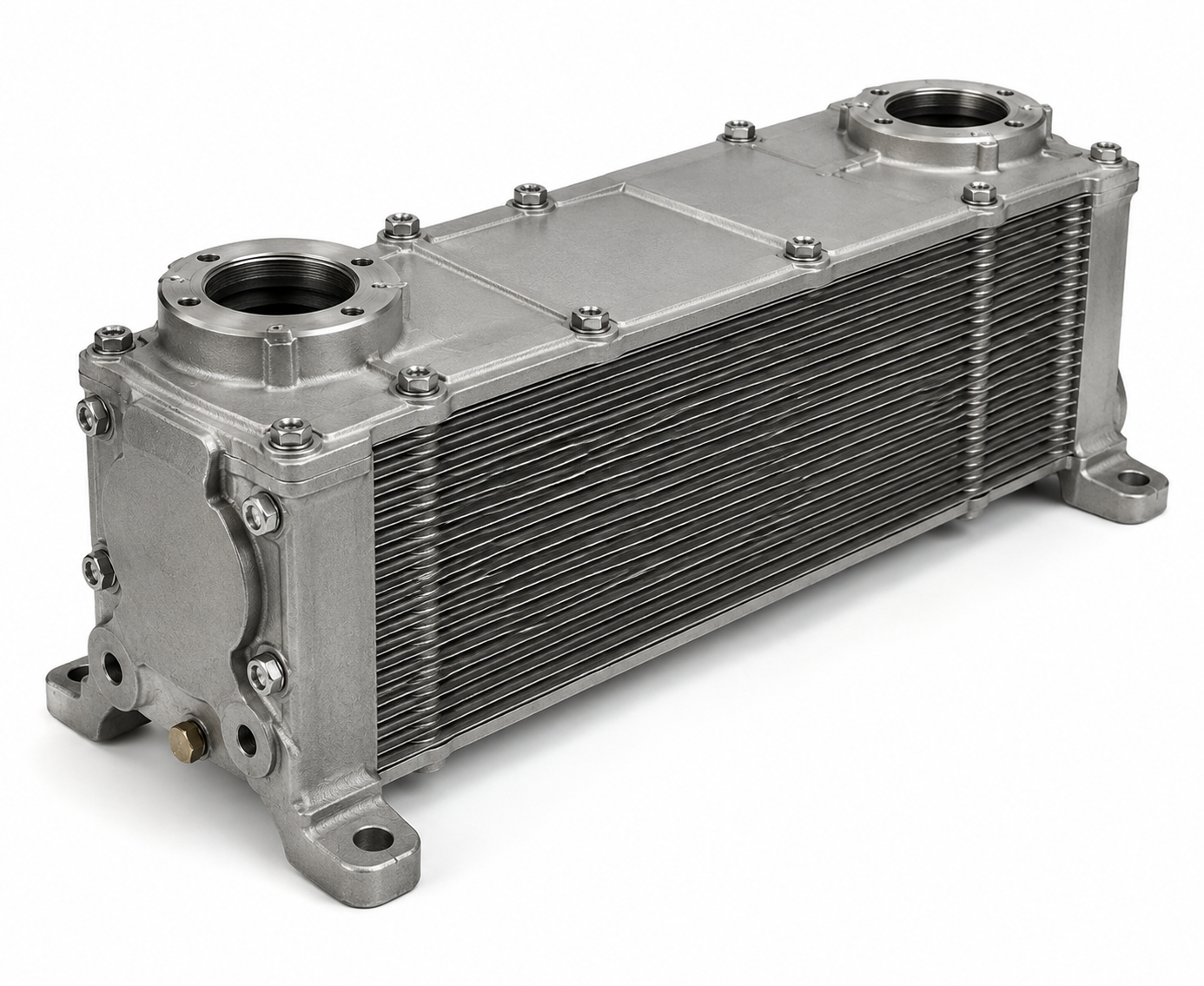
The oil cooler is designed for years of reliable service, but like every heat exchanger operating in a marine environment, it requires routine inspection and maintenance to perform at its best.
What Does the Oil Cooler Do?
The oil cooler transfers excess heat from the engine oil into the cooling system.
Its main functions include:
- Maintaining correct oil temperature
- Preserving oil viscosity
- Protecting engine bearings
- Improving lubrication efficiency
- Reducing internal engine wear
- Supporting long engine life
Stable oil temperature is just as important as stable coolant temperature.
Why Is Oil Temperature So Important?
Every moving component inside the MTU 8V 2000 M84 depends on a strong lubricating oil film.
If oil becomes too hot:
- Viscosity decreases.
- Lubrication becomes less effective.
- Bearings experience greater stress.
- Internal wear increases.
- Oil oxidation accelerates.
- Component life may be reduced.
Maintaining proper oil temperature helps protect the entire engine.
A Real Marine Maintenance Scenario
A commercial patrol vessel powered by an MTU 8V 2000 M84 had completed an intensive operating season without any engine alarms.
Routine engine monitoring showed coolant temperatures remained normal.
However, engineers noticed lubricating oil temperatures were consistently several degrees higher than previous operating records.
Rather than waiting for a fault to develop, the maintenance team inspected the oil cooler during scheduled servicing.
Marine deposits and internal contamination had reduced heat transfer efficiency.
After cleaning the oil cooler and replacing worn seals, oil temperatures returned to their normal operating range.
No internal engine damage had occurred because the issue was identified early.
What Causes Oil Cooler Problems?
Oil coolers operate continuously under demanding marine conditions.
Several factors may reduce their efficiency over time.
Internal Fouling
Oil deposits gradually build up inside the cooler passages, reducing heat transfer.
Seawater Scale
Marine minerals and salt deposits restrict cooling efficiency on the seawater side.
Corrosion
Continuous exposure to seawater can gradually affect internal cooling passages if maintenance intervals are ignored.
Oil Contamination
Poor oil quality accelerates deposit formation inside the cooler.
Age
Even well-maintained oil coolers lose efficiency after many years of service.
Regular inspections help determine their condition.
Warning Signs of a Dirty or Worn Oil Cooler
Oil cooler problems usually develop gradually.
Watch for:
- Higher engine oil temperature
- Oil pressure changes at high temperature
- Reduced lubrication efficiency
- Increased oil oxidation
- Darkened engine oil
- Higher bearing temperatures
- Reduced engine efficiency
- Oil contamination
- Abnormal oil analysis reports
- Progressive engine wear
These symptoms should never be ignored.
Why Oil Analysis Is So Valuable
Routine oil analysis provides valuable information about the health of the lubrication system.
Laboratory testing can detect:
- Oxidation
- Contamination
- Fuel dilution
- Water contamination
- Wear metals
- Viscosity changes
Trending these results over time allows marine engineers to identify cooling and lubrication problems long before mechanical damage occurs.
Components to Inspect Alongside the Oil Cooler
Whenever the oil cooler is serviced, engineers should also inspect:
- Oil pump
- Oil filters
- Pressure relief valve
- Thermostat
- Heat exchanger
- Seawater pump
- Freshwater cooling system
- Turbocharger bearings
- Main bearings
- Connecting rod bearings
The entire lubrication and cooling system should always be evaluated together.
Preventive Maintenance Checklist
Routine maintenance helps maximize oil cooler efficiency.
✔ Monitor engine oil temperature.
✔ Follow MTU oil change intervals.
✔ Perform regular oil analysis.
✔ Inspect the oil cooler during scheduled maintenance.
✔ Clean seawater cooling passages when required.
✔ Replace worn seals and gaskets.
✔ Monitor oil pressure.
✔ Check for coolant or oil contamination.
✔ Record operating temperatures.
✔ Follow MTU maintenance recommendations.
Marine Engineer Tip
Don't compare today's oil temperature only with the manufacturer's maximum limits.
Instead, compare it with your own historical engine records.
A gradual increase of only a few degrees over several months often indicates that the oil cooler is becoming less efficient, even though the engine is still operating within acceptable limits.
Trend monitoring is one of the most effective predictive maintenance tools available.
Common Maintenance Mistakes
Avoid these common errors:
- Ignoring gradually increasing oil temperatures.
- Waiting for an engine alarm before inspecting the oil cooler.
- Skipping routine oil analysis.
- Extending oil change intervals unnecessarily.
- Failing to clean seawater passages.
- Overlooking small oil or coolant leaks around the cooler.
Frequently Asked Questions
How often should the oil cooler be inspected?
Inspection intervals should follow MTU maintenance recommendations and the vessel's operating profile. Heavy-duty marine applications may require more frequent inspections.
Can a dirty oil cooler increase engine wear?
Yes. Reduced cooling efficiency raises oil temperature, which can lower lubrication performance and increase wear on internal engine components.
Can oil analysis indicate oil cooler problems?
Yes. Changes in viscosity, oxidation, contamination, or water content may point to issues affecting the lubrication system.
Should the oil cooler be cleaned during major maintenance?
Absolutely. Cleaning and inspecting the oil cooler helps restore cooling efficiency and identify signs of corrosion or internal blockage.
Can normal coolant temperatures hide oil cooling problems?
Yes. Coolant temperature may remain normal while oil temperature gradually increases due to reduced oil cooler efficiency.
Worldwide Marine Engine Spare Parts Supply
Alfa Marine Spare Parts supplies genuine, OEM, aftermarket, remanufactured, and reconditioned spare parts for the MTU 8V 2000 M84 and the complete MTU Series 2000 engine family.
We support:
- Shipyards
- Marine engineers
- Chief engineers
- Technical superintendents
- Fleet operators
- Commercial shipping companies
- Offshore operators
- Luxury yacht operators
- Government fleets
- Fishing vessel operators
We regularly supply marine engine spare parts throughout the United Kingdom, United States, Dubai (UAE), Monaco, Nigeria, the Netherlands, Italy, Spain, France, Germany, Norway, and Greece.
Browse Our Complete Spare Parts Catalog
We supply a comprehensive range of MTU Series 2000 components, including:
- Oil coolers
- Oil pumps
- Oil filters
- Heat exchangers
- Seawater pumps
- Thermostats
- Turbochargers
- Fuel injectors
- Cylinder heads
- Gaskets and seals
- Complete overhaul kits
Browse our complete catalog:
https://alfamarinespareparts.com/spareparts
Why Choose Alfa Marine Spare Parts?
Keeping an MTU engine reliable requires attention to every part of the lubrication and cooling system—not just the major components. At Alfa Marine Spare Parts, we help shipyards, fleet operators, and marine engineers source the correct replacement parts for preventive maintenance, repairs, and complete engine overhauls.
We provide:
- Genuine, OEM, aftermarket, remanufactured, and reconditioned marine engine spare parts
- Worldwide shipping
- Fast quotations
- Technical assistance with part identification
- Support for MTU, Caterpillar, Wärtsilä, MAN, Cummins, Volvo Penta, Scania, Detroit Diesel, Perkins, Yanmar, and many other marine engine brands
Contact Alfa Marine Spare Parts
Looking for MTU 8V 2000 M84 oil coolers, lubrication system components, or marine engine spare parts?
Website: https://alfamarinespareparts.com
Email: request@alfamarinespareparts.com
Our experienced team is ready to help you identify the right components to keep your MTU engine operating efficiently and reliably.
Conclusion
The oil cooler on the MTU 8V 2000 M84 plays a vital role in protecting the engine by maintaining the correct lubricating oil temperature. Even when coolant temperatures appear normal, a partially restricted or inefficient oil cooler can gradually reduce lubrication performance and increase wear on critical components. By combining regular inspections, oil analysis, trend monitoring, and scheduled maintenance, marine engineers can detect developing problems early, improve engine reliability, and extend the service life of the entire MTU Series 2000 lubrication system.