
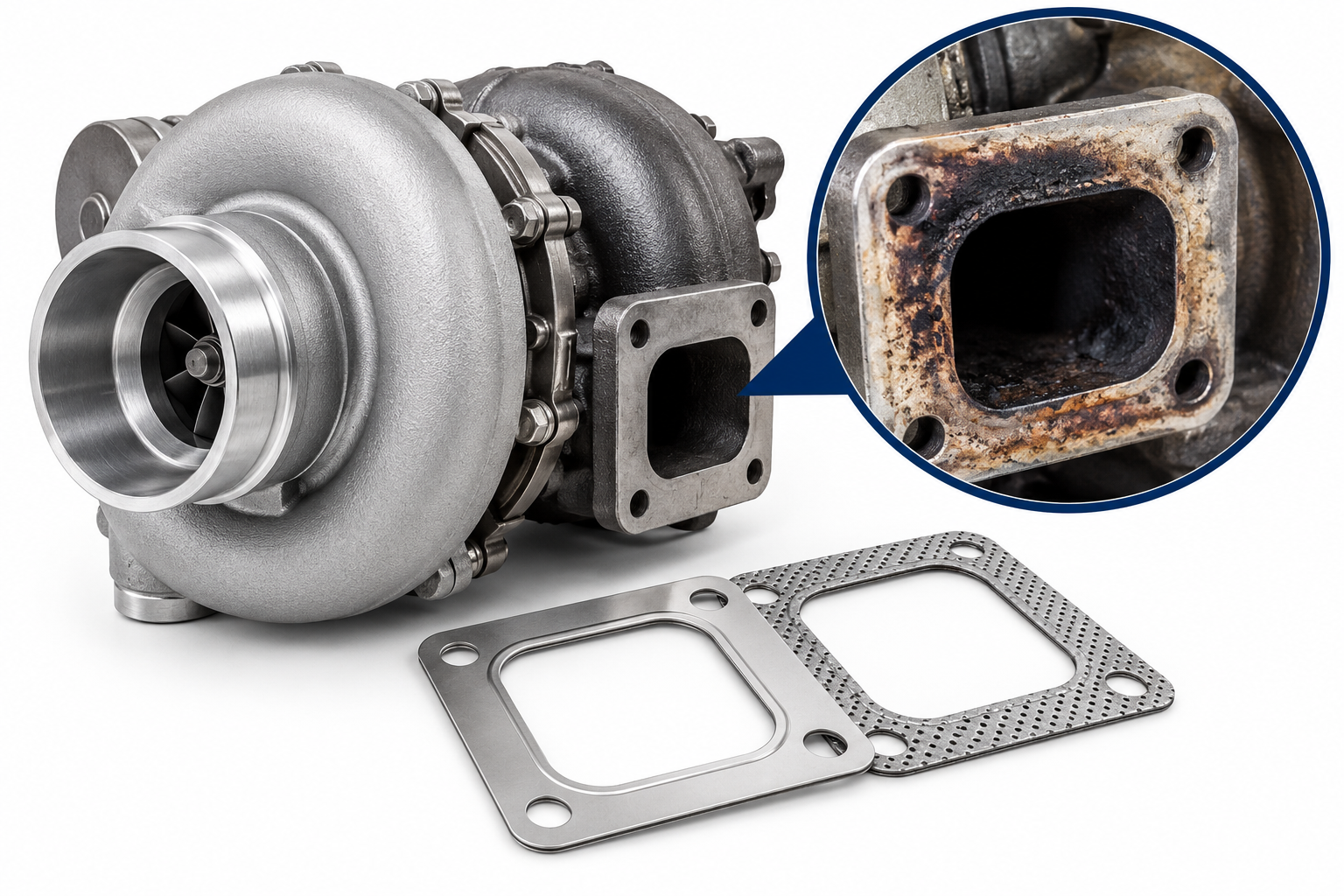

MTU 4000 Turbo Gasket Symptoms, Failure Causes and Solutions
The MTU Series 4000 marine diesel engine is designed for demanding marine propulsion and power generation applications. Its turbocharging system plays a critical role in engine efficiency, combustion performance and reliable operation under heavy loads.
However, a damaged or leaking MTU 4000 turbo gasket can affect exhaust gas sealing, reduce turbocharger efficiency and contribute to engine performance problems.
Understanding the early warning signs, common failure causes and correct repair procedures can help vessel operators, marine engineers and maintenance teams prevent costly turbocharger damage and unexpected downtime.
What Is an MTU 4000 Turbo Gasket?
An MTU 4000 turbo gasket is a sealing component installed at designated turbocharger or exhaust system connections.
Depending on the engine configuration, gaskets and sealing rings are used around the turbocharger mounting flange, exhaust connections and associated pipework.
These components help maintain a gas-tight connection while withstanding high exhaust temperatures, thermal expansion and engine vibration.
A deteriorated gasket may allow hot exhaust gases to escape before or around the turbocharger, depending on the location of the failure.
7 Common MTU 4000 Turbo Gasket Failure Symptoms
1. Black Soot Around the Turbocharger Flange
One of the most recognizable signs of an exhaust-side gasket leak is black soot accumulating around the turbocharger mounting flange or exhaust connections.
Escaping exhaust gases can leave dark deposits around the leaking joint.
Solution: Inspect the flange, gasket seating surfaces, mounting studs and surrounding exhaust connections. Replace damaged sealing components after identifying the cause.
2. Unusual Hissing or Exhaust Noise
A leaking turbo gasket may produce a hissing, ticking or blowing sound, particularly when engine load increases.
The sound can result from exhaust gases escaping through a damaged gasket or an improperly sealed connection.
Solution: Inspect the exhaust connections for leakage. Do not place hands near operating turbocharger or exhaust components because of extreme heat and pressure.
3. Reduced Engine Power
An exhaust leak upstream of the turbine may reduce the energy available to drive the turbocharger.
Depending on leak severity and operating conditions, the engine may experience reduced boost pressure, slower response or lower available power.
Solution: Check the exhaust system for leaks and compare turbocharger performance readings with the correct MTU operating specifications.
4. Increased Exhaust Gas Temperature
Poor turbocharger performance can affect combustion air supply and engine operating temperatures.
However, increased exhaust temperature is not proof of gasket failure. Fuel injection problems, excessive load, restricted airflow and other faults can produce similar symptoms.
Solution: Check exhaust temperature readings, boost pressure, engine load and relevant alarm history before replacing components.
5. Increased Fuel Consumption
A significant exhaust leak affecting turbocharger performance may reduce engine efficiency.
The engine may require more fuel to deliver the same useful output under certain conditions.
Solution: Investigate the turbocharger, air intake system, exhaust system and fuel injection equipment rather than assuming the gasket is the only cause.
6. Exhaust Smell or Visible Leakage
A damaged gasket may allow exhaust gases to escape into the engine compartment.
This is particularly concerning in enclosed marine machinery spaces.
Solution: Follow vessel safety procedures, assess the leak and arrange corrective maintenance. Significant exhaust leakage should not be ignored.
7. Repeated Gasket Failure
If an MTU 4000 turbo gasket fails repeatedly after replacement, another mechanical problem may be present.
Possible causes include distorted flanges, damaged mounting studs, excessive vibration or incorrect installation.
Solution: Inspect the entire joint assembly, not just the gasket.
What Causes MTU 4000 Turbo Gasket Failure?
Excessive Thermal Stress
Turbocharger exhaust connections experience repeated heating and cooling cycles. These temperature changes cause metal components to expand and contract.
Over time, excessive thermal stress or abnormal operating conditions may contribute to sealing problems.
Incorrect Installation
Incorrect gasket positioning, damaged mating surfaces or improper fastener tightening can prevent the connection from sealing correctly.
Installation procedures must follow the applicable MTU engine service documentation.
Damaged Flange Surfaces
A new gasket cannot reliably compensate for a cracked, warped or severely damaged flange.
The mating surfaces should be inspected before installing replacement parts.
Loose or Damaged Fasteners
Damaged studs, nuts or improperly secured exhaust connections can allow joint movement and leakage.
Excessive Engine Vibration
Abnormal vibration may place additional mechanical stress on turbocharger supports and exhaust connections.
The underlying vibration problem should be investigated if repeated failures occur.
How to Fix an MTU 4000 Turbo Gasket Leak
Step 1 — Confirm the leak location
Identify whether the leakage originates from the turbocharger mounting flange, exhaust manifold, Y-pipe connection or another sealing joint.
Step 2 — Shut down and secure the engine
Allow the engine and exhaust system to cool. Follow the vessel's lockout and maintenance safety procedures before dismantling components.
Step 3 — Remove the affected connection
Use the correct MTU maintenance instructions for the engine model and serial number.
Step 4 — Inspect the sealing surfaces
Check for cracks, distortion, corrosion, damaged threads and old gasket material.
Step 5 — Replace the sealing components
Install the correct new gasket and any required replacement sealing rings, studs or nuts according to the applicable service procedure.
Step 6 — Reassemble correctly
Follow the manufacturer-approved installation sequence, fastener specifications and any specified assembly materials.
Step 7 — Perform an operational inspection
After reassembly, check for leaks, abnormal noises and irregular operating temperatures. Verify performance under appropriate operating conditions.
Important MTU Series 4000 Maintenance Guidance
MTU Series 4000 workshop documentation includes specific procedures for turbocharger and exhaust system maintenance.
These procedures cover inspection of sealing surfaces, exhaust pipework, Y-pipe connections, mounting hardware and replacement sealing components.
The correct repair procedure depends on the exact engine configuration.
Never assume that every MTU 4000 turbocharger uses the same gasket, mounting arrangement or tightening specification.
MTU 4000 Marine Engine Applications
This guide is relevant to maintenance planning for MTU Series 4000 marine diesel engines, including configurations within the following engine families:
- MTU 8V4000
- MTU 12V4000
- MTU 16V4000
- MTU 20V4000
Turbocharger arrangements and spare part numbers differ by engine version and serial number. Always confirm compatibility before ordering.
Buy MTU 4000 Turbo Gaskets and Marine Engine Spare Parts Online
Alfa Marine Spare Parts supplies marine diesel engine spare parts for customers worldwide.
Customers looking for MTU Series 4000 turbocharger components can request quotations for:
- Turbocharger gaskets and sealing rings
- Turbocharger assemblies
- Exhaust manifold gaskets
- Exhaust system sealing components
- Turbocharger mounting hardware
- Marine engine maintenance and overhaul parts
Whether you require spare parts for planned maintenance, vessel repairs or an urgent technical requirement, our team can assist with identifying suitable parts based on your engine details.
For accurate identification, please provide your MTU engine type, engine serial number, required part number and quantity.
Looking for an MTU 4000 turbo gasket supplier online?
Contact Alfa Marine Spare Parts for a quotation and worldwide marine spare parts supply.
Website: https://www.alfamarinespareparts.com
Frequently Asked Questions
1. What are the symptoms of a leaking MTU 4000 turbo gasket?
Possible symptoms include black soot around exhaust connections, unusual hissing noises, visible exhaust leakage, reduced turbocharger performance and changes in engine operating temperatures. A proper inspection is required to confirm the cause.
2. Can a leaking MTU 4000 turbo gasket cause loss of engine power?
Yes. A significant exhaust leak upstream of the turbocharger turbine can reduce the exhaust energy available to drive the turbocharger, potentially affecting boost pressure and engine performance.
3. Where can I buy MTU 4000 turbocharger gaskets online?
You can request MTU Series 4000 turbocharger gaskets, sealing components and related marine engine spare parts through Alfa Marine Spare Parts. Provide the engine serial number and part number to confirm the correct application.
Conclusion
MTU 4000 turbo gasket failures should be investigated promptly to protect turbocharger performance and maintain reliable marine engine operation.
Black soot deposits, exhaust leakage, unusual noises and performance changes may indicate sealing problems, but these symptoms can also result from other engine faults.
Correct diagnosis, proper installation and suitable replacement components are essential for a reliable repair.
Alfa Marine Spare Parts — Worldwide Supplier of MTU Marine Engine Spare Parts.Request A Quote | Alfa Marine Spare Parts