MTU 16V4000 Marine Engine: Why Correct Liner Seal Installation Is Essential During an Engine Overhaul
Imagine your MTU 16V4000 Marine Engine has accumulated thousands of operating hours and is now scheduled for a major overhaul. The cylinder heads have been removed, the pistons are out, and the cylinder liners are ready for inspection.
Everything appears to be progressing smoothly.
Then someone asks an important question:
"Are we replacing the liner seals?"
Because they're small and relatively inexpensive, liner seals can easily be overlooked. Yet these components play one of the most important roles in protecting the cooling system and maintaining the long-term reliability of the engine.
Experienced marine engineers know that overlooking liner seals during an overhaul can create problems that are far more expensive than the seals themselves.
At Alfa Marine Spare Parts, we regularly support marine engineers, chief engineers, technical superintendents, shipyards, and fleet operators with replacement parts for the MTU 16V4000 Marine Engine. One lesson has remained consistent over the years:
A successful overhaul depends just as much on the small components as it does on the major ones.
In this guide, we'll explain what liner seals are, why they matter, how they protect your engine, and the best practices for installing them during a professional marine engine overhaul.
Understanding the MTU 16V4000 Marine Engine
The MTU 16V4000 Marine Engine is one of the most respected high-speed diesel engines used throughout the marine industry. Designed to deliver high power output, excellent fuel efficiency, and dependable operation, it powers a wide range of commercial and high-performance vessels around the world.
Common applications include:
- Crew transfer vessels
- Fast ferries
- Offshore support vessels
- Patrol boats
- Pilot boats
- Government and naval vessels
- High-performance yachts
- Commercial workboats
Because these engines often operate under demanding conditions and extended load cycles, proper maintenance is essential to achieving maximum service life.
One area that deserves particular attention during a major overhaul is the cylinder liner sealing system.
What Are Liner Seals?
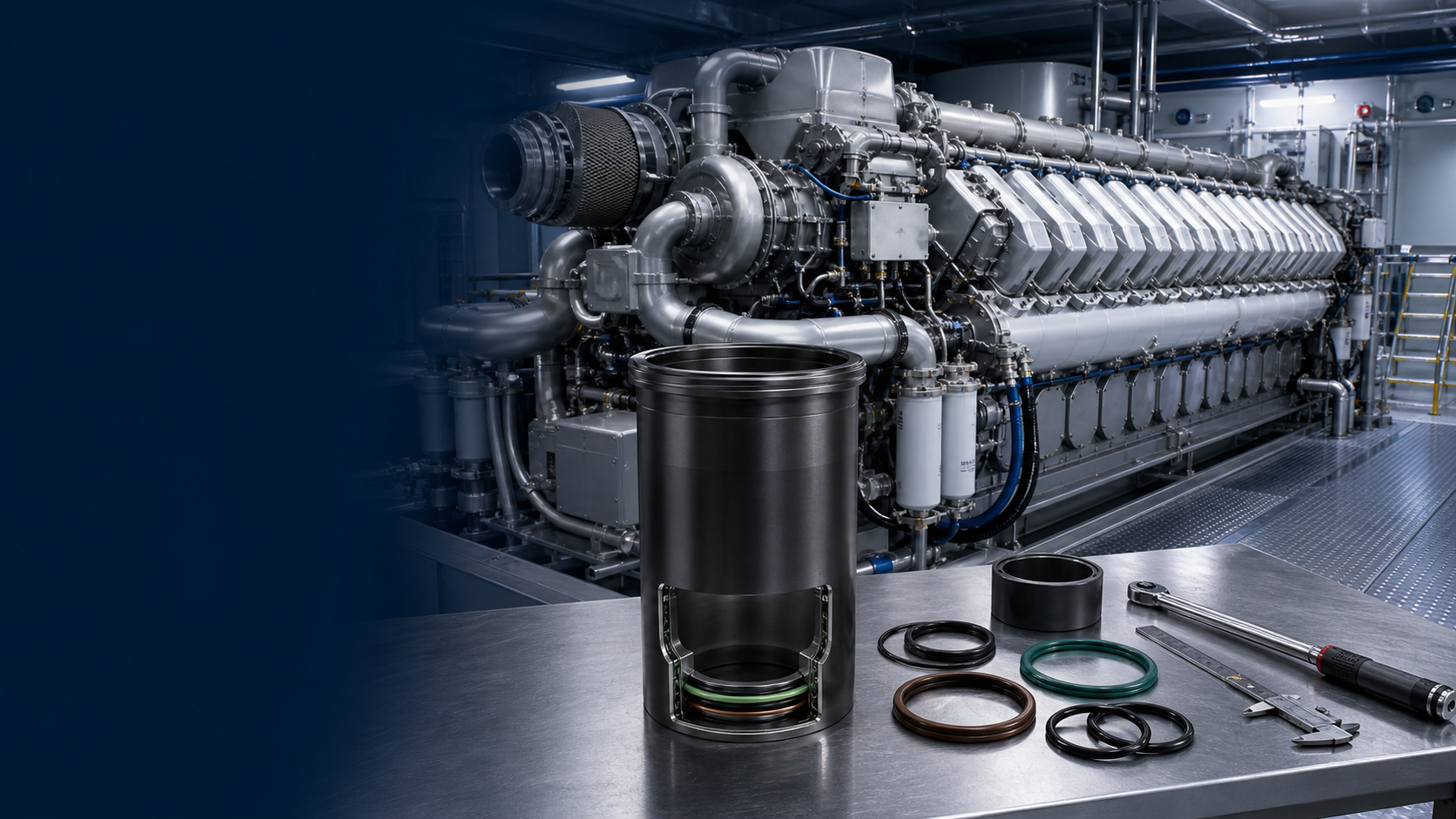
Cylinder liners are fitted into the engine block to provide the running surface for the pistons.
At the lower section of each liner are specially designed liner seals, which create a barrier between the engine's cooling passages and the crankcase.
Although they may appear to be simple sealing rings, their function is critical.
Their primary purpose is to prevent engine coolant from escaping into areas where it should never be present while maintaining the integrity of the cooling system.
Without properly installed liner seals, coolant contamination can affect lubrication, reduce engine reliability, and lead to costly repairs.
According to MTU workshop and overhaul documentation, careful inspection of the cylinder liner seating surfaces and correct installation of new sealing components are essential steps during engine rebuild procedures. These recommendations are consistent with accepted marine engine overhaul practices and help ensure reliable sealing after reassembly.
Why Liner Seals Are So Important
When the MTU 16V4000 Marine Engine reaches operating temperature, every cylinder liner expands and contracts as temperatures change.
The liner seals are designed to maintain a reliable seal throughout these continuous thermal cycles.
Their responsibilities include:
- Preventing coolant leakage.
- Maintaining cooling system integrity.
- Preventing coolant contamination of engine oil.
- Supporting efficient engine temperature control.
- Protecting internal engine components.
- Contributing to long-term engine reliability.
Although liner seals are inexpensive compared with major engine components, they protect systems worth many thousands of euros.
The Function of Liner Seals in the MTU 16V4000 Marine Engine
Every litre of coolant circulating through the engine depends on sealed cooling passages.
The liner seals help direct coolant around each cylinder liner so heat can be removed efficiently.
This cooling process supports:
- Stable operating temperatures.
- Reduced thermal stress.
- Improved combustion efficiency.
- Consistent engine performance.
- Longer engine service life.
If a liner seal becomes damaged, incorrectly installed, or reused beyond its service life, coolant leakage may occur.
Even a small leak can eventually affect engine reliability if not addressed promptly.
Marine Rebuild Challenges: Why Seal Quality Matters
One of the most demanding stages of rebuilding an MTU 16V4000 Marine Engine is reassembling the cylinder block.
Every component must be installed precisely.
Experienced marine engineers know that successful overhauls are rarely determined by major components alone.
Instead, reliability often depends on the correct installation of smaller components such as:
- Liner seals
- O-rings
- Gaskets
- Valve stem seals
- Bearing shells
- Thrust washers
Replacing these parts during an overhaul is considered good engineering practice because access is already available and the additional cost is small compared with the labour involved in dismantling the engine again.
Common Causes of Liner Seal Problems
In many cases, liner seal failures are not caused by poor-quality seals.
Instead, problems often result from installation or operating conditions.
Common causes include:
Incorrect Installation
Twisted or pinched seals may leak shortly after the engine returns to service.
Contaminated Sealing Surfaces
Rust, debris, or corrosion can prevent proper sealing between the liner and the engine block.
Reusing Old Seals
Liner seals are designed as replacement components during major overhauls.
Reusing old seals increases the risk of leakage.
Cooling System Problems
Overheating or contaminated coolant can shorten the service life of sealing components.
Incorrect Assembly Procedures
Following the engine manufacturer's workshop procedures during installation helps ensure reliable sealing and long-term engine performance.
Installing MTU 16V4000 Liner Seals: Best Practices for a Reliable Engine Overhaul
Best Practices for Installing MTU 16V4000 Liner Seals
Installing liner seals on an MTU 16V4000 Marine Engine is much more than simply fitting new seals into the engine block. Every step during installation contributes to the reliability of the overhaul and the long-term performance of the engine.
According to accepted marine engine overhaul practices and MTU workshop documentation, careful preparation, cleanliness, and following the correct assembly procedures are essential for achieving a reliable seal. Even a minor installation error can lead to coolant leakage after the engine returns to service.
Experienced marine engineers know that successful engine rebuilds begin with careful preparation rather than rushing the assembly process.
Step 1 – Prepare the Engine Block
Before installing new liner seals, thoroughly inspect the engine block.
Check for:
- Dirt and debris
- Corrosion
- Old gasket material
- Damaged sealing surfaces
- Scratches inside the liner bore
Every sealing surface should be completely clean before new components are installed.
Even small particles trapped beneath a seal may affect its ability to seal properly.
Step 2 – Inspect the Cylinder Liners
Before reinstalling the cylinder liners, inspect each one carefully.
Look for:
- Wear
- Corrosion
- Cavitation damage
- Scratches
- Pitting
- Damage to the sealing area
If a liner does not meet the manufacturer's service limits, it should be replaced rather than reused.
Installing new liner seals onto damaged liners will not solve an underlying mechanical problem.
Step 3 – Always Install New Liner Seals
One of the most common questions during an overhaul is:
"Can liner seals be reused?"
The safest answer is no.
During a complete overhaul of an MTU 16V4000 Marine Engine, liner seals are generally considered replacement components.
After thousands of operating hours, the seals have already been exposed to:
- Continuous heat cycles
- Cooling system pressure
- Engine vibration
- Coolant additives
- Age-related hardening
Installing new seals helps restore the integrity of the cooling system and reduces the risk of future leaks.
Step 4 – Use the Recommended Assembly Lubricant
MTU workshop procedures specify using the appropriate assembly lubricant where required during seal installation.
Lubrication helps:
- Protect the seals during installation
- Reduce friction
- Prevent twisting
- Allow proper seating
Using unsuitable lubricants or installing seals dry can increase the risk of damaging the seal before the engine is even started.
Always follow the recommendations provided in the workshop documentation for your specific engine model.
Step 5 – Install the Cylinder Liner Carefully
Lowering the cylinder liner into the engine block should always be done slowly and evenly.
Avoid:
- Sudden impacts
- Tilting the liner
- Excessive force
- Twisting the liner while the seal is under compression
A damaged liner seal may not leak immediately, but problems often appear once the engine reaches normal operating temperature and cooling system pressure increases.
Step 6 – Verify Correct Liner Seating
Correct liner seating is an important part of any professional overhaul.
After installation, verify that each liner is fully seated according to the manufacturer's inspection procedures.
Workshop documentation for MTU Series 4000 engines describes checking liner installation and related measurements before final engine assembly to ensure correct sealing and reliable operation.
Taking time to complete these inspections helps prevent expensive rework later.
Engine Room Insight
Experienced Chief Engineers often say that the quality of an overhaul is determined long before the engine is started.
One incorrectly installed liner seal can allow coolant to migrate into areas where it doesn't belong.
Although the leak may begin as only a few drops, it can eventually affect lubrication, increase maintenance costs, and require the engine to be dismantled again.
Replacing liner seals during the original overhaul is far easier than repeating the entire job because of one overlooked sealing component.
Chief Engineer's Tip
During every MTU 16V4000 Marine Engine overhaul, treat liner seals as critical engine components—not as inexpensive rubber rings.
Many experienced engineers recommend:
✔ Replacing every liner seal.
✔ Cleaning every liner bore.
✔ Inspecting every sealing surface.
✔ Following the workshop manual step by step.
✔ Recording liner measurements during assembly.
Attention to detail during assembly often determines how reliably the engine performs over the next several thousand operating hours.
Marine Engineer's Preventive Maintenance Checklist
Although liner seals are hidden inside the engine, the cooling system should be monitored throughout the engine's service life.
Daily
✔ Monitor engine temperature.
✔ Check coolant level.
✔ Look for coolant leaks.
Weekly
✔ Inspect expansion tank level.
✔ Check for abnormal coolant loss.
✔ Monitor oil condition.
Monthly
✔ Inspect the cooling system.
✔ Check coolant concentration.
✔ Inspect hoses and clamps.
Scheduled Maintenance
✔ Test coolant quality.
✔ Inspect heat exchangers.
✔ Inspect freshwater pumps.
✔ Inspect seawater pumps.
✔ Follow MTU maintenance intervals.
During Major Overhaul
✔ Replace liner seals.
✔ Inspect cylinder liners.
✔ Inspect liner seating surfaces.
✔ Replace related O-rings and gaskets.
✔ Verify liner installation before final assembly.
Common Installation Mistakes
Even experienced technicians can make mistakes during an engine overhaul.
Some of the most common include:
❌ Reusing old liner seals.
❌ Installing seals onto dirty sealing surfaces.
❌ Using incorrect assembly lubricant.
❌ Damaging the seal while lowering the liner.
❌ Failing to inspect the liner bore.
❌ Ignoring corrosion around the sealing area.
❌ Skipping final liner installation checks.
Avoiding these mistakes improves overhaul quality and helps maximise engine reliability.
Part 3 – FAQs, Related Parts & Why Marine Engineers Choose Alfa Marine Spare Parts
Frequently Asked Questions About the MTU 16V4000 Marine Engine
One of the advantages of the MTU 16V4000 Marine Engine is its proven reliability when maintained according to the manufacturer's recommendations. During overhaul projects, however, marine engineers often ask the same questions about cylinder liners and liner seals.
Here are some of the most frequently asked questions.
Should liner seals always be replaced during an MTU 16V4000 engine overhaul?
In most overhaul situations, yes.
Liner seals are designed to maintain a reliable seal between the cylinder liner and the engine block throughout thousands of operating hours. During a major overhaul, replacing these seals is considered good engineering practice because they have already been exposed to continuous heat, pressure, coolant, and vibration.
Replacing them while the engine is dismantled helps reduce the likelihood of coolant leaks after reassembly.
Can old liner seals be reused if they still look good?
Visual appearance alone is not a reliable indication of seal condition.
Rubber sealing materials naturally age and lose elasticity over time. Even if a seal appears undamaged, it may no longer provide the sealing performance required for long-term operation.
Replacing liner seals during an overhaul is generally more economical than dismantling the engine again to repair a coolant leak.
What happens if a liner seal leaks?
A damaged or incorrectly installed liner seal can allow coolant to move into areas where it should not be present.
Depending on the severity of the leak, this may contribute to:
- Coolant loss
- Cooling system pressure changes
- Engine oil contamination
- Reduced lubrication performance
- Increased maintenance requirements
Investigating coolant loss promptly can help prevent more extensive engine damage.
How can marine engineers help prevent liner seal problems?
Good overhaul practices remain the best form of prevention.
This includes:
- Thorough cleaning of sealing surfaces.
- Careful inspection of cylinder liners.
- Installing new liner seals.
- Using the recommended assembly procedures.
- Performing final inspection checks before engine assembly.
Attention to detail during the overhaul contributes significantly to long-term engine reliability.
How long do liner seals normally last?
There is no universal replacement interval.
Service life depends on factors such as:
- Operating hours
- Cooling system condition
- Coolant quality
- Engine operating temperatures
- Maintenance practices
- Vessel operating profile
For this reason, liner seals are typically renewed during scheduled major overhauls rather than replaced at fixed time intervals.
Can poor coolant maintenance affect liner seals?
Yes.
The cooling system plays a major role in protecting every sealing component inside the engine.
Maintaining the correct coolant quality, concentration, and service intervals helps reduce corrosion, cavitation, and unnecessary stress on seals and other cooling system components.
Engine Room Insight
Marine engineers often say that "coolant tells the story of an engine."
If coolant quality begins to deteriorate or contamination appears during routine inspections, it should never be ignored.
Although liner seals are hidden deep inside the engine block, changes in coolant condition, unexplained coolant loss, or signs of contamination can provide valuable clues that further investigation may be required.
Regular monitoring allows maintenance to be planned before a small issue develops into an expensive overhaul.
Chief Engineer's Tip
One habit shared by many experienced Chief Engineers is simple:
Document everything during an overhaul.
Record:
✔ Cylinder liner measurements.
✔ Liner protrusion values.
✔ Cooling system inspection results.
✔ Seal replacement.
✔ Torque values.
✔ Component serial numbers where applicable.
Good records make future maintenance easier and help identify trends throughout the engine's service life.
Related MTU 16V4000 Marine Engine Parts
When rebuilding an MTU 16V4000 Marine Engine, liner seals are rarely the only components replaced.
Marine engineers commonly inspect or renew related parts during the same overhaul to maximise reliability and reduce repeat labour.
Common replacement components include:
- Cylinder Liners
- Pistons
- Piston Rings
- Cylinder Heads
- Cylinder Head Gaskets
- Main Bearings
- Connecting Rod Bearings
- Thrust Bearings
- Camshafts
- Fuel Injectors
- Turbochargers
- Freshwater Pumps
- Seawater Pumps
- Oil Pumps
- Heat Exchangers
- Aftercoolers
- Thermostats
- Oil Coolers
- Valve Stem Seals
- Intake Valves
- Exhaust Valves
- Complete Gasket Sets
- Complete Overhaul Kits
Replacing related wear components during planned maintenance often improves engine reliability and helps reduce future downtime.
Why Marine Engineers Choose Alfa Marine Spare Parts
Finding the correct part for an MTU 16V4000 Marine Engine is about more than matching a part number.
Marine engineers need confidence that the replacement component matches the engine's original specification and is suitable for the intended application.
At Alfa Marine Spare Parts, we support customers worldwide by helping identify replacement components using:
- Engine Model
- Engine Serial Number
- Existing Part Number
- Technical Documentation
- Component Identification
We supply:
- Genuine Marine Parts
- OEM Replacement Parts
- Premium Aftermarket Components
- Professionally Remanufactured Parts
Whether you're replacing a single liner seal or carrying out a complete engine overhaul, our team is committed to helping you source the right components efficiently.
Industries We Support
Our customers include professionals throughout the maritime industry, including:
- Marine Engineers
- Chief Engineers
- Technical Superintendents
- Shipyards
- Commercial Shipping Companies
- Offshore Operators
- Fishing Fleets
- Tugboat Operators
- Ferry Companies
- Government Fleets
- Naval Operators
- Yacht Management Companies
- Marine Service Companies
- Boat Builders
- Marine Equipment Distributors
Worldwide Marine Spare Parts Supply
Alfa Marine Spare Parts supports customers operating vessels in major maritime regions around the world, including:
- Spain
- Netherlands
- Germany
- Italy
- France
- Norway
- Greece
- United Kingdom
- United States
- Canada
- Brazil
- United Arab Emirates
- Saudi Arabia
- Qatar
- Nigeria
- South Africa
- Singapore
- Australia
Whether your vessel is preparing for scheduled maintenance or undergoing a complete overhaul, we aim to help you source the correct MTU engine components as efficiently as possible.
Browse Our Complete Marine Spare Parts Catalog
Looking for replacement parts for your MTU 16V4000 Marine Engine or other leading marine diesel engines?
Browse our complete catalogue:
https://alfamarinespareparts.com/spareparts
Our product range includes parts for:
- MTU
- Caterpillar
- Cummins
- MAN
- Volvo Penta
- Wärtsilä
- Yanmar
- Perkins
- Mitsubishi
- Scania
- Detroit Diesel
- Deutz
- John Deere
- Komatsu
- Doosan
Contact Alfa Marine Spare Parts
Need assistance identifying the correct parts for your MTU 16V4000 Marine Engine?
Our experienced team is ready to help.
Website
https://alfamarinespareparts.com
Browse Our Marine Spare Parts Catalog
https://alfamarinespareparts.com/spareparts
request@alfamarinespareparts.com
Providing your engine model, serial number, or existing part number allows us to identify compatible replacement components more accurately.
Final Thoughts
The MTU 16V4000 Marine Engine is designed for demanding marine applications where reliability is essential. During a major overhaul, it's often the smallest components—such as liner seals—that play a crucial role in protecting the engine's cooling system and supporting long-term performance.
Replacing liner seals, carefully preparing sealing surfaces, and following the correct installation procedures are important steps in achieving a successful overhaul. Combined with regular cooling system maintenance and the use of quality replacement components, these practices help reduce the risk of coolant leaks, minimise unplanned downtime, and extend engine service life.
At Alfa Marine Spare Parts, we are committed to supporting marine engineers, chief engineers, shipyards, and fleet operators with genuine, OEM, aftermarket, and professionally remanufactured MTU marine engine parts. Whether you're planning preventive maintenance or carrying out a complete overhaul, our team is ready to help you identify the right components to keep your vessel operating safely and efficiently.