
MTU 16V4000 M90 Parts: Why Fuel System Health Determines Long-Term Engine Performance
Opening Story
The Engine Was Running Well—But Fuel Consumption Told Another Story
An offshore patrol vessel equipped with MTU 16V4000 M90 engines had completed another successful mission.
Engine temperatures were stable.
Oil pressure remained normal.
No fault codes appeared on the engine monitoring system.
At first glance, there was nothing to suggest a problem.
However, the Chief Engineer noticed one small detail while reviewing the voyage records.
Fuel consumption had increased by nearly 3% over the previous six months.
The increase was gradual enough that it had gone unnoticed during daily operations.
Instead of assuming it was normal, the engineering team investigated the fuel system.
Their findings prevented future injector damage and restored engine efficiency before reliability was affected.
This is why understanding MTU 16V4000 M90 Parts means paying attention to small performance trends—not just alarms.
Why This Matters
Modern high-performance marine diesel engines rely on an extremely efficient fuel system.
Every combustion cycle depends on:
- Clean fuel
- Correct injection pressure
- Accurate injector timing
- Efficient fuel filtration
- Stable fuel delivery
If one part of the fuel system begins to lose efficiency, combustion quality gradually changes.
Although the engine may continue operating normally, fuel economy, emissions, power output, and component life can all be affected.
Routine inspection protects both engine performance and the service life of MTU 16V4000 M90 Parts.
Engineering Lesson
Small Fuel System Problems Become Large Engine Problems
Fuel systems rarely fail without warning.
Instead, engineers often notice gradual changes such as:
- Slightly higher fuel consumption
- Harder engine starting
- Increased exhaust smoke
- Uneven engine idle
- Higher exhaust gas temperatures
- Reduced engine response
These symptoms frequently develop long before engine alarms appear.
Regular inspection, clean fuel practices, and scheduled maintenance help prevent unnecessary wear on injectors, pumps, and combustion components.
Engine Room Reality
Marine fuel systems work under extremely high pressure.
Even microscopic contamination can reduce injector efficiency.
A partially restricted fuel filter may still allow the engine to operate, but fuel pressure and injector performance gradually begin to suffer.
Experienced engineers understand that clean fuel protects every combustion cycle.
Chief Engineer's Notebook
"A healthy fuel system isn't measured by whether the engine starts—it's measured by how consistently every cylinder performs under load."
Monitoring long-term fuel trends often reveals developing problems before they become expensive repairs.
MTU 16V4000 M90 Parts Every Engineer Should Monitor
Fuel Injectors
Fuel injectors are among the most important components in the combustion system.
Inspect for:
- Poor spray patterns
- Fuel leakage
- Uneven combustion
- Increased smoke
- Higher fuel consumption
Routine fuel filtration significantly extends injector service life.
Ask Yourself
Has fuel consumption gradually increased even though vessel operations remain unchanged?
Fuel Filters
Fuel filters remove contaminants before they reach sensitive injection components.
Inspect for:
- Restriction
- Water contamination
- Scheduled replacement intervals
- Correct installation
Clean filters protect the entire fuel system.
High-Pressure Fuel Pump
The fuel pump supplies injectors with the pressure required for efficient combustion.
Inspect for:
- External leaks
- Stable fuel pressure
- Abnormal noise
- Seal condition
Reliable fuel pressure is essential for engine efficiency.
Turbochargers
Efficient combustion depends on the correct balance between fuel delivery and air supply.
Reduced turbocharger performance may increase fuel consumption and exhaust temperatures.
Did You Know?
A clean air intake system improves combustion efficiency and helps reduce fuel consumption.
Air Filters
Restricted air filters reduce the amount of oxygen available for combustion.
Routine replacement supports efficient fuel burning and protects turbochargers.
Fuel Lines
Inspect all fuel lines for:
- Corrosion
- Leakage
- Loose connections
- Abrasion
- Signs of vibration damage
Even minor leaks should be corrected immediately.
Engine Control Sensors
Modern MTU engines rely on accurate sensor data to manage fuel delivery.
Routine inspection of wiring and connectors helps maintain reliable engine performance.
(Continue with Part 2: Real Marine Maintenance Scenario, Oil Analysis, Engineer's Toolbox, Preventive Maintenance Checklist, Marine Engineer Tip, Marine Engineer Quote, Common Maintenance Mistakes, FAQs, Worldwide Marine Engine Spare Parts Supply, Browse Our Complete Catalog, Related Engine Pages, Related Products, Further Reading, Why Choose Alfa Marine Spare Parts, Contact, and One Final Thought.)
Real Marine Maintenance Scenario
A Small Fuel Restriction That Cost Engine Efficiency
A high-speed passenger ferry powered by MTU 16V4000 M90 engines had accumulated thousands of reliable operating hours.
The engines started easily.
Power output remained within specification.
Engine temperatures were stable.
No alarms had been recorded.
During a scheduled performance review, the Chief Engineer noticed a gradual increase in fuel consumption compared with records from the previous season.
Although the difference was only around 2–3%, it was enough to justify a detailed inspection.
The engineering team discovered:
- Partially restricted fuel filters.
- Minor contamination in the fuel system.
- Early injector wear on several cylinders.
- Small deposits affecting injector spray patterns.
None of the MTU 16V4000 M90 Parts had failed completely.
However, together they reduced combustion efficiency, increased fuel consumption, and slightly raised exhaust gas temperatures.
After replacing the affected components and cleaning the fuel system, fuel consumption returned to previous levels and engine performance improved immediately.
The lesson was simple: small changes in fuel system performance often provide the earliest warning signs of developing engine problems.
Oil Analysis: Protecting More Than the Lubrication System
Although this article focuses on the fuel system, oil analysis remains one of the most valuable predictive maintenance tools for the MTU 16V4000 M90.
Regular laboratory testing helps engineers detect abnormal wear long before serious damage occurs.
Trend analysis is far more useful than relying on a single report.
Iron
Iron commonly indicates wear from:
- Cylinder liners
- Camshafts
- Timing gears
- Crankshaft components
Gradual increases should always be investigated.
Copper
Copper often originates from bearings or bushings.
Monitoring trends allows engineers to schedule maintenance before excessive wear develops.
Lead
Lead may indicate bearing wear and should be reviewed alongside copper results.
Aluminium
Aluminium can indicate piston or housing wear.
Unexpected increases require further investigation.
Silicon
Silicon is usually associated with airborne contamination entering through the intake system.
Proper air filtration reduces abrasive wear.
Fuel Dilution
Fuel dilution lowers the lubricating ability of engine oil and may indicate injector leakage or incomplete combustion.
Water Contamination
Water contamination reduces oil protection and increases corrosion risk.
Any abnormal result should be investigated immediately.
Oxidation
Oxidation reflects lubricant ageing and helps determine appropriate oil replacement intervals.
Viscosity
Maintaining correct oil viscosity is essential for protecting bearings, turbochargers, and other critical engine components.
Routine oil analysis helps maximise the service life of MTU 16V4000 M90 Parts while reducing unexpected downtime.
Engineer's Toolbox
Daily MTU 16V4000 M90 Inspection
Experienced marine engineers routinely perform the following checks:
✔ Inspect fuel filters for contamination.
✔ Check for fuel leaks around injectors and pipe connections.
✔ Monitor fuel consumption trends.
✔ Compare exhaust temperatures between cylinders.
✔ Inspect turbochargers for normal operation.
✔ Verify oil pressure and coolant temperatures.
✔ Review engine monitoring data.
✔ Record observations in the engine logbook.
Consistent inspections allow engineers to detect gradual changes before they affect vessel operations.
Preventive Maintenance Checklist
Daily
- Check engine oil level.
- Verify coolant level.
- Inspect for oil, fuel, and coolant leaks.
- Observe exhaust smoke.
- Monitor fuel consumption.
- Listen for abnormal engine sounds.
Weekly
- Inspect fuel lines and connections.
- Check air filter condition.
- Inspect turbochargers.
- Review engine operating data.
- Clean around the fuel system.
Every 250–500 Operating Hours
- Replace fuel filters.
- Replace engine oil and oil filters according to the maintenance schedule.
- Review oil analysis reports.
- Inspect injectors.
- Check fuel pump performance.
Every 1,000 Operating Hours
- Inspect turbochargers.
- Test injectors if required.
- Inspect heat exchangers.
- Verify cooling system performance.
- Review long-term fuel consumption trends.
Long-Term Maintenance
- Keep accurate maintenance records.
- Compare fuel consumption over time.
- Monitor oil analysis trends.
- Replace wear components during planned maintenance.
- Investigate small operating changes before they develop into major failures.
A structured maintenance programme significantly extends the service life of MTU 16V4000 M90 Parts.
Marine Engineer Tip
Fuel consumption is one of the best indicators of engine health.
If consumption gradually increases without a change in vessel operation, investigate the cause rather than accepting it as normal.
Marine Engineer Quote
"Efficient combustion begins with clean fuel, accurate injection, and consistent preventive maintenance."
Common Maintenance Mistakes
Avoid these common fuel system mistakes:
- Delaying fuel filter replacement.
- Ignoring small increases in fuel consumption.
- Overlooking injector maintenance.
- Allowing water contamination in fuel.
- Ignoring engine performance trends.
- Neglecting air filter inspections.
- Waiting for warning alarms before taking action.
- Failing to maintain accurate service records.
Reliable engine performance depends on consistent fuel system maintenance.
Frequently Asked Questions
Which MTU 16V4000 M90 Parts should receive regular inspection?
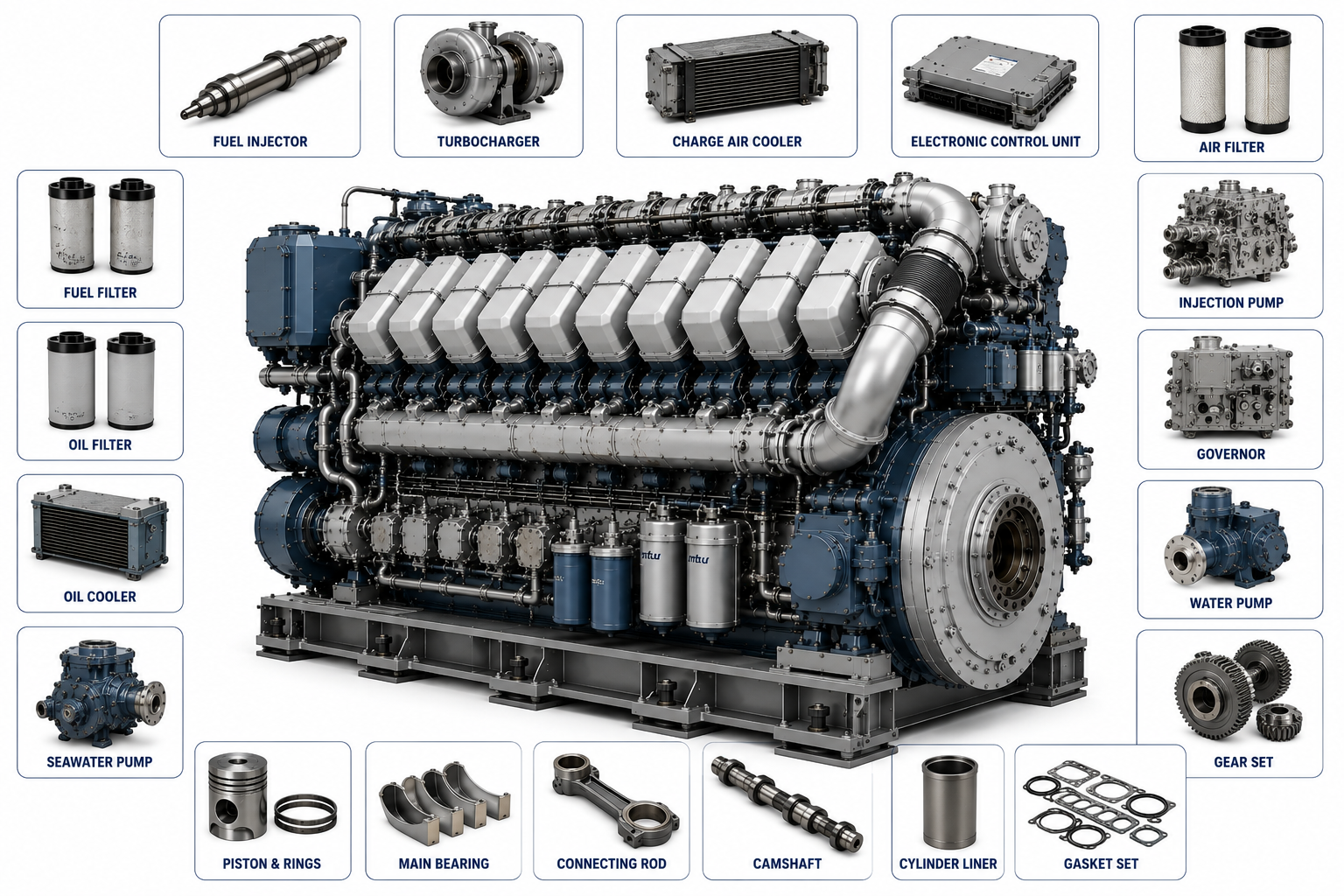
Fuel injectors, fuel filters, high-pressure fuel pumps, turbochargers, air filters, oil filters, heat exchangers, freshwater pumps, seawater pumps, sensors, and engine control components should all be inspected according to the maintenance schedule.
Why is fuel cleanliness so important?
Clean fuel protects injectors, maintains proper combustion, improves fuel economy, and reduces unnecessary wear throughout the engine.
Can oil analysis identify fuel system problems?
Yes. Fuel dilution in engine oil may indicate injector leakage or combustion issues that require further investigation.
How can I maximise the service life of MTU 16V4000 M90 Parts?
Follow preventive maintenance schedules, maintain clean fuel and lubrication systems, monitor engine trends, investigate abnormal fuel consumption early, and install quality replacement parts.
Worldwide Marine Engine Spare Parts Supply
Alfa Marine Spare Parts supplies genuine, OEM, aftermarket, remanufactured, and reconditioned MTU 16V4000 M90 Parts for commercial vessels, offshore support vessels, patrol boats, ferries, and luxury yachts worldwide.
We support:
- Shipyards
- Marine engineers
- Chief engineers
- Technical superintendents
- Fleet operators
- Offshore operators
- Government fleets
- Commercial shipping companies
- Fishing vessel operators
- Yacht operators
- Marine service companies
We provide worldwide delivery, including the United Kingdom, the United States, Canada, Italy, Spain, France, Germany, the Netherlands, Norway, Greece, Monaco, Dubai (UAE), Nigeria, Singapore, and Australia.
Browse Our Complete Catalog
Explore our complete range of MTU marine engine spare parts and maintenance solutions.
https://alfamarinespareparts.com/spareparts
Related Engine Pages
- MTU Series 4000 Marine Engine Spare Parts
- MTU 8V4000 M70 Parts
- MTU 12V4000 M70 Parts
- MTU 12V4000 M90 Parts
- MTU 16V4000 M73 Parts
- MTU 20V4000 M73L Parts
Related Products
- Fuel Injectors
- Fuel Filters
- High-Pressure Fuel Pumps
- Turbochargers
- Air Filters
- Oil Filters
- Freshwater Pumps
- Seawater Pumps
- Heat Exchangers
- Temperature Sensors
- Gasket and Seal Kits
Further Reading
Continue improving your marine engineering knowledge with these topics:
- Fuel System Maintenance for High-Performance Marine Engines
- Understanding Marine Diesel Oil Analysis
- Turbocharger Inspection Best Practices
- Preventive Maintenance Planning
- Condition-Based Maintenance for MTU Engines
Why Choose Alfa Marine Spare Parts?
Alfa Marine Spare Parts provides genuine, OEM, aftermarket, remanufactured, and reconditioned MTU spare parts backed by experienced technical support for marine professionals worldwide.
Whether you need help identifying the correct MTU 16V4000 M90 Parts, planning scheduled maintenance, or sourcing replacement components, our team is ready to assist with fast worldwide shipping and expert guidance.
Contact Alfa Marine Spare Parts
Website: https://alfamarinespareparts.com
Browse Our Catalog: https://alfamarinespareparts.com/spareparts
Email: request@alfamarinespareparts.com
Contact Alfa Marine Spare Parts for expert assistance with MTU 16V4000 M90 Parts, technical support, and reliable worldwide delivery.
One Final Thought
The MTU 16V4000 M90 is built for demanding marine environments where reliability, efficiency, and performance are essential. Maintaining that reliability begins with protecting the fuel system and monitoring engine trends long before alarms appear.
Every fuel filter replaced, injector inspected, oil sample analysed, and maintenance record updated contributes to extending engine life and reducing operational costs.
Understanding MTU 16V4000 M90 Parts means adopting a proactive maintenance strategy that keeps your vessel operating safely, efficiently, and confidently on every voyage.