
MTU 16V 2000 M96L Valve Clearance Adjustment: Why Proper Valve Settings Can Prevent Major Engine Repairs
Imagine you're preparing your vessel for a long offshore journey. The MTU 16V 2000 M96L starts immediately, oil pressure looks normal, coolant temperature is stable, and there are no alarms on the engine display. Everything appears perfect.
A few hours later, however, the chief engineer notices something unusual. One cylinder seems slightly noisier than the others, fuel consumption has increased a little, and the exhaust temperatures aren't as balanced as they used to be. The engine still performs well, but experienced engineers know these subtle changes should never be ignored.
One possible cause is something many operators rarely think about—valve clearance.
Valve clearance adjustment is one of the most important routine maintenance procedures on a high-performance marine diesel engine. It doesn't attract as much attention as fuel injectors or turbochargers, but incorrect valve clearances can gradually reduce efficiency, increase wear, and eventually lead to costly repairs.
In this guide, we'll explain how valve clearance works, why it changes over time, what warning signs to watch for, and how proper maintenance helps protect your MTU 16V 2000 M96L for thousands of reliable operating hours.
What Is Valve Clearance?
Every intake and exhaust valve must open and close at exactly the right moment.
Between the valve mechanism and the valve stem is a carefully specified gap known as valve clearance or valve lash.
This small clearance allows engine components to expand as they heat up during operation.
Without it, the valves may not close completely once the engine reaches operating temperature.
Although the gap is measured in fractions of a millimeter, it plays a huge role in engine reliability.
Why Does Valve Clearance Matter?
Think of the valves as the engine's breathing system.
During every combustion cycle they must:
- Allow fresh air into the cylinder
- Seal the combustion chamber
- Release exhaust gases
- Maintain compression
If valve clearance becomes incorrect, the entire combustion process is affected.
Even slight changes can influence:
- Engine efficiency
- Fuel consumption
- Exhaust temperature
- Starting performance
- Power output
- Valve life
A Real Marine Engineering Scenario
A luxury yacht powered by MTU 16V 2000 M96L engines arrived for scheduled maintenance after approximately 1,000 operating hours.
The owner had not noticed any serious problems.
However, engineers reviewing the engine trend data observed that one bank consistently showed slightly higher exhaust temperatures than the other.
Fuel quality had been confirmed.
Injectors tested correctly.
Turbochargers were inspected and found to be operating normally.
During the scheduled valve clearance inspection, several exhaust valves were discovered to be outside specification.
After adjustment, exhaust temperatures returned to normal and fuel efficiency improved.
No expensive replacement parts were required because the issue had been identified early.
Why Does Valve Clearance Change?
Many owners assume valve clearances remain constant throughout the engine's life.
In reality, they gradually change because engine components naturally wear during operation.
Common causes include:
- Valve seat wear
- Valve face wear
- Rocker arm wear
- Camshaft lobe wear
- Pushrod wear (where applicable)
- Thermal cycling
- High engine loads
Each operating hour produces microscopic changes that slowly alter valve settings.
This is why MTU includes valve inspections as part of scheduled maintenance.
What Happens If Valve Clearance Is Too Tight?
A tight valve clearance means there is insufficient space for thermal expansion.
As the engine heats up, the valve may never fully close.
This can cause:
- Compression loss
- Burnt valves
- Higher exhaust temperatures
- Reduced engine power
- Difficult starting
- Valve seat damage
One burnt exhaust valve can eventually require removal of the cylinder head.
What Happens If Valve Clearance Is Too Loose?
Excessive clearance creates different problems.
Instead of opening smoothly, the valve mechanism develops unnecessary movement.
Symptoms include:
- Ticking noises
- Increased wear
- Reduced valve lift
- Lower engine efficiency
- Additional stress on rocker arms
- Camshaft wear
Although a loose valve is usually less dangerous than one that is too tight, it should still be corrected promptly.
Early Warning Signs
Experienced marine engineers rarely wait for an alarm.
Instead, they look for gradual changes such as:
- Increased valve train noise
- Rough idle
- Uneven exhaust temperatures
- Reduced fuel efficiency
- Hard starting
- Loss of engine performance
- Increased smoke
- Higher exhaust gas temperatures
- Small changes in vibration
Trend monitoring often identifies these changes long before a serious mechanical failure develops.
Components That Should Be Inspected Together
Whenever valve clearances are checked, it's a good opportunity to inspect other related components.
Recommended inspections include:
- Rocker arms
- Camshaft lobes
- Valve springs
- Injector condition
- Injector sealing washers
- Cylinder head
- Turbocharger performance
- Air filters
- Charge air cooler
- Lubrication system
Looking at the complete valve train rather than a single adjustment provides a much clearer picture of engine health.
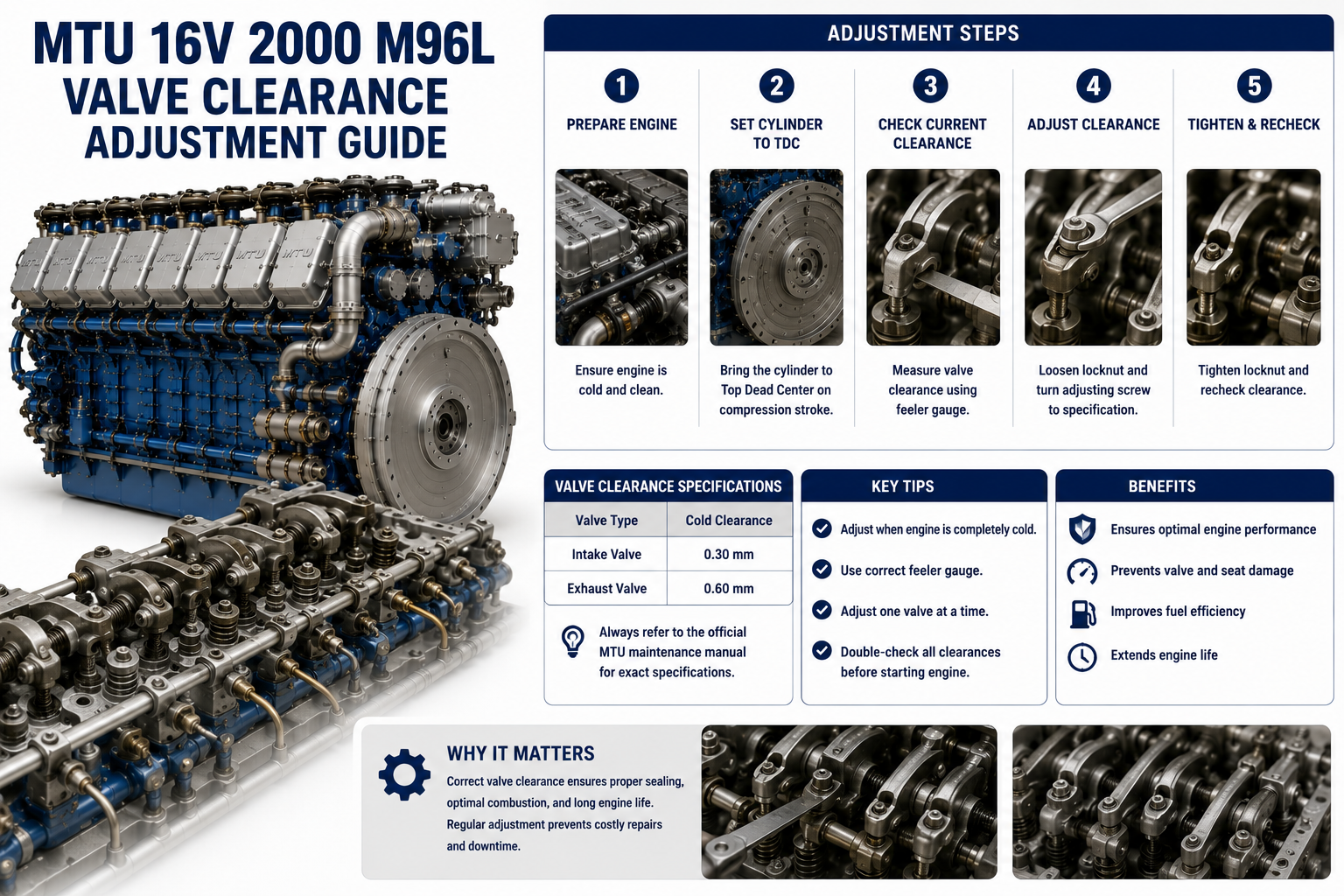
Why Following the Correct Adjustment Procedure Matters
Valve clearance adjustment is not simply a matter of tightening or loosening a screw.
Manufacturer procedures specify:
- Engine temperature
- Cylinder position
- Crankshaft rotation
- Adjustment sequence
- Measurement tools
- Torque values
Skipping steps or using incorrect specifications may result in inaccurate settings.
Following the official maintenance procedure helps ensure reliable operation and prevents unnecessary wear.
Can Oil Analysis Help?
Oil analysis cannot directly measure valve clearance, but it can reveal wear occurring within the valve train.
Laboratory testing may detect increased concentrations of metals associated with:
- Camshaft wear
- Rocker arm wear
- Valve train components
Combined with regular inspections, oil analysis provides another layer of predictive maintenance.
Preventive Maintenance Checklist
Routine inspections help prevent small adjustments from becoming major repairs.
Recommended practices include:
✔ Follow MTU scheduled maintenance intervals.
✔ Check valve clearances at the recommended operating hours.
✔ Record measurements during every inspection.
✔ Monitor exhaust temperature trends.
✔ Investigate unusual engine noises.
✔ Replace worn rocker components when necessary.
✔ Maintain clean engine oil.
✔ Perform regular oil analysis.
✔ Service air intake components.
✔ Keep detailed maintenance records.
Marine Engineer Tip
One of the easiest ways to detect developing valve problems is by comparing exhaust temperatures between cylinders.
If one cylinder consistently operates hotter than the others without injector or turbocharger issues, checking valve clearances may reveal the cause before more serious damage develops.
Common Maintenance Mistakes
Avoid these common errors:
- Skipping scheduled valve inspections.
- Adjusting valves on a hot engine when cold specifications are required.
- Ignoring unusual ticking noises.
- Failing to inspect rocker arm wear.
- Assuming injectors are always responsible for high exhaust temperatures.
- Not recording previous adjustment measurements.
Frequently Asked Questions
How often should valve clearances be inspected?
Always follow the maintenance schedule specified for your MTU engine model and operating conditions. Regular inspections help identify wear before it affects performance.
Can incorrect valve clearance increase fuel consumption?
Yes. Poor valve timing and reduced compression can lower combustion efficiency and increase fuel usage.
Is valve noise always a sign of incorrect adjustment?
Not necessarily. Valve train noise may also indicate worn rocker arms, camshaft wear, or lubrication problems.
Can tight valves damage the engine?
Yes. Valves that cannot fully close may overheat and eventually burn, requiring cylinder head repairs.
Should injectors be inspected during valve adjustments?
Yes. Since both systems influence combustion quality, inspecting injectors during scheduled valve maintenance is considered good engineering practice.
Worldwide Marine Engine Spare Parts Supply
Alfa Marine Spare Parts supplies genuine, OEM, aftermarket, remanufactured, and reconditioned spare parts for the MTU 16V 2000 M96L and the complete MTU Series 2000 engine family.
We support:
- Commercial shipping companies
- Luxury yacht operators
- Shipyards
- Offshore support vessels
- Marine engineers
- Chief engineers
- Technical superintendents
- Government fleets
- Fishing fleets
- Marine service providers
We regularly supply marine engine parts to customers in the United Kingdom, United States, Dubai (UAE), Monaco, Nigeria, the Netherlands, Italy, Spain, France, Germany, Norway, and Greece, helping vessels stay operational around the world.
Browse Our Complete Spare Parts Catalog
Whether you're carrying out routine maintenance or planning a major overhaul, Alfa Marine Spare Parts offers a comprehensive range of components for the MTU Series 2000, including:
- Valve train components
- Rocker arms
- Camshafts
- Cylinder heads
- Intake and exhaust valves
- Valve guides
- Valve springs
- Fuel injectors
- Turbochargers
- Charge air coolers
- Water pumps
- Heat exchangers
- Oil pumps
- Complete overhaul kits
Browse our complete catalog:
https://alfamarinespareparts.com/spareparts
Why Choose Alfa Marine Spare Parts?
Marine maintenance is about more than replacing worn parts—it's about keeping vessels operating safely, efficiently, and with minimal downtime. At Alfa Marine Spare Parts, we understand the challenges faced by marine engineers, chief engineers, and fleet operators. That's why we supply high-quality genuine, OEM, aftermarket, remanufactured, and reconditioned components backed by knowledgeable support and worldwide shipping.
Whether you're maintaining an MTU 16V 2000 M96L or managing an entire fleet of marine engines, we're committed to helping you find the right parts quickly and reliably.
Contact Alfa Marine Spare Parts
Need assistance identifying the correct valve train or engine components for your MTU 16V 2000 M96L?
Website: https://alfamarinespareparts.com
Email: request@alfamarinespareparts.com
Our experienced team is ready to help with routine maintenance, planned overhauls, and emergency spare parts requirements.
Conclusion
Valve clearance adjustment may seem like a small maintenance task, but its impact on the MTU 16V 2000 M96L is significant. Correct valve settings help maintain efficient combustion, balanced exhaust temperatures, smooth engine operation, and long-term reliability. By following the manufacturer's maintenance schedule, monitoring performance trends, and investigating subtle changes before they become major problems, marine engineers can avoid unnecessary repairs and extend the service life of one of the world's most respected high-performance marine diesel engines.