
MTU 16V 2000 M96 Fuel Injector Inspection: Why Small Injector Problems Can Become Major Engine Repairs
When an MTU marine engine starts consuming more fuel than usual, many people immediately suspect the turbocharger or cooling system.
While those systems certainly play an important role, experienced marine engineers often begin somewhere else—the fuel injectors.
On the MTU 16V 2000 M96, every injector must deliver the right amount of fuel at exactly the right moment and under extremely high pressure. If just one injector begins to wear or spray fuel incorrectly, the entire combustion process can be affected.
The engine may continue operating for weeks or even months without triggering an alarm, but subtle changes in performance are often the first indication that something isn't quite right.
Fortunately, injectors usually provide warning signs long before they fail completely. Understanding those signs can help prevent expensive repairs and keep your vessel operating efficiently.
What Does a Fuel Injector Do?
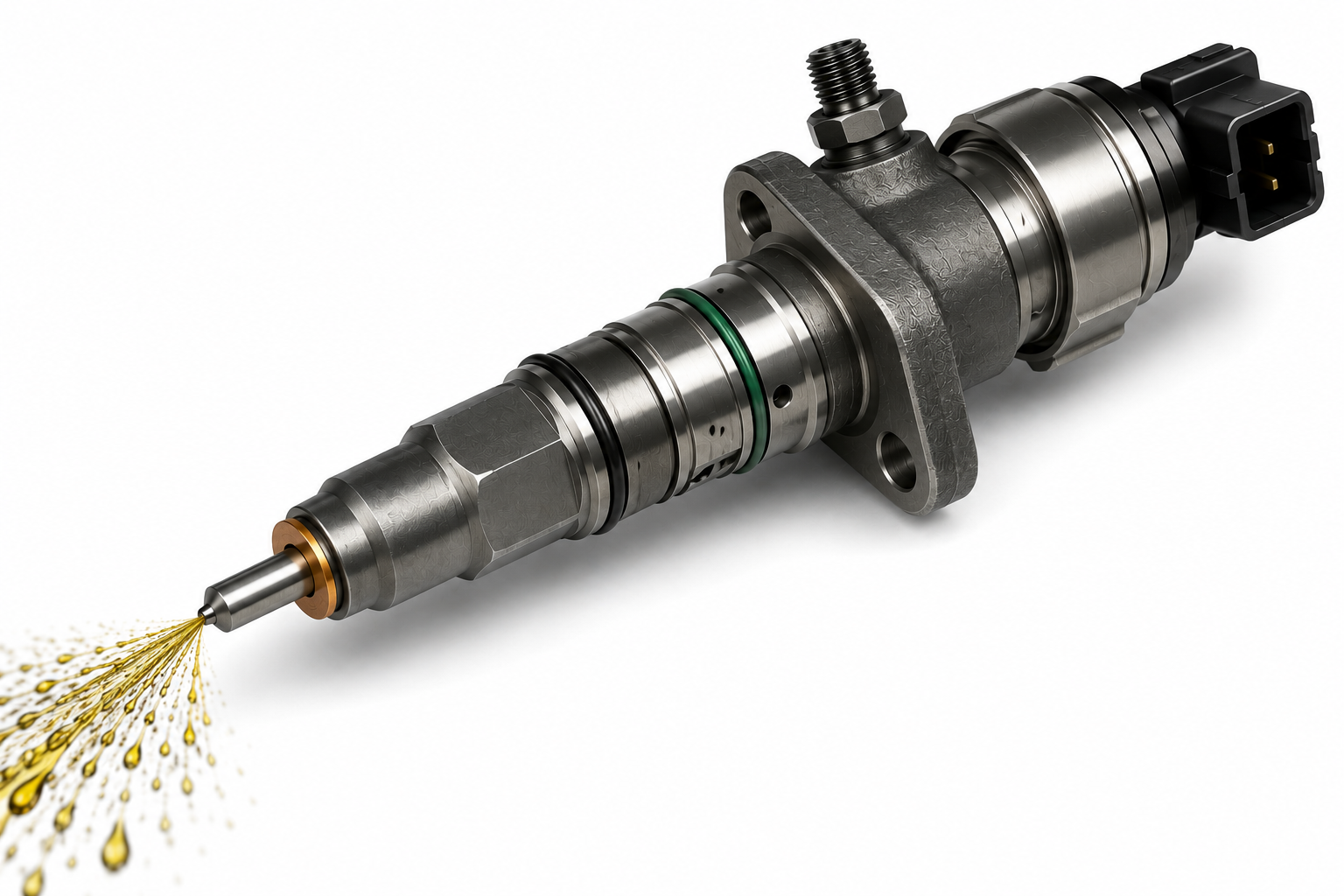
Fuel injectors are responsible for delivering a precise amount of diesel fuel into each cylinder.
Their job isn't simply to inject fuel.
They must also:
- Deliver the correct fuel quantity
- Atomize the fuel into a fine mist
- Inject at the correct pressure
- Maintain an accurate spray pattern
- Ensure complete combustion
When all injectors perform equally, the engine runs smoothly and efficiently.
Why Are Fuel Injectors So Important?
Combustion inside a diesel engine depends on three things:
- Air
- Compression
- Fuel
If the fuel is not injected correctly, combustion efficiency decreases immediately.
Even one injector with an incorrect spray pattern may cause:
- Higher fuel consumption
- Increased smoke
- Higher exhaust temperatures
- Rough engine operation
- Increased piston temperatures
That's why injector condition should never be overlooked.
A Real Marine Maintenance Story
A coastal patrol vessel powered by MTU 16V 2000 M96 engines began experiencing a slight increase in fuel consumption.
There were no alarms.
Oil pressure remained normal.
Turbocharger boost pressure was within specification.
During routine maintenance, technicians inspected the injectors and discovered one nozzle with significant carbon deposits that had altered the spray pattern.
Instead of producing a fine fuel mist, the injector delivered uneven droplets into the combustion chamber.
After replacing the affected injector and testing the complete fuel system, fuel consumption returned to normal and exhaust temperatures became more balanced across all cylinders.
A relatively small injector issue had quietly affected the performance of an entire engine.
What Causes Injector Wear?
Fuel injectors operate under extremely demanding conditions.
Several factors gradually reduce their efficiency.
Normal Operating Hours
Injector nozzles experience continuous high-pressure operation.
Over time, internal components naturally wear.
Fuel Contamination
Small particles of dirt or water entering the fuel system accelerate injector wear.
Even high-quality filters cannot compensate for severely contaminated fuel.
Carbon Deposits
Incomplete combustion gradually creates deposits around the injector nozzle.
These deposits may distort the spray pattern.
Poor Fuel Quality
Low-quality diesel may reduce lubrication inside the injector and increase internal wear.
Extended Service Intervals
Ignoring recommended maintenance intervals allows wear to continue unnoticed until engine performance begins to suffer.
Warning Signs of Injector Problems
Fuel injectors usually provide early warning signs.
Watch for:
- Increased fuel consumption
- Black exhaust smoke
- White smoke during start-up
- Rough idle
- Uneven engine performance
- Hard starting
- Higher exhaust gas temperatures
- Increased engine vibration
- Reduced engine power
- Slower throttle response
These symptoms deserve investigation before they become larger problems.
Why Exhaust Temperature Matters
Marine engineers routinely monitor exhaust gas temperatures for good reason.
A single cylinder operating significantly hotter than the others often indicates:
- Poor injector spray pattern
- Incomplete combustion
- Fuel delivery imbalance
Monitoring exhaust temperatures helps identify injector issues before mechanical damage occurs.
Components to Inspect Alongside the Injectors
Whenever injectors are inspected, engineers should also examine:
- High-pressure fuel lines
- Fuel filters
- Fuel transfer pump
- Turbocharger
- Charge air cooler
- Air filters
- Cylinder head
- Exhaust manifold
- Engine control system
- Fuel return lines
The fuel system works as one complete unit.
Can Oil Analysis Detect Injector Problems?
Yes—indirectly.
Oil analysis may reveal:
- Fuel dilution
- Increased soot
- Elevated wear metals
- Changes in viscosity
These results often indicate incomplete combustion caused by injector problems.
Combined with exhaust temperature monitoring, oil analysis provides valuable insight into overall engine health.
Preventive Maintenance Checklist
Routine inspections help maximize injector life.
✔ Replace fuel filters on schedule.
✔ Use clean, high-quality diesel fuel.
✔ Monitor exhaust temperatures.
✔ Perform routine oil analysis.
✔ Investigate smoke immediately.
✔ Inspect injectors during major services.
✔ Monitor fuel consumption trends.
✔ Drain water separators regularly.
✔ Keep fuel tanks clean.
✔ Record engine performance after maintenance.
Marine Engineer Tip
One injector rarely fails overnight.
Fuel consumption usually begins increasing gradually long before noticeable power loss occurs.
Keeping accurate fuel consumption records can help detect injector wear much earlier than relying on warning alarms alone.
Common Maintenance Mistakes
Avoid these common errors:
- Ignoring increased fuel consumption.
- Delaying fuel filter replacement.
- Assuming smoke is normal.
- Replacing only one injector without checking the others.
- Ignoring fuel contamination.
- Waiting until the engine begins misfiring.
Frequently Asked Questions
How long do MTU fuel injectors last?
Injector life depends on fuel quality, operating conditions, maintenance practices, and engine load. Regular inspections significantly extend service life.
Can one faulty injector affect the entire engine?
Yes. Uneven combustion in one cylinder affects overall engine balance and efficiency.
Why does black smoke indicate injector problems?
Poor fuel atomization creates incomplete combustion, producing excess soot.
Can dirty fuel damage injectors?
Absolutely. Dirt and water are among the leading causes of premature injector wear.
Is oil analysis useful for injector maintenance?
Yes. Fuel dilution and increased soot often provide early indications of injector-related combustion problems.
Worldwide Marine Engine Spare Parts Supply
Alfa Marine Spare Parts supplies genuine, OEM, aftermarket, remanufactured, and reconditioned spare parts for the MTU 16V 2000 M96 and the complete MTU Series 2000 engine family.
We proudly support:
- Commercial shipping companies
- Shipyards
- Offshore operators
- Luxury yacht operators
- Marine engineers
- Chief engineers
- Technical superintendents
- Government fleets
- Fishing fleets
- Marine maintenance companies
We regularly supply marine engine spare parts to customers throughout the United Kingdom, United States, Dubai (UAE), Monaco, Nigeria, the Netherlands, Italy, Spain, France, Germany, Norway, and Greece.
Browse Our Complete Spare Parts Catalog
Alfa Marine Spare Parts supplies:
- Fuel injectors
- Injection pumps
- Fuel filters
- High-pressure fuel lines
- Turbochargers
- Charge air coolers
- Cylinder heads
- Pistons
- Camshafts
- Oil pumps
- Heat exchangers
- Complete overhaul kits
Browse our complete catalog:
https://alfamarinespareparts.com/spareparts
Why Choose Alfa Marine Spare Parts?
At Alfa Marine Spare Parts, we understand that fuel system reliability is essential for marine engine performance. Whether you're carrying out preventive maintenance or responding to an unexpected engine issue, our experienced team can help you source the correct components quickly and accurately.
We provide:
- Genuine, OEM, aftermarket, remanufactured, and reconditioned marine engine spare parts
- Worldwide shipping
- Fast quotations
- Technical assistance with part identification
- Support for MTU, Caterpillar, Wärtsilä, MAN, Cummins, Volvo Penta, Scania, Detroit Diesel, Perkins, Yanmar, and many other leading marine engine brands
Our commitment is to help marine professionals reduce downtime, improve engine efficiency, and keep vessels operating safely around the world.
Contact Alfa Marine Spare Parts
Looking for MTU 16V 2000 M96 fuel injectors or other fuel system components?
Website: https://alfamarinespareparts.com
Email: request@alfamarinespareparts.com
Our marine engine specialists are ready to assist you with spare parts identification, maintenance planning, and worldwide delivery.
Conclusion
The fuel injectors on the MTU 16V 2000 M96 play a vital role in delivering clean, efficient combustion and reliable engine performance. Although injector wear develops gradually, early signs such as increased fuel consumption, exhaust smoke, uneven temperatures, or rough operation should never be ignored. Regular inspections, clean fuel, timely filter replacements, and routine oil analysis can identify developing issues before they lead to costly repairs. By maintaining the complete fuel system, marine engineers can improve efficiency, extend engine life, and ensure dependable operation throughout thousands of service hours.