MTU 16V 2000 M61 Spare Parts: Engine Monitoring and Maintenance Guide
Discover how engine monitoring, predictive maintenance, cooling system inspections, and MTU 16V 2000 M61 spare parts help improve yacht engine reliability. Learn why Miami, Dubai, and Monaco are global centres for marine engineering.
The MTU 16V 2000 M61 is one of the most respected high-performance marine diesel engines in the MTU Series 2000 family. Designed for luxury yachts, fast motor yachts and commercial vessels, it has earned a reputation for delivering reliable performance, excellent power density and long service life.
While many yacht owners search online for MTU 16V 2000 M61 spare parts, understanding how proper maintenance, engine monitoring and cooling system management contribute to engine reliability is equally important. Modern marine engineering has evolved beyond scheduled servicing, with digital diagnostics and predictive maintenance helping engineers detect potential issues before they become costly repairs.
Whether a yacht is cruising the Mediterranean, berthed in Miami, or operating in the warm waters of Dubai, proactive maintenance is essential for maximising engine performance and reducing unexpected downtime.
Understanding the MTU 16V 2000 M61
The MTU Series 2000 was developed to provide high power output in a compact and efficient package. The 16V 2000 M61 features a 16-cylinder V-configuration and has been installed in numerous luxury yachts produced by some of the world's leading boat builders.
Its popularity comes from several key characteristics:
- High power-to-weight ratio
- Fast acceleration
- Excellent reliability
- Smooth operation
- Efficient fuel consumption
- Worldwide service support
These qualities have made the engine a preferred choice for vessels operating throughout Europe, North America, the Middle East and the Caribbean.
Why Preventive Maintenance Matters
Marine diesel engines operate under demanding conditions. Saltwater, vibration, continuous engine loads and changing environmental conditions all contribute to the gradual wear of mechanical components.
Routine maintenance helps reduce the risk of unexpected failures while ensuring the engine continues to perform efficiently.
Marine engineers typically inspect:
- Fuel injection equipment
- Turbochargers
- Cooling systems
- Air filtration
- Lubrication systems
- Exhaust components
- Sensors and electronic controls
- Belts and hoses
Regular inspections also help determine when MTU 16V 2000 M61 spare parts should be replaced before wear affects engine performance.
Engine Monitoring Is Transforming Marine Maintenance
Modern yacht maintenance has shifted from reactive repairs to condition-based maintenance.
Instead of replacing components solely according to engine hours, marine engineers now monitor the actual operating condition of the engine using advanced diagnostic equipment.
This allows maintenance decisions to be based on real operating data rather than estimates.
Digital monitoring technologies include:
- Engine data logging
- Oil analysis
- Vibration analysis
- Thermal imaging
- Coolant monitoring
- Exhaust temperature analysis
Together, these systems provide valuable information about engine health while helping reduce unplanned downtime.
Vibration Analysis
Every rotating engine produces vibration.
As components begin to wear, vibration patterns gradually change.
Marine engineers use specialised equipment to monitor:
- Turbochargers
- Bearings
- Crankshaft alignment
- Shaft couplings
- Engine mounts
- Rotating assemblies
Detecting abnormal vibration early allows repairs to be scheduled before serious mechanical damage develops.
Oil Analysis
Lubricating oil contains valuable information about engine condition.
Laboratory testing can identify:
- Bearing wear
- Cylinder liner wear
- Fuel dilution
- Coolant contamination
- Water ingress
- Excessive soot
- Oxidation
Oil analysis is widely used throughout the marine industry because it allows engineers to monitor internal engine wear without dismantling major components.
Thermal Imaging
Infrared cameras have become a valuable inspection tool for modern yachts.
Thermal imaging can quickly identify:
- Cooling restrictions
- Hot exhaust manifolds
- Turbocharger temperature imbalance
- Electrical hotspots
- Heat exchanger performance
- Bearing temperature increases
Many shipyards now include thermal inspections as part of annual engine servicing.
The Importance of the Cooling System
Among all MTU 16V 2000 M61 spare parts, few systems are more important than the engine cooling system.
Marine engines rely on carefully controlled operating temperatures to maintain combustion efficiency and protect internal components.
The MTU 16V 2000 M61 uses both freshwater and seawater cooling circuits that work together to remove heat from the engine.
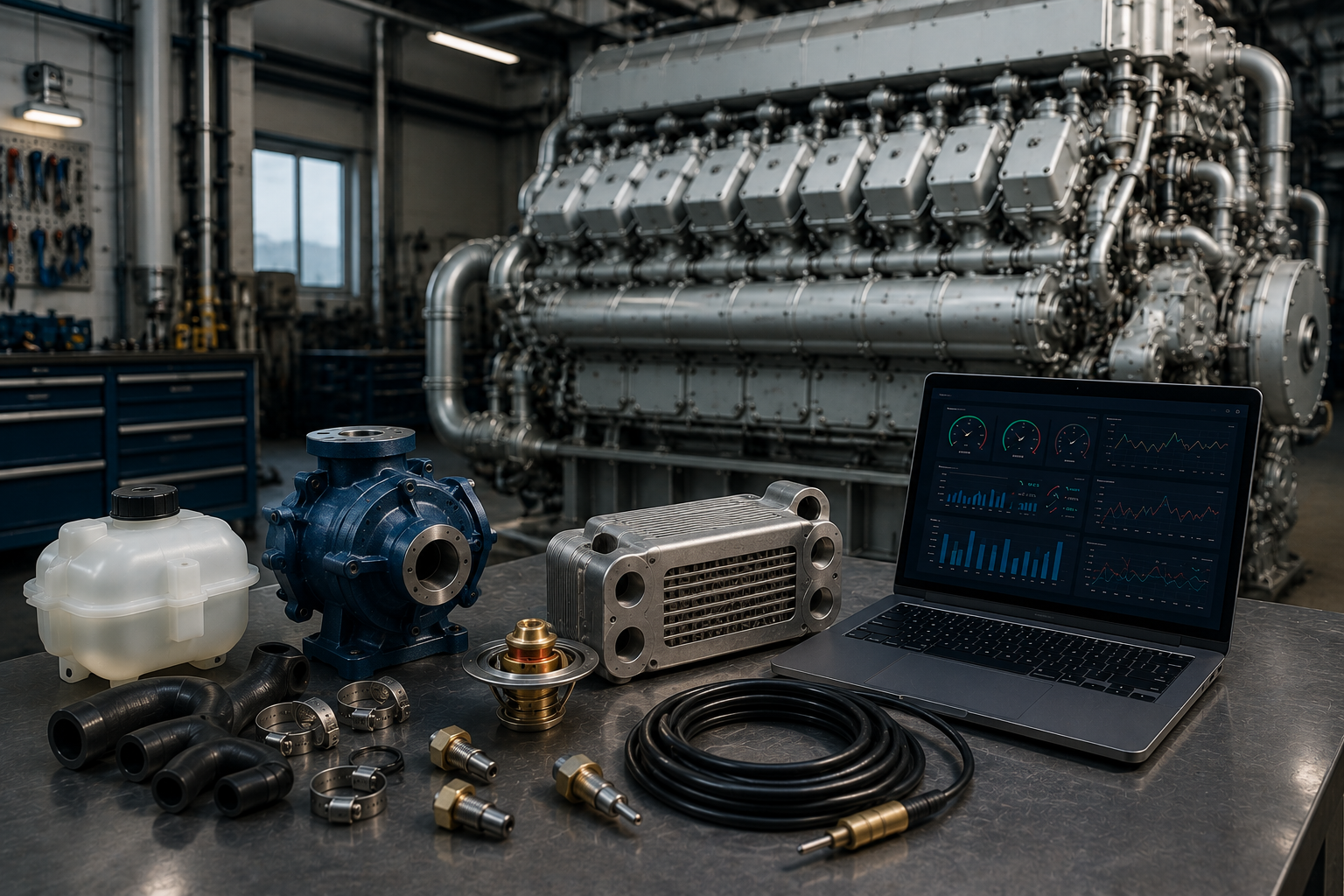
Major cooling system components include:
- Raw water pump
- Coolant circulation pump
- Heat exchangers
- Expansion tank
- Thermostats
- Cooling hoses
- Pipework
- Temperature sensors
Even minor reductions in coolant flow can gradually increase engine temperatures, placing additional stress on pistons, cylinder heads and turbochargers.
Water Pump Maintenance
The raw water pump plays a vital role in drawing seawater through the engine's heat exchangers.
Over time, continuous exposure to seawater can lead to wear on internal components, making routine inspections essential.
Marine engineers commonly inspect:
- Pump shaft
- Bearings
- Mechanical seals
- Pump housing
- Wear rings
- Gaskets
- Heat exchanger connections
The freshwater circulation pump should also be inspected during scheduled servicing to ensure proper coolant circulation throughout the engine block.
Because cooling system configurations vary depending on the engine build specification, there is no single universal MTU 16V 2000 M61 water pump part number. The correct pump assembly is identified using the engine serial number (ESN) and the original MTU build specification.
For this reason, professional marine engineers always verify the engine serial number before specifying replacement MTU 16V 2000 M61 spare parts, ensuring compatibility with the engine's cooling system and installation.
Common MTU 16V 2000 M61 Spare Parts
Although every vessel operates under different conditions, some components require more frequent inspection than others.
Common maintenance items include:
- Oil filters
- Fuel filters
- Air filters
- Turbochargers
- Fuel injectors
- Water pumps
- Thermostats
- Heat exchangers
- Belts
- Gaskets
- Bearings
- Engine sensors
- Cooling hoses
- Exhaust components
Replacing these components at the appropriate maintenance intervals helps improve engine reliability and minimise unexpected downtime.
Miami: A Global Yacht Maintenance Centre
Miami is one of the world's leading destinations for luxury yachts.
Its modern marinas, experienced marine engineers and specialist service companies make South Florida an important hub for MTU-powered vessels.
Many yachts schedule annual maintenance while berthed in Miami marinas before departing for the Bahamas or Caribbean.
Nearby Fort Lauderdale has become internationally recognised for yacht refits, engine overhauls and propulsion system upgrades, making it one of the busiest marine service centres in the world.
Dubai's Growing Marine Industry
The Middle East has experienced significant growth in luxury yachting, with Dubai emerging as one of the region's premier marine destinations.
Modern marinas, expanding superyacht facilities and specialist shipyards have increased demand for advanced marine engineering services.
High ambient temperatures in the Arabian Gulf place additional emphasis on cooling system efficiency, making regular inspections of water pumps, heat exchangers and coolant circulation systems particularly important.
Monaco and the Mediterranean
No discussion of luxury yachting would be complete without Monaco.
Its famous marinas attract some of the world's most sophisticated yachts each year, while the surrounding Mediterranean remains one of the busiest cruising regions for vessels powered by MTU Series 2000 engines.
Before the summer cruising season begins, many yacht owners complete preventative maintenance programmes that include engine diagnostics, cooling system inspections and replacement of worn MTU 16V 2000 M61 spare parts.
Regular servicing helps improve reliability during extended voyages along the French Riviera, Italy, Spain, Greece and Croatia.
Industry Trends: Smarter Maintenance Through Digital Technology
One of the biggest changes in modern marine engineering is the adoption of predictive maintenance.
Today's engines generate thousands of operational data points every hour. Combined with cloud-based monitoring systems and artificial intelligence, this information allows engineers to identify developing problems earlier than ever before.
Modern monitoring systems evaluate:
- Engine load
- Fuel consumption
- Oil pressure
- Coolant temperature
- Exhaust gas temperatures
- Turbocharger performance
- Water pump efficiency
- Vibration levels
- Historical operating trends
Instead of replacing components simply because they have reached a scheduled maintenance interval, engineers can assess their actual condition and plan maintenance more efficiently.
This approach reduces unnecessary component replacement while improving engine availability.
Conclusion
The MTU 16V 2000 M61 continues to be one of the marine industry's most trusted diesel engines thanks to its proven engineering, high performance and worldwide support network.
As engine monitoring technology continues to evolve, maintenance is becoming increasingly data-driven. Predictive diagnostics, vibration analysis, oil testing and thermal imaging allow marine engineers to make informed decisions that improve reliability and extend engine life.
Whether operating from the marinas of Miami, the yacht facilities of Dubai, or the iconic ports of Monaco, understanding the maintenance requirements of the MTU 16V 2000 M61 and its critical systems—including cooling components and MTU 16V 2000 M61 spare parts—helps owners, captains and marine professionals maximise performance, minimise downtime and keep their vessels ready for every voyage.