
MTU 12V4000 M70 Parts: Why Engine Trends Matter More Than Warning Alarms
Every Great Chief Engineer Watches for Change, Not Failure
The engine room is quiet.
The MTU 12V4000 M70 has been running smoothly for several hours, producing steady power as the vessel continues its voyage. Every gauge appears normal. No alarms are active. To many people, everything looks perfect.
An experienced Chief Engineer sees things differently.
Instead of asking, "Is the engine running?", they ask, "Is the engine running exactly the same as it did last month?"
That simple question separates preventive maintenance from reactive maintenance.
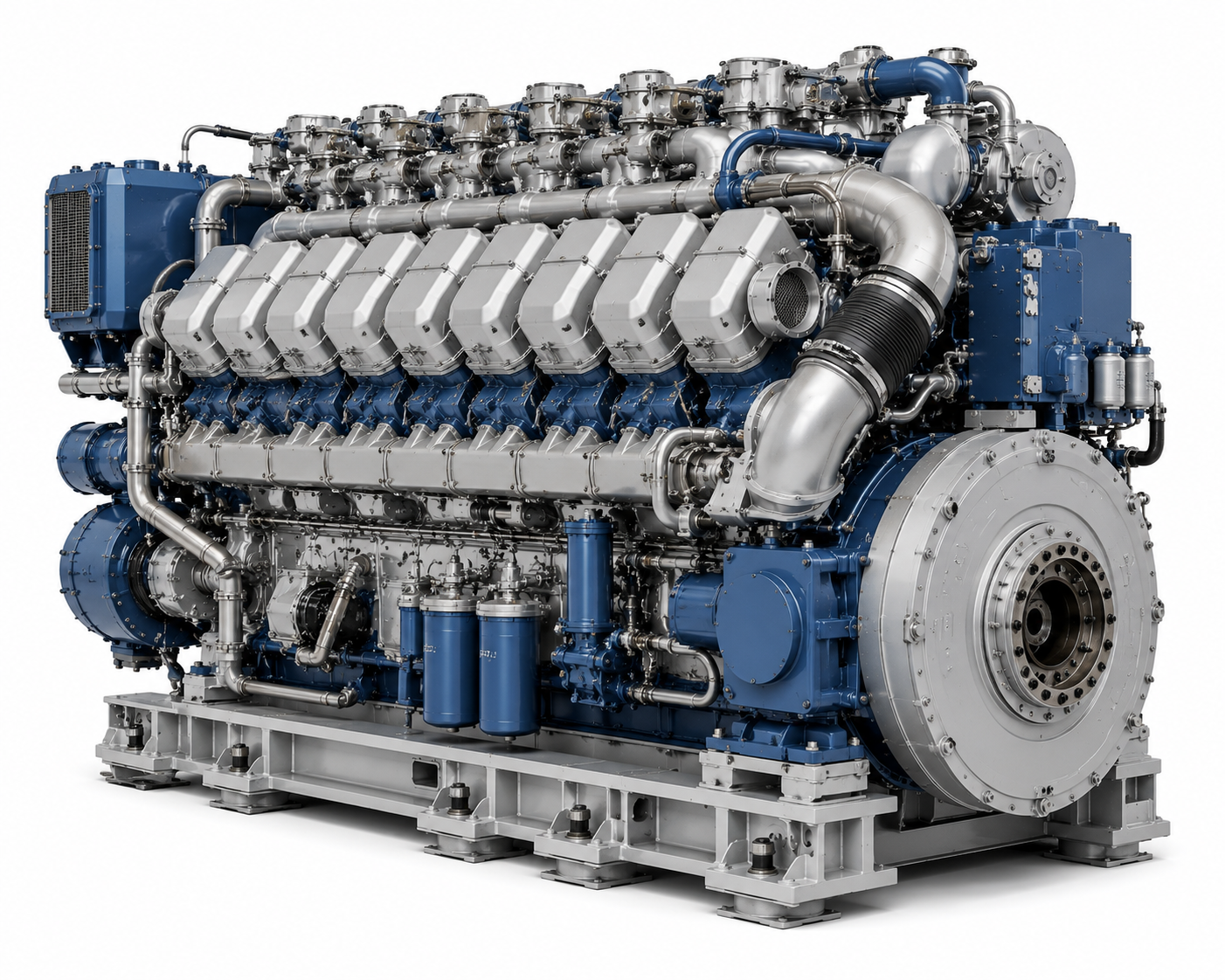
The MTU 12V4000 M70 is widely respected for powering commercial vessels, offshore support vessels, patrol boats, ferries, and large yachts. Its reliability comes from robust engineering, but even the most dependable marine engine relies on the condition of every individual component.
Understanding MTU 12V4000 M70 Parts means learning how each system contributes to engine reliability and recognising small changes before they become expensive repairs.
Why This Matters
Marine engines almost always provide warning signs before a major failure.
Unfortunately, those warning signs are often subtle.
A slight increase in coolant temperature.
A gradual rise in exhaust temperature.
A small change in fuel consumption.
A minor oil seep around a pump seal.
None of these issues may trigger an alarm immediately, but together they can indicate that maintenance is required.
Experienced engineers understand that long-term engine reliability depends on recognising trends rather than reacting to failures.
Engineering Lesson
Why Engine Trends Matter More Than Warning Alarms
Modern engine monitoring systems are designed to protect the engine when operating limits are exceeded.
However, alarms are the final layer of protection—not the first.
Before an alarm activates, the engine often provides valuable information through gradual changes in operating behaviour.
For example:
- Slightly higher coolant temperatures
- Small reductions in oil pressure
- Increased fuel consumption
- Higher exhaust temperatures
- Increased vibration
- Changes in turbocharger performance
Monitoring these trends allows maintenance to be planned during scheduled service periods instead of during emergency repairs.
This approach protects critical MTU 12V4000 M70 Parts, reduces downtime, and lowers operating costs.
Engine Room Reality
Many operators believe that a reliable engine is simply one that has never stopped unexpectedly.
Experienced engineers define reliability differently.
A reliable engine is one that receives consistent attention long before problems become visible.
Waiting until an alarm appears often means wear has already progressed further than necessary.
Routine inspections help identify developing issues while repairs are still simple, affordable, and planned.
Chief Engineer's Notebook
"The best maintenance decisions are based on trends, not surprises."
One abnormal reading may not indicate a problem.
Several small changes occurring together often tell the real story.
The engine is constantly providing information through temperatures, pressures, fuel consumption, vibration, and operating hours.
Learning to interpret those trends is one of the most valuable skills a marine engineer can develop.
MTU 12V4000 M70 Parts Every Engineer Should Understand
Fuel Injectors
Fuel injectors directly influence combustion quality, engine efficiency, and exhaust emissions.
Watch for:
- Difficult starting
- Increased smoke
- Rough engine operation
- Higher fuel consumption
Clean fuel and routine filter replacement help extend injector service life.
Ask Yourself
Has engine performance gradually changed even though no faults have been recorded?
Turbochargers
Turbochargers improve engine efficiency by increasing the volume of air entering the cylinders.
Routine inspections should include:
- Oil leaks
- Shaft movement
- Compressor cleanliness
- Abnormal noises
Early inspection often prevents more serious turbocharger damage.
Did You Know?
A turbocharger can gradually lose efficiency without producing an immediate alarm, affecting both performance and fuel economy.
Freshwater Pumps
Freshwater pumps circulate coolant throughout the engine.
Inspect for:
- Seal leaks
- Bearing noise
- Reduced coolant circulation
Small leaks should never be ignored.
Seawater Pumps
The seawater pump transfers heat away from the cooling system.
Regular inspections should include:
- Impeller condition
- Bearing wear
- Seal integrity
- Marine growth
- Corrosion
Reliable cooling begins with efficient seawater circulation.
Heat Exchangers
Heat exchangers remove heat from the engine coolant.
Marine deposits, scaling, and corrosion gradually reduce efficiency.
Routine cleaning helps maintain stable operating temperatures and supports the long-term reliability of MTU 12V4000 M70 Parts.
Lubrication System
Clean lubricating oil protects every rotating component.
Inspect:
- Oil filters
- Oil cooler
- Oil pressure
- Oil condition
- Oil analysis reports
Consistent lubrication extends engine life.
Sensors
Modern MTU engines rely on accurate sensor information.
Inspect:
- Temperature sensors
- Pressure sensors
- Wiring
- Electrical connectors
Faulty sensor data can lead to incorrect maintenance decisions.
Engine Mounts
Engine mounts reduce vibration and help maintain drivetrain alignment.
Excessive vibration can increase stress on surrounding components, making routine inspection an important part of preventive maintenance.
Real Marine Maintenance Scenario
During a scheduled inspection of a patrol vessel equipped with MTU 12V4000 M70 engines, engineers noticed that coolant temperatures had increased only slightly over several months.
No alarms had activated.
Engine performance remained normal.
Rather than dismissing the change, the engineering team investigated further.
They found:
- Minor fouling inside one heat exchanger.
- Early wear on a freshwater pump seal.
- Partial restriction in a seawater strainer.
- Small corrosion deposits within part of the cooling circuit.
Individually, these issues appeared insignificant.
Together, they were reducing cooling efficiency.
Cleaning the cooling system and replacing the affected components restored normal operating temperatures and prevented a far more expensive repair later.
The lesson?
Reliable maintenance is based on recognising gradual changes—not waiting for failures.
(Continue with Part 2: Oil Analysis, Engineer's Toolbox, Preventive Maintenance Checklist, Marine Engineer Tip, FAQs, Worldwide Supply, Related Products, Further Reading, Why Choose Alfa Marine Spare Parts, Contact, and One Final Thought.)
Oil Analysis: Understanding the Health of MTU 12V4000 M70 Parts
Every experienced marine engineer knows that the engine oil contains more than lubrication—it contains information.
Routine oil analysis is one of the most effective ways to monitor the internal condition of an MTU 12V4000 M70 without dismantling the engine. Rather than waiting for a component to fail, engineers can use laboratory reports to identify wear trends and schedule maintenance before reliability is affected.
Instead of focusing on a single oil report, compare results over time.
Trend analysis often provides far more useful information than one isolated sample.
Iron
Iron may indicate normal or abnormal wear from cylinder liners, gears, camshafts, and other rotating components.
A gradual increase should always be investigated.
Copper
Copper is commonly associated with bearing or bushing wear.
Monitoring changes over time helps determine whether wear is stable or increasing.
Aluminium
Aluminium can indicate wear from pistons or aluminium engine components.
Unexpected increases deserve further inspection.
Silicon
Silicon is frequently linked to airborne dirt entering the intake system.
Checking air filters and intake piping can often prevent unnecessary engine wear.
Fuel Dilution
Fuel contamination reduces the lubricating properties of engine oil and may indicate injector or combustion-related issues.
Water Contamination
Water reduces the oil's ability to protect moving parts.
Even small amounts should be investigated immediately.
Oxidation
Oxidation reflects oil ageing.
Monitoring oxidation helps determine when lubricant performance is beginning to decline.
Viscosity
Oil that becomes significantly thinner or thicker than specification may no longer provide the protection required for critical engine components.
Routine oil analysis supports informed maintenance decisions and helps extend the service life of MTU 12V4000 M70 Parts.
Engineer's Toolbox
Today's MTU 12V4000 M70 Inspection
Before every voyage or scheduled maintenance period, experienced engineers often review the following:
✔ Inspect for oil, coolant, and fuel leaks.
✔ Compare today's coolant temperature with historical records.
✔ Check freshwater and seawater pumps for signs of leakage.
✔ Inspect turbochargers for oil traces or abnormal sounds.
✔ Verify oil pressure under normal operating conditions.
✔ Examine belts, hoses, and hose clamps.
✔ Inspect heat exchangers for signs of fouling.
✔ Review engine operating data for gradual changes.
✔ Record observations in the engine maintenance log.
Consistent inspections help identify developing issues while repairs are still planned rather than unexpected.
Preventive Maintenance Checklist
Daily
- Check engine oil level.
- Verify coolant level.
- Inspect for leaks.
- Observe exhaust colour.
- Monitor engine gauges.
- Listen for unusual sounds or vibration.
Weekly
- Inspect belts and hoses.
- Check cooling system connections.
- Examine seawater pump and freshwater pump areas.
- Clean around the engine to improve leak detection.
Every 250–500 Operating Hours
- Replace engine oil and oil filters according to the maintenance schedule.
- Replace fuel filters when required.
- Review oil analysis reports.
- Inspect turbochargers.
- Check engine operating trends.
Every 1,000 Operating Hours
- Inspect heat exchangers.
- Check thermostats.
- Inspect injectors.
- Examine engine mounts.
- Verify cooling system efficiency.
Long-Term Maintenance
- Monitor engine trends continuously.
- Keep detailed maintenance records.
- Investigate gradual operating changes.
- Replace wear components during planned maintenance whenever appropriate.
Preventive maintenance reduces downtime, supports engine reliability, and extends the life of MTU 12V4000 M70 Parts.
Marine Engineer Tip
The engine logbook is one of the most valuable tools in the engine room.
A temperature reading written down every day becomes a trend.
A trend becomes knowledge.
Knowledge allows engineers to plan maintenance before reliability is affected.
Marine Engineer Quote
"The most reliable engines are maintained by engineers who notice small changes before anyone else."
Common Maintenance Mistakes
Avoid these common practices that can shorten the service life of MTU 12V4000 M70 Parts:
- Waiting for engine alarms before investigating.
- Ignoring small coolant or oil leaks.
- Delaying oil analysis.
- Neglecting heat exchanger cleaning.
- Overlooking seawater pump inspections.
- Replacing only failed components without checking related systems.
- Failing to record engine performance trends.
- Using lubricants or coolant that do not meet the recommended specifications.
Good maintenance is built on consistency, careful observation, and planning.
Frequently Asked Questions
Which MTU 12V4000 M70 Parts require the most attention?
Fuel injectors, turbochargers, freshwater pumps, seawater pumps, heat exchangers, oil filters, fuel filters, thermostats, sensors, engine mounts, and cooling system components should all be inspected as part of a structured preventive maintenance programme.
Why is trend monitoring important?
Trend monitoring helps engineers recognise gradual changes in engine performance before operating limits are exceeded, allowing maintenance to be planned rather than forced by unexpected failures.
Can oil analysis replace routine inspections?
No.
Oil analysis provides valuable information about internal engine condition, but it should always complement regular visual inspections and scheduled maintenance.
How can I extend the service life of MTU 12V4000 M70 Parts?
Maintain clean lubrication and cooling systems, follow the recommended service schedule, monitor operating trends, investigate small changes early, and use quality replacement parts.
Worldwide Marine Engine Spare Parts Supply
Alfa Marine Spare Parts supplies genuine, OEM, aftermarket, remanufactured, and reconditioned MTU 12V4000 M70 Parts to customers across the global maritime industry.
We support:
- Shipyards
- Marine engineers
- Chief engineers
- Technical superintendents
- Fleet operators
- Offshore companies
- Government fleets
- Commercial shipping companies
- Fishing vessel operators
- Yacht owners
- Marine service companies
We provide worldwide shipping to major maritime regions including the United Kingdom, the United States, Canada, Italy, Spain, France, Germany, the Netherlands, Norway, Greece, Monaco, Dubai (UAE), Nigeria, Singapore, and Australia.
Browse Our Complete Catalog
Browse our complete inventory of MTU marine engine spare parts and solutions for commercial vessels, workboats, offshore operators, and yachts.
https://alfamarinespareparts.com/spareparts
Related Engine Pages
- MTU Series 4000 Marine Engine Spare Parts
- MTU 8V4000 M70 Parts
- MTU 16V4000 M70 Parts
- MTU 20V4000 M73L Parts
- MTU Series 2000 Marine Engine Spare Parts
- MTU 1163 Marine Engine Spare Parts
Related Products
- Fuel Injectors
- Turbochargers
- Freshwater Pumps
- Seawater Pumps
- Heat Exchangers
- Oil Filters
- Fuel Filters
- Thermostats
- Engine Mounts
- Sensors
- Gaskets and Seal Kits
Further Reading
Continue learning with these related engineering topics:
- How Oil Analysis Improves Marine Engine Reliability
- Cooling System Maintenance Best Practices
- Understanding Marine Turbocharger Performance
- Fuel System Maintenance for Marine Diesel Engines
- Building an Effective Preventive Maintenance Programme
Why Choose Alfa Marine Spare Parts?
At Alfa Marine Spare Parts, we believe that dependable engines begin with dependable maintenance. We combine a wide range of genuine, OEM, aftermarket, remanufactured, and reconditioned marine engine spare parts with practical technical knowledge to support marine professionals around the world.
Whether you require assistance identifying the correct MTU 12V4000 M70 Parts, planning scheduled maintenance, or sourcing replacement components, our experienced team is ready to assist.
Contact Alfa Marine Spare Parts
Website: https://alfamarinespareparts.com
Browse Our Catalog: https://alfamarinespareparts.com/spareparts
Email: request@alfamarinespareparts.com
For expert assistance with MTU 12V4000 M70 Parts, contact Alfa Marine Spare Parts for part identification, technical support, and worldwide shipping.
One Final Thought
The MTU 12V4000 M70 is designed to deliver reliable performance under demanding marine conditions, but long-term reliability is achieved through consistent maintenance rather than good fortune.
Every oil sample, every temperature trend, every inspection, and every maintenance record contributes to the future performance of the engine.
Understanding MTU 12V4000 M70 Parts is not simply about replacing worn components. It is about recognising gradual changes, protecting critical systems, and making informed maintenance decisions before problems develop into costly failures.
The most successful marine engineers know that reliability is built one careful inspection at a time.