
MTU 12V 2000 M72 Vibration Damper Inspection: The Hidden Component That Protects Your Crankshaft
When marine engineers investigate engine vibration, they usually inspect the propeller, engine mounts, shaft alignment, or turbochargers. However, one component often receives far less attention than it deserves—the vibration damper.
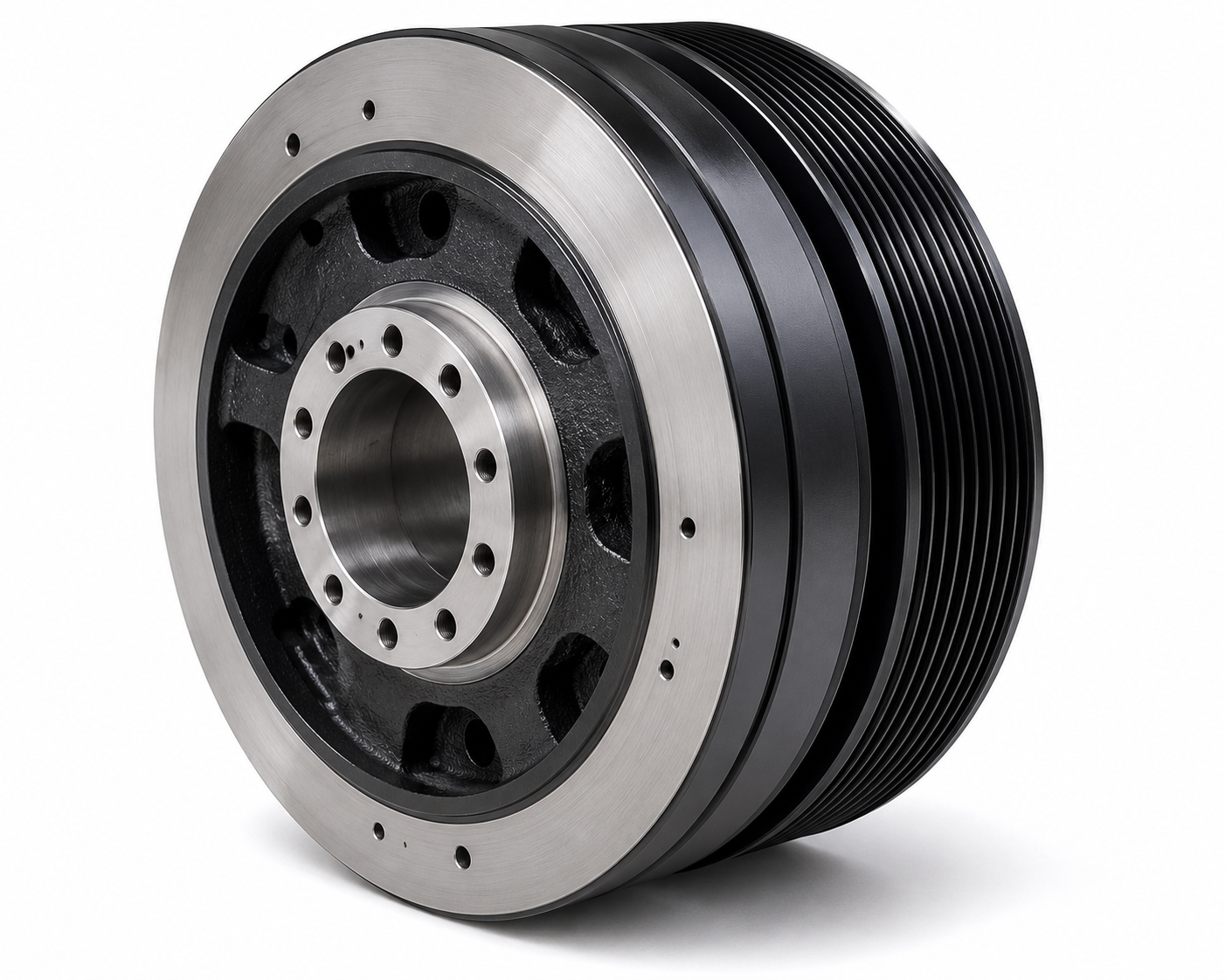
On the MTU 12V 2000 M72, the vibration damper plays a crucial role in protecting the crankshaft from torsional vibrations generated during every combustion cycle. These vibrations are invisible to the eye, but without proper damping, they can place enormous stress on the crankshaft, timing gears, bearings, and other rotating components.
Unlike many engine parts, a vibration damper rarely gives dramatic warning signs before its performance begins to decline. That is why routine inspection should always be part of a preventive maintenance program.
What Is a Vibration Damper?
The vibration damper, sometimes referred to as a torsional vibration damper, is mounted at the front of the crankshaft.
Its primary purpose is to absorb and reduce torsional vibrations that occur as each cylinder fires.
The vibration damper helps to:
- Protect the crankshaft
- Reduce torsional vibration
- Improve engine smoothness
- Reduce stress on timing gears
- Protect bearings
- Increase engine reliability
Without it, rotational forces would place much greater stress on the engine.
Why Is Torsional Vibration a Concern?
Every combustion event twists the crankshaft slightly.
Although these movements are extremely small, they occur thousands of times every minute.
Without effective damping, these repeated twisting forces can contribute to:
- Crankshaft fatigue
- Timing gear wear
- Bearing stress
- Increased vibration
- Reduced component life
The vibration damper absorbs much of this energy before it reaches other engine components.
A Real Marine Maintenance Scenario
A pilot boat operating with MTU 12V 2000 M72 engines developed a slight increase in vibration at specific engine speeds.
Propeller balance was checked.
Engine mounts were inspected.
The gearbox showed no signs of abnormal wear.
During a scheduled front-end engine inspection, engineers discovered that the vibration damper showed signs of age-related deterioration.
Although the engine continued operating normally, the damper was no longer absorbing torsional vibration as efficiently as intended.
Replacing the damper restored smoother engine operation and reduced vibration throughout the drivetrain.
What Causes Vibration Damper Deterioration?
Vibration dampers are designed for long service life, but several factors gradually reduce their effectiveness.
Age
Internal damping materials naturally deteriorate over time, even if engine operating hours are relatively low.
Continuous Engine Loading
Repeated torsional loads slowly reduce the damper's ability to absorb vibration.
Heat
Continuous exposure to engine heat accelerates ageing of internal components.
Oil Contamination
Oil leaks near the front of the engine may damage certain damper materials.
Heavy-Duty Operation
Commercial vessels operating under continuous high loads generally experience faster damper wear than lightly used vessels.
Warning Signs of a Worn Vibration Damper
A deteriorating vibration damper often develops gradually.
Possible warning signs include:
- Increased engine vibration
- Slight rattling noises
- Front engine vibration
- Irregular vibration at specific RPM ranges
- Visible deterioration of the damper
- Loose mounting hardware
- Increased timing gear wear
- Higher bearing loads
- Abnormal vibration monitoring results
- Age beyond recommended replacement interval
Many dampers show few obvious symptoms until inspected.
Why Visual Inspection Alone Isn't Enough
Some vibration dampers appear normal externally while their internal damping mechanism has already deteriorated.
For this reason, marine engineers should consider:
- Engine operating hours
- Service history
- Manufacturer recommendations
- Vibration monitoring data
- Age of the component
Inspection should include more than simply looking for external damage.
Components to Inspect at the Same Time
Whenever the vibration damper is inspected, engineers should also examine:
- Crankshaft
- Front crankshaft seal
- Timing gears
- Drive belts
- Belt pulleys
- Oil pump drive
- Front engine cover
- Engine mounts
- Couplings
- Vibration monitoring records
A complete front-end inspection provides a clearer picture of engine condition.
Can Vibration Analysis Help?
Yes.
Vibration analysis is one of the most effective tools for monitoring rotating machinery.
Trend monitoring can identify:
- Increasing torsional vibration
- Rotational imbalance
- Bearing deterioration
- Coupling problems
- Alignment issues
Although vibration analysis cannot confirm vibration damper failure on its own, it provides valuable information when combined with routine inspections.
Preventive Maintenance Checklist
Help extend the life of your vibration damper by following these practices.
✔ Inspect during scheduled maintenance.
✔ Monitor engine vibration trends.
✔ Repair oil leaks promptly.
✔ Check mounting bolts.
✔ Inspect the crankshaft pulley area.
✔ Review service history.
✔ Replace ageing dampers when recommended.
✔ Record engine operating hours.
✔ Perform vibration monitoring.
✔ Follow MTU maintenance schedules.
Marine Engineer Tip
Don't wait for severe vibration before inspecting the vibration damper.
Many dampers gradually lose effectiveness over time while the engine continues operating normally.
Replacing a worn damper during planned maintenance is significantly less expensive than repairing a damaged crankshaft or timing gear train.
Common Maintenance Mistakes
Avoid these common mistakes:
- Assuming the vibration damper lasts the lifetime of the engine.
- Ignoring increased vibration at specific RPM ranges.
- Overlooking front engine oil leaks.
- Failing to review service history.
- Reusing damaged mounting hardware.
- Skipping vibration monitoring.
Frequently Asked Questions
What does a vibration damper do?
It absorbs torsional vibration produced by the crankshaft during combustion, helping protect critical engine components.
Can a worn vibration damper damage the crankshaft?
Over time, reduced damping may increase stress on the crankshaft and other rotating components.
Does the vibration damper require routine inspection?
Yes. Regular inspections and adherence to manufacturer maintenance schedules are recommended.
Can vibration analysis detect damper problems?
Vibration analysis can identify abnormal vibration trends that may indicate reduced damping performance.
Should the vibration damper be replaced preventively?
Many marine operators replace vibration dampers during major overhauls or according to manufacturer recommendations rather than waiting for failure.
Worldwide Marine Engine Spare Parts Supply
Alfa Marine Spare Parts supplies genuine, OEM, aftermarket, remanufactured, and reconditioned spare parts for the MTU 12V 2000 M72 and the complete MTU Series 2000 engine family.
We support:
- Shipyards
- Commercial vessel operators
- Offshore operators
- Luxury yacht operators
- Marine engineers
- Chief engineers
- Technical superintendents
- Government fleets
- Fishing companies
- Marine service providers
We regularly supply marine engine spare parts throughout the United Kingdom, United States, Dubai (UAE), Monaco, Nigeria, the Netherlands, Italy, Spain, France, Germany, Norway, and Greece.
Browse Our Complete Spare Parts Catalog
Alfa Marine Spare Parts supplies a wide range of MTU Series 2000 components, including:
- Vibration dampers
- Crankshafts
- Timing gears
- Engine mounts
- Oil pumps
- Fuel injectors
- Turbochargers
- Heat exchangers
- Water pumps
- Cylinder heads
- Complete overhaul kits
Browse our complete catalog:
https://alfamarinespareparts.com/spareparts
Why Choose Alfa Marine Spare Parts?
At Alfa Marine Spare Parts, we understand that reliable engine performance depends on every component, including those that are often overlooked. Whether you are planning preventive maintenance or a complete overhaul, we supply high-quality parts that help keep your MTU engine operating safely and efficiently.
We provide:
- Genuine, OEM, aftermarket, remanufactured, and reconditioned marine engine spare parts
- Worldwide shipping
- Fast quotations
- Technical support for part identification
- Support for MTU, Caterpillar, Wärtsilä, MAN, Cummins, Volvo Penta, Scania, Detroit Diesel, Perkins, Yanmar, and many other leading marine engine brands
Contact Alfa Marine Spare Parts
Looking for MTU 12V 2000 M72 vibration dampers, front engine components, or overhaul parts?
Website: https://alfamarinespareparts.com
Email: request@alfamarinespareparts.com
Our experienced marine parts specialists are ready to help you identify the correct components for maintenance, repairs, and complete engine overhauls.
Conclusion
The vibration damper on the MTU 12V 2000 M72 is a vital component that quietly protects the crankshaft and rotating assembly from damaging torsional forces. Although it often operates unnoticed, its condition directly affects engine smoothness, component longevity, and overall reliability. By incorporating vibration damper inspections into your preventive maintenance schedule, monitoring vibration trends, and replacing ageing units at the appropriate time, marine engineers can reduce the risk of costly drivetrain failures and ensure dependable performance from their MTU Series 2000 engine.