MTU 12V 2000 M72 Engine Oil Analysis: Detecting Problems Before They Become Failures
The MTU 12V 2000 M72 marine engine is trusted worldwide in patrol boats, yachts, commercial vessels, pilot boats, and workboats because of its reliability and performance. Like any high-performance marine diesel engine, however, its longevity depends on proactive maintenance rather than waiting for a warning alarm.
One of the most valuable maintenance tools available is engine oil analysis.
Many serious engine failures begin months before they become visible. Bearings slowly wear, injectors leak fuel into the oil, coolant contaminates the lubrication system, and microscopic metal particles circulate throughout the engine. By the time a mechanic hears unusual noises or sees low oil pressure, significant internal damage may already have occurred.
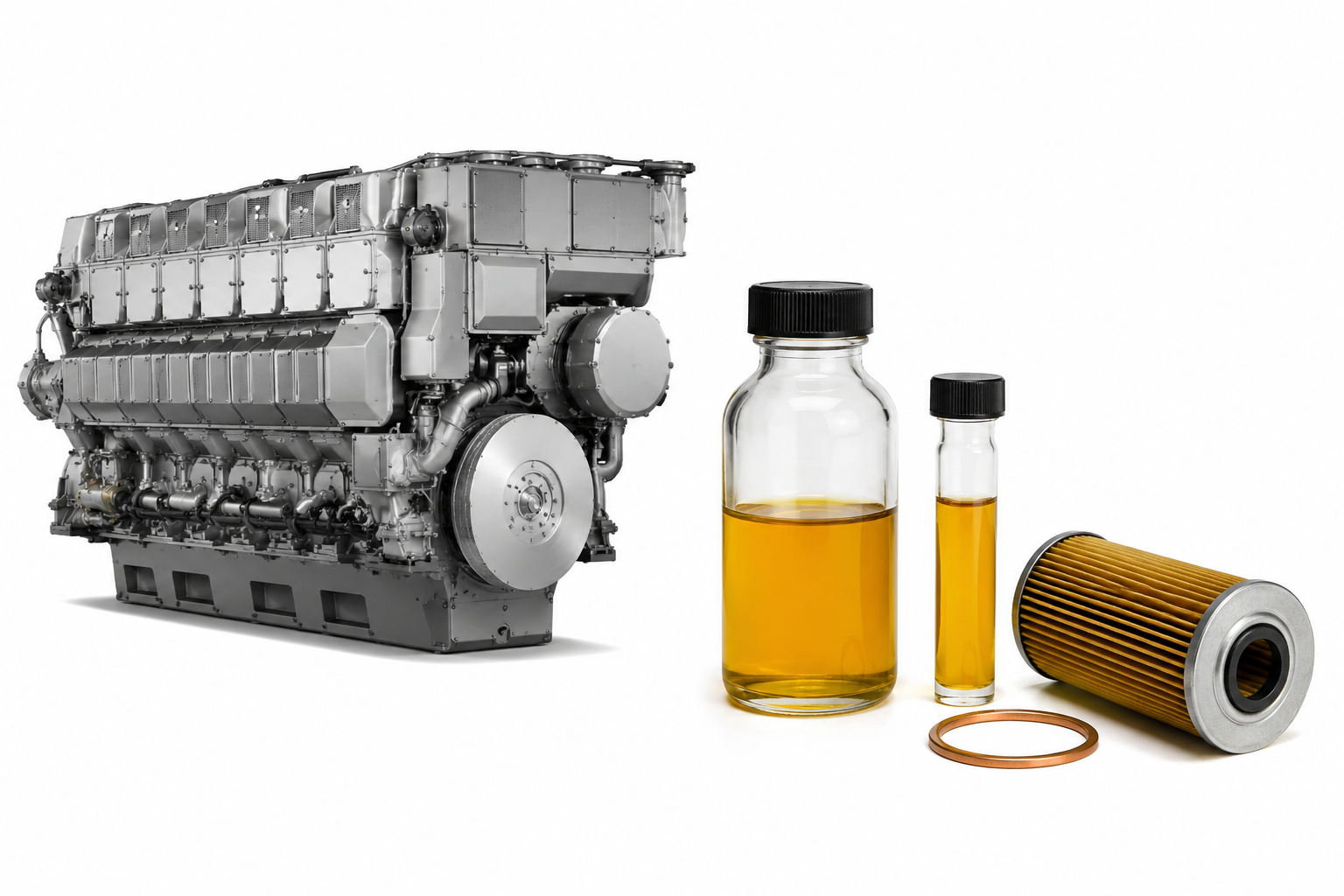
Oil analysis allows marine engineers to monitor the internal condition of the MTU 12V 2000 M72 without dismantling the engine. A simple laboratory sample can reveal early warning signs of wear, contamination, and lubrication problems, helping operators schedule maintenance before a minor issue becomes a costly overhaul.
What Is Engine Oil Analysis?
Engine oil analysis is the laboratory examination of a small sample of lubricating oil taken from a running engine.
Rather than simply checking whether the oil looks dirty, a laboratory measures:
- Metal wear particles
- Oil viscosity
- Fuel dilution
- Water contamination
- Coolant contamination
- Oxidation
- Soot levels
- Additive condition
- Total Base Number (TBN)
- Acid formation
- Particle contamination
These results provide a snapshot of the engine's internal condition.
For an MTU 12V 2000 M72, regular oil analysis can identify developing problems long before they lead to reduced performance or unexpected downtime.
Why Is Oil Analysis Important for the MTU 12V 2000 M72?
The MTU Series 2000 is a precision-engineered marine diesel engine with closely matched components operating under high temperatures and heavy loads.
Components such as:
- Camshafts
- Crankshafts
- Main bearings
- Connecting rod bearings
- Pistons
- Cylinder liners
- Turbochargers
- Oil pumps
all rely on clean, properly lubricated engine oil.
When lubrication begins to deteriorate, these expensive components may wear rapidly.
Oil analysis helps detect these issues while they are still small and manageable.
How Does Oil Analysis Detect Internal Engine Problems?
Every moving engine component releases microscopic particles as it operates.
Normally, these particles remain at low levels.
When a component begins wearing abnormally, the concentration of certain metals increases.
By monitoring these trends over time, laboratories can identify which part of the engine may require further inspection.
Rather than replacing components unnecessarily, engineers can focus maintenance where it is truly needed.
What Can Oil Analysis Reveal?
Bearing Wear
Main bearings and connecting rod bearings are among the most heavily loaded components inside the MTU 12V 2000 M72.
Increasing concentrations of bearing-related metals may indicate:
- Lubrication problems
- Oil contamination
- Excessive engine loading
- Misalignment
- Early bearing fatigue
Detecting bearing wear early may prevent a catastrophic crankshaft failure.
Camshaft and Valve Train Wear
The camshaft operates the intake and exhaust valves through the valve train.
Abnormal wear may produce increased iron levels together with changes in engine performance.
Possible causes include:
- Poor lubrication
- Incorrect valve adjustment
- Worn followers
- Oil contamination
- Extended oil change intervals
Routine oil analysis can help identify these issues before significant valve train damage develops.
Cylinder Liner and Piston Wear
Cylinder liners and piston rings experience continuous friction.
If wear accelerates, increased iron and chromium concentrations may appear in the oil.
Possible causes include:
- Dust entering through damaged air filters
- Poor lubrication
- Overheating
- Incorrect engine loading
- Fuel contamination
Ignoring these signs may eventually reduce compression and increase oil consumption.
Fuel Dilution
Diesel fuel should remain inside the fuel system—not mix with engine oil.
Fuel dilution may result from:
- Worn injectors
- Injector leakage
- High-pressure fuel system problems
- Excessive idling
- Incomplete combustion
Fuel entering the lubricating oil reduces viscosity, making it more difficult for the oil to protect bearings and camshaft surfaces.
Coolant Contamination
Coolant should never mix with engine oil.
Laboratory testing can identify coolant contamination before it becomes visible.
Possible causes include:
- Failed head gasket
- Cracked cylinder head
- Damaged oil cooler
- Cylinder liner sealing problems
Even a small amount of coolant can damage engine bearings if not corrected quickly.
Water Contamination
Marine engines operate in demanding environments where water contamination is always a possibility.
Water may enter through:
- Condensation
- Cooling system leaks
- Poor storage conditions
- Maintenance errors
Water reduces the lubricating properties of the oil and promotes corrosion inside the engine.
What Components Benefit Most from Oil Analysis?
Oil analysis helps monitor the condition of:
- Camshaft
- Crankshaft
- Main bearings
- Connecting rod bearings
- Pistons
- Cylinder liners
- Oil pump
- Turbocharger bearings
- Timing gears
- Rocker arms
- Valve train
- Oil cooler
Because the lubricating oil circulates throughout the engine, a single sample provides valuable information about multiple components.
When Should Oil Samples Be Taken?
Consistency is more important than frequency.
Samples should always be:
- Taken at normal operating temperature.
- Collected using clean equipment.
- Taken from the same sampling point.
- Recorded with engine hours.
- Sent to the same laboratory whenever possible.
Trend analysis is much more valuable than comparing isolated results.
Warning Signs That Should Prompt an Oil Analysis
Do not wait for the next scheduled interval if you notice:
- Rising engine temperature
- Low oil pressure
- Metal particles in the oil filter
- Increased oil consumption
- Higher fuel consumption
- Excessive smoke
- Abnormal engine vibration
- Knocking sounds
- Coolant loss
- Reduced engine performance
An immediate oil analysis may identify the source before major damage occurs.
What Else Should You Inspect?
Oil analysis should be combined with routine inspections of:
- Oil filters
- Oil cooler
- Fuel filters
- Fuel injectors
- Air filters
- Heat exchanger
- Seawater pump
- Freshwater pump
- Turbochargers
- Cooling system
- Crankcase breather
No single maintenance procedure provides a complete picture of engine health.
Preventive Maintenance Checklist
To maximize the life of your MTU 12V 2000 M72:
✔ Follow the recommended oil change intervals.
✔ Use only approved engine oils.
✔ Replace oil filters during every oil change.
✔ Record oil analysis results.
✔ Compare laboratory trends over time.
✔ Investigate abnormal wear metals immediately.
✔ Inspect cooling systems regularly.
✔ Monitor oil pressure.
✔ Maintain proper operating temperatures.
✔ Repair leaks promptly.
✔ Keep maintenance records updated.
Marine Engineer Tip
One oil analysis report is useful—but a series of reports is far more valuable.
Trending wear metals over hundreds or thousands of operating hours allows engineers to see gradual changes before they become visible during normal inspections. A slow increase in iron, copper, or chromium often provides weeks or even months of warning before a component fails.
For fleet operators, this predictive approach reduces unplanned downtime and helps schedule maintenance during planned service periods rather than emergency repairs.
Common Mistakes
Avoid these common mistakes:
- Waiting until the oil is visibly dirty.
- Skipping laboratory testing because the engine "sounds fine."
- Mixing different oil brands without approval.
- Ignoring rising wear metal trends.
- Sampling cold engine oil.
- Changing oil without replacing filters.
- Failing to investigate repeated contamination.
Frequently Asked Questions
Can oil analysis detect bearing failure?
It can identify early signs of abnormal bearing wear by detecting increasing concentrations of bearing-related metals, allowing further inspection before catastrophic failure.
Can oil analysis detect coolant leaks?
Yes. Laboratory testing often detects coolant contamination before it becomes visible during routine maintenance.
Does dirty oil always mean the engine is damaged?
No. Diesel engine oil naturally darkens during operation. Laboratory testing is required to determine whether the oil still provides adequate protection.
How often should oil analysis be performed?
The interval depends on engine duty, operating hours, and maintenance strategy. Commercial operators often include oil analysis as part of every scheduled service to build reliable trend data.
Can oil analysis reduce overhaul costs?
Yes. Detecting wear early allows repairs to be planned before extensive secondary damage occurs, reducing repair costs and minimizing vessel downtime.
Browse Our Complete Spare Parts Catalog
Looking for more than maintenance advice?
Alfa Marine Spare Parts supplies genuine, OEM, aftermarket, remanufactured, and reconditioned marine engine spare parts for MTU, Caterpillar, Wärtsilä, MAN, Cummins, Volvo Penta, Scania, Perkins, Detroit Diesel, Deutz, Doosan, Mitsubishi, John Deere, and Yanmar.
Our inventory includes:
- Oil pumps
- Oil coolers
- Oil filters
- Camshafts
- Crankshafts
- Bearings
- Pistons
- Cylinder liners
- Fuel injectors
- Turbochargers
- Heat exchangers
- Seawater pumps
- Freshwater pumps
- Gaskets
- Overhaul kits
Browse our complete inventory:
https://alfamarinespareparts.com/spareparts
Why Choose Alfa Marine Spare Parts?
Marine professionals around the world trust Alfa Marine Spare Parts because we offer:
- Genuine, OEM, aftermarket, remanufactured, and reconditioned parts
- Worldwide shipping
- Technical assistance identifying the correct components
- Support for commercial vessels, yachts, offshore operators, and government fleets
- Experience serving shipyards, chief engineers, marine engineers, and fleet managers
Contact Alfa Marine Spare Parts
Need assistance with your MTU 12V 2000 M72 or help finding the correct spare parts?
🌐 Website: https://alfamarinespareparts.com
📧 Email: request@alfamarinespareparts.com
Our technical team can assist you in identifying the correct parts and planning maintenance for your MTU marine engine.
Conclusion
Oil analysis is one of the most effective predictive maintenance tools available for the MTU 12V 2000 M72 marine engine. Instead of waiting for visible symptoms or costly failures, it enables marine engineers to monitor the health of bearings, camshafts, pistons, cylinder liners, injectors, and other critical components through routine laboratory testing.
When combined with scheduled maintenance, cooling system inspections, and proper lubrication practices, oil analysis helps maximize engine reliability, extend component life, and reduce the risk of unexpected downtime. For operators who rely on their vessels every day, this proactive approach is an investment that can prevent major repairs and keep the MTU 12V 2000 M72 performing at its best.