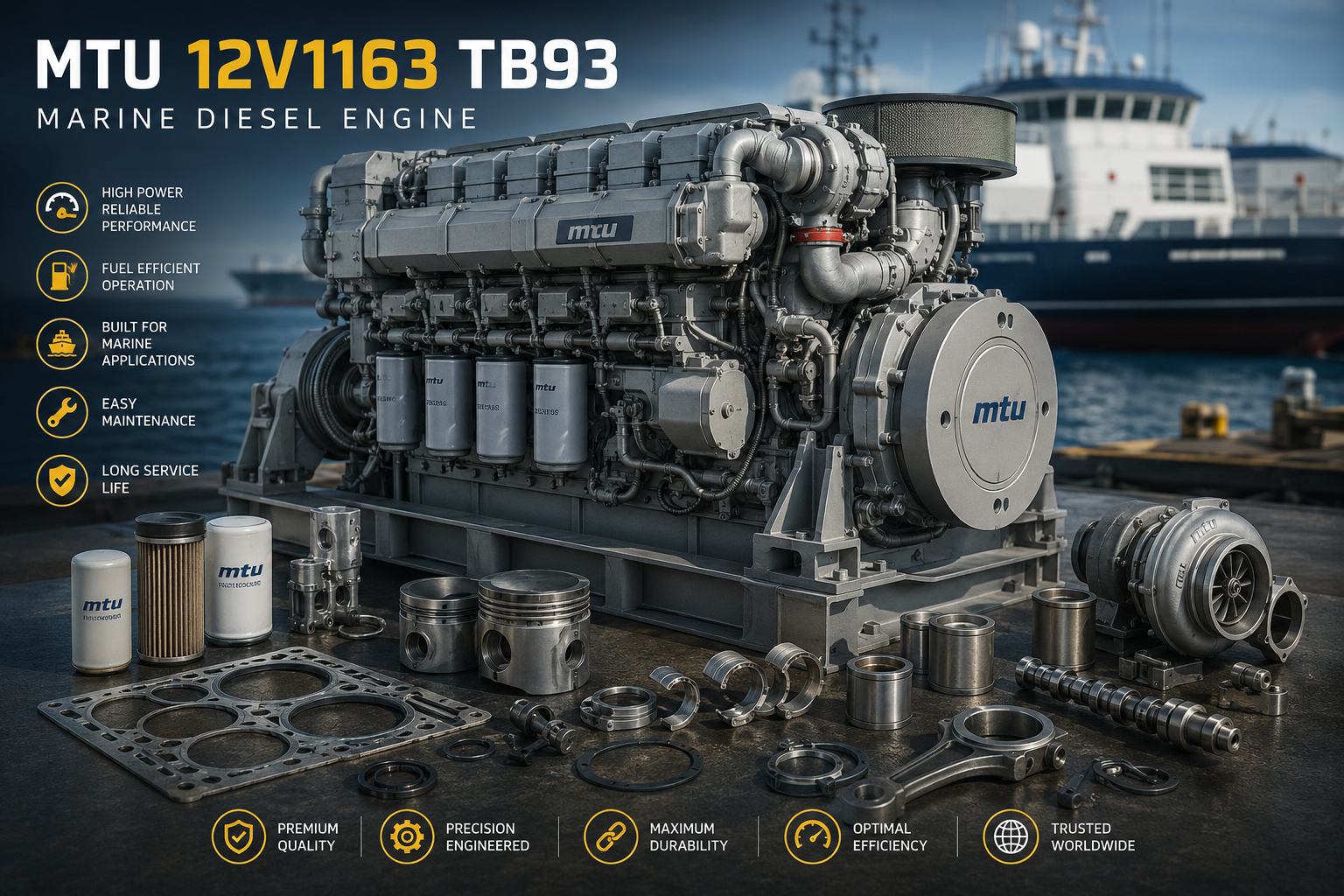
MTU 12 V 1163 TB93 Marine Diesel Engine: The Questions Every Marine Engineer Eventually Asks
MTU 12 V 1163 TB93 Marine Diesel Engine: A Reliable Engine That Rewards Good Maintenance
Walk into almost any busy engine room where high-speed marine diesel engines are working hard, and you'll hear the same thing from experienced engineers:
"These engines will take care of you if you take care of them."
That perfectly describes the MTU 12 V 1163 TB93 Marine Diesel Engine.
Whether it's powering a fast patrol craft, pilot boat, rescue vessel, or commercial workboat, this engine was designed to deliver dependable power under demanding conditions. But like every precision-built marine diesel engine, it performs best when routine maintenance is never skipped.
The good news is that many expensive breakdowns can be prevented long before they happen. The engine usually gives small warning signs first—you just have to recognize them.
Let's answer the questions marine engineers ask most often.
"How reliable is the MTU 12 V 1163 TB93 Marine Diesel Engine?"
Very reliable.
The engine has earned its reputation because it combines high power output with proven durability. Operators around the world rely on it in applications where downtime is simply not an option.
However, reliability isn't something that happens automatically.
It depends on three things:
- Following the recommended maintenance schedule
- Using clean fuel and the correct lubricants
- Investigating small problems before they become large ones
Many engines that suffer major failures weren't abused—they were simply neglected in small ways over a long period.
"What should I inspect before starting the engine?"
Experienced engineers spend a few minutes inspecting the engine before every departure.
Those few minutes often prevent hours—or even days—of downtime later.
Before starting the engine, check:
- Engine oil level
- Coolant level
- Fuel leaks
- Oil leaks
- Seawater strainers
- Belt condition and tension
- Hose connections
- Battery voltage
- Alarm panel status
- Any unusual smell inside the engine room
Never assume that because the engine ran well yesterday, it will do the same today.
"Why is the cooling system so critical?"
One senior marine engineer once said:
"Engines rarely die from age. They usually die from heat."
That statement contains a lot of truth.
The cooling system controls the temperature of critical components including:
- Cylinder heads
- Pistons
- Cylinder liners
- Turbochargers
- Lubricating oil
If seawater flow becomes restricted by marine growth, debris, or a worn impeller, engine temperatures can begin rising without immediately triggering a serious alarm.
Over time, excessive heat accelerates wear and reduces the life of almost every internal component.
Keeping the cooling system clean is one of the best investments you can make in engine longevity.
"How important is engine oil?"
Think of engine oil as the engine's bloodstream.
It doesn't simply lubricate moving parts.
It also helps:
- Carry heat away from bearings
- Reduce friction
- Protect against corrosion
- Remove microscopic contaminants
- Prevent metal-to-metal contact
Oil that has exceeded its service life gradually loses these protective qualities.
Changing oil and filters at the recommended intervals is far less expensive than replacing crankshaft bearings.
"What happens if I ignore small oil leaks?"
Many engineers have seen this happen.
A small oil leak seems harmless.
The vessel continues operating.
Weeks later the leak becomes larger.
Oil contamination spreads.
Belts become slippery.
Temperatures rise.
Eventually the original repair that might have taken thirty minutes becomes an expensive overhaul.
Fix leaks while they're still small.
"Can poor-quality fuel really damage the engine?"
Absolutely.
Modern diesel injection systems operate with extremely fine tolerances.
Contaminated fuel may introduce:
- Water
- Dirt
- Rust particles
- Microbial growth
- Sediment
These contaminants can damage injectors and fuel system components while reducing combustion efficiency.
Clean fuel is one of the cheapest forms of engine insurance.
"What warning signs should never be ignored?"
The engine usually tells you when something is beginning to change.
Pay close attention to:
- Higher coolant temperature
- Lower oil pressure
- Increased exhaust smoke
- Loss of engine power
- Rough idle
- Difficult starting
- Increased fuel consumption
- Unusual vibration
- Knocking sounds
- Persistent warning alarms
Ignoring these symptoms often allows minor wear to become major damage.
"Why do experienced engineers keep maintenance records?"
Good maintenance isn't based on memory.
It's based on records.
An engine logbook allows engineers to monitor:
- Operating hours
- Oil changes
- Filter replacement
- Coolant service
- Valve adjustments
- Fuel consumption
- Alarm history
- Repairs performed
Detailed records help identify patterns before failures occur.
"What parts naturally wear over time?"
No engine contains parts that last forever.
Normal wear items include:
- Filters
- Drive belts
- Rubber hoses
- Seawater pump impellers
- Seals
- O-rings
- Gaskets
- Bearings
- Injectors
Replacing these components during scheduled maintenance is much less costly than waiting for them to fail unexpectedly.
"When should I think about an overhaul?"
An overhaul shouldn't be scheduled based only on engine hours.
Hours are important, but they don't tell the whole story.
Engine condition also depends on:
- Load profile
- Operating temperatures
- Fuel quality
- Maintenance history
- Oil analysis results
- Cooling system condition
Two engines with identical operating hours may require very different maintenance depending on how they have been used.
Condition-based inspections help determine the right time for major work.
"What are the biggest maintenance mistakes?"
These are some of the most common:
- Delaying oil changes
- Ignoring coolant quality
- Running with clogged fuel filters
- Overlooking small leaks
- Continuing to operate after repeated alarms
- Neglecting seawater strainers
- Failing to inspect belts and hoses
- Using incorrect lubricants or coolant
- Skipping routine visual inspections
Most of these issues are preventable with a disciplined maintenance routine.
Pro Tips from Experienced Marine Engineers
After years of working with high-performance marine diesel engines, experienced engineers often recommend a few simple habits:
- Let the engine warm up before applying full load.
- Monitor engine gauges throughout every voyage, not just at start-up.
- Investigate unusual noises immediately.
- Keep the engine room clean so leaks are easy to spot.
- Replace wear components before they fail.
- Record every maintenance task in an engine logbook.
- Never ignore warning alarms.
- Train crew members to recognize early signs of trouble.
These habits don't take much time, but they can significantly extend engine life and reduce the risk of unexpected breakdowns.
Frequently Asked Questions
Is the MTU 12 V 1163 TB93 Marine Diesel Engine suitable for continuous operation?
Yes, provided it is operated within its rated limits and maintained according to the manufacturer's recommendations.
What causes overheating most often?
Restricted cooling water flow, fouled heat exchangers, worn impellers, low coolant levels, or cooling system leaks are common causes.
Should I replace parts only after they fail?
Not usually. Many components are considered wear items and are best replaced during scheduled maintenance to avoid unplanned downtime.
Does engine monitoring really make a difference?
Yes. Tracking temperatures, pressures, fuel consumption, and operating hours helps identify problems before they become costly repairs.
Can routine maintenance reduce overhaul costs?
In many cases, yes. Preventive maintenance helps reduce wear, improve efficiency, and extend the service life of major engine components.
Final Thoughts
The MTU 12 V 1163 TB93 Marine Diesel Engine has earned its place in the marine industry because it combines power, reliability, and durability. But no engine is maintenance-free. The operators who get the longest service life are the ones who treat routine inspections as part of every voyage—not as an afterthought.
By checking fluid levels, monitoring engine performance, keeping the cooling and fuel systems clean, responding quickly to warning signs, and maintaining accurate service records, you can reduce the likelihood of unexpected failures and help your engine deliver dependable performance for years to come.
A well-maintained engine isn't just more reliable—it also contributes to safer operations, lower running costs, and greater confidence every time your vessel leaves the dock.