MTU 10V 2000 M96L Heat Exchanger Maintenance: How to Prevent Overheating and Extend Engine Life
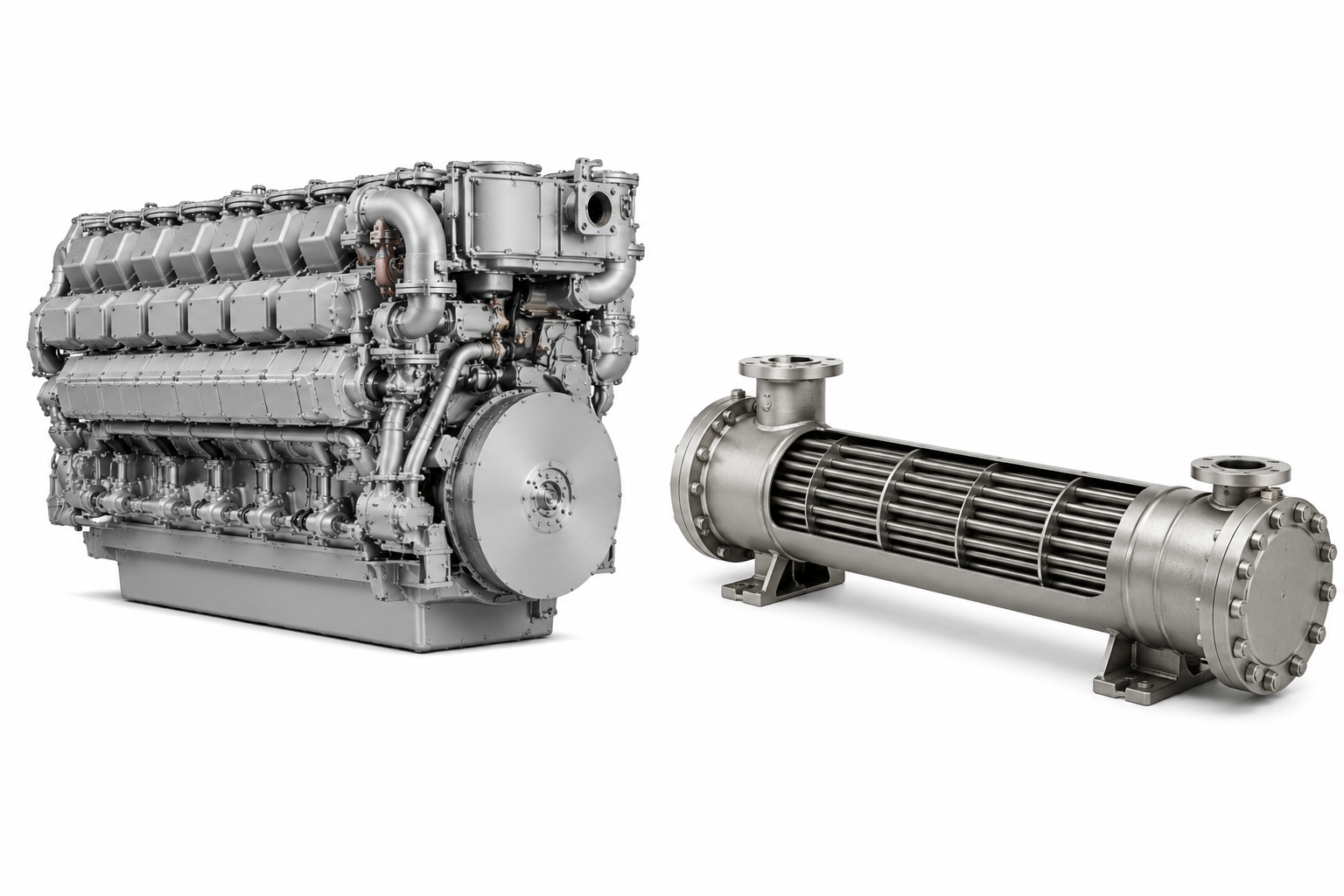
The MTU 10V 2000 M96L marine engine is widely used in luxury yachts, patrol vessels, pilot boats, and commercial craft where reliability and consistent performance are essential. One of the most important components keeping this engine operating at the correct temperature is the heat exchanger.
Although the heat exchanger often receives less attention than injectors or turbochargers, it plays a vital role in removing excess heat from the engine coolant. A partially blocked or corroded heat exchanger can reduce cooling efficiency, leading to rising operating temperatures, higher fuel consumption, reduced performance, and eventually costly engine damage.
The good news is that most heat exchanger failures can be prevented through routine inspection and maintenance.
What Does the Heat Exchanger Do?
The heat exchanger transfers heat from the engine's closed freshwater cooling circuit to seawater flowing through separate passages. This design allows the engine to maintain a stable operating temperature while protecting internal components from direct exposure to seawater.
Without an efficient heat exchanger, coolant temperatures will rise quickly, especially when the engine is operating under heavy load or in warm coastal waters.
Why Is Heat Exchanger Maintenance So Important?
Marine engines operate in environments where seawater contains salt, minerals, shell growth, and debris. Over time these contaminants can reduce cooling efficiency.
Routine maintenance helps prevent:
- Engine overheating
- Restricted coolant flow
- Corrosion
- Internal scaling
- Reduced engine performance
- Increased fuel consumption
- Premature wear of cooling system components
Ignoring the heat exchanger may eventually affect the turbocharger, cylinder heads, pistons, and engine oil.
Common Causes of Heat Exchanger Problems
Several factors can reduce heat exchanger performance:
Marine Growth
Operating in coastal or tropical waters encourages barnacles, algae, and shell growth inside seawater passages.
Salt Deposits
Salt gradually forms deposits that reduce heat transfer efficiency.
Corrosion
Even high-quality marine materials are vulnerable to corrosion over time if maintenance is neglected.
Debris
Seaweed, plastic bags, sand, or shells can restrict seawater flow before it even reaches the heat exchanger.
Poor Maintenance
Skipping scheduled cleaning allows deposits to build up, reducing cooling performance.
Warning Signs of a Dirty or Restricted Heat Exchanger
Watch for:
- Rising coolant temperature
- High engine temperature alarms
- Reduced engine power
- Higher exhaust temperatures
- Increased fuel consumption
- Coolant boiling after shutdown
- Frequent overheating under load
- Reduced performance in warm seawater
Early investigation can prevent expensive repairs.
Components to Inspect at the Same Time
When servicing the heat exchanger, inspect the entire cooling system, including:
- Seawater pump
- Freshwater pump
- Impeller
- Thermostats
- Charge air cooler
- Oil cooler
- Cooling hoses
- Hose clamps
- Expansion tank
- Coolant level
- Temperature sensors
- Seawater strainer
These components work together, and a fault in one area can affect the entire cooling system.
Why Seawater Flow Matters
Even a perfectly clean heat exchanger cannot perform properly if seawater flow is restricted.
Common causes include:
- Worn seawater pump impeller
- Blocked seawater strainer
- Damaged hoses
- Air leaks in the suction line
- Marine growth in pipework
Regular inspection of the seawater circuit is just as important as cleaning the heat exchanger itself.
Preventive Maintenance Checklist
To maximize cooling efficiency on the MTU 10V 2000 M96L:
✔ Inspect the seawater strainer before every voyage.
✔ Check coolant level regularly.
✔ Inspect hoses and clamps for leaks.
✔ Monitor engine operating temperature.
✔ Clean the heat exchanger at recommended service intervals.
✔ Inspect the seawater pump impeller.
✔ Flush the cooling system when required.
✔ Replace damaged seals and gaskets.
✔ Perform routine coolant analysis.
✔ Record all maintenance activities.
Marine Engineer Tip
One of the easiest ways to detect a developing cooling problem is to compare current operating temperatures with previous maintenance records. A gradual increase over several months often indicates fouling inside the heat exchanger or reduced seawater flow. Addressing the issue early can prevent overheating and extend the life of the entire cooling system.
Common Mistakes
Avoid these common mistakes:
- Cleaning only the outside of the heat exchanger.
- Ignoring seawater strainers.
- Reusing damaged seals after disassembly.
- Mixing incompatible coolants.
- Continuing to operate with recurring overheating alarms.
- Replacing thermostats without checking the heat exchanger.
- Assuming the seawater pump is always the cause of overheating.
Frequently Asked Questions
How often should a heat exchanger be cleaned?
The interval depends on operating hours and water quality. Vessels operating in warm, high-fouling environments generally require more frequent inspections than those in cleaner waters.
Can a blocked heat exchanger increase fuel consumption?
Yes. Higher operating temperatures reduce engine efficiency, causing the engine to consume more fuel under the same load.
What happens if the heat exchanger fails?
Loss of cooling efficiency can result in overheating, reduced engine performance, damage to internal components, and potentially an unscheduled overhaul.
Should I inspect the seawater pump at the same time?
Absolutely. The heat exchanger and seawater pump work together, and both should be inspected during cooling system maintenance.
Can overheating damage the turbocharger?
Yes. Sustained high temperatures increase stress on the turbocharger and may shorten its service life.
Worldwide Marine Engine Spare Parts Supply
Alfa Marine Spare Parts supplies genuine, OEM, aftermarket, remanufactured, and reconditioned spare parts for the MTU 10V 2000 M96L and other MTU Series 2000 engines worldwide.
We support commercial shipping companies, shipyards, offshore operators, yacht builders, marine engineers, and fleet operators in the United Kingdom, United States, Dubai (UAE), Monaco, Nigeria, the Netherlands, Italy, Spain, France, Germany, Norway, Greece, and many other maritime regions.
Our customers include operators working with major maritime organizations such as Harland & Wolff, A&P Group, Huntington Ingalls Industries, General Dynamics NASSCO, Damen Shipyards, Fincantieri, and Drydocks World Dubai. We also regularly supply marine engine spare parts to offshore and commercial fleets in Lagos, Port Harcourt, Onne, and Warri, Nigeria.
Browse Our Complete Spare Parts Catalog
Alfa Marine Spare Parts supplies:
- Heat exchangers
- Seawater pumps
- Freshwater pumps
- Charge air coolers
- Oil coolers
- Thermostats
- Fuel injectors
- Turbochargers
- Camshafts
- Crankshafts
- Cylinder heads
- Bearings
- Overhaul kits
- Gaskets and seals
Browse our complete inventory:
https://alfamarinespareparts.com/spareparts
Why Choose Alfa Marine Spare Parts?
We provide:
- Genuine, OEM, aftermarket, remanufactured, and reconditioned marine engine parts
- Worldwide shipping
- Technical assistance for correct part identification
- Support for commercial vessels, yachts, offshore platforms, and government fleets
- Reliable service for shipyards, marine engineers, chief engineers, and fleet managers
Contact Alfa Marine Spare Parts
Need assistance with your MTU 10V 2000 M96L or help sourcing cooling system components?
Website: https://alfamarinespareparts.com
Email: request@alfamarinespareparts.com
Our technical team can help you identify the correct parts and keep your MTU marine engine operating at peak performance.
Conclusion
The heat exchanger is one of the most important components in the cooling system of the MTU 10V 2000 M96L marine engine. Routine cleaning, regular inspections, and monitoring operating temperatures help prevent overheating, improve engine efficiency, and reduce the risk of expensive repairs. By maintaining the heat exchanger alongside the seawater pump, charge air cooler, thermostats, and related cooling components, marine operators can maximize reliability and extend the service life of their MTU engine while minimizing unplanned downtime.