
MTU 10V 2000 M94 Timing Gear Inspection: Why Accurate Engine Timing Starts with Healthy Gears
When people think about engine timing, they often focus on the camshaft or electronic control system.
However, neither of these can operate correctly without one critical mechanical system—the timing gears.
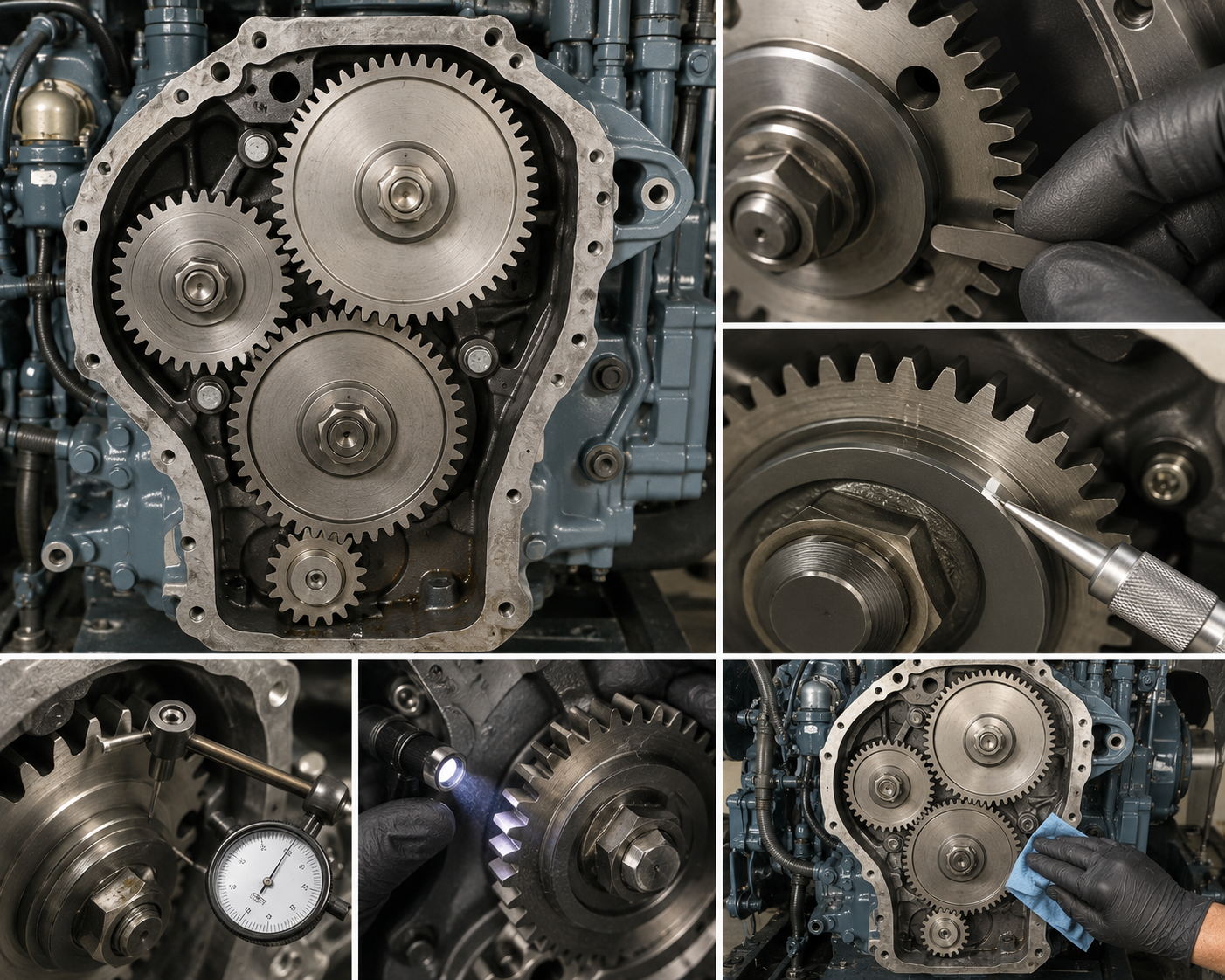
On the MTU 10V 2000 M94, the timing gear train ensures that the crankshaft, camshaft, fuel injection system, and valve train remain perfectly synchronized. Every combustion event depends on this precise timing.
Timing gears are built to last for thousands of operating hours, but like every mechanical component, they should never be ignored during scheduled maintenance. Wear, poor lubrication, contamination, or misalignment can gradually affect engine reliability and eventually lead to costly repairs.
Let's explore why timing gears are so important and how routine inspections help keep your MTU engine performing at its best.
What Are Timing Gears?
Timing gears are hardened steel gears located at the front of the engine.
Their primary purpose is to transfer rotational movement from the crankshaft to other engine components while maintaining exact timing relationships.
The timing gear system synchronizes:
- Crankshaft
- Camshaft
- Fuel injection system
- Valve train
- Auxiliary engine components
Without accurate timing, combustion cannot occur efficiently.
Why Is Timing So Critical?
Every piston reaches top dead centre at precisely the right moment.
At that exact instant:
- The valves must open or close correctly.
- Fuel must be injected at the correct time.
- Combustion must occur efficiently.
The timing gears ensure this sequence repeats perfectly thousands of times every minute.
Even slight wear elsewhere in the engine can affect overall timing accuracy.
A Real Marine Maintenance Scenario
A fast crew transfer vessel powered by MTU 10V 2000 M94 engines continued operating normally but developed a faint mechanical noise at the front of one engine.
Engine power remained normal.
Fuel consumption showed only a slight increase.
Rather than ignoring the noise, engineers performed a scheduled inspection.
They discovered abnormal wear on one timing gear bearing caused by contaminated lubricating oil.
The gear itself remained serviceable, and replacing the bearing prevented further wear throughout the timing system.
Had the problem continued unnoticed, gear alignment could eventually have been affected, resulting in much more extensive repairs.
What Causes Timing Gear Wear?
Timing gears are extremely durable, but several conditions can shorten their service life.
Contaminated Engine Oil
Timing gears rely on clean engine oil for continuous lubrication.
Contaminants accelerate wear on gear teeth and bearings.
Poor Lubrication
Reduced oil pressure or restricted lubrication increases friction between rotating components.
Bearing Wear
Supporting bearings help maintain proper gear alignment.
As bearings wear, gear contact patterns may gradually change.
Foreign Material
Metal particles circulating through the lubrication system can damage gear surfaces over time.
Misalignment
Although uncommon, excessive wear elsewhere in the engine can place abnormal loads on timing gears.
Early Warning Signs
Timing gear problems rarely appear suddenly.
Watch for:
- Mechanical noise from the front of the engine
- Abnormal vibration
- Metallic particles in engine oil
- Lower oil pressure
- Increased gear housing temperature
- Unusual engine timing behaviour
- Difficulty maintaining smooth engine operation
- Abnormal oil analysis results
- Increased bearing wear
- Progressive engine noise
Small changes should always be investigated.
Why Lubrication Matters
Timing gears operate under continuous load.
A protective oil film separates the gear teeth during operation.
Without proper lubrication:
- Gear tooth wear increases.
- Bearing temperatures rise.
- Metal particles circulate through the engine.
- Overall engine reliability decreases.
Good lubrication protects the entire timing system.
Components to Inspect Alongside the Timing Gears
Whenever timing gear maintenance is performed, engineers should also inspect:
- Crankshaft
- Camshaft
- Camshaft bearings
- Timing gear bearings
- Lubrication system
- Oil pump
- Oil filters
- Fuel injection components
- Valve train
- Front engine seals
Looking at the complete system provides a better understanding of engine condition.
Can Oil Analysis Help?
Yes.
Routine laboratory oil analysis is one of the best ways to monitor timing gear condition indirectly.
Oil samples may reveal:
- Iron
- Chromium
- Wear particles
- Lubrication degradation
- Contamination
Trending oil analysis reports over time often identifies developing wear before mechanical symptoms become obvious.
Preventive Maintenance Checklist
Routine inspections improve timing system reliability.
✔ Monitor engine oil pressure.
✔ Replace engine oil and filters on schedule.
✔ Perform regular oil analysis.
✔ Investigate unusual mechanical noises.
✔ Monitor engine vibration trends.
✔ Inspect timing gear housing during major maintenance.
✔ Maintain proper lubrication.
✔ Investigate abnormal wear particles.
✔ Follow MTU maintenance schedules.
✔ Keep detailed maintenance records.
Marine Engineer Tip
One of the easiest ways to detect developing timing gear problems is by listening during a cold engine start.
Changes in mechanical noise from the front gear housing often become easier to identify before normal operating temperatures and engine noise increase.
Never dismiss a new mechanical sound simply because engine performance still appears normal.
Common Maintenance Mistakes
Avoid these common mistakes:
- Ignoring unusual mechanical noises.
- Delaying oil analysis.
- Extending oil change intervals.
- Ignoring metallic particles found during oil changes.
- Assuming timing gears never require inspection.
- Waiting for engine performance problems before investigating.
Frequently Asked Questions
Do timing gears normally wear out?
Timing gears are designed for a very long service life, but lubrication quality and operating conditions significantly influence their longevity.
Can poor lubrication damage timing gears?
Yes. Clean engine oil is essential for protecting both the gear teeth and supporting bearings.
Does oil analysis help detect gear wear?
Yes. Increased iron or other wear metals often indicate developing mechanical wear.
Should timing gears be inspected during an engine overhaul?
Absolutely. Inspecting the complete timing gear train is an important part of any major overhaul.
Can worn timing gears affect engine performance?
If wear becomes severe, engine timing accuracy and overall reliability may eventually be affected.
Worldwide Marine Engine Spare Parts Supply
Alfa Marine Spare Parts supplies genuine, OEM, aftermarket, remanufactured, and reconditioned spare parts for the MTU 10V 2000 M94 and the complete MTU Series 2000 engine family.
We proudly support:
- Commercial shipping companies
- Shipyards
- Luxury yacht operators
- Offshore operators
- Marine engineers
- Chief engineers
- Technical superintendents
- Government fleets
- Fishing fleets
- Marine repair companies
We regularly supply marine engine spare parts throughout the United Kingdom, United States, Dubai (UAE), Monaco, Nigeria, the Netherlands, Italy, Spain, France, Germany, Norway, and Greece.
Browse Our Complete Spare Parts Catalog
Alfa Marine Spare Parts supplies:
- Timing gears
- Camshafts
- Crankshafts
- Oil pumps
- Oil filters
- Fuel injectors
- Cylinder heads
- Valve train components
- Turbochargers
- Water pumps
- Heat exchangers
- Complete overhaul kits
Browse our complete catalog:
https://alfamarinespareparts.com/spareparts
Why Choose Alfa Marine Spare Parts?
At Alfa Marine Spare Parts, we understand that reliable engine timing is essential for dependable marine engine performance. From timing gear components to complete overhaul kits, we help marine engineers, shipyards, and fleet operators source the correct parts for preventive maintenance and major repairs.
We provide:
- Genuine, OEM, aftermarket, remanufactured, and reconditioned marine engine spare parts
- Worldwide shipping
- Fast quotations
- Technical support for part identification
- Support for MTU, Caterpillar, Wärtsilä, MAN, Cummins, Volvo Penta, Scania, Detroit Diesel, Perkins, Yanmar, and many other leading marine engine brands
Our goal is to help reduce downtime and keep your vessel operating safely and efficiently.
Contact Alfa Marine Spare Parts
Looking for MTU 10V 2000 M94 timing gears, engine timing components, or overhaul parts?
Website: https://alfamarinespareparts.com
Email: request@alfamarinespareparts.com
Our experienced marine parts specialists are ready to help you identify the correct components for maintenance, repairs, and complete engine overhauls.
Conclusion
The timing gear system of the MTU 10V 2000 M94 is fundamental to accurate engine operation, ensuring that the crankshaft, camshaft, fuel injection system, and valve train remain perfectly synchronized. Although timing gears are designed for exceptional durability, they still depend on clean lubrication, proper alignment, and regular inspections. By monitoring oil condition, investigating unusual noises, and including the timing gear train in scheduled maintenance, marine engineers can prevent unnecessary wear, extend engine life, and maintain the reliable performance expected from the MTU Series 2000.