The connecting rod, a.k.a. con-rod, is an integral component in the engine room. A slight misalignment or damage in the marine engine connecting rod can severely affect the working of the propulsion system. Fortunately, replacement con rods are only a few clicks away and easy to avail at a reliable online store. With con rods and bearings working fine, the vessel operators can expect high-end fuel economy, performance, and reliability when the ship is on a voyage. In this blog post, we delve into the importance of choosing the right connecting rods to match the crankshaft and cylinder alignment.
What is a Marine Engine Connecting Rod?
The connecting rod is an intermediate part that connects the piston in the cylinder to the crankshaft. Con rods establish this connectivity between the crankshaft and the engine. The number of connecting rods in the setup depends on the crankshaft size and the number of cylinders in the arrangement. The diesel engine connecting rods feature a hollow design with a passage for bore oil along the shank (length of the rod). This split bore layout is beneficial to spread the lubricating oil from the crankshaft to the piston and piston pins to minimise friction and heat.Con Rod Design and Sub-Components
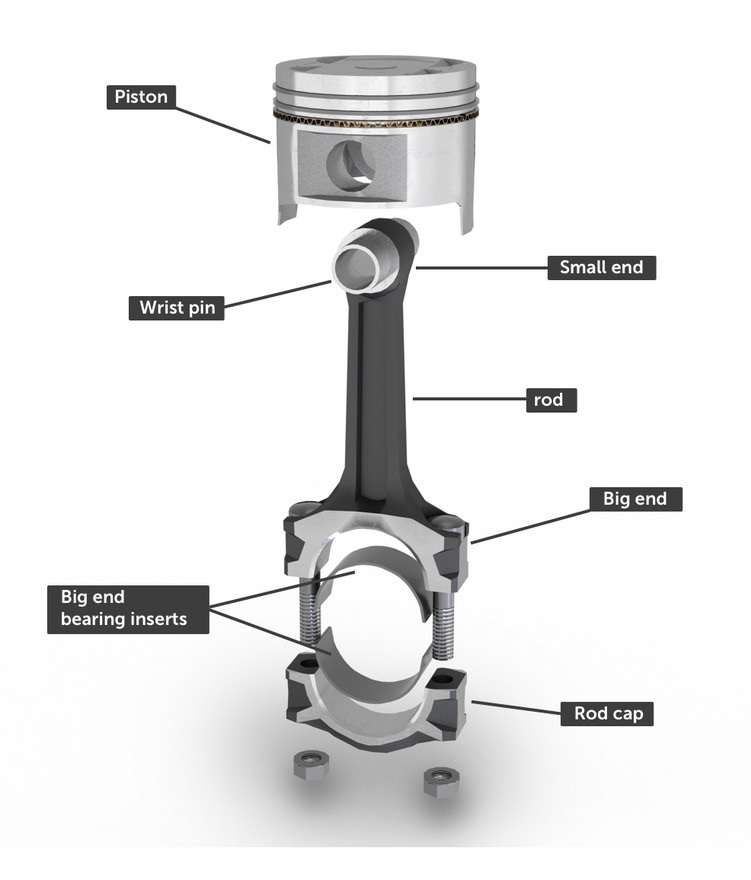
The design of the connecting rods in marine engines comprises three main parts:Top bore
It is a small end connected to the piston ring or the wrist pin.Large bore
This end of the rod is attached to the crankshaft. The bore with a split framework is assembled with a set of fasteners (bolts).Shank (Body)
It is the centre part connecting the two bores on either end. There are further sub-components in the marine connecting rods: Bush Bearing – These bearings on the small bore eliminate friction between the piston and the con rod despite continuous metal-to-metal rubbing along the piston pin. Bearing Insert – A couple of semi-circular inserts made of low-friction material create an oil film buffer between the crankshaft and the con rod. Bolts and Nuts – High-quality bolts and nuts are essential for fastening the small bore to the piston and the large bore to the crankshaft.Function of the Connecting Rod in Marine Engines
The con rod receives the linear motion generated by the piston. Later, these rods convert the derived energy into rotary motion to regulate the crankshaft operation. This mechanical power is vital for controlling the propellers and vessel navigation. In large 2-stroke diesel engine modules, the con rods connect the crankshaft to the crosshead instead of pistons. The role of these rods in large marine engines is to convert the linear motion of the crossheads into mechanical energy to drive the crankshaft.Marine Con Rod Materials
The marine engine connecting rod receives stress while working constantly in a tremendous vibration and saltwater environment. Usually, aluminium, steel, or titanium alloy con rods are ideal for ships. These metals boast durability and performance, offering an array of benefits:- The lightweight metals consume less energy for movement, thereby reducing fuel consumption.
- These nitrite-treated alloys are resistant to corrosion. Therefore, the materials do not wear down when exposed to saltwater and chemicals (in lubrication oils, air, etc.)
- Steel alloy rods are ideal for continued engine operation at high pressure and temperature.