Marine Diesel Cylinder Head Rebuild vs Replacement: Which Option Is Best for Your Cummins Marine Engine?
If you've been told your marine diesel cylinder head needs attention, one question usually comes up first:
Should you rebuild it, or is it better to replace it?
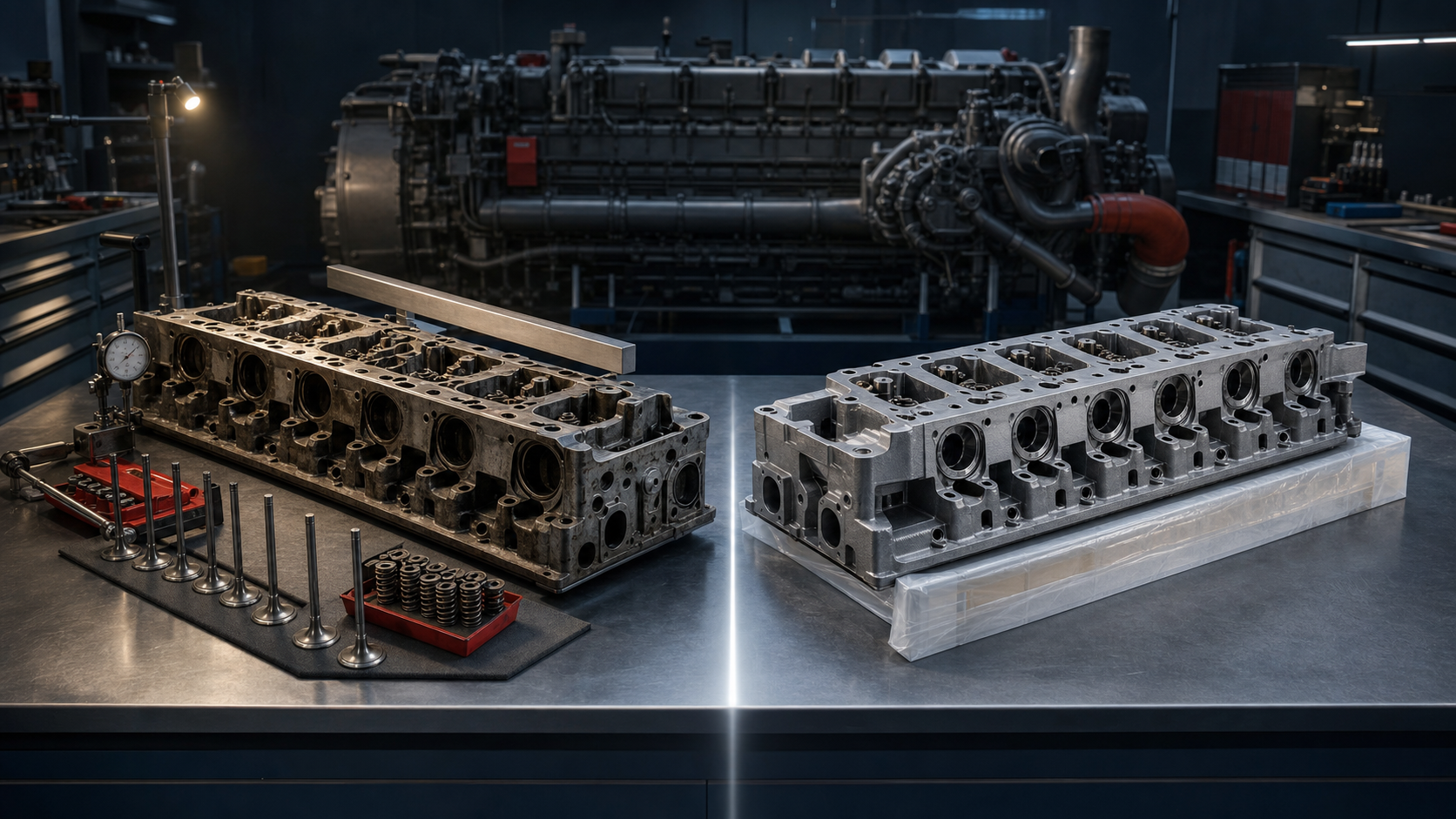
For many vessel owners and marine engineers, the answer isn't always straightforward. A rebuild can appear less expensive at first, while a brand-new cylinder head offers reliability and peace of mind. The right decision depends on the engine's condition, your operating schedule, and how much downtime your vessel can tolerate.
At Alfa Marine Spare Parts, we regularly assist customers worldwide with replacement cylinder heads and marine engine spare parts for Cummins marine engines. Whether you're planning an overhaul or dealing with an unexpected failure, understanding the advantages and limitations of each option can save both time and money.
This guide explains the differences, the risks, and the situations where rebuilding or replacing a cylinder head makes the most sense.
Table of Contents
- What Does a Marine Diesel Cylinder Head Do?
- Common Signs Your Cylinder Head Needs Attention
- When Rebuilding a Marine Diesel Cylinder Head Makes Sense
- Minor Wear and Limited Damage
- Low Engine Operating Hours
- Temporary Fleet Repairs
- Emergency Repairs During a Voyage
- When Replacing a Marine Diesel Cylinder Head Is the Better Choice
- Hidden Damage Is Eliminated
- New Components Mean Greater Reliability
- Reduced Downtime
- Long-Term Cost Savings
- Cummins Marine Engine Cylinder Head Applications
- Why Marine Engineers Choose Alfa Marine Spare Parts
- Rebuilding vs Replacement Cost Comparison
- Frequently Asked Questions
- Final Thoughts
- Contact Alfa Marine Spare Parts
What Does a Marine Diesel Cylinder Head Do?
The cylinder head is one of the hardest-working components in any marine diesel engine. It seals the combustion chamber while supporting essential parts such as the intake and exhaust valves, valve springs, injector bores, and coolant passages.
Every time your engine fires, the cylinder head is exposed to:
- High combustion pressures
- Extreme temperature changes
- Constant vibration
- Cooling system pressure
- Fuel injection forces
On marine engines, these conditions are even more demanding because engines often operate for long periods under heavy load.
When a cylinder head begins to fail, engine performance, fuel efficiency, and reliability can quickly decline.
Common Signs Your Cylinder Head Needs Attention
Marine engineers often notice warning signs before complete failure occurs.
Typical symptoms include:
- Persistent engine overheating
- Coolant loss without visible leaks
- White exhaust smoke
- Coolant mixing with engine oil
- Compression loss
- Difficult starting
- Misfiring cylinders
- Coolant pressure building rapidly
- Visible cracks around injector seats or valve bridges
If several of these symptoms appear together, it's important to inspect the cylinder head before further damage affects pistons, liners, or the engine block.
Why Do Marine Cylinder Heads Fail?
Many cylinder head failures don't happen overnight. They usually develop over time because of operating conditions or maintenance issues.
Common causes include:
Overheating
High engine temperatures place tremendous stress on the casting. Repeated overheating can warp the cylinder head or create cracks that may not be visible without specialized inspection.
Cooling System Problems
Blocked heat exchangers, worn seawater pumps, restricted coolant passages, or poor coolant quality can all increase operating temperatures and shorten cylinder head life.
Corrosion
Marine cooling systems are exposed to moisture, minerals, and saltwater environments. Without proper coolant maintenance, internal corrosion can gradually damage water jackets and sealing surfaces.
Thermal Fatigue
Marine engines often cycle between idle and full load. Continuous heating and cooling causes the metal to expand and contract, eventually creating stress fractures.
Improper Maintenance
Incorrect torque procedures, neglected valve adjustments, or poor-quality replacement components can reduce cylinder head service life.
Routine inspections and preventive maintenance remain the most effective way to avoid major cylinder head failures.
When Rebuilding a Marine Diesel Cylinder Head Makes Sense
Rebuilding isn't always the wrong decision. In some situations, it can extend engine life and reduce immediate costs.
The key is ensuring the original casting remains structurally sound.
Minor Wear and Limited Damage
If inspections confirm that the casting has no significant cracks or warping, rebuilding may involve replacing wear components such as:
- Valve guides
- Valve seats
- Intake valves
- Exhaust valves
- Valve springs
- Valve stem seals
A professionally rebuilt cylinder head can continue operating reliably when the original casting is still within manufacturer specifications.
Low Engine Operating Hours
If your Cummins marine engine has relatively low running hours and the cylinder head has only experienced normal wear, rebuilding may be a practical option.
Rather than replacing the complete assembly, replacing worn internal components may restore performance while keeping costs under control.
Temporary Fleet Repairs
Some commercial operators choose rebuilding when planning a future engine overhaul.
For example, if an engine overhaul is already scheduled within the next year, rebuilding the cylinder head may help keep the vessel operational until the planned maintenance period.
This can reduce immediate expenditure while maintaining fleet availability.
Emergency Repairs During a Voyage
Sometimes vessel schedules don't allow waiting for new replacement parts.
If a qualified marine machine shop is available and the damage is limited, rebuilding can provide a practical temporary solution that gets the vessel back into service quickly.
However, it's essential that all inspections and machining meet manufacturer specifications to ensure safe operation.
The Limitations of Rebuilding a Marine Cylinder Head
Although rebuilding can be successful, it also carries risks that should be considered.
Unlike a new cylinder head, the original casting has already experienced years of thermal cycling, vibration, and combustion stress.
Even after machining, some defects may remain hidden.
Potential concerns include:
- Hairline cracks that are difficult to detect
- Warped gasket surfaces
- Internal corrosion
- Injector bore wear
- Valve bridge fatigue
- Future cracking caused by metal fatigue
For vessels operating in demanding commercial service, these risks may outweigh the initial cost savings of rebuilding.
When Replacing a Marine Diesel Cylinder Head Is the Better Choice
For many marine operators, installing a new cylinder head offers the most reliable long-term solution.
Although the initial investment is higher, replacement often reduces unexpected downtime and future repair costs.
In the next section, we'll look at why many fleet operators and marine engineers choose replacement over rebuilding, compare the long-term costs, and cover Cummins marine cylinder head applications from the Cummins 4B through the Cummins QSK19 series, along with guidance on selecting the right replacement from Alfa Marine Spare Parts.
Cummins Marine Cylinder Head Applications & Why Marine Engineers Choose Replacement
Cummins Marine Cylinder Head Applications
Cummins has built a reputation for producing reliable marine diesel engines used in fishing vessels, tugboats, offshore support vessels, commercial workboats, ferries, pilot boats, patrol boats, and luxury yachts. While each engine family has its own design, one thing remains the same—a healthy marine diesel cylinder head is essential for dependable engine performance.
Below are some of the most common Cummins marine engines that require cylinder head maintenance or replacement during their service life.
Cummins 4B Marine Cylinder Head
The Cummins 4B is a compact four-cylinder engine known for its simplicity and reliability. It's commonly found in small commercial boats, workboats, and auxiliary marine applications.
With proper cooling system maintenance and regular valve inspections, the cylinder head can provide many years of dependable service. If overheating occurs, however, the cylinder head should be inspected for cracks, warping, and valve seat damage before deciding whether to rebuild or replace it.
Cummins 4BT Marine Cylinder Head
The Cummins 4BT has become one of the most recognized diesel engines worldwide thanks to its durability and mechanical simplicity.
Marine operators often appreciate its straightforward maintenance, but after thousands of operating hours, normal wear may affect valve guides, injector bores, and sealing surfaces. A thorough inspection helps determine whether rebuilding remains practical or if replacement offers better long-term reliability.
Cummins 4BTA Marine Cylinder Head
Adding turbocharging places additional thermal stress on the cylinder head.
For the Cummins 4BTA, maintaining a clean cooling system and monitoring exhaust temperatures can significantly extend cylinder head life. During major engine overhauls, many operators inspect the cylinder head alongside injectors, valves, and turbocharger components.
Cummins 6B Marine Cylinder Head
The naturally aspirated Cummins 6B continues to serve many commercial vessels around the world.
Its robust design allows for long operating life, but years of continuous marine service may eventually lead to valve wear, corrosion, or gasket sealing issues. Replacing worn components early helps prevent larger engine failures.
Cummins 6BT Marine Cylinder Head
The Cummins 6BT is one of the most respected diesel engines ever produced.
Because many marine engines remain in operation for decades, cylinder head condition becomes increasingly important during scheduled overhauls. Careful inspection of combustion chambers, valve bridges, and coolant passages helps determine the best repair strategy.
Cummins 6BTA Marine Cylinder Head
Turbocharged marine engines experience higher combustion temperatures than naturally aspirated models.
For the Cummins 6BTA, overheating caused by restricted seawater flow or poor coolant maintenance can accelerate cylinder head wear. Preventive maintenance remains the best way to maximize service life.
Cummins ISB Marine Cylinder Head
The electronically controlled Cummins ISB combines fuel efficiency with modern engine management.
Because these engines depend on precise combustion, maintaining a properly sealed cylinder head is essential for performance, emissions, and fuel economy.
Cummins QSB Marine Cylinder Head
The Cummins QSB is widely used in commercial vessels, fishing boats, pilot boats, and recreational craft.
Regular inspections of the cooling system, injectors, and cylinder head help minimize unexpected downtime. During overhaul planning, many operators choose replacement cylinder heads to reduce the risk of future failures.
Cummins 6C Marine Cylinder Head
The dependable Cummins 6C continues to power vessels worldwide.
Routine maintenance of valves, coolant passages, and gasket surfaces helps maintain efficient combustion while protecting the engine from overheating.
Cummins 6CT Marine Cylinder Head
The Cummins 6CT remains popular for heavy-duty marine applications.
Because these engines often operate under continuous load, the cylinder head should be inspected carefully whenever cooling system problems or compression loss are suspected.
Cummins 6CTA Marine Cylinder Head
The Cummins 6CTA offers excellent power while maintaining fuel efficiency.
Marine engineers often inspect cylinder heads during scheduled overhaul intervals to prevent unexpected failures during demanding operations.
Cummins ISC Marine Cylinder Head
The Cummins ISC delivers dependable performance across a wide range of marine applications.
Proper coolant chemistry, regular valve adjustments, and periodic inspections all contribute to longer cylinder head service life.
Cummins QSC Marine Cylinder Head
The Cummins QSC is a modern marine engine designed for demanding commercial and recreational applications.
Because of its high-performance design, maintaining the cylinder head, injectors, and cooling system is critical for long-term reliability.
Cummins L10 Marine Cylinder Head
The legendary Cummins L10 remains popular in commercial fleets due to its durability.
During overhaul, cylinder heads should always be pressure-tested and inspected for cracks before deciding between rebuilding and replacement.
Cummins ISL Marine Cylinder Head
The Cummins ISL combines modern fuel management with proven reliability.
Maintaining proper engine temperatures significantly reduces the risk of thermal stress that can shorten cylinder head life.
Cummins QSL Marine Cylinder Head
The Cummins QSL is widely recognized for dependable operation in commercial marine service.
Routine inspections of valves, injector seats, and coolant passages help prevent costly engine downtime.
Cummins M11 Marine Cylinder Head
The Cummins M11 has earned an excellent reputation for heavy-duty marine applications.
Because many engines operate continuously under high load, replacing worn cylinder heads during major overhauls often improves long-term reliability.
Cummins ISM Marine Cylinder Head
The Cummins ISM continues to power commercial fleets around the world.
Keeping cooling systems clean and monitoring operating temperatures greatly reduces cylinder head failures.
Cummins QSM Marine Cylinder Head
The Cummins QSM is frequently found aboard patrol vessels, workboats, and offshore support vessels.
Marine engineers often replace cylinder heads during complete overhauls to minimize future downtime and improve engine dependability.
Cummins NH855 Marine Cylinder Head
The Cummins NH855 has powered marine vessels for decades.
Although many remain operational today, older engines benefit from detailed inspections of cylinder heads, valves, and sealing surfaces during scheduled maintenance.
Cummins NT855 Marine Cylinder Head
The turbocharged Cummins NT855 delivers greater power but also operates under increased thermal loads.
Maintaining the cooling system and monitoring engine temperatures remain essential for maximizing cylinder head life.
Cummins N14 Marine Cylinder Head
The Cummins N14 combines durability with dependable performance.
Routine inspections help identify wear before it develops into more expensive engine repairs.
Cummins ISX Marine Cylinder Head
The Cummins ISX incorporates advanced fuel injection and electronic engine management.
Because of the engine's precision, cylinder head sealing surfaces, injector bores, and valve components must remain in excellent condition.
Cummins QSX Marine Cylinder Head
Designed for demanding heavy-duty service, the Cummins QSX requires careful maintenance to deliver reliable performance throughout its operating life.
Cummins KTA19 Marine Cylinder Head
The Cummins KTA19 is one of the most popular engines used in commercial marine applications.
Its cylinder heads are engineered for continuous heavy-duty operation, but regular inspections remain essential, particularly after overheating events or high-hour operation.
Cummins KTA38 Marine Cylinder Head
The Cummins KTA38 powers larger commercial vessels where engine reliability is critical.
Many fleet operators choose replacement cylinder heads during planned overhauls to reduce operational risk and improve long-term engine performance.
Cummins KTA50 Marine Cylinder Head
As one of Cummins' largest marine engines, the KTA50 is built for continuous heavy-duty service.
Replacing worn cylinder heads during scheduled maintenance often prevents unexpected failures that could result in costly downtime.
Cummins QSK19 Marine Cylinder Head
The modern Cummins QSK19 combines advanced electronic controls with outstanding power output.
Maintaining the cylinder head, injectors, cooling system, and valve train helps ensure dependable performance in demanding marine environments.
Why Many Marine Engineers Choose Replacement Over Rebuilding
Although rebuilding may appear to save money initially, many experienced marine engineers consider the total cost of ownership rather than the repair bill alone.
A replacement cylinder head offers several advantages:
Greater Reliability
A new cylinder head eliminates concerns about hidden cracks, metal fatigue, or previous machining repairs that may reduce long-term reliability.
Less Downtime
Installing a replacement cylinder head is often faster than waiting for inspection, machining, pressure testing, and rebuilding.
For commercial operators, returning a vessel to service sooner can easily outweigh the difference in repair cost.
Consistent Performance
New cylinder heads provide accurate sealing surfaces, properly machined valve seats, and precise component alignment, helping maintain engine performance and fuel efficiency.
Better Long-Term Value
Although the initial investment may be higher, replacing a cylinder head often reduces future repair costs and minimizes the risk of unexpected engine failures.
Why Choose Alfa Marine Spare Parts?
At Alfa Marine Spare Parts, we understand that every hour a vessel remains alongside because of engine problems represents lost productivity.
That's why we supply genuine, OEM, aftermarket, and remanufactured marine diesel cylinder heads and replacement parts for a wide range of Cummins marine engines.
We support:
- Commercial shipping companies
- Fishing fleets
- Offshore operators
- Tugboat operators
- Ferry companies
- Government and naval fleets
- Yacht management companies
- Marine service providers
- Shipyards
- Marine engineers and technical superintendents
Whether you're carrying out routine maintenance or planning a complete marine engine overhaul, our team can help identify the correct replacement parts for your engine model and application.
We supply marine engine spare parts to customers across Europe, North America, South America, the Middle East, Africa, Asia, and many of the world's busiest ports, helping vessels stay operational wherever they are needed.
Engine Room Q&A: Marine Diesel Cylinder Head Questions Answered
One of the best ways to avoid unexpected engine failures is by understanding how your cylinder head works and recognizing early warning signs. Here are some of the questions marine engineers ask most often.
Can You Continue Operating With a Damaged Marine Diesel Cylinder Head?
It depends on the severity of the damage, but in most cases, continuing to operate the engine is not recommended.
A cracked or warped cylinder head can lead to coolant leaks, compression loss, overheating, and, in severe cases, damage to pistons, cylinder liners, or even the engine block. Stopping the engine and carrying out an inspection early is usually far less expensive than repairing major internal engine damage later.
Can a Marine Diesel Cylinder Head Be Reused After Overheating?
Sometimes, yes.
If the cylinder head has not warped or developed cracks and remains within the manufacturer's specifications, it may be suitable for rebuilding.
However, repeated overheating often causes metal fatigue, making replacement the more reliable long-term solution.
How Do Marine Engineers Check a Cylinder Head for Cracks?
Professional workshops typically use several inspection methods, including:
- Visual inspection
- Pressure testing
- Dye penetrant testing
- Magnetic particle inspection (for applicable materials)
- Flatness measurements
- Cooling passage inspection
These tests help identify damage that may not be visible during a routine inspection.
How Long Does a Marine Diesel Cylinder Head Normally Last?
There is no fixed service life.
The lifespan depends on:
- Engine loading
- Cooling system maintenance
- Operating temperatures
- Coolant quality
- Preventive maintenance
- Engine operating hours
A well-maintained marine engine can often operate for many thousands of hours before cylinder head replacement becomes necessary.
Can a Blown Head Gasket Damage the Cylinder Head?
Yes.
If a damaged head gasket is ignored, combustion gases may leak into the cooling system while coolant can enter the combustion chamber.
This may eventually cause:
- Overheating
- Warped cylinder heads
- Cracked castings
- Corrosion
- Loss of compression
Replacing the head gasket promptly helps prevent more expensive repairs.
Should I Replace the Cylinder Head During a Major Engine Overhaul?
Many marine engineers choose to inspect the cylinder head carefully during an overhaul.
If significant wear, cracking, or corrosion is found, replacing the cylinder head while the engine is already dismantled often saves both labor time and future downtime.
What Is the Difference Between a Rebuilt and a Remanufactured Cylinder Head?
A rebuilt cylinder head is generally repaired by replacing worn components and machining reusable parts where necessary.
A remanufactured cylinder head is typically restored following defined engineering standards and inspected to ensure it meets specified performance and dimensional requirements.
Always confirm the scope of work and quality standards with your supplier before purchasing.
Does Cooling System Maintenance Affect Cylinder Head Life?
Absolutely.
A properly maintained cooling system is one of the most important factors in extending cylinder head service life.
Regular inspections of:
- Heat exchangers
- Freshwater pumps
- Seawater pumps
- Thermostats
- Coolant condition
- Coolant hoses
help prevent overheating and reduce thermal stress on the cylinder head.
Marine Engineer's Cylinder Head Maintenance Checklist
Preventive maintenance is always less expensive than emergency repairs. Before a minor issue becomes a major overhaul, use this checklist during routine engine inspections.
Daily Checks
✔ Monitor engine operating temperature.
✔ Check coolant level.
✔ Look for coolant leaks around the cylinder head.
✔ Watch for unusual exhaust smoke.
✔ Listen for abnormal engine noises.
Weekly Checks
✔ Inspect coolant hoses and hose clamps.
✔ Check engine oil condition.
✔ Inspect for external corrosion.
✔ Verify there are no signs of combustion gas leakage.
Scheduled Maintenance
✔ Test coolant quality.
✔ Inspect valve clearances according to the manufacturer's recommendations.
✔ Examine injectors for proper sealing.
✔ Inspect cylinder head bolts if required by the maintenance schedule.
✔ Clean the cooling system.
✔ Inspect heat exchangers.
✔ Inspect seawater pumps.
✔ Replace worn gaskets during major maintenance.
Regular inspections help identify problems before they develop into expensive engine failures.
Related Cummins Marine Parts
A cylinder head rarely works alone. During major maintenance or an engine overhaul, marine engineers often inspect or replace several related components at the same time.
Commonly serviced Cummins marine engine parts include:
- Cylinder Head Gaskets
- Complete Overhaul Kits
- Cylinder Liners
- Pistons
- Piston Rings
- Connecting Rod Bearings
- Main Bearings
- Camshafts
- Crankshafts
- Fuel Injectors
- Water Pumps
- Freshwater Pumps
- Seawater Pumps
- Oil Pumps
- Oil Coolers
- Heat Exchangers
- Turbochargers
- Exhaust Manifolds
- Intake Valves
- Exhaust Valves
- Valve Guides
- Valve Seats
- Valve Stem Seals
- Rocker Arms
- Push Rods
- Thermostats
- Fuel Pumps
- Gasket Sets
- Seal Kits
Replacing related wear components during planned maintenance often improves engine reliability and reduces the likelihood of repeat repairs.
Browse Our Complete Marine Spare Parts Catalog
At Alfa Marine Spare Parts, we supply a comprehensive range of marine engine components for many of the world's leading diesel engine manufacturers.
Our product range includes:
- Genuine Parts
- OEM Parts
- High-Quality Aftermarket Parts
- Professionally Remanufactured Components
Supporting brands such as:
- Cummins
- Caterpillar
- MTU
- MAN
- Volvo Penta
- Yanmar
- Perkins
- Mitsubishi
- Deutz
- Scania
- Wärtsilä
- Detroit Diesel
- John Deere
- Komatsu
- Doosan
Browse our catalog:
https://alfamarinespareparts.com/spareparts
Why Marine Engineers Choose Alfa Marine Spare Parts
Finding the correct replacement part is about more than price. Marine engineers need components that match the engine specifications, arrive on time, and perform reliably in demanding operating conditions.
At Alfa Marine Spare Parts, we focus on helping customers source the right parts for planned maintenance, emergency repairs, and complete engine overhauls.
We supply:
- Genuine marine engine parts
- OEM replacement parts
- Premium aftermarket components
- Professionally remanufactured parts
Our team assists customers in identifying the correct components using engine model information, part numbers, and technical documentation, helping reduce the risk of ordering incorrect parts.
Whether you are maintaining a single workboat or managing an entire fleet, our goal is to provide dependable support throughout the purchasing process.
Industries We Support
Our customers include professionals across the global maritime industry, including:
- Marine engineers
- Chief engineers
- Ship owners
- Ship management companies
- Technical superintendents
- Shipyards
- Marine repair companies
- Commercial fishing operators
- Offshore service companies
- Ferry operators
- Tugboat operators
- Government fleets
- Naval operators
- Yacht management companies
- Marine equipment distributors
- Boat builders
Worldwide Marine Spare Parts Supply
Alfa Marine Spare Parts supplies customers around the world, supporting vessels operating in major maritime regions including:
- Europe
- United Kingdom
- Spain
- Italy
- Netherlands
- Germany
- Norway
- Greece
- Monaco
- United States
- Canada
- Mexico
- Brazil
- United Arab Emirates
- Saudi Arabia
- Qatar
- Nigeria
- South Africa
- Singapore
- Australia
Whether your vessel is in port for scheduled maintenance or requires urgent replacement parts, we strive to help you source the correct components efficiently.
Contact Alfa Marine Spare Parts
Need assistance identifying the correct marine diesel cylinder head or Cummins marine engine part?
Our experienced team is available to help you identify the correct replacement based on your engine model, serial number, and application.
Website:
https://alfamarinespareparts.com
Browse Marine Spare Parts:
https://alfamarinespareparts.com/spareparts
Email:
request@alfamarinespareparts.com
Final Thoughts
A marine diesel cylinder head is one of the most critical structural components in any diesel engine. Its condition directly affects combustion efficiency, engine reliability, fuel consumption, and overall vessel performance.
Choosing between rebuilding and replacing a cylinder head should always be based on a thorough inspection, the manufacturer's specifications, and your vessel's operating requirements. While rebuilding can be a practical solution when the casting is in good condition, replacing the cylinder head is often the better long-term investment for engines that have experienced severe overheating, cracking, or high operating hours.
Routine cooling system maintenance, regular inspections, and the use of quality replacement parts are among the most effective ways to extend cylinder head service life and reduce unexpected downtime.