Marine Water Pumps for Cummins KTA19, QSK19 & KTA38: A Complete Cooling System Guide
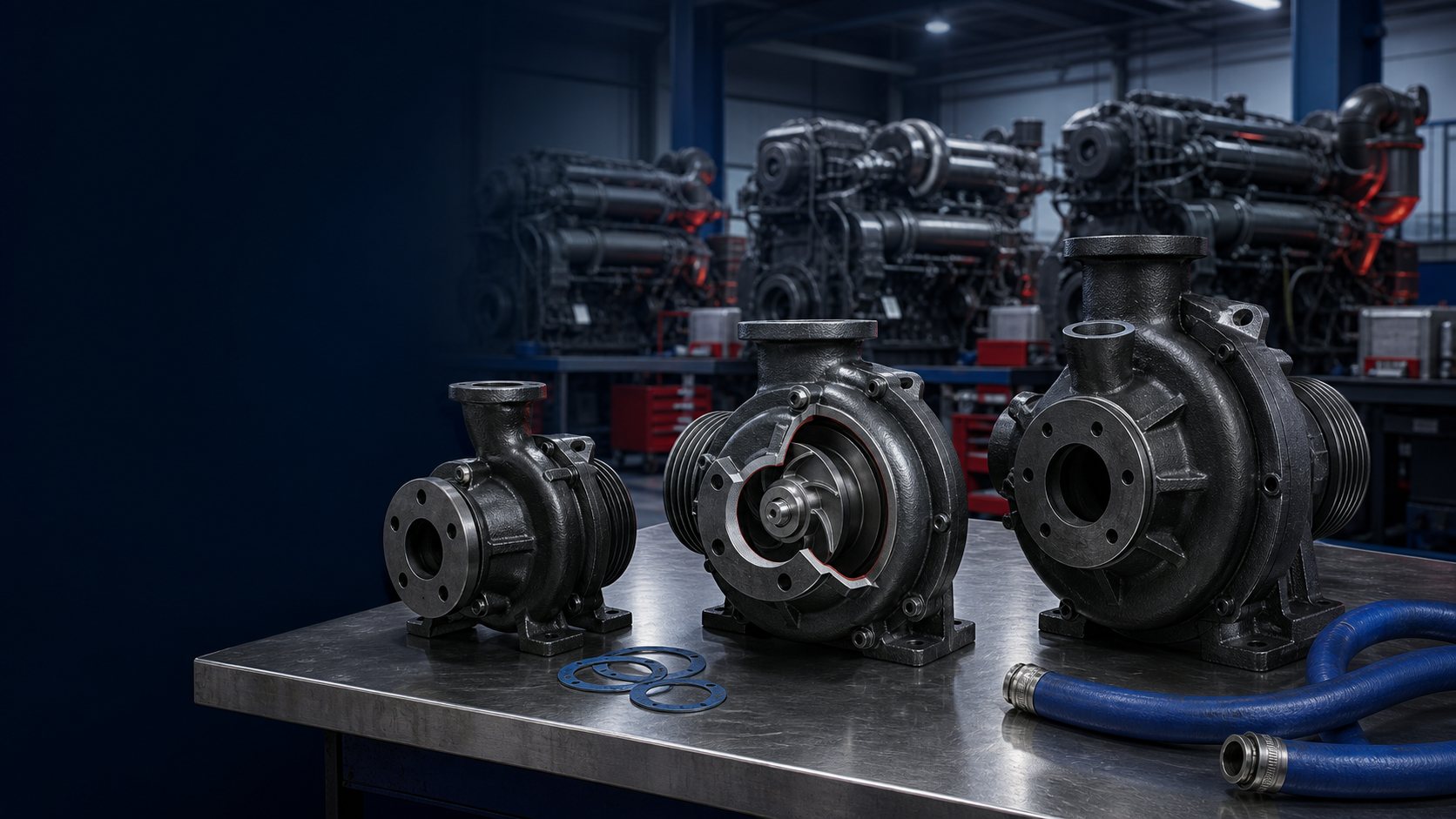
If there's one component that quietly protects your Cummins marine engine every time you leave the dock, it's the marine water pump.
It doesn't generate horsepower or attract attention like a turbocharger, but without a properly functioning water pump, even the most reliable marine diesel engine can overheat within a short period of time.
Whether your vessel is powered by a Cummins KTA19, QSK19, K19, KTA19M, QSK19M, or the larger KTA38, the cooling system depends on a reliable water pump to keep temperatures under control.
At Alfa Marine Spare Parts, we regularly assist marine engineers, chief engineers, technical superintendents, shipyards, fishing fleets, offshore operators, and vessel owners in selecting replacement water pumps and cooling system components. One of the most common questions we hear is:
"How do I know if my marine water pump needs replacing?"
This guide explains how Cummins marine water pumps work, why they are essential, common warning signs of failure, maintenance recommendations, and how to identify the correct replacement pump for your engine.
Why Is the Marine Water Pump So Important?
Marine diesel engines generate a tremendous amount of heat while operating under continuous load.
Unlike many land-based engines that experience frequent changes in speed and load, marine engines often run for long periods at steady operating temperatures. To maintain reliable performance, excess heat must be removed efficiently.
The marine water pump is one of the key components responsible for circulating coolant or seawater—depending on the engine's cooling system design—through the engine and heat exchanger. Cummins service literature describes the cooling system as a critical part of maintaining correct engine operating temperature and preventing overheating.
Without adequate coolant circulation, engine temperatures rise quickly, increasing the risk of serious damage.
How Does a Cummins Marine Water Pump Work?
Although designs vary between engine families, the basic function remains the same.
The pump continuously circulates cooling fluid through the engine to absorb heat produced during combustion.
The heated coolant then passes through the engine's cooling system, where heat is transferred before the coolant returns to repeat the cycle.
This continuous circulation helps maintain stable operating temperatures while protecting components such as:
- Cylinder heads
- Cylinder liners
- Pistons
- Valves
- Turbochargers
- Exhaust manifolds
- Head gaskets
Efficient cooling also contributes to better fuel efficiency and consistent engine performance.
Cummins Marine Engines Covered in This Guide
This information is particularly relevant for operators of engines including:
- Cummins K19
- Cummins KTA19
- Cummins KTA19M
- Cummins QSK19
- Cummins QSK19M
- Cummins KTA38
These engines are widely used in:
- Commercial fishing vessels
- Tugboats
- Offshore support vessels
- Ferries
- Patrol boats
- Workboats
- Passenger vessels
- Large yachts
Although the engines differ in output and configuration, each relies on a dependable cooling system to operate safely.
Common Signs a Cummins Marine Water Pump May Need Attention
A water pump rarely fails without warning.
Recognising the early signs allows maintenance to be scheduled before overheating leads to more extensive engine damage.
Common indicators include:
Rising Engine Temperature
One of the earliest warning signs is a gradual increase in normal operating temperature.
Coolant Leaks
Visible coolant around the pump housing or shaft seal should always be investigated promptly.
Unusual Bearing Noise
Grinding, rumbling, or squealing noises may indicate worn bearings inside the pump assembly.
Reduced Coolant Flow
Poor circulation can reduce cooling efficiency and increase operating temperatures under load.
Corrosion or Wear
Marine environments expose pumps to moisture, salt, vibration, and long operating hours. Routine inspection helps identify corrosion or wear before it affects performance.
Why Preventive Maintenance Matters
Replacing a worn water pump during planned maintenance is usually far less disruptive than dealing with an unexpected failure at sea.
Routine inspections of the cooling system should include:
- Water pump condition
- Drive components
- Hoses and clamps
- Coolant quality
- Heat exchanger cleanliness
- Thermostat operation
- Belt condition where applicable
Regular maintenance helps improve engine reliability and reduce unplanned downtime.
Choosing the Correct Cummins Marine Water Pump
Not every water pump fits every engine.
Even within the same engine family, specifications can vary depending on engine serial number, application, and production configuration.
Before ordering a replacement, it's good practice to confirm:
- Engine model
- Engine serial number
- Part number (if available)
- Vessel application
Providing this information helps ensure the replacement pump is compatible with your engine.
Why Choose Alfa Marine Spare Parts?
At Alfa Marine Spare Parts, we help customers worldwide source marine engine cooling system components for routine maintenance, planned overhauls, and emergency repairs.
We supply:
- Genuine parts
- OEM-quality parts
- Premium aftermarket parts
- Professionally remanufactured components
Our range includes marine water pumps, seawater pumps, freshwater pumps, heat exchangers, thermostats, gaskets, overhaul kits, turbochargers, injectors, cylinder heads, bearings, and many other marine diesel engine components.
Whether your vessel operates in Europe, North America, the Middle East, Africa, Asia, or Australia, our team is ready to help identify the right replacement parts for your Cummins marine engine.
In the next section, we'll cover:
- Common causes of marine water pump failure
- Step-by-step replacement considerations
- Frequently asked questions
- Maintenance checklist for marine engineers
- Related Cummins cooling system parts
- Contact Alfa Marine Spare Parts
- Final recommendations
Marine Water Pump Maintenance, Replacement & Frequently Asked Questions
What Causes a Cummins Marine Water Pump to Fail?
Marine water pumps are built to operate for thousands of hours, but like any mechanical component, they experience wear over time. Most failures develop gradually rather than occurring without warning.
Understanding the common causes can help you schedule maintenance before an unexpected breakdown interrupts your voyage.
Some of the most common reasons include:
Normal Wear
Pump bearings, seals, and rotating components naturally wear after years of continuous operation.
Routine inspections help identify wear before it develops into a major problem.
Contaminated Cooling System
Rust particles, mineral deposits, debris, or poor coolant quality can reduce cooling efficiency and increase wear on internal pump components.
Following the coolant recommendations in Cummins service documentation and maintaining a clean cooling system helps protect the entire engine.
Seal Wear
The mechanical seal prevents coolant from leaking around the pump shaft.
As seals age, small leaks may develop.
Ignoring these leaks can eventually damage the bearings and shorten pump life.
Bearing Failure
Bearings support the rotating shaft inside the pump.
When bearings begin to wear, operators may notice vibration, rumbling noises, or shaft movement.
Replacing the pump before complete bearing failure helps prevent further damage.
Corrosion
Marine engines operate in humid and often corrosive environments.
Without proper maintenance, corrosion can affect the pump housing, impeller, and sealing surfaces.
Regular inspections help identify corrosion before it becomes a reliability issue.
How Can You Extend the Life of Your Cummins Marine Water Pump?
Good maintenance practices often have a greater impact on pump life than operating hours alone.
Simple routine inspections can significantly reduce the likelihood of unexpected failures.
Some practical recommendations include:
- Check coolant level before each voyage.
- Inspect the pump for signs of leakage.
- Listen for unusual bearing noise during engine operation.
- Monitor engine operating temperature.
- Inspect hoses and clamps regularly.
- Replace worn drive belts where applicable.
- Follow Cummins maintenance intervals.
- Keep the cooling system clean.
- Replace coolant according to the manufacturer's recommendations.
Preventive maintenance is almost always less expensive than emergency repairs.
Marine Engineer's Cooling System Inspection Checklist
Whenever the engine room is inspected, consider checking the complete cooling system—not just the pump itself.
Daily Inspection
✔ Check engine operating temperature.
✔ Inspect coolant level.
✔ Look for leaks around the water pump.
✔ Check for unusual engine noises.
Weekly Inspection
✔ Inspect coolant hoses.
✔ Examine hose clamps.
✔ Check pump mounting bolts.
✔ Inspect for corrosion.
Scheduled Maintenance
✔ Test coolant quality.
✔ Inspect heat exchangers.
✔ Check thermostat operation.
✔ Inspect freshwater and seawater pumps.
✔ Examine drive components.
✔ Replace worn seals where necessary.
Keeping accurate maintenance records helps identify trends before they become serious problems.
How Do You Choose the Correct Cummins Marine Water Pump?
One of the most common mistakes is assuming that every water pump fits every engine.
In reality, pump specifications can vary depending on:
- Engine model
- Engine serial number
- Cooling system configuration
- Production changes
- Marine application
Before ordering a replacement, it's helpful to provide:
- Engine Model
- Engine Serial Number
- Existing Pump Part Number
- Pump Photographs (if available)
Providing this information allows your supplier to verify compatibility more accurately.
Frequently Asked Questions
How long does a Cummins marine water pump normally last?
There isn't a fixed replacement interval.
Pump life depends on operating hours, maintenance practices, coolant condition, and the operating environment.
Regular inspections remain the best way to determine pump condition.
Should I replace the thermostat when replacing the water pump?
Many marine engineers inspect both components at the same time.
If the thermostat shows signs of wear or has reached its recommended service interval, replacing it during cooling system maintenance can be a practical decision.
Can I continue operating if the water pump is leaking?
Small leaks should never be ignored.
Even a minor coolant leak may indicate seal wear that can eventually lead to overheating or bearing failure.
Inspect the pump as soon as possible.
What happens if the water pump stops circulating coolant?
Without adequate coolant circulation, engine temperatures can rise rapidly.
Prolonged overheating increases the risk of damage to components such as:
- Cylinder Heads
- Head Gaskets
- Pistons
- Cylinder Liners
- Turbochargers
Stopping the engine and investigating the cause of overheating is generally the safest approach.
Do all Cummins marine engines use the same water pump?
No.
Different engine families—and sometimes different versions within the same family—may use different pump designs.
Always confirm compatibility using the engine model and serial number before ordering replacement parts.
Related Cummins Marine Cooling System Parts
A marine water pump is only one part of the cooling system.
During scheduled maintenance, marine engineers often inspect related components at the same time.
Common replacement parts include:
- Freshwater Pumps
- Seawater Pumps
- Heat Exchangers
- Oil Coolers
- Aftercoolers
- Thermostats
- Coolant Hoses
- Hose Clamps
- Gaskets
- Seal Kits
- Water Pump Repair Kits
- Drive Components
- Cooling System Sensors
Inspecting the complete cooling system helps improve long-term engine reliability.
A Cummins Marine Water Pump may not be the most visible component in your engine room, but it is one of the most important. By maintaining proper coolant circulation, it helps protect your engine from overheating and supports reliable performance during every voyage.
Routine inspections, clean coolant, and replacing worn components before they fail are key to extending the life of your cooling system. If replacement becomes necessary, identifying the correct pump using your engine model and serial number helps ensure compatibility and reduces the risk of costly downtime.
At Alfa Marine Spare Parts, we support marine engineers, vessel owners, shipyards, and fleet operators with genuine, OEM, aftermarket, and professionally remanufactured Cummins marine engine parts. Whether you operate a KTA19, QSK19, K19, KTA38, or another Cummins marine engine, our team is ready to help you keep your vessel running safely and efficiently wherever your next voyage takes you.
Engine Room Reality, Chief Engineer's Notebook & Complete Marine Cooling System Guide
Engine Room Reality
One of the biggest misconceptions in marine engineering is that a water pump suddenly fails without warning.
In reality, most Cummins marine water pumps show signs of wear long before they stop working.
A small coolant leak.
A slightly higher operating temperature.
A bearing that's just beginning to make noise.
These are often the first indicators that maintenance should be scheduled.
Ignoring these early warning signs may seem harmless during a busy operating schedule, but on a commercial vessel, a failed water pump can quickly turn into an overheated engine and unexpected downtime.
Experienced marine engineers know that preventing failures is always more cost-effective than repairing them.
Chief Engineer's Notebook
Every experienced Chief Engineer develops routines that help prevent expensive repairs.
When inspecting a Cummins marine engine, many engineers don't only inspect the water pump itself—they evaluate the entire cooling system.
A typical inspection may include:
- Freshwater pump
- Seawater pump
- Heat exchanger
- Aftercooler
- Thermostat
- Coolant hoses
- Hose clamps
- Coolant quality
- Expansion tank
- Belt condition (where applicable)
Looking at the complete cooling system rather than one component helps identify small issues before they become major failures.
Engineering Lesson
A marine water pump doesn't cool the engine by itself.
Its real job is to maintain continuous coolant circulation.
Without proper circulation:
- Engine temperatures increase.
- Cylinder heads absorb more heat.
- Head gaskets experience additional stress.
- Turbochargers operate at higher temperatures.
- Lubricating oil loses cooling efficiency.
The water pump is therefore one of the most important components protecting the engine from thermal damage.
A Real Maintenance Scenario
Imagine your vessel is halfway through a commercial voyage.
During the morning engine room inspection, you notice a few drops of coolant beneath the freshwater pump.
The engine temperature is still normal.
Should you continue operating?
Many experienced marine engineers would:
✔ Record the leak.
✔ Monitor engine temperature closely.
✔ Check coolant level regularly.
✔ Inspect the pump during the next maintenance opportunity.
✔ Prepare replacement parts before the leak becomes more serious.
Acting early often prevents an emergency repair later.
Did You Know?
Many Cummins marine engine overheating incidents are not caused by the water pump alone.
Restricted heat exchangers, worn thermostats, blocked seawater strainers, contaminated coolant, or deteriorated hoses can produce similar symptoms.
This is why experienced engineers diagnose the entire cooling system, not just a single component.
Ask Yourself
Before replacing your marine water pump, consider these questions:
- Is the engine reaching normal operating temperature?
- Has coolant quality been tested recently?
- Are there visible coolant leaks?
- Is the heat exchanger clean?
- Has the thermostat been inspected?
- Are the pump bearings quiet?
- Has the seawater pump been serviced?
- Are all hoses in good condition?
Sometimes the pump isn't the root cause of the problem.
Condition Monitoring
Many fleet operators today include cooling system inspections as part of their condition monitoring programme.
Instead of waiting for failures, engineers monitor trends such as:
- Coolant temperature
- Coolant pressure
- Pump leakage
- Bearing noise
- Engine vibration
- Infrared temperature measurements
- Coolant analysis
Monitoring changes over time allows maintenance to be planned before reliability is affected.
Engineer's Toolbox
When inspecting or replacing a Cummins marine water pump, engineers often use:
- Torque wrench
- Cooling system pressure tester
- Infrared thermometer
- Dial indicator (where required)
- Inspection mirror
- Flashlight
- Clean coolant sampling container
- Service manual
- Genuine replacement gaskets and seals
Using the correct tools and following Cummins service procedures helps ensure a successful installation.
Preventive Maintenance Checklist
A simple checklist can significantly extend cooling system life.
Before Every Voyage
✔ Check coolant level.
✔ Inspect for coolant leaks.
✔ Monitor engine temperature.
Weekly
✔ Inspect the pump housing.
✔ Examine hoses and clamps.
✔ Check for bearing noise.
✔ Inspect the heat exchanger.
Scheduled Maintenance
✔ Replace coolant according to Cummins recommendations.
✔ Flush the cooling system if required.
✔ Inspect thermostats.
✔ Inspect freshwater and seawater pumps.
✔ Replace worn seals and gaskets.
✔ Check belt tension where applicable.
Preventive maintenance almost always costs less than emergency repairs.
Common Mistakes to Avoid
Even experienced operators can make mistakes.
Some of the most common include:
❌ Ignoring a small coolant leak.
❌ Mixing incompatible coolants.
❌ Reusing damaged gaskets.
❌ Replacing only the pump while ignoring the rest of the cooling system.
❌ Ordering a replacement pump without confirming the engine serial number.
❌ Continuing to operate an overheating engine.
Avoiding these mistakes helps improve engine reliability and reduce maintenance costs.
Related Cummins Marine Spare Parts
During cooling system maintenance, many engineers also inspect or replace related components.
These commonly include:
- Freshwater Pumps
- Seawater Pumps
- Heat Exchangers
- Aftercoolers
- Thermostats
- Coolant Hoses
- Hose Clamps
- Water Pump Repair Kits
- Oil Coolers
- Oil Pumps
- Turbochargers
- Cylinder Heads
- Head Gaskets
- Fuel Injectors
- Complete Overhaul Kits
Inspecting these components together can reduce repeat maintenance and improve long-term engine reliability.
Browse Our Complete Marine Spare Parts Catalog
Alfa Marine Spare Parts supplies marine engine components for many of the world's leading diesel engine manufacturers.
Our range includes:
- Genuine Parts
- OEM Parts
- Premium Aftermarket Parts
- Professionally Remanufactured Components
Supporting engines from:
- Cummins
- Caterpillar
- MTU
- MAN
- Volvo Penta
- Yanmar
- Wärtsilä
- Perkins
- Mitsubishi
- Scania
- Detroit Diesel
- John Deere
- Komatsu
- Doosan
Browse our complete catalogue:
https://alfamarinespareparts.com/spareparts
Why Choose Alfa Marine Spare Parts?
Marine maintenance is about making the right decisions before a small issue becomes a major repair.
At Alfa Marine Spare Parts, we support marine professionals by helping them identify the correct replacement components for planned maintenance, scheduled overhauls, and emergency repairs.
We supply:
- Genuine Marine Engine Parts
- OEM Replacement Parts
- Premium Aftermarket Components
- Professionally Remanufactured Parts
Our customers include:
- Marine Engineers
- Chief Engineers
- Shipyards
- Technical Superintendents
- Commercial Vessel Operators
- Offshore Companies
- Fishing Fleets
- Ferry Operators
- Tugboat Operators
- Yacht Managers
- Government Fleets
Contact Alfa Marine Spare Parts
Need help identifying the correct Cummins Marine Water Pump?
Our experienced team is ready to assist.
Website
https://alfamarinespareparts.com
Browse Marine Spare Parts
https://alfamarinespareparts.com/spareparts
request@alfamarinespareparts.com
Providing your engine model, serial number, or existing part number helps us identify compatible replacement parts more efficiently.
Final Thoughts
A Cummins Marine Water Pump is one of the hardest-working components in your engine's cooling system. While it often operates unnoticed, it plays a vital role in maintaining stable operating temperatures and protecting critical engine components from excessive heat.
By following a preventive maintenance programme, inspecting the complete cooling system, and addressing early warning signs before they develop into failures, marine engineers can significantly reduce unexpected downtime and extend engine life.
Whether your vessel is powered by a Cummins K19, KTA19, KTA19M, QSK19, QSK19M, or KTA38, choosing the correct replacement water pump begins with accurate engine identification.
At Alfa Marine Spare Parts, we're committed to helping marine professionals around the world source dependable cooling system components and marine engine spare parts, keeping vessels operating safely, efficiently, and ready for the next voyage.