Caterpillar C32 Sea Water Pump 436-1239: Maintenance, Lifespan, Warning Signs & Reman Guide
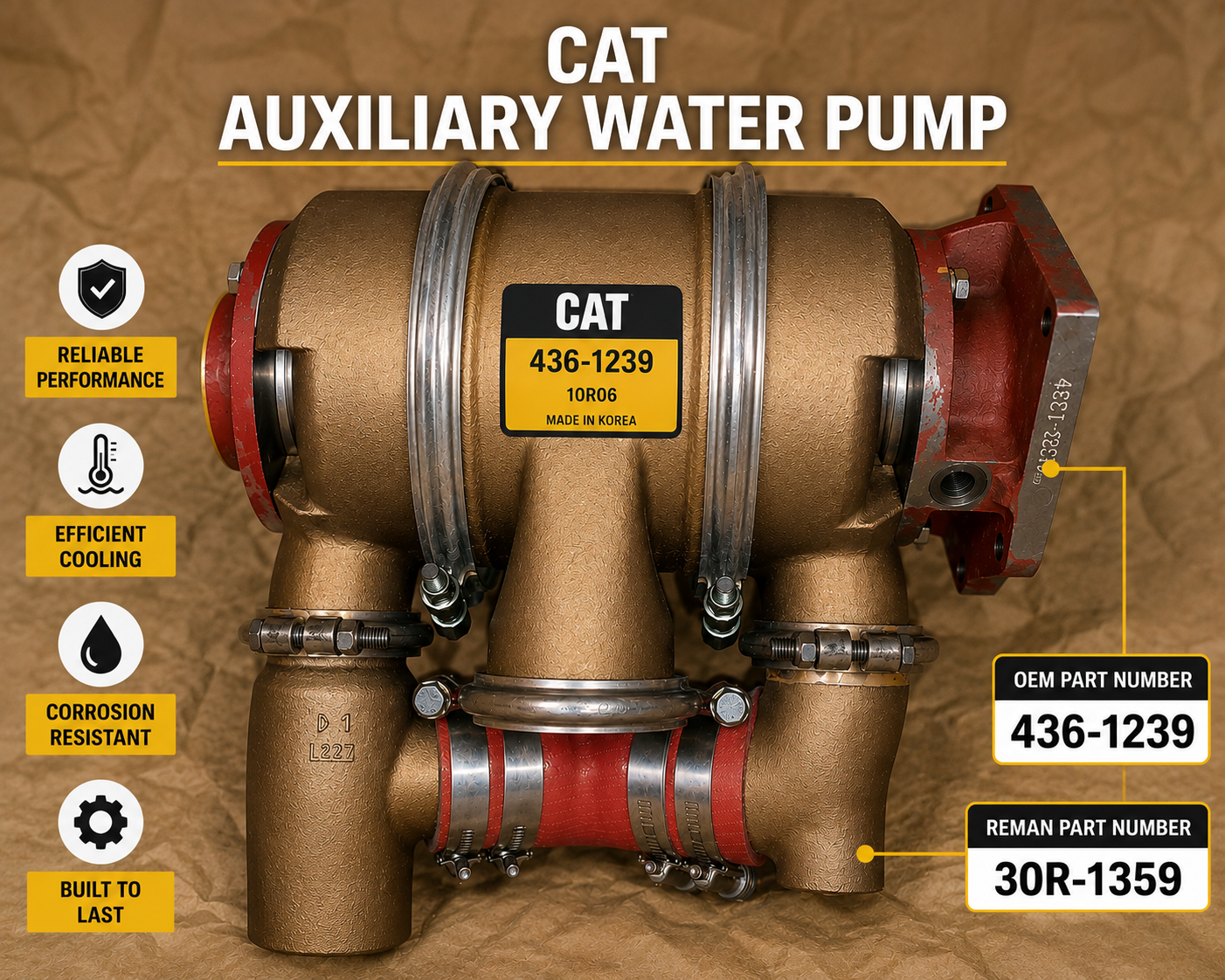
The Caterpillar C32 Sea Water Pump 436-1239 is a critical component of the marine engine cooling system. Whether your Caterpillar C32 powers a commercial vessel, workboat, yacht, or generator set, the sea water pump ensures efficient heat transfer, helping maintain the engine's operating temperature and preventing costly overheating.
Understanding how the pump works, recognizing early signs of wear, and following a preventive maintenance schedule can significantly improve reliability while reducing unexpected downtime.
What Does the Caterpillar C32 Sea Water Pump Do?
The Caterpillar C32 Sea Water Pump (436-1239) circulates seawater through the engine's cooling circuit. The seawater absorbs heat from the heat exchanger before being discharged overboard, allowing the engine coolant to remain within the manufacturer's recommended operating temperature.
Without proper seawater circulation, engine temperatures can quickly rise, increasing the risk of:
- Engine overheating
- Reduced engine performance
- Damage to heat exchangers
- Turbocharger overheating
- Premature engine wear
- Expensive repairs and downtime
For marine operators, maintaining a healthy sea water pump is essential for reliable engine performance.
Is There a Fixed Lifespan?
One of the most common questions is:
How long does the Caterpillar 436-1239 sea water pump last?
The answer is that there is no fixed service life. Pump longevity depends on several operating factors, including:
- Total engine operating hours
- Water quality
- Saltwater exposure
- Cooling system maintenance
- Operating environment
- Frequency of inspections
A vessel operating continuously in harsh saltwater conditions may experience faster wear than one operating in cleaner water with regular preventive maintenance.
Routine inspections remain the best way to maximize service life.
Common Warning Signs of a Failing Sea Water Pump
Early detection can prevent major engine damage.
Inspect the Caterpillar C32 Sea Water Pump for the following symptoms:
Water Leaks
Water leaking around the shaft or seals may indicate worn mechanical seals or damaged sealing surfaces.
Bearing Noise
Grinding or unusual bearing noise often signals bearing wear and should be addressed immediately.
Excessive Shaft Play
Movement in the pump shaft can indicate worn bearings or shaft damage, eventually leading to seal failure.
Corrosion
Marine environments naturally expose pumps to corrosion. Excessive corrosion may weaken the housing and reduce cooling efficiency.
Rising Engine Temperature
If the cooling system cannot circulate sufficient seawater, engine temperatures may increase, potentially causing overheating.
Preventive Maintenance Tips
Routine maintenance helps extend the life of the Caterpillar 436-1239 Sea Water Pump.
Recommended inspections include:
- Check for external leaks
- Inspect bearings for noise
- Verify shaft movement
- Examine seals for wear
- Inspect the housing for corrosion
- Monitor engine operating temperature
- Flush the cooling system according to Caterpillar maintenance recommendations
Preventive maintenance costs significantly less than emergency repairs.
Can the Caterpillar 436-1239 Sea Water Pump Be Remanufactured?
Yes.
Many Caterpillar sea water pumps can be professionally remanufactured when the housing remains serviceable.
A quality remanufacturing process typically includes:
- Complete disassembly
- Thorough cleaning
- Housing inspection
- Shaft inspection
- Replacement of bearings
- Replacement of seals
- Replacement of worn internal components
- Pressure testing
- Final quality inspection
Professional remanufacturing can restore reliable cooling system performance while offering a cost-effective alternative to purchasing a new pump.
OEM and Reman Part Numbers
The official Caterpillar part numbers are:
| DescriptionPart Number | |
| OEM Sea Water Pump | 436-1239 |
| Caterpillar Reman | 30R-1359 |
Using genuine Caterpillar components or professionally remanufactured replacements helps ensure proper fit, cooling efficiency, and long-term reliability.
Why Regular Inspection Matters
The sea water pump operates continuously whenever the engine is running.
Ignoring small leaks, bearing noise, or shaft wear can eventually lead to cooling system failure, overheating, and expensive engine repairs.
Scheduling regular inspections during routine maintenance allows marine engineers to identify wear before it becomes a major problem.
Final Thoughts
The Caterpillar C32 Sea Water Pump 436-1239 plays a vital role in protecting one of Caterpillar's most widely used marine engines. While there is no predetermined replacement interval, routine inspections and preventive maintenance can significantly extend pump life and improve engine reliability.
Understanding the early warning signs of wear, maintaining the cooling system, and selecting the correct replacement or remanufactured pump can help reduce downtime and keep your vessel operating efficiently.
If you're looking for genuine OEM or professionally remanufactured Caterpillar marine engine parts, choosing the correct part number is essential for maintaining the performance and reliability of your cooling system.
Frequently Asked Questions
What is the Caterpillar C32 Sea Water Pump part number?
The OEM part number is 436-1239.
What is the Caterpillar Reman replacement number?
The official Caterpillar Reman part number is 30R-1359.
What are the signs of a failing sea water pump?
Common signs include water leaks, bearing noise, shaft play, corrosion, and rising engine temperatures.
Can the Caterpillar 436-1239 Sea Water Pump be remanufactured?
Yes. Many pumps can be professionally remanufactured by replacing worn bearings, seals, and other internal components after a full inspection and pressure test.
How can I extend the life of my sea water pump?
Regular inspections, preventive maintenance, monitoring for leaks or unusual noises, and maintaining a clean cooling system are the best ways to maximize pump service life.