
Caterpillar 3500 Engine Oil Pump: Why Is It So Important? A Marine Engineer Answers the Most Common Questions
Caterpillar 3500 Engine Oil Pump: Why Every Marine Engineer Pays Attention to It
Imagine starting your Caterpillar 3500 engine and seeing the oil pressure gauge stay lower than normal.
Your first thought might be:
"Is the engine worn out?"
Not necessarily.
One of the first components experienced marine engineers investigate is the Caterpillar 3500 engine oil pump. Although it's hidden inside the front of the engine, it performs one of the most important jobs on board.
Without it, even the strongest Caterpillar engine would only run for a very short time.
Let's answer the questions that marine engineers, mechanics, and vessel owners ask most often.
What does the Caterpillar 3500 engine oil pump actually do?
Think of the Caterpillar 3500 engine oil pump as the engine's heart.
Instead of pumping blood, it circulates clean engine oil to every moving part.
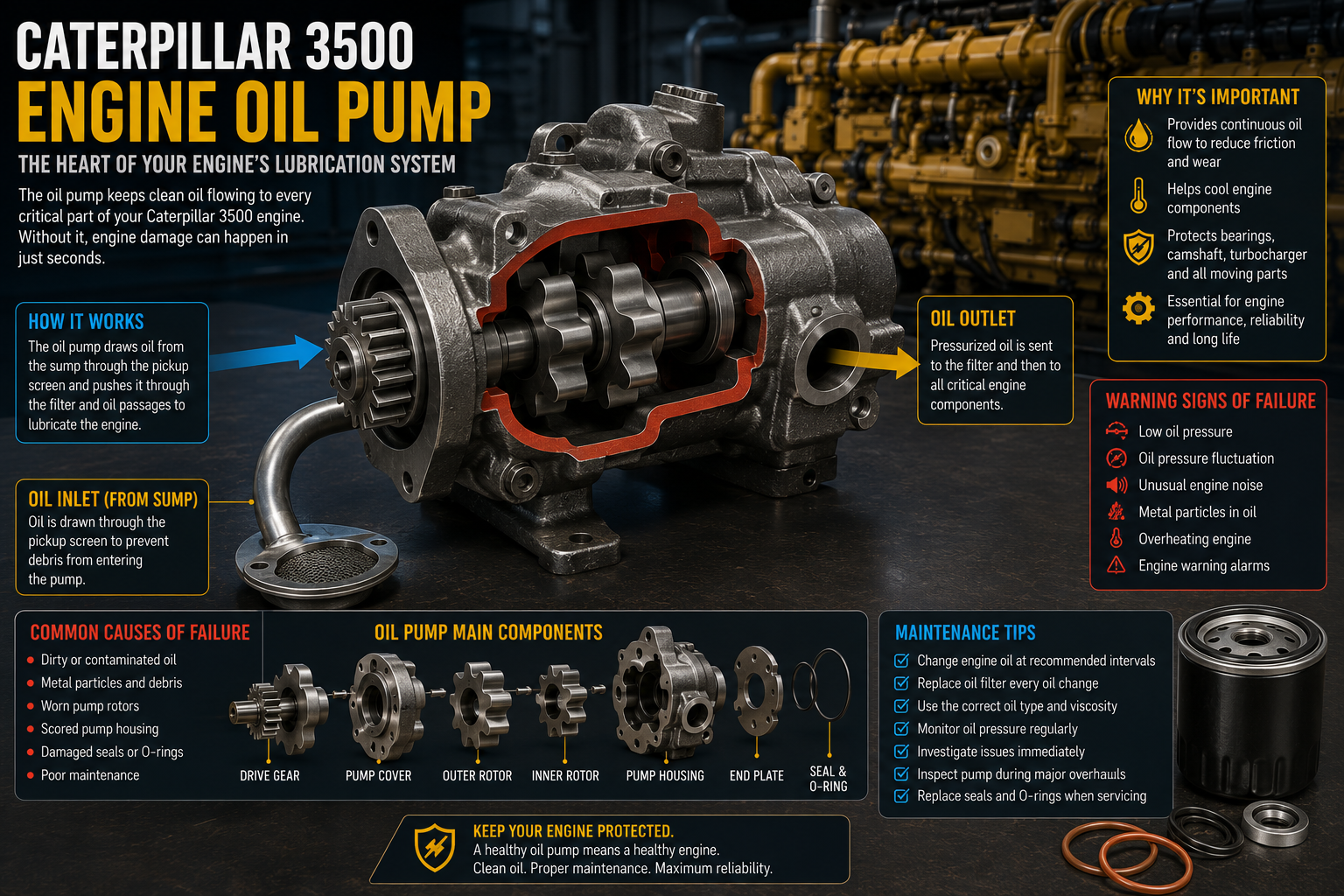
As soon as the engine starts, the oil pump draws oil from the sump through the suction system and pushes it through the oil filter and lubrication galleries before it reaches critical components such as:
- Main bearings
- Connecting rod bearings
- Camshaft bearings
- Rocker arms
- Turbochargers
- Timing gears
Every one of these parts depends on a continuous supply of clean, pressurized oil.
If that flow stops, damage can begin within seconds. Marine service information also emphasizes careful inspection of the pump housing, rotors, O-rings, and sealing surfaces whenever the pump is removed for service.
Why is the Caterpillar 3500 engine oil pump so important?
A diesel engine contains hundreds of metal components moving at high speed.
Without lubrication:
- Metal rubs directly against metal.
- Friction increases rapidly.
- Temperatures rise.
- Bearings begin to wear.
- Engine components can seize.
The Caterpillar 3500 engine oil pump keeps a protective oil film between these moving parts, reducing wear and helping carry heat away from loaded components.
Does the oil pump create oil pressure?
This is one of the biggest misconceptions.
Many people believe the pump "makes pressure."
In reality, the Caterpillar 3500 engine oil pump creates oil flow.
Oil pressure develops because that flowing oil meets resistance as it passes through the engine's bearings, passages, and clearances. If the pump cannot supply enough flow—or if there is excessive internal wear elsewhere in the engine—the oil pressure will drop.
What causes a Caterpillar 3500 engine oil pump to fail?
Most oil pumps don't suddenly stop working.
Problems usually develop gradually.
Common causes include:
- Dirty engine oil
- Metal contamination
- Worn pump rotors
- Scored pump housing
- Damaged O-rings or seals
- Poor maintenance
- Debris inside the lubrication system
Marine repair procedures recommend thoroughly cleaning every pump component and inspecting the rotors and housing for scoring, nicks, or burrs before reassembly because these defects can reduce pump efficiency.
Can dirty oil damage the oil pump?
Absolutely.
Engine oil doesn't only lubricate the engine—it also lubricates the pump itself.
When the oil becomes contaminated with carbon, dirt, or metal particles, those contaminants circulate through the pump.
Over time they wear the precision-machined rotors and the pump housing.
As the internal clearances increase, the pump becomes less efficient and oil pressure may begin to fall.
That's why regular oil and filter changes are one of the best ways to protect the Caterpillar 3500 engine oil pump.
What are the warning signs of a failing Caterpillar 3500 engine oil pump?
Fortunately, the engine usually gives you several warnings.
Watch for:
- Low oil pressure
- Oil pressure that fluctuates
- Engine warning alarms
- Unusual bearing noise
- Increased engine temperature
- Turbocharger lubrication problems
- Metal particles during oil inspection
- Faster-than-normal engine wear
Never ignore a low oil pressure warning.
It could be telling you that the lubrication system needs immediate attention.
Can low oil pressure always be blamed on the oil pump?
No.
This is another common misunderstanding.
Low oil pressure can also be caused by:
- Low engine oil level
- Worn crankshaft bearings
- Blocked oil pickup screen
- Clogged oil filters
- Faulty pressure relief valve
- Incorrect oil viscosity
- Internal engine wear
The Caterpillar 3500 engine oil pump should always be inspected as part of the diagnosis—not automatically blamed.
What is inspected when an oil pump is removed?
During overhaul, technicians don't simply clean the pump and reinstall it.
They carefully inspect:
- Pump rotors
- Pump housing
- Housing plate
- O-ring sealing surfaces
- Drive components
- Wear marks
- Scoring
- Burrs
- Relief valve components
If wear exceeds service limits, replacing worn parts is usually the safest option. Service procedures also recommend replacing sealing O-rings rather than reusing old ones to help prevent leaks.
Can poor maintenance shorten oil pump life?
Definitely.
The oil pump depends on clean oil every second the engine is running.
Skipping oil changes or delaying filter replacement allows contaminants to circulate through the entire lubrication system.
Eventually those particles begin wearing not only the pump but also the bearings, turbochargers, and camshaft.
Routine maintenance is much less expensive than rebuilding a damaged engine.
How can you extend the life of a Caterpillar 3500 engine oil pump?
Fortunately, protecting the pump isn't complicated.
Good maintenance habits include:
- Change engine oil at the recommended service interval.
- Replace the oil filter every oil change.
- Use the correct engine oil grade.
- Monitor oil pressure during operation.
- Investigate oil pressure changes immediately.
- Inspect the lubrication system during major overhauls.
- Replace damaged seals and O-rings during pump servicing.
- Keep the engine internally clean by following the manufacturer's maintenance schedule.
These simple practices help keep the Caterpillar 3500 engine oil pump working efficiently for thousands of operating hours.
Final Thoughts
The Caterpillar 3500 engine oil pump is one of the most critical components in the engine's lubrication system. While it often goes unnoticed, it is constantly supplying the oil that protects bearings, camshafts, turbochargers, and other vital engine parts.
The good news is that oil pump problems are often preventable. Clean oil, timely filter changes, regular oil pressure monitoring, and careful inspection during scheduled maintenance can greatly extend the life of both the pump and the engine.
If your Caterpillar 3500 engine begins showing low oil pressure, unusual noises, or lubrication warnings, don't ignore the signs. Finding the root cause early can help prevent severe engine damage and keep your vessel operating reliably for many thousands of hours.