
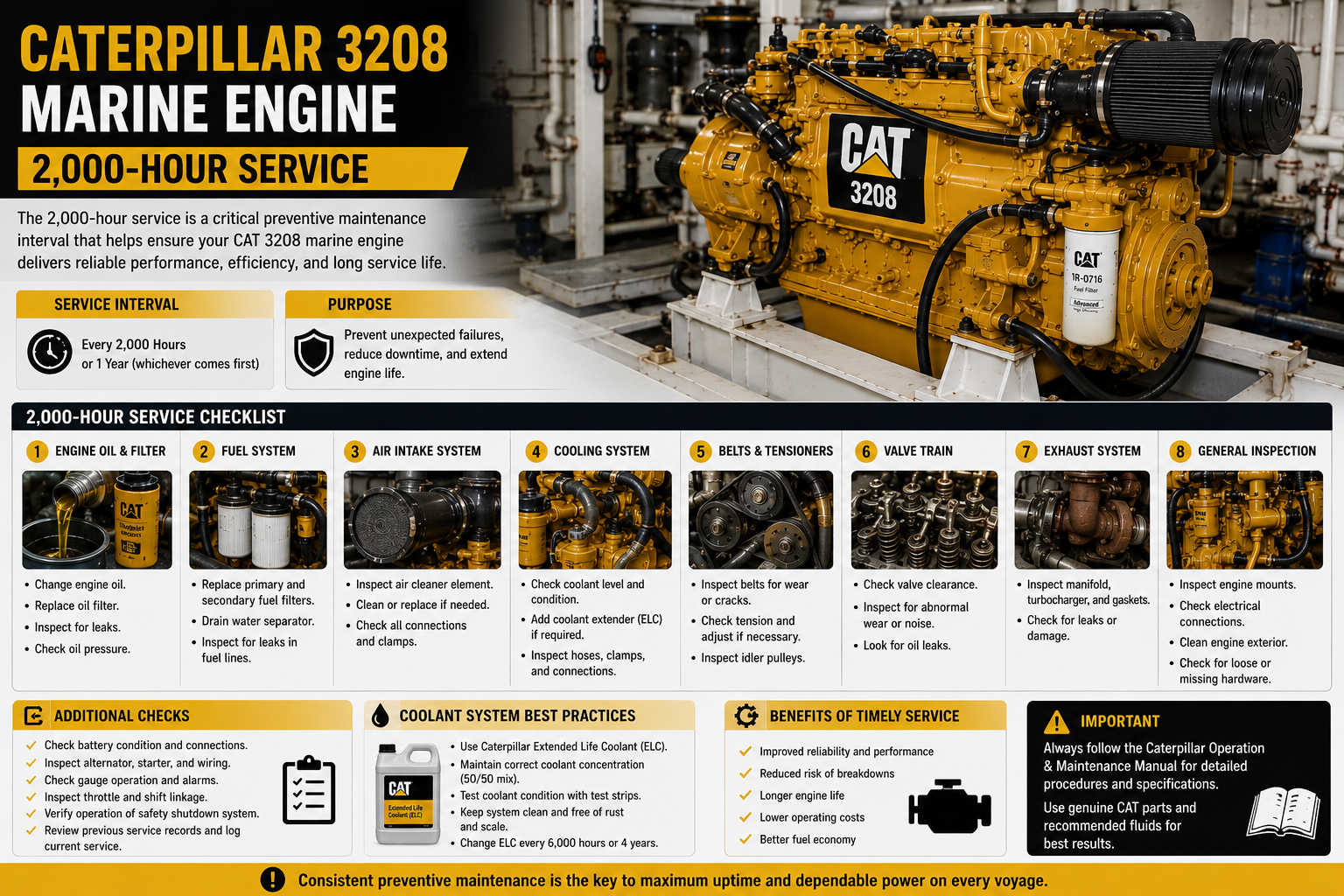

Caterpillar 3208 Marine Engine: Complete 2,000-Hour Maintenance Guide
Caterpillar 3208 Marine Engine: What Should Be Inspected Every 2,000 Service Hours?
Introduction
Routine maintenance plays a significant role in extending the service life of every Caterpillar 3208 Marine Engine, but some service intervals require a more comprehensive inspection than the daily and weekly checks carried out in the engine room.
The 2,000-hour maintenance interval is one of those important milestones.
By this point, the engine has accumulated thousands of operating hours under varying loads and operating conditions. Although many components may continue to function normally, this scheduled inspection provides an opportunity to identify wear before it develops into reduced performance or unexpected downtime.
Rather than focusing on one individual component, the 2,000-hour service evaluates several critical systems that support engine reliability, including the charging system, valve train, fuel system, cooling system, turbocharger, engine mounting, and starting system.
At Alfa Marine Spare Parts, we work with marine engineers, chief engineers, technical superintendents, shipyards, and vessel owners worldwide to help identify quality replacement parts and provide practical maintenance guidance. In this guide, we'll explain why the 2,000-hour service matters, what components should be inspected, and how preventive maintenance contributes to reliable long-term engine operation.
Table of Contents
- Why the 2,000-Hour Service Matters
- Inspecting the Alternator
- Inspecting the Crankshaft Vibration Damper
- Inspecting Engine Mounts
- Inspecting and Adjusting Valve Lash
- Testing or Exchanging Fuel Injection Nozzles
- Inspecting or Adjusting Fuel Ratio Control
- Inspecting the Heat Exchanger
- Inspecting the Starting Motor
- Inspecting the Turbocharger
- Engine Room Insight
- Chief Engineer's Tip
- Frequently Asked Questions
- Related Caterpillar 3208 Marine Engine Parts
- Why Choose Alfa Marine Spare Parts
- Technical Reference
- Final Thoughts
Why the 2,000-Hour Service Matters
Unlike routine oil and filter changes, the 2,000-hour maintenance interval focuses on inspecting components that experience gradual wear throughout normal engine operation.
Many of these parts continue functioning long after minor wear begins to develop, making scheduled inspections an important part of preventive maintenance.
This service interval helps marine engineers identify components that may require adjustment, cleaning, testing, or replacement before they affect engine reliability.
A structured inspection programme can help:
- Reduce unplanned downtime.
- Improve engine reliability.
- Maintain efficient engine performance.
- Extend component service life.
- Support safer vessel operation.
Inspecting the Alternator
The alternator supplies electrical power while charging the vessel's batteries.
During the 2,000-hour inspection, marine engineers commonly examine:
- Drive belt condition.
- Belt tension.
- Electrical connections.
- Mounting bolts.
- Signs of overheating.
- Bearing condition.
- Charging performance.
A reliable charging system helps ensure that batteries remain fully charged and that onboard electrical equipment operates correctly.
Inspecting the Crankshaft Vibration Damper
The crankshaft vibration damper helps reduce torsional vibrations generated during engine operation.
Routine inspection may include checking for:
- Oil leakage.
- Cracks.
- Rubber deterioration.
- Loose fasteners.
- Physical damage.
- Signs of excessive vibration.
A damaged vibration damper may increase stress on the crankshaft and other rotating components.
Inspecting Engine Mounts
Engine mounts help support the engine while reducing vibration transmitted to the vessel.
Inspection typically includes:
- Mount alignment.
- Rubber condition.
- Corrosion.
- Loose mounting hardware.
- Signs of excessive movement.
Worn engine mounts may contribute to increased vibration, driveline misalignment, and reduced operator comfort.
Inspecting and Adjusting Valve Lash
Correct valve lash is essential for efficient engine breathing and reliable performance.
During scheduled maintenance, valve lash should be checked according to the manufacturer's recommended procedures.
Correct valve adjustment helps:
- Maintain engine efficiency.
- Support proper combustion.
- Improve fuel economy.
- Protect valve train components.
- Promote smooth engine operation.
Because valve clearance changes gradually with normal wear, periodic inspection remains an important preventive maintenance task.
Engine Room Insight
Experienced marine engineers understand that engine performance often begins to decline gradually rather than suddenly. The 2,000-hour service provides an opportunity to detect these subtle changes before they become major mechanical problems.
Small adjustments and careful inspections performed during scheduled maintenance frequently prevent larger repairs later.
Chief Engineer's Tip
When carrying out the 2,000-hour inspection, don't evaluate components individually.
Instead, consider how the charging system, valve train, cooling system, fuel system, and turbocharger work together.
Looking at the engine as one integrated system often helps identify maintenance issues that might otherwise be overlooked.
We'll continue with:
- Testing or Exchanging Fuel Injection Nozzles
- Inspecting or Adjusting Fuel Ratio Control
- Inspecting the Heat Exchanger
- Inspecting the Starting Motor
- Inspecting the Turbocharger
- Common Inspection Findings
- Preventive Maintenance Checklist
- Best Practices for Long-Term Reliability
Fuel System, Cooling System & Turbocharger Inspection for the Caterpillar 3208 Marine Engine
Testing or Exchanging Fuel Injection Nozzles
The fuel injection nozzles are responsible for delivering fuel into the combustion chamber at the correct pressure and spray pattern.
After thousands of operating hours, injector performance can gradually decline due to normal wear, deposits, or contamination.
During the 2,000-hour maintenance interval, marine engineers often test the injectors to verify that they continue to operate within the manufacturer's specifications.
Typical inspections include:
- Injector spray pattern.
- Opening pressure.
- Leakage.
- Injector body condition.
- Carbon deposits.
- Nozzle wear.
If testing indicates that an injector is no longer performing correctly, replacement or professional servicing should be considered.
A properly operating fuel injection system helps maintain:
- Smooth engine operation.
- Efficient fuel combustion.
- Reduced exhaust emissions.
- Consistent engine power.
- Improved fuel economy.
Inspecting or Adjusting Fuel Ratio Control
The fuel ratio control system helps regulate fuel delivery during engine operation, particularly during acceleration and changes in engine load.
During scheduled maintenance, marine engineers may inspect:
- External linkage condition.
- Adjustment settings.
- Free movement of mechanical components.
- Signs of wear.
- Fuel system connections.
A correctly functioning fuel ratio control system helps reduce excessive exhaust smoke during acceleration while supporting smooth engine response.
Any adjustments should always be carried out in accordance with the applicable manufacturer specifications.
Inspecting the Heat Exchanger
The heat exchanger plays a vital role in maintaining the correct operating temperature of the Caterpillar 3208 Marine Engine.
Its function is to transfer heat from the closed cooling circuit to the raw water system, allowing the engine to operate efficiently under varying load conditions.
During the 2,000-hour inspection, engineers commonly inspect:
- Heat exchanger core.
- End caps.
- Internal passages.
- Corrosion.
- Marine growth.
- Coolant leaks.
- Sealing surfaces.
Restricted coolant flow or fouled heat exchanger passages can reduce cooling efficiency and contribute to increased engine operating temperatures.
Routine inspection helps maintain reliable cooling system performance.
Inspecting the Starting Motor
Although the starting motor operates for only a short time during engine start-up, it is essential for dependable vessel operation.
Inspection typically includes:
- Electrical terminals.
- Mounting bolts.
- Wiring condition.
- Solenoid operation.
- Signs of overheating.
- Mechanical engagement.
A reliable starting system helps reduce unexpected starting problems, particularly after extended periods alongside or during emergency departures.
Inspecting the Turbocharger
The turbocharger is one of the hardest-working components on the Caterpillar 3208 Marine Engine.
Operating at extremely high rotational speeds and temperatures, it plays a major role in engine performance by supplying compressed air to the combustion process.
During scheduled maintenance, engineers commonly inspect:
- Compressor wheel.
- Turbine wheel.
- Shaft movement.
- Bearings.
- Oil seals.
- Housing condition.
- Air duct connections.
The turbocharger should also be inspected for signs of:
- Oil leakage.
- Foreign object damage.
- Carbon deposits.
- Abnormal noise.
- Reduced boost performance.
Routine inspection helps identify wear before it affects engine efficiency or reliability.
Common Inspection Findings
During the 2,000-hour maintenance interval, engineers frequently identify minor issues that can be corrected before they become major repairs.
Examples include:
- Loose electrical connections.
- Worn hoses.
- Belt wear.
- Minor coolant leaks.
- Early bearing wear.
- Dirty heat exchanger cores.
- Injector deposits.
- Turbocharger oil seepage.
Addressing these items during scheduled maintenance often reduces future downtime and repair costs.
Best Practices for Long-Term Reliability
Consistent maintenance is one of the most effective ways to maximise the service life of the Caterpillar 3208 Marine Engine.
Recommended practices include:
- Following scheduled maintenance intervals.
- Monitoring engine operating temperatures.
- Inspecting the fuel system regularly.
- Maintaining clean lubrication oil.
- Keeping the cooling system in good condition.
- Monitoring vibration and unusual noises.
- Recording maintenance history.
Small maintenance tasks performed consistently often prevent larger mechanical problems later.
Engine Room Insight
Many experienced Chief Engineers consider the 2,000-hour inspection one of the most valuable preventive maintenance opportunities.
Unlike emergency repairs, scheduled inspections allow maintenance teams to identify gradual wear while the engine is still operating normally.
Correcting these issues early helps maintain engine reliability and supports longer service life.
Chief Engineer's Tip
Don't focus only on the component being inspected.
Ask why wear has occurred.
For example:
✔ Is the cooling system operating efficiently?
✔ Is the lubrication system performing correctly?
✔ Has vibration increased?
✔ Is fuel quality consistent?
Understanding the cause—not just the symptom—helps prevent the same problem from returning.
Marine Engineer's Preventive Maintenance Checklist
Every Day
✔ Check engine temperature.
✔ Monitor oil pressure.
✔ Listen for abnormal noises.
✔ Inspect for leaks.
Weekly
✔ Inspect belts.
✔ Check alternator operation.
✔ Inspect coolant hoses.
✔ Monitor battery charging.
Monthly
✔ Inspect turbocharger externally.
✔ Check engine mounts.
✔ Monitor fuel system performance.
✔ Inspect electrical connections.
Every 2,000 Service Hours
✔ Inspect alternator.
✔ Inspect crankshaft vibration damper.
✔ Inspect engine mounts.
✔ Check and adjust valve lash where required.
✔ Test or replace fuel injection nozzles if necessary.
✔ Inspect fuel ratio control.
✔ Inspect the heat exchanger.
✔ Inspect the starting motor.
✔ Inspect the turbocharger.
Following this maintenance schedule helps improve the long-term reliability of the Caterpillar 3208 Marine Engine while reducing the likelihood of unexpected mechanical failures.
We'll complete the guide with:
- Frequently Asked Questions
- Related Caterpillar 3208 Marine Engine Parts
- Why Choose Alfa Marine Spare Parts
- Industries We Support
- Worldwide Marine Spare Parts Supply
- Browse Our Complete Marine Spare Parts Catalog
- Contact Alfa Marine Spare Parts
- Technical Reference
- Disclaimer
- Final Thoughts
Frequently Asked Questions, Disclaimer & Why Choose Alfa Marine Spare Parts
Frequently Asked Questions About the Caterpillar 3208 Marine Engine 2,000-Hour Service
Regular maintenance raises many practical questions for marine engineers, vessel owners, and technical superintendents. Below are answers to some of the most common questions about the 2,000-hour service for the Caterpillar 3208 Marine Engine.
Why is the 2,000-hour service interval important?
The 2,000-hour maintenance interval focuses on inspecting components that experience gradual wear but may not show obvious signs of failure during routine daily inspections.
These inspections help identify developing issues before they affect:
- Engine performance.
- Fuel efficiency.
- Cooling system operation.
- Starting reliability.
- Overall engine dependability.
Completing scheduled maintenance reduces the risk of unexpected breakdowns and helps maximise engine service life.
Why should valve lash be inspected?
Valve lash gradually changes as engine components wear during normal operation.
Maintaining the correct valve clearance helps:
- Improve combustion efficiency.
- Maintain engine performance.
- Support proper valve operation.
- Reduce unnecessary valve train wear.
- Improve fuel economy.
Valve adjustment should always follow the manufacturer's specifications.
Why inspect the turbocharger during scheduled maintenance?
The turbocharger operates under extremely demanding conditions.
Routine inspection allows engineers to identify:
- Oil leaks.
- Bearing wear.
- Shaft movement.
- Compressor damage.
- Carbon deposits.
- Loose air connections.
Early detection helps prevent reduced engine performance and more extensive repairs.
When should fuel injection nozzles be replaced?
Replacement depends on inspection and testing results rather than operating hours alone.
If injectors show excessive wear, poor spray patterns, leakage, or reduced performance, replacement or professional servicing should be considered.
Maintaining efficient fuel injection supports cleaner combustion and reliable engine operation.
Why inspect engine mounts?
Engine mounts absorb vibration and maintain proper alignment between the engine and drivetrain.
Damaged or worn mounts may contribute to:
- Increased vibration.
- Driveline misalignment.
- Noise.
- Additional stress on surrounding components.
Routine inspection helps maintain smooth engine operation.
How often should the heat exchanger be inspected?
Although major inspections are commonly carried out during scheduled maintenance intervals, the heat exchanger should also be monitored during routine engine room inspections.
Maintaining clean cooling passages helps ensure efficient heat transfer and stable engine temperatures.
Engine Room Insight
Experienced marine engineers understand that the 2,000-hour inspection is not simply a checklist—it is an opportunity to assess the overall condition of the engine.
Small observations made during scheduled maintenance often reveal trends that might otherwise go unnoticed.
A slight increase in vibration, gradual belt wear, changing injector performance, or early signs of turbocharger wear may all indicate maintenance requirements before they become expensive repairs.
Preventive maintenance is built on identifying these trends early.
Chief Engineer's Tip
Whenever carrying out a major inspection, compare current observations with previous maintenance records.
Look for changes in:
✔ Engine temperature.
✔ Oil pressure.
✔ Fuel consumption.
✔ Vibration.
✔ Exhaust appearance.
✔ Starting performance.
✔ Charging system output.
Trend analysis often provides more valuable information than a single inspection.
Marine Engineer's Preventive Maintenance Checklist
Daily
✔ Check engine oil level.
✔ Monitor coolant level.
✔ Inspect for oil or coolant leaks.
✔ Observe engine operating temperature.
✔ Listen for unusual noises.
Weekly
✔ Inspect alternator drive belt.
✔ Check battery charging.
✔ Inspect engine mounts.
✔ Monitor turbocharger operation.
Monthly
✔ Inspect heat exchanger externally.
✔ Inspect electrical connections.
✔ Review fuel system performance.
✔ Check air intake system.
Every 2,000 Service Hours
✔ Inspect alternator.
✔ Inspect crankshaft vibration damper.
✔ Inspect engine mounts.
✔ Check and adjust valve lash.
✔ Test fuel injection nozzles.
✔ Inspect fuel ratio control.
✔ Inspect heat exchanger.
✔ Inspect starting motor.
✔ Inspect turbocharger.
A consistent preventive maintenance programme helps maximise the reliability and operating life of the Caterpillar 3208 Marine Engine.
Related Caterpillar 3208 Marine Engine Parts
During the 2,000-hour service, marine engineers commonly inspect or replace components such as:
- Alternators
- Alternator Belts
- Crankshaft Vibration Dampers
- Engine Mounts
- Valve Train Components
- Fuel Injectors
- Fuel Injection Nozzles
- Fuel Pumps
- Heat Exchangers
- Starting Motors
- Turbochargers
- Turbocharger Repair Kits
- Air Filters
- Oil Filters
- Fuel Filters
- Thermostats
- Water Pumps
- Gasket Sets
Replacing worn components during scheduled maintenance can help improve engine reliability and reduce future downtime.
Why Choose Alfa Marine Spare Parts?
At Alfa Marine Spare Parts, we understand that effective preventive maintenance depends on using the correct replacement parts.
Our experienced team helps customers identify compatible parts for the Caterpillar 3208 Marine Engine using:
- Engine Model
- Engine Serial Number
- Arrangement Number
- Existing Part Numbers
- Technical Documentation
We supply:
- Genuine Marine Parts
- OEM Replacement Parts
- Premium Aftermarket Parts
- Professionally Remanufactured Components
- Complete Engine Overhaul Parts
Whether you're carrying out routine servicing or planning a major engine rebuild, we're ready to help you identify the right solution for your vessel.
Industries We Support
Our customers include:
- Marine Engineers
- Chief Engineers
- Technical Superintendents
- Shipyards
- Commercial Shipping Companies
- Offshore Operators
- Fishing Fleets
- Tugboat Operators
- Passenger Ferry Companies
- Government Fleets
- Naval Operators
- Yacht Management Companies
- Marine Service Companies
- Boat Builders
- Marine Equipment Distributors
Worldwide Marine Spare Parts Supply
Alfa Marine Spare Parts supplies marine engine parts worldwide, including:
- Spain
- Netherlands
- Germany
- Italy
- France
- Norway
- Greece
- United Kingdom
- United States
- Canada
- Brazil
- United Arab Emirates
- Saudi Arabia
- Qatar
- Nigeria
- South Africa
- Singapore
- Australia
We support commercial shipping, offshore operations, fishing vessels, workboats, ferries, patrol craft, and recreational marine operators across major maritime markets.
Browse Our Complete Marine Spare Parts Catalog
Looking for parts for your Caterpillar 3208 Marine Engine?
Browse our complete catalogue:
https://alfamarinespareparts.com/spareparts
We supply marine parts for:
- Caterpillar
- MTU
- Cummins
- Twin Disc
- MAN
- Volvo Penta
- Wärtsilä
- Scania
- Perkins
- Detroit Diesel
- Deutz
- Mitsubishi
- John Deere
- Komatsu
- Doosan
- Yanmar
Disclaimer
This guide is intended for educational and informational purposes to help marine engineers and vessel owners better understand the maintenance requirements of the Caterpillar 3208 Marine Engine.
Inspection procedures, adjustment values, service intervals, and replacement recommendations may vary depending on engine configuration, application, operating conditions, and maintenance history.
Always consult the latest manufacturer service documentation and follow approved maintenance procedures before performing inspections, adjustments, repairs, or component replacements.
Contact Alfa Marine Spare Parts
Need help sourcing parts for your Caterpillar 3208 Marine Engine?
Our experienced team is here to assist.
Website
https://alfamarinespareparts.com
Browse Our Marine Spare Parts Catalog
https://alfamarinespareparts.com/spareparts
request@alfamarinespareparts.com
Providing your engine model, serial number, arrangement number, or existing part number helps us identify compatible replacement parts more efficiently.
Technical Reference
The information in this article is based on recognised marine engineering practices and maintenance principles applicable to heavy-duty marine diesel engines. Service procedures, inspection methods, and maintenance intervals may vary depending on engine configuration and operating conditions. Always consult the appropriate manufacturer documentation before carrying out maintenance or repairs.
Final Thoughts
The 2,000-hour service interval is one of the most valuable opportunities to assess the overall condition of the Caterpillar 3208 Marine Engine. Inspecting critical systems such as the alternator, crankshaft vibration damper, engine mounts, valve train, fuel injection system, heat exchanger, starting motor, and turbocharger helps identify normal wear before it develops into costly repairs or unexpected downtime.
By following a structured preventive maintenance programme and addressing minor issues early, marine engineers can improve engine performance, maintain operational reliability, and extend the service life of the engine. Careful inspections, accurate maintenance records, and quality replacement parts all contribute to dependable operation in demanding marine environments.
At Alfa Marine Spare Parts, we are committed to supporting marine engineers, chief engineers, technical superintendents, shipyards, fleet operators, mechanics, and vessel owners with genuine, OEM, aftermarket, and professionally remanufactured Caterpillar marine engine parts. Whether you're performing scheduled maintenance or preparing for a major overhaul, our experienced team is ready to help you keep your Caterpillar 3208 Marine Engine operating safely, efficiently, and reliably throughout its service life.