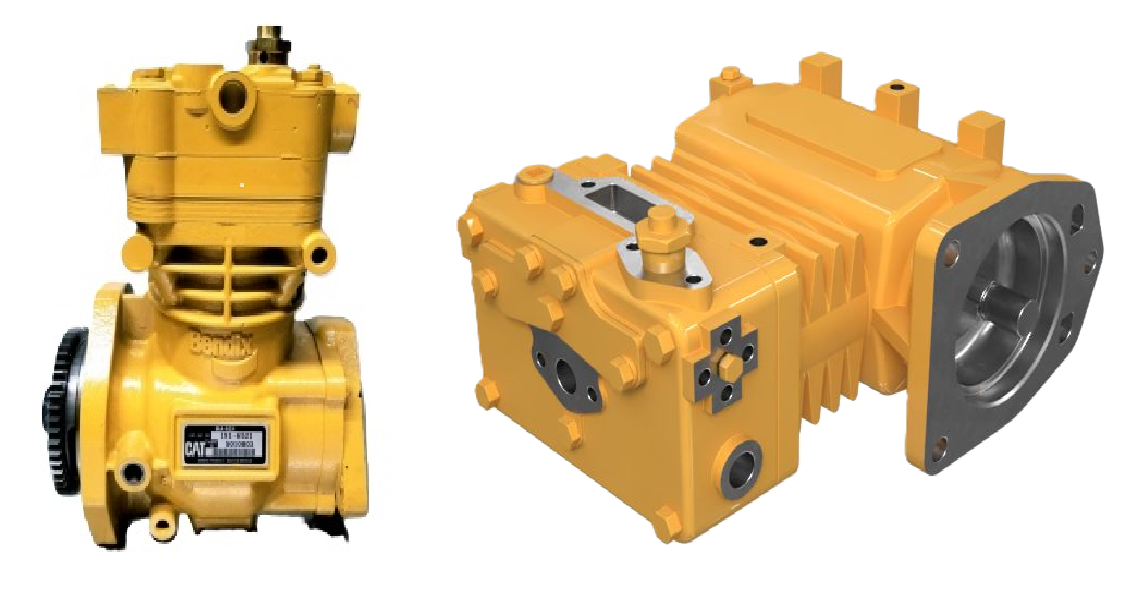
Air compressors are not generally part of the marine main engine or auxiliary systems. However, the device is a crucial integration within the comprehensive air starter system. These devices support multiple applications in bulk carriers. An air compressor integrated within the air starter system provides a continuous supply of compressed air to start the engine. Cat Reman Air Compressors are the best-in-class air starter machinery for ships operating on Caterpillar internal combustion diesel engines. There are various types of marine air compressors in the market. The variations and diverse specifications often confuse shipbuilders and vessel owners when choosing a model to ship engine retrofits. Here is a comprehensive guide to clarify these doubts when pairing your marine engine with the recommended air starter system, helping buyers make informed decisions.
What is an Air Compressor in a Marine Air Starter System?
There are various types of air compressors on a ship. The primary role of a compressor is to compress gases at the required pressure. However, such equipment addresses diverse applications to maintain the required flow rate and air pressure across marine machinery. Compressors are integral components of air starter systems, pneumatic control systems, turbochargers, and other systems. The compressor in the air starter system supplies the engine components with air at the required high temperature and pressure. It resumes operation at the time the marine diesel engine starts. The engine needs some time to reach the necessary heat and pressure to achieve high-quality combustion, resulting in enhanced energy output. The air starter system, comprising seamless compressed air supply equipment, performs its function from the moment the engine is started. It runs continuously to supply compressed air to the combustion cylinders until the engine attains the required pressure and heat to conduct the combustions independently.Functions and Uses of Air Compressors in Watercrafts
Air compressors of various types, sizes, and models perform one or more of the following functions on board in heavy vessels:Pressurized, Hot, and Compressed Air Supply to the Engine
When integrated into an air starter system, the compressor's primary role is to provide air supply at the required pressure and temperature to the engine. The compressed air supports regular combustion at optimum quality when the engine is cold or operating in frigid temperatures. Moreover, the air compressor ensures that the engine produces high-quality energy from the first combustion cycle. It means enhanced fuel efficiency, less exhaust gases, and maximum power output without any stress. Over the years, this has contributed to an extended machinery lifecycle in the engine room.Maintain the Required Pressure for Specific Application
The chief purpose of using a compressor in a ship is to regulate the supply of compressed air at the required pressure. For instance, an air starter system enables the compressed gases to flow at 30 bar pressure, facilitating combustion in marine diesel engines. Similarly, pneumatic control systems require an air supply at a low pressure (preferably 10 bar or less).Control Pneumatic Clutch Operations
The compressed air in pneumatic control systems facilitates the clutches to use pressure springs to establish contact between the gearbox and the engine cooling system. Furthermore, the compressed air passes through the activated magnetic valve assembly towards the pneumatic clutch to provide support when coupling the two power shafts.Other Functions
Air compressors perform one or more of the following functions across various machinery installations on a bulk carrier:- Compress the refrigerant vapors
- Blow cleaning the oil filters and the Kingstone in the main engine
- Pushing out the smoke and soot through the exhaust valves
- Charge the oxygen cylinders at a high-pressure
- Generate foam in fire extinguisher cylinders