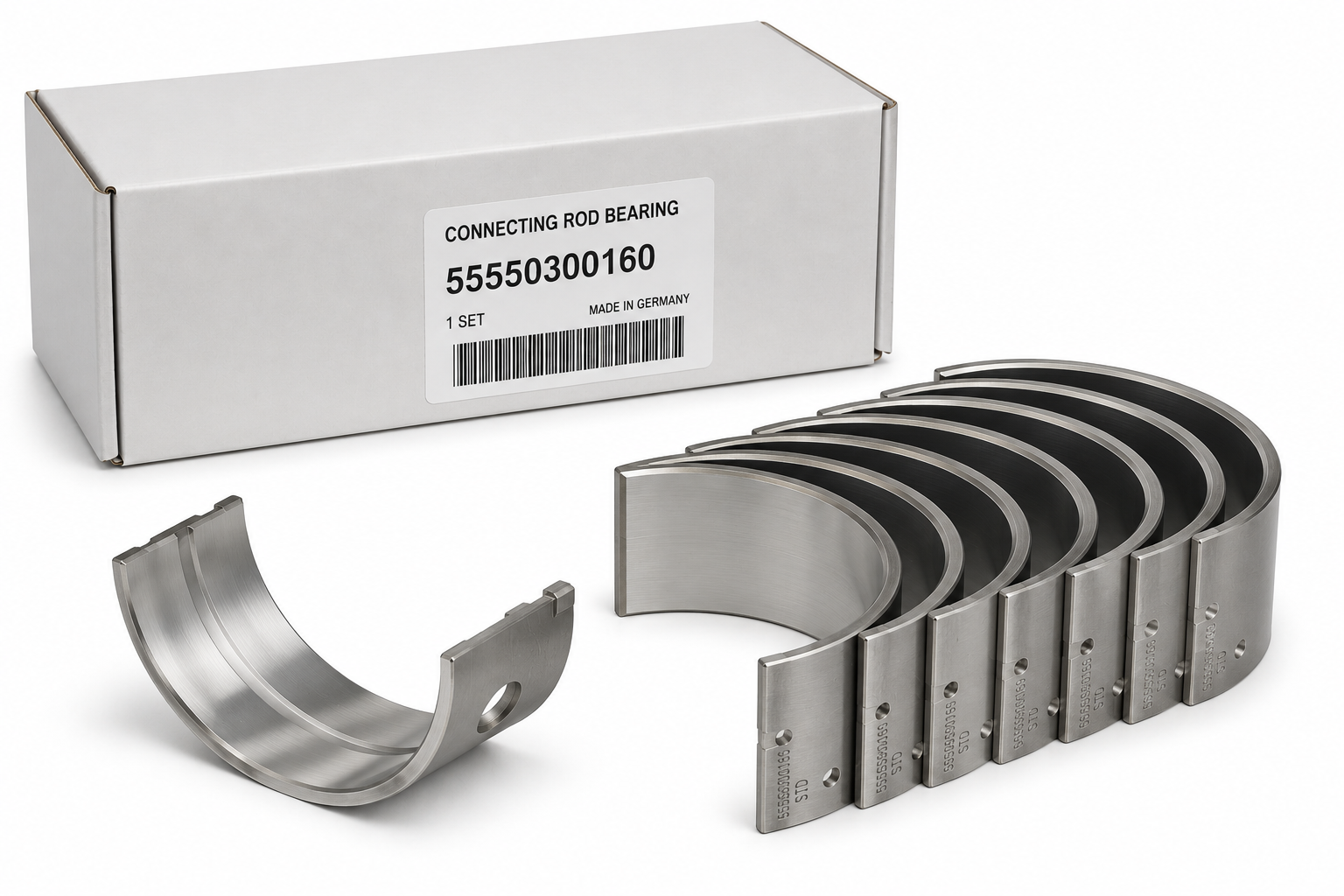

Buy MTU 55550300160 Connecting Rod Bearing: Why Bearing Quality Is Critical for MTU Series 4000 Engines
A Small Bearing That Protects One of the Engine's Most Important Components
The MTU 55550300160 Connecting Rod Bearing is one of the most critical internal components found in many MTU Series 4000 marine diesel engines. Although relatively small compared to major engine assemblies, this precision-engineered bearing carries enormous loads while allowing the connecting rod to rotate smoothly around the crankshaft journal.
For commercial vessels, offshore support vessels, naval ships, fast ferries, workboats, and luxury yachts, bearing reliability directly influences engine life, fuel efficiency, and operational safety.
If you are looking to Buy MTU 55550300160 Connecting Rod Bearing, selecting a trusted supplier is just as important as selecting the correct part number.
Why This Matters
Connecting rod bearings operate under some of the harshest conditions inside a marine diesel engine.
They must withstand:
- Extremely high combustion forces.
- Continuous crankshaft rotation.
- Heavy engine loads.
- High oil temperatures.
- Long operating hours.
- Constant vibration.
If lubrication is interrupted or bearing clearance becomes excessive, serious engine damage can occur within minutes.
Replacing worn bearings during scheduled overhauls is significantly less expensive than replacing a damaged crankshaft or connecting rod.
Engineering Lesson
Connecting Rod Bearings Depend on Clean Lubrication
Unlike rolling bearings, connecting rod bearings rely on a thin hydrodynamic film of engine oil.
When oil pressure and viscosity remain within specification, the crankshaft journal rides on this oil film without direct metal-to-metal contact.
However, several conditions can damage the bearing:
- Low oil pressure.
- Oil contamination.
- Incorrect lubricant viscosity.
- Overheating.
- Fuel dilution.
- Dirty oil filters.
- Delayed oil changes.
Routine lubrication system maintenance is essential for maximising bearing life.
Engine Room Reality
Experienced marine engineers rarely replace connecting rod bearings without inspecting related engine components.
During an overhaul they typically inspect:
- Crankshaft journals.
- Connecting rods.
- Main bearings.
- Oil pump.
- Oil coolers.
- Oil filters.
- Lubrication passages.
- Pistons.
- Cylinder liners.
Replacing only the bearing without identifying the cause of wear can lead to repeat failures.
Chief Engineer's Notebook
"Bearings rarely fail without warning. Oil analysis and trend monitoring usually reveal the problem long before the engine does."
Successful marine maintenance focuses on preventing failures—not reacting to them.
MTU 55550300160 Connecting Rod Bearing: Related Components to Inspect
Crankshaft
Inspect for:
- Journal wear.
- Surface scoring.
- Heat discoloration.
- Cracks.
- Proper journal dimensions.
Connecting Rods
Check:
- Alignment.
- Big-end bore condition.
- Bolt condition.
- Surface damage.
Main Bearings
Main bearing condition often reflects the overall health of the lubrication system.
Inspect for:
- Wear patterns.
- Heat damage.
- Fatigue.
- Oil starvation.
Oil Pump
The oil pump supplies lubrication to every bearing inside the engine.
Inspect:
- Oil pressure.
- Internal wear.
- Pressure relief valve operation.
Oil Filters
Restricted or contaminated filters reduce lubrication quality.
Routine replacement protects all engine bearings.
Oil Coolers
Efficient oil cooling maintains proper lubricant viscosity and protects bearing surfaces.
Inspect for:
- Blockage.
- Internal leaks.
- Corrosion.
Pistons and Cylinder Liners
Excessive combustion temperatures can increase bearing loading.
Inspect:
- Piston condition.
- Liner wear.
- Ring condition.
Engine Monitoring System
Review historical trends for:
- Oil pressure.
- Oil temperature.
- Engine load.
- Fuel dilution.
- Bearing metal content from oil analysis.
Real Marine Maintenance Scenario
A Scheduled Bearing Replacement Prevented a Major Engine Failure
A commercial offshore support vessel powered by MTU Series 4000 engines was approaching its planned overhaul interval. The engines were still operating within normal parameters, but the engineering crew noticed subtle changes during routine monitoring:
- Slight reduction in oil pressure at operating temperature.
- A gradual increase in iron and copper particles in oil analysis reports.
- Minor vibration changes under heavy engine load.
- No engine alarms or abnormal exhaust smoke.
Rather than waiting for a failure, the Chief Engineer scheduled a planned inspection.
During the overhaul, technicians discovered:
- Wear on several MTU 55550300160 Connecting Rod Bearings.
- Light polishing on one crankshaft journal.
- Minor debris inside an oil gallery.
- Early wear on adjacent main bearings.
The connecting rod bearings were replaced with correctly specified replacement components, the crankshaft journals were measured and found to remain within tolerance, and the lubrication system was thoroughly cleaned.
Following reassembly:
- Oil pressure returned to normal.
- Engine vibration decreased.
- Oil analysis results showed significantly reduced wear metals.
- The engine returned to reliable service without requiring an expensive crankshaft replacement.
This example demonstrates why replacing connecting rod bearings during scheduled maintenance is far more economical than repairing catastrophic engine damage.
Oil Analysis: Your First Warning of Bearing Wear
Routine oil analysis is one of the most effective predictive maintenance tools for MTU Series 4000 engines.
It allows engineers to identify bearing wear long before serious engine damage occurs.
Iron
Iron often indicates wear from:
- Crankshaft journals
- Cylinder liners
- Camshafts
- Timing gears
Increasing trends should always be investigated.
Copper
Copper commonly originates from bearing shells and bushings.
An increasing copper trend often provides one of the earliest warnings of connecting rod bearing wear.
Lead
Lead is frequently associated with bearing overlay material.
Unexpected increases indicate that bearing surfaces should be inspected.
Aluminium
Aluminium may originate from pistons or bearing housings.
Trend monitoring helps determine whether wear is progressing.
Silicon
Silicon often indicates airborne dirt entering the engine.
Clean air filtration helps protect bearing surfaces from abrasive particles.
Fuel Dilution
Fuel contamination reduces oil viscosity, weakening the protective oil film between the crankshaft and bearing.
Water Contamination
Water contamination accelerates corrosion and damages bearing materials.
Immediate corrective action is recommended.
Oxidation
Oxidation indicates lubricant ageing and helps determine the correct oil replacement interval.
Viscosity
Correct oil viscosity is essential for maintaining the hydrodynamic oil film that protects connecting rod bearings.
Routine oil analysis significantly extends engine life while reducing unexpected downtime.
Engineer's Toolbox
Connecting Rod Bearing Inspection Checklist
During scheduled overhauls, experienced marine engineers inspect:
✔ Connecting rod bearings.
✔ Crankshaft journals.
✔ Main bearings.
✔ Oil pump.
✔ Oil pressure relief valve.
✔ Oil galleries.
✔ Oil coolers.
✔ Oil filters.
✔ Connecting rod bolts.
✔ Lubrication history.
Small wear patterns identified during inspection often prevent major engine failures.
Preventive Maintenance Checklist
Daily
- Monitor oil pressure.
- Check engine oil level.
- Observe engine temperatures.
- Listen for unusual knocking noises.
- Monitor engine vibration.
Weekly
- Inspect oil filters.
- Review engine monitoring data.
- Check for oil leaks.
- Inspect oil coolers.
- Verify lubricant condition.
Every 250–500 Operating Hours
- Replace oil filters.
- Replace engine oil according to maintenance schedule.
- Perform laboratory oil analysis.
- Inspect lubrication system.
- Review wear metal trends.
Every 1,000 Operating Hours
- Inspect crankshaft condition.
- Check connecting rod clearances.
- Inspect main bearings.
- Review oil pressure history.
- Compare historical oil analysis reports.
Long-Term Maintenance
- Maintain detailed service records.
- Continue routine oil analysis.
- Replace bearings during scheduled overhauls.
- Monitor lubrication system performance.
- Investigate abnormal wear trends immediately.
Marine Engineer Tip
Connecting rod bearings almost always provide warning signs before failure. Regular oil analysis and pressure trend monitoring allow engineers to replace bearings before crankshaft damage occurs.
Marine Engineer Quote
"A healthy bearing rides on oil—not on metal."
Common Maintenance Mistakes
Avoid these common mistakes:
- Ignoring gradual oil pressure loss.
- Delaying oil analysis.
- Extending oil change intervals.
- Installing bearings without measuring crankshaft journals.
- Reusing damaged connecting rod bolts.
- Ignoring contaminated lubricating oil.
- Overlooking oil cooler cleanliness.
- Waiting for engine knocking before investigating bearing wear.
Frequently Asked Questions
What is the MTU 55550300160 Connecting Rod Bearing?
The MTU 55550300160 Connecting Rod Bearing is a precision bearing that supports the connection between the connecting rod and crankshaft journal, allowing smooth rotation while carrying extremely high combustion loads.
When should connecting rod bearings be replaced?
They are typically inspected and replaced during scheduled engine overhauls or whenever oil analysis, reduced oil pressure, abnormal engine noise, or excessive bearing clearance indicates wear.
What causes connecting rod bearing failure?
Common causes include low oil pressure, contaminated lubricating oil, overheating, incorrect oil viscosity, fuel dilution, improper installation, or inadequate maintenance.
Can Alfa Marine Spare Parts supply MTU 55550300160 Connecting Rod Bearings?
Yes. Alfa Marine Spare Parts supplies genuine, OEM, aftermarket, remanufactured, and reconditioned MTU Series 4000 engine components, including connecting rod bearings and complete engine overhaul parts.
Worldwide Marine Engine Spare Parts Supply
Alfa Marine Spare Parts supplies MTU 55550300160 Connecting Rod Bearings together with a complete range of genuine, OEM, aftermarket, remanufactured, and reconditioned MTU Series 4000 spare parts for:
- Commercial cargo vessels
- Offshore support vessels
- Tugboats
- Fast ferries
- Patrol boats
- Naval vessels
- Fishing vessels
- Workboats
- Pilot boats
- Luxury yachts
We support:
- Shipyards
- Marine engineers
- Chief engineers
- Technical superintendents
- Fleet managers
- Marine repair companies
- Offshore operators
- Government fleets
- Commercial shipping companies
- Yacht management companies
Worldwide delivery is available to the United Kingdom, the United States, Canada, Italy, Spain, France, Germany, the Netherlands, Norway, Greece, Croatia, Monaco, Dubai (UAE), Saudi Arabia, Singapore, Malaysia, Australia, Nigeria, South Africa, Brazil, and major international ports worldwide.
Browse Our Complete Catalog
Explore our extensive marine engine parts inventory and engine solutions for all your vessel and equipment maintenance requirements.
Website: https://alfamarinespareparts.com
Browse Our Complete Catalog: https://alfamarinespareparts.com/spareparts
Related Engine Pages
- MTU Series 4000 Marine Engine Spare Parts
- MTU 12V4000 Genuine OEM Parts
- MTU 16V4000 Engine Spare Parts
- MTU 20V4000 Marine Engine Parts
- MTU Marine Spare Parts Supplier Worldwide
- MTU 4000 5550161420 Cylinder Head Gasket Supplier
Related Products
- Connecting Rod Bearings
- Main Bearings
- Crankshafts
- Connecting Rods
- Pistons
- Cylinder Liners
- Oil Pumps
- Oil Coolers
- Oil Filters
- Fuel Filters
- Gasket Kits
- Turbochargers
- Fuel Injectors
Further Reading
Expand your marine engineering knowledge with these related topics:
- MTU Series 4000 Lubrication System Maintenance
- Understanding Marine Engine Oil Analysis
- Crankshaft Inspection During Engine Overhaul
- Preventive Maintenance for High-Speed Marine Diesel Engines
- Bearing Failure Analysis in Marine Engines
Why Choose Alfa Marine Spare Parts?
Alfa Marine Spare Parts supplies genuine, OEM, aftermarket, remanufactured, and reconditioned MTU spare parts supported by experienced marine engine specialists.
Whether you need to buy the MTU 55550300160 Connecting Rod Bearing, source complete overhaul kits, or identify the correct components for your MTU Series 4000 engine, our team provides expert technical support and fast worldwide shipping to keep your fleet operating reliably.
Contact Alfa Marine Spare Parts
Website: https://alfamarinespareparts.com
Browse Our Complete Catalog: https://alfamarinespareparts.com/spareparts
Email: request@alfamarinespareparts.com
Contact Alfa Marine Spare Parts today for expert assistance sourcing the MTU 55550300160 Connecting Rod Bearing and other MTU Series 4000 engine spare parts.
One Final Thought
The MTU 55550300160 Connecting Rod Bearing is a small component with a major responsibility. Its condition directly affects crankshaft protection, lubrication efficiency, and overall engine reliability.
By combining scheduled bearing replacement, routine oil analysis, proper lubrication practices, and high-quality replacement parts from a trusted supplier, marine operators can extend engine life, reduce unplanned downtime, and maintain dependable performance throughout the service life of their MTU Series 4000 engines.