Caterpillar C32 Marine Engine Troubleshooting: Common Questions Every Marine Engineer Asks
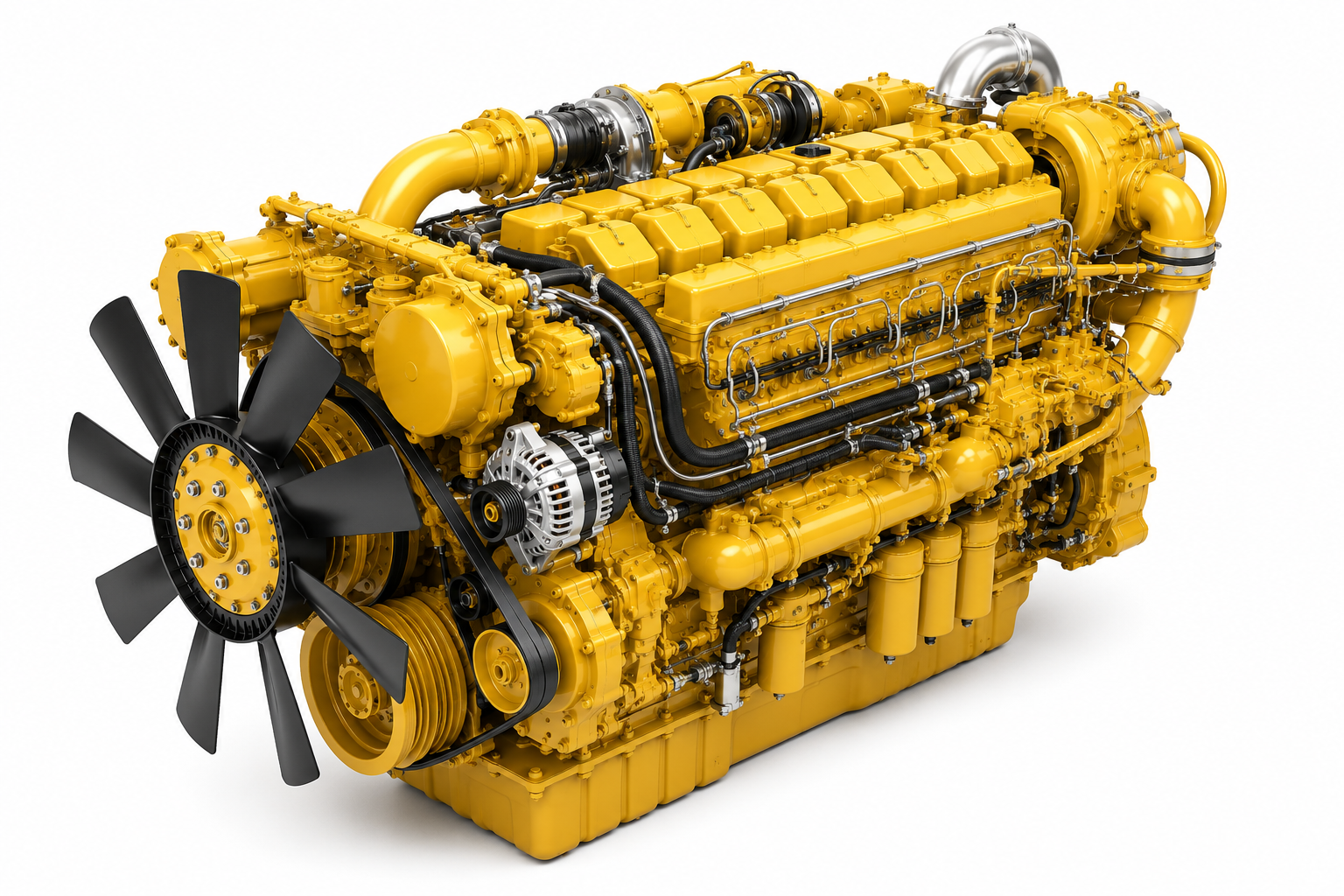
The Caterpillar C32 is one of the most widely used high-performance marine diesel engines in commercial vessels, pilot boats, fishing vessels, offshore support vessels, ferries and luxury yachts. Its reputation for reliability comes from a robust design, but like any marine diesel engine, it depends heavily on a healthy cooling system.
One of the most common service calls involving a Caterpillar C32 starts with a simple statement:
"My engine is running hot."
The good news is that overheating does not automatically mean the engine has suffered serious damage. In many cases, the problem can be traced to a restriction somewhere within the cooling system.
This guide answers the questions marine engineers, captains and vessel owners search for most, using practical troubleshooting advice based on Caterpillar C32 operation and maintenance procedures.
Why is my Caterpillar C32 marine engine overheating?
This is easily the number one question.
Many people immediately suspect the thermostat.
Although a faulty thermostat can certainly cause high coolant temperatures, it is only one component in a much larger cooling system.
A Caterpillar C32 relies on several systems working together:
- Auxiliary seawater pump
- Seawater strainer
- Heat exchanger
- Jacket water circuit
- Thermostats
- Expansion tank
- Coolant pump
- Coolant level sensors
- Temperature sensors
- Charge air cooling system
If just one of these components becomes restricted or fails, coolant temperature may begin climbing.
Before replacing expensive components, inspect the complete cooling system.
Is the thermostat always responsible?
No.
This is probably the biggest myth surrounding Caterpillar marine engines.
The thermostat simply controls coolant flow based on engine temperature. If coolant cannot circulate properly because of another restriction, replacing the thermostat will not solve the problem.
Professional technicians usually inspect the following first:
- Seawater intake
- Sea strainer
- Auxiliary seawater pump
- Pump impeller condition
- Heat exchanger cleanliness
- Coolant level
- Coolant concentration
- Air trapped inside the cooling system
Only after these inspections should the thermostat become a primary suspect.
How does the Caterpillar C32 cooling system work?
Understanding the system makes troubleshooting much easier.
The C32 uses two separate cooling circuits.
Closed fresh-water circuit
This circuit circulates coolant through:
- Engine block
- Cylinder heads
- Turbochargers (where applicable)
- Oil cooler
- Thermostat housing
The coolant absorbs engine heat before flowing to the heat exchanger.
Raw seawater circuit
The auxiliary seawater pump draws seawater through:
- Sea chest
- Seawater strainer
- Heat exchanger
- Charge air cooler
- Exhaust cooling components (configuration dependent)
The seawater removes heat from the engine coolant before being discharged overboard.
If seawater flow is reduced anywhere along this path, engine temperature will rise quickly.
Can a blocked seawater strainer really cause overheating?
Absolutely.
A surprising number of overheating complaints are caused by something as simple as a clogged sea strainer.
Common obstructions include:
- Seaweed
- Plastic bags
- Fishing line
- Shells
- Sand
- Marine growth
Even a partially blocked strainer reduces cooling capacity.
If your C32 begins running hotter than normal after operating in shallow water or debris-filled harbors, inspect the strainer before replacing any engine components.
How do I know if the auxiliary seawater pump is failing?
The auxiliary seawater pump is one of the hardest-working components on any marine diesel engine.
It operates continuously whenever the engine is running.
Signs of a worn pump include:
- Higher coolant temperatures
- Reduced seawater discharge
- Water leakage around the shaft seal
- Bearing noise
- Impeller wear
- Corrosion inside the housing
A damaged impeller may still rotate while moving far less water than required.
Routine inspection of the pump and impeller helps prevent unexpected overheating during long passages.
Could the heat exchanger be the problem?
Yes.
The heat exchanger transfers heat from the engine coolant to seawater.
Over time, scale, salt deposits and marine growth reduce heat transfer efficiency.
Common symptoms include:
- Gradually increasing operating temperature
- Normal seawater flow but poor cooling
- Higher temperatures under heavy engine load
- Reduced cooling after extended service intervals
Cleaning the heat exchanger according to the recommended maintenance schedule often restores cooling performance without replacing expensive parts.
Why does coolant level matter so much?
Many operators underestimate the importance of maintaining the correct coolant level.
Low coolant can create air pockets inside the cooling circuit.
These pockets reduce coolant circulation and may create localized hot spots around the cylinder heads.
A low coolant level can also produce inaccurate temperature readings because the sensor may not remain fully immersed.
Always check coolant level only after the engine has cooled and follow Caterpillar's recommended coolant specifications.
What happens if air becomes trapped inside the cooling system?
Air trapped inside the cooling system can be surprisingly difficult to diagnose.
Typical symptoms include:
- Temperature fluctuations
- Intermittent overheating
- Poor heater performance (where fitted)
- Coolant level changes after shutdown
- Gurgling noises in the expansion tank
Air pockets reduce coolant circulation and prevent efficient heat transfer.
Whenever cooling system components are replaced, the system should be refilled and bled according to the manufacturer's procedure.
Quick Caterpillar C32 Overheating Checklist
Before replacing major components, inspect the following:
✔ Seawater intake clear
✔ Sea strainer clean
✔ Auxiliary seawater pump operating correctly
✔ Pump impeller in good condition
✔ Heat exchanger clean
✔ Coolant level correct
✔ Correct coolant mixture
✔ No air trapped in system
✔ Thermostat operating properly
✔ Temperature sensors functioning correctly
Following this sequence helps identify many overheating issues without unnecessary parts replacement.
Final Thoughts
The Caterpillar C32 is engineered for demanding marine applications, but its reliability depends on proper cooling system maintenance. Most overheating problems originate from restricted coolant or seawater flow rather than catastrophic engine failure.
Approaching diagnostics methodically—starting with the seawater intake and progressing through the pump, heat exchanger, coolant circuit, and thermostat—can save significant downtime and repair costs.
For marine engineers and vessel owners alike, preventive inspections are often the simplest way to avoid an unexpected overheating alarm at sea.
Why is my Caterpillar C32 losing coolant?
If you find yourself topping up coolant more often than usual, don't ignore it. A Caterpillar C32 should not consume coolant during normal operation.
The first step is determining whether the coolant is leaking externally or internally.
External coolant leaks
External leaks are generally easier to identify. Check for:
- Loose hose clamps
- Damaged coolant hoses
- Leaking heat exchanger end covers
- Worn water pump seals
- Expansion tank leaks
- Cracked fittings
- Coolant residue around hose connections
Dried coolant often leaves a white or green residue, making the leak easier to locate.
Internal coolant leaks
Internal coolant loss requires more investigation.
Possible causes include:
- Failed cylinder head gasket
- Cracked cylinder head
- Damaged liner seals
- Oil cooler failure
- Internal heat exchanger leaks
Signs of an internal leak include:
- White exhaust smoke after warm-up
- Coolant disappearing with no visible leak
- Rising engine oil level
- Milky engine oil
- Cooling system pressure increasing unusually fast
If you suspect an internal leak, pressure testing the cooling system should be one of the first diagnostic steps.
Why is my Caterpillar C32 producing black smoke?
Black smoke usually indicates incomplete combustion.
The engine is receiving more fuel than available air can burn efficiently.
Common causes include:
- Dirty air filters
- Restricted turbocharger airflow
- Fouled charge air cooler
- Worn injectors
- Poor fuel atomization
- Excessive engine loading
- Restricted exhaust flow
Many engineers replace injectors first.
However, always inspect the air intake system before replacing expensive fuel system components.
A partially blocked charge air cooler can reduce combustion efficiency even when the turbocharger appears to be operating normally.
Why has my Caterpillar C32 lost power?
Loss of power can develop gradually or appear suddenly.
Ask yourself these questions:
- Does the engine reach rated RPM?
- Is the turbocharger building boost?
- Are there active engine alarms?
- Has fuel consumption increased?
- Is black smoke present?
Common causes include:
- Fuel restrictions
- Dirty fuel filters
- Low boost pressure
- Turbocharger wear
- Injector problems
- Cooling system derate
- Sensor faults
- Electronic control issues
Modern Caterpillar engines may automatically reduce power to protect themselves if coolant temperature, oil pressure, or other critical parameters move outside acceptable limits.
Can the turbochargers cause overheating?
Yes.
Although turbochargers primarily increase engine performance, they also influence combustion temperatures.
Problems may include:
- Damaged compressor wheel
- Restricted air intake
- Oil supply issues
- Excessive shaft play
- Carbon deposits
- Reduced boost pressure
Poor boost results in less efficient combustion.
The engine must work harder to produce the same power, increasing thermal load throughout the cooling system.
Inspecting turbochargers during scheduled maintenance helps prevent larger performance problems later.
How important is the charge air cooler?
The charge air cooler is often overlooked.
Its job is to cool compressed air before it enters the cylinders.
Cooler air contains more oxygen.
More oxygen means:
- Better combustion
- Lower exhaust temperatures
- Improved fuel efficiency
- Higher power output
- Reduced smoke
Over time, marine environments introduce:
- Salt deposits
- Oil residue
- Dust
- Carbon contamination
These contaminants reduce cooling efficiency.
Cleaning the charge air cooler at recommended service intervals helps maintain engine performance.
Can faulty injectors increase engine temperature?
Absolutely.
Marine diesel injectors operate under extremely high pressure.
As injectors wear, fuel atomization becomes less efficient.
Instead of producing a fine fuel mist, worn injectors may create larger fuel droplets.
This can result in:
- Black smoke
- Rough idle
- Increased fuel consumption
- Higher exhaust gas temperatures
- Reduced engine performance
Injector testing should always be performed before replacing the complete fuel system.
What alarms should I never ignore?
Modern Caterpillar C32 engines continuously monitor critical operating conditions.
Never ignore alarms relating to:
- High coolant temperature
- Low engine oil pressure
- High exhaust temperature
- Low coolant level
- Low fuel pressure
- Overspeed
- Charging system faults
Continuing to operate after repeated alarms can lead to expensive engine damage.
Investigate the root cause before returning the engine to full service.
Preventive Maintenance Tips for the Caterpillar C32
Many major engine failures begin as small maintenance issues.
Routine inspections can significantly reduce unexpected downtime.
A good preventive maintenance routine includes:
- Inspect the seawater strainer before every voyage.
- Check coolant level daily.
- Look for coolant and oil leaks around pumps and hose connections.
- Monitor engine operating temperature for gradual changes.
- Clean the heat exchanger according to the maintenance schedule.
- Inspect the auxiliary seawater pump and impeller regularly.
- Replace fuel and oil filters at the recommended intervals.
- Inspect belts and hose clamps for wear.
- Keep the engine room clean to make leaks easier to identify.
- Record operating temperatures and pressures to spot trends before they become failures.
Preventive maintenance is almost always less expensive than emergency repairs.
Frequently Asked Questions
Is it safe to continue operating a Caterpillar C32 while overheating?
No. Continued operation at high temperatures can damage cylinder heads, pistons, liners and turbochargers.
Can dirty seawater damage the cooling system?
Yes. Sand, shells, marine growth and debris can restrict seawater flow and reduce cooling efficiency.
How often should the heat exchanger be inspected?
Inspection intervals depend on operating conditions, but vessels operating in warm or high-fouling waters may require more frequent cleaning.
Does replacing the thermostat always solve overheating?
No. The thermostat is only one part of the cooling system. Restrictions elsewhere often produce similar symptoms.
What is the most common cause of overheating?
In many marine applications, reduced seawater flow caused by blocked strainers, fouled heat exchangers or worn seawater pump components is among the most common causes.
Final Thoughts
The Caterpillar C32 has earned a strong reputation for reliability in demanding marine environments. Most performance problems are not caused by a single failed component but by gradual reductions in cooling efficiency, fuel delivery or airflow.
When troubleshooting, avoid replacing parts based on assumptions. Instead, inspect the cooling system, seawater circuit, air intake and fuel system methodically. A structured approach saves time, reduces repair costs and helps keep your vessel operating safely and efficiently.
At Alfa Marine Spare Parts, we encourage vessel owners and marine engineers to combine regular maintenance with accurate diagnostics to maximize the service life of the Caterpillar C32 marine engine.
Need Caterpillar C32 Marine Engine Parts?
If your troubleshooting points to a worn seawater pump, heat exchanger, cylinder head, turbocharger, water pump, or other Caterpillar C32 component, browse our complete range of marine engine spare parts.
➡️ Explore Caterpillar C32 Marine Engine Spare Parts:
https://www.alfamarinespareparts.com/engine-type/caterpillar-c32-marine-engine-spare-parts
Our inventory includes genuine, OEM, surplus, reconditioned, and remanufactured marine engine components for commercial vessels, workboats, offshore vessels, and yachts.
Continue Learning About Caterpillar Marine Engines
Looking for more technical guides and maintenance tips?
Explore our growing collection of educational articles covering Caterpillar marine engine maintenance, troubleshooting, cooling systems, turbochargers, fuel systems, and preventive maintenance.
➡️ Visit Our Marine Engine Blog:
https://www.alfamarinespareparts.com/blog-and-news
Whether you're a marine engineer, vessel owner, superintendent, or shipyard professional, our guides are designed to help you diagnose problems faster, reduce downtime, and keep your Caterpillar marine engines operating at peak performance.